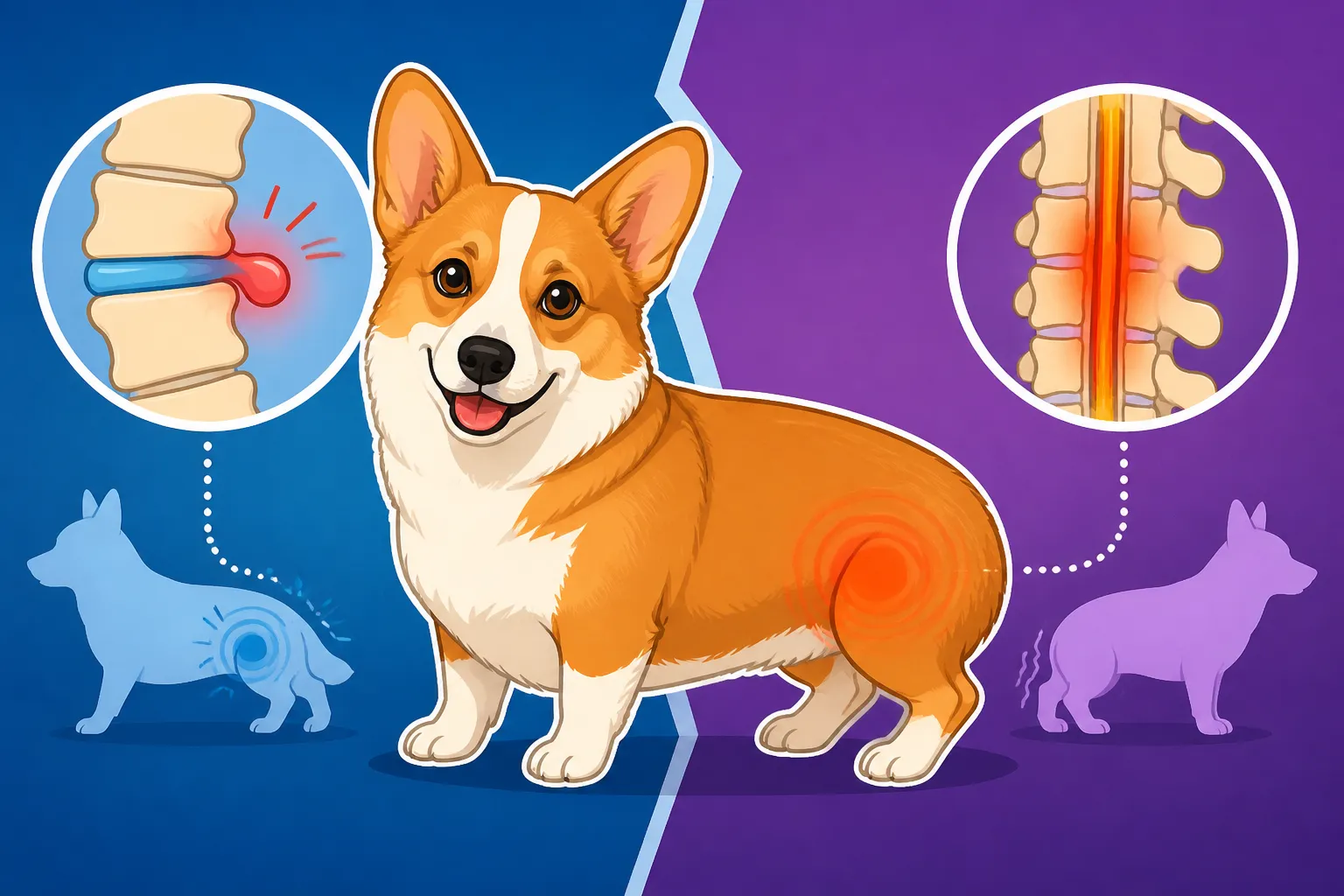
Telling a Corgi’s Slipped Disc From Myelopathy
It's incredibly distressing when your beloved Corgi starts showing signs of hind leg weakness or discomfort, and the sheer number of possibilities can feel overwhelming. Many Corgi parents immediately jump to conclusions about a "slipped disc" or fear the worst with "degenerative myelopathy," and honestly, it's really hard to tell the difference sometimes without professional help. This guide aims to clear up that confusion, offering a comprehensive look at how to distinguish between a Corgi's slipped disc and degenerative myelopathy, so you can better understand what might be happening with your furry friend.
Understanding the Corgi Spine: A Foundation for Health Issues
Before we dive into the specific conditions, it’s really helpful to grasp why Corgis are so prone to back problems in the first place. Their adorable, long bodies and short legs, while utterly charming, come with a built-in predisposition to certain spinal challenges. It’s not just bad luck; it’s a design feature that requires us as owners to be extra vigilant and informed.
The Unique Anatomy of a Corgi's Back
Think about your Corgi's silhouette: long, low, and wonderfully stocky. This unique build isn't just for looks; it’s a result of their history as herding dogs, bred to nip at the heels of cattle without getting kicked. However, this structure places significant stress on their spinal column. Their spine, while flexible, is stretched horizontally, and each segment (vertebrae) has a disc in between that acts as a cushion. These discs are like jelly donuts, with a soft center and a tougher outer ring. They absorb shock and allow for movement. In a Corgi, due to their inherent body shape, these discs are constantly under more strain than in a dog with more proportionate legs and back. It's truly a marvel that their backs hold up as well as they do for as long as they do, but it's also why we see so many spinal issues. Understanding Why a Corgi's Back Is Built the Way It Is can really help owners appreciate the biomechanical challenges their pets face daily.
Imagine carrying a heavy log horizontally – the longer the log, the more strain on the middle. Your Corgi's spine is effectively doing this throughout its life. Every jump, every twist, every awkward landing, sends forces through those intervertebral discs. Over time, this constant pressure can lead to wear and tear, making the discs more vulnerable to injury or degeneration. This is a fundamental reason why many Corgi owners become hyper-aware of their dog's movements, trying to prevent anything that might put their precious back at risk.
Chondrodystrophy and Its Implications
Now, let's talk about a big scientific word: chondrodystrophy. Don't let it scare you off; it's just the fancy term for the genetic trait that gives Corgis (and other breeds like Dachshunds and Basset Hounds) their characteristic short legs and long bodies. This isn’t a disease in itself, but rather a developmental abnormality of cartilage. The problem is, this same genetic trait also affects the intervertebral discs, causing them to mature abnormally early. Instead of remaining soft and jelly-like, the centers of these discs start to harden and mineralize even when the dog is quite young, sometimes as early as puppyhood.
This premature hardening means the discs lose their shock-absorbing capabilities. They become brittle and prone to rupture, much like a stale jelly donut compared to a fresh one. This predisposes Corgis to Intervertebral Disc Disease (IVDD), commonly known as a slipped disc. It's a ticking time bomb for many of them, which is why prevention and early recognition of symptoms are so crucial. Knowing What Chondrodystrophy Means for a Corgi truly underscores the importance of lifelong care focused on spinal health. This genetic predisposition means that even a perfectly healthy Corgi, born from excellent lines, can still develop disc issues due to this inherent structural vulnerability. It's not always about a trauma or an accident; sometimes, it's just the unfortunate genetic lottery.
Degenerative Myelopathy (DM): The Gradual Neurological Decline
One of the most heartbreaking conditions a Corgi owner might face is Degenerative Myelopathy. It’s a progressive neurological disease that gradually robs dogs of their ability to walk, and it's often mistaken for other issues because of its insidious onset. The emotional toll of watching your dog decline is immense, and understanding DM is the first step in managing it.
What is DM and How Does it Progress?
Degenerative Myelopathy, or DM, is a genetic disease that affects the spinal cord itself, specifically the white matter that transmits nerve signals. It's considered a neurodegenerative disease, similar in some ways to ALS (Lou Gehrig's disease) in humans. The myelin sheath, which insulates nerve fibers, breaks down, and the nerve fibers themselves start to degenerate. This process disrupts the communication between the brain and the limbs, leading to a progressive loss of motor function. Corgis are one of the breeds with a known genetic predisposition, primarily due to a mutation in the SOD1 gene. While many Corgis carry the gene, not all develop the disease, which adds another layer of complexity. If you're looking into breeding or just curious about your dog's risk, understanding How Many Corgis Carry the DM Mutation and Whether Carrier Corgis Ever Show Signs can provide valuable insights.
The progression of DM is typically slow and insidious. It starts subtly, often with mild weakness or incoordination in the hind limbs, and gradually worsens over months to years. This slow march of symptoms is one of the key differentiators from a sudden disc injury. There's no cure for DM, but supportive care, physiotherapy, and mobility aids can significantly improve a Corgi's quality of life as the disease progresses.
Early Signs and Subtle Changes of DM
Recognizing the very first signs of DM can be incredibly challenging because they're often so subtle. Initially, you might notice your Corgi dragging one of its back feet slightly, often manifested as excessive wear on the nails of the hind paws, especially the middle two. This is called proprioceptive deficit – they don't quite know where their feet are in space. They might stumble occasionally, particularly when turning quickly, or have a slightly clumsy gait. You might observe a sway in their hindquarters as they walk, or they might seem a bit weaker when trying to stand up from a lying position. Sometimes, it's just a general stiffness that comes and goes, leading many owners to attribute it to "getting old." Knowing The First Signs of DM in a Corgi is critical for early detection.
As the disease progresses, these signs become more pronounced. The hind leg weakness becomes more obvious, leading to a wobbly walk (ataxia). They might struggle with stairs or ramps, and you might notice their back legs crossing over each other when they walk. Eventually, they will lose the ability to stand or walk on their own. What's crucial to remember about DM is that it's generally not painful. Unlike a slipped disc, which causes intense pain, DM is a silent progression of nerve degeneration. This lack of pain can sometimes make owners delay seeking veterinary attention, mistakenly thinking it's just age-related weakness. This is a crucial distinction that we'll explore further.
Confirming a DM Diagnosis
Diagnosing DM can be a bit of a journey, primarily because there's no single definitive test for it in a living dog. Vets will often perform a thorough neurological exam to assess reflexes, muscle tone, and proprioception. They'll look for the characteristic hind limb weakness, ataxia, and proprioceptive deficits, often starting by checking the Corgi's ability to correct a paw when it's placed upside down. A healthy dog will immediately flip its paw back over; a dog with neurological issues might be slow or fail to do so. This exam helps rule out other neurological conditions.
The definitive diagnosis for DM can only truly be made through a post-mortem examination of the spinal cord, which is obviously not helpful for managing a living dog. However, a genetic test is available for the SOD1 mutation. This test can tell you if your Corgi is "clear" (no mutation), a "carrier" (one copy of the mutation), or "at-risk" (two copies of the mutation). While an "at-risk" result strongly suggests DM if clinical signs are present and other conditions have been ruled out, it’s important to remember that not all at-risk Corgis will develop the disease. A vet will typically use the genetic test result in conjunction with the neurological exam and by ruling out other conditions like IVDD to make a presumptive diagnosis. Understanding Reading a Corgi SOD1 Test Result is key for interpreting these findings.
Intervertebral Disc Disease (IVDD) or Slipped Disc: The Sudden Spinal Crisis
In stark contrast to the gradual progression of DM, Intervertebral Disc Disease (IVDD), or a slipped disc, is often a sudden, intensely painful event. It’s an emergency situation that demands immediate veterinary attention, and it’s one of the most common reasons Corgis end up at the emergency vet.
What Happens During a Slipped Disc Event
As we touched on earlier, a Corgi's intervertebral discs are prone to hardening due to chondrodystrophy. When a disc "slips," it generally means one of two things, classified as Hansen Type I or Type II IVDD. In Type I, the most common type in Corgis, the hardened, jelly-like center of the disc (the nucleus pulposus) ruptures through the outer fibrous ring (annulus fibrosus). This material then explodes upwards or downwards into the spinal canal, directly compressing the delicate spinal cord. This is incredibly painful and can cause sudden neurological deficits, from mild weakness to complete paralysis. It's often described as a catastrophic event, even though it can be triggered by something as simple as a normal jump or twist.
Type II IVDD involves a more gradual bulging of the outer fibrous ring of the disc into the spinal canal. While it can cause chronic pain and progressive symptoms, it’s less common in Corgis and typically not as acutely debilitating as a Type I rupture. The key takeaway for a Corgi owner is that a slipped disc event, particularly Type I, is an acute injury to the spinal cord due to disc material displacement, leading to immediate and severe consequences. The Jump That Ruptures a Corgi Disc might seem innocuous at the time, but the underlying disc degeneration makes it a real threat.
Acute Symptoms and Pain Presentation
The hallmark of a slipped disc in a Corgi is sudden and severe pain. Your dog might yelp unexpectedly, become extremely reluctant to move, or cry out when touched or lifted. They might arch their back, hold their head low, or refuse to jump on furniture they usually frequent. They might tremble, pant excessively, or appear anxious and restless, unable to get comfortable. The pain can be so intense that they refuse to eat or drink.
Beyond the pain, you'll see neurological signs that can range from mild wobbly walking (ataxia) in the hind legs to complete paralysis. They might drag one or both back legs, or knuckle over on their paws. In severe cases, they might lose bladder and bowel control, which is a significant emergency. The onset is usually very fast – one minute they're fine, the next they're in agony and struggling to move. If you see Emergency Signs of a Corgi Disc Injury, you need to get to a vet immediately. Unlike DM, where pain is usually absent, IVDD screams pain, and that's a critical difference to observe.
Diagnosing IVDD in Corgis
When you rush your Corgi to the vet with suspected IVDD, the vet will start with a thorough physical and neurological examination. They'll look for signs of pain, assess your dog's gait, reflexes, and proprioception. They'll try to localize the pain to a specific area of the spine. However, while these exams are crucial, they can't definitively show the disc rupture or its exact location.
To confirm IVDD and plan treatment, advanced imaging is usually required. X-rays can sometimes show narrowed disc spaces or calcified discs, which suggest disc degeneration, but they don't show the spinal cord compression itself. For a definitive diagnosis, a Myelogram (a dye injected into the spinal canal followed by X-rays), a CT scan, or most commonly, an MRI (Magnetic Resonance Imaging) is needed. An MRI is the gold standard because it provides detailed images of the spinal cord, showing exactly where the disc material is pressing and the extent of the compression. This information is vital for determining whether surgery is necessary and where the surgeon needs to operate. What an MRI Shows in a Corgi Back can make all the difference in treatment decisions.
Key Differences: DM vs. Slipped Disc in Corgis
Distinguishing between Degenerative Myelopathy and Intervertebral Disc Disease is paramount because their prognoses, management, and treatment approaches are vastly different. While both can cause hind leg weakness, the underlying mechanisms and clinical presentations diverge significantly.
Onset and Progression: Gradual vs. Sudden
This is perhaps the most critical distinction to observe as a Corgi owner. Degenerative Myelopathy is a disease of gradual onset and slow progression. Symptoms typically begin subtly, often with mild, intermittent weakness or clumsiness in one or both hind legs. It might take months, or even years, for the disease to progress from those first subtle signs to a significant impact on mobility. It's a slow, steady decline, where each day or week might bring a barely perceptible worsening. For instance, you might notice your Corgi occasionally scuffing its back nails, then weeks later, it might start dragging a foot more consistently, and only after months might it truly struggle to walk. The phrase The Corgi Years When the Back End Gives Out often refers to this slower, DM-like progression.
In stark contrast, a slipped disc (IVDD) usually has a sudden onset. One moment your Corgi is fine, perhaps playing or jumping, and the next they might yelp, collapse, or show immediate, severe signs of pain and neurological deficit. This could be anything from a sudden refusal to move, intense yelping when touched, or an immediate inability to use their back legs. The change is often dramatic and unmistakable. While a dog might have underlying disc degeneration for a long time, the actual "slip" is an acute event.
Pain Perception: Absent vs. Intense
Another major differentiator lies in the presence or absence of pain. With Degenerative Myelopathy, the disease affects the motor nerves, not typically the pain-sensing nerves. Therefore, DM is generally considered a non-painful condition. Your Corgi might be weak and wobbly, but they are not usually in discomfort from the nerve degeneration itself. They might experience secondary pain from compensating for weakness or from muscle strain, but the primary neurological disease does not cause pain. This is why a Corgi with DM might still appear happy and alert, even as their hind legs fail. You might wonder Whether a Corgi With DM Is Suffering, and typically, the direct answer regarding the disease itself is no, though secondary issues can cause discomfort.
Conversely, a slipped disc (IVDD) is characterized by intense pain. When disc material compresses the spinal cord, it causes inflammation and direct nerve impingement, leading to significant discomfort. A Corgi with a slipped disc will often vocalize their pain with yelps or cries, become restless or unwilling to move, and show signs of extreme sensitivity when touched, especially along their back. They might pant heavily, tremble, or refuse to eat. The presence of severe pain, particularly with sudden onset, is a strong indicator of IVDD rather than DM.
Symmetry of Symptoms: Bilateral vs. Unilateral
Observing the symmetry of the neurological signs can also provide clues. Degenerative Myelopathy typically affects both hind limbs symmetrically, though one side might appear slightly worse than the other initially. The weakness and incoordination tend to progress in a relatively even manner on both sides of the body. You'll see general weakness in both hindquarters, struggling to coordinate both legs. For example, a Corgi that scuffs both back nails, even if one is worse, points more towards DM than IVDD.
A slipped disc, however, can often present with unilateral (one-sided) or asymmetrical symptoms, depending on where the disc material impinges on the spinal cord. While severe compression can affect both sides, it's not uncommon to see one hind leg more affected than the other – perhaps one leg is paralyzed while the other still has some movement, or one leg is dragging significantly more. Of course, a central disc herniation can also cause bilateral signs, but the initial presentation can sometimes be more skewed. For instance, a Corgi dragging one back foot quite suddenly is a red flag for IVDD.
Here's a quick comparison table to help summarize these key differences:
| Feature | Degenerative Myelopathy (DM) | Intervertebral Disc Disease (IVDD) / Slipped Disc |
|---|---|---|
| Onset | Gradual, insidious over months to years | Sudden, acute |
| Progression | Slow, progressive worsening | Can be sudden paralysis or rapid decline |
| Pain | Generally absent (primary disease) | Intense, acute pain often present |
| Symmetry | Typically bilateral and symmetrical | Can be unilateral or bilateral, often asymmetrical |
| Primary Cause | Genetic nerve degeneration in spinal cord | Disc material compressing spinal cord |
| Affected Age | Older dogs (typically 8+ years) | Can occur at any age, commonly 3-7 years |
| Genetic Test | Available (SOD1 gene mutation) | No specific genetic test for IVDD itself |
| Urgency | Monitor and support, often non-emergency | Emergency! Requires immediate veterinary care |
Diagnostic Tools and Veterinary Approaches
When your Corgi starts exhibiting hind leg issues, a prompt and thorough veterinary evaluation is absolutely non-negotiable. Don't try to guess or wait it out. The diagnostic process can sometimes be lengthy, involving a combination of physical exams, neurological assessments, and advanced imaging to pinpoint the exact cause of the problem. This is where your vet and potentially a specialist will be your most valuable allies.
The Importance of a Neurological Exam
Every investigation into Corgi hind leg weakness starts with a comprehensive neurological exam. This isn't just a quick check; it's a systematic assessment designed to evaluate the integrity of your dog's nervous system. The vet will look at gait, posture, reflexes (like the patellar reflex or withdrawal reflex), and conscious proprioception. Proprioception tests often involve knuckling over your Corgi's paw and seeing how quickly they correct it. Slower correction or no correction points to neurological deficits. They'll also check for any signs of pain or sensitivity along the spine. What a Neurologist Checks in a Corgi goes into even more depth, but your general vet will perform a thorough initial assessment.
The neurological exam helps the vet determine if the problem is indeed neurological, and if so, where along the spinal cord (or in the brain, though less common for hind leg issues) the lesion might be located. It helps differentiate between upper motor neuron and lower motor neuron signs, which can guide further diagnostic steps. For example, a loss of conscious proprioception without pain is a strong indicator of DM if other conditions are ruled out. If severe pain is present alongside neurological deficits, IVDD immediately jumps to the top of the list.
Imaging: X-rays, MRI, and CT Scans
While a neurological exam points the way, imaging is often required for a definitive diagnosis, especially for IVDD.
- X-rays: These are usually the first step, as they are readily available and less expensive. X-rays can show abnormalities in the vertebral column, such as narrowed disc spaces, calcified discs, or signs of arthritis. However, they are limited because they don't show the soft tissues like the spinal cord itself or the disc material that might be compressing it. So, while X-rays can suggest IVDD, they cannot definitively diagnose the degree of spinal cord compression.
- CT Scans: Computed Tomography (CT) scans provide more detailed images than X-rays, creating cross-sectional views of the spine. They are excellent for visualizing bone and calcified disc material. A CT scan can often identify the exact location and extent of disc herniation, particularly if the disc material is calcified. They are quicker than MRIs and sometimes more accessible.
- MRI Scans: Magnetic Resonance Imaging (MRI) is considered the gold standard for diagnosing spinal cord compression dueions to disc disease. An MRI provides incredibly detailed images of soft tissues, including the spinal cord, nerves, and intervertebral discs. It can clearly show disc herniations, spinal cord swelling, and other soft tissue abnormalities that X-rays and CT scans might miss. For instance, if you're dealing with a sudden, severe issue and considering surgery, an MRI is almost always recommended to guide the surgeon precisely. This is a significant investment, but often necessary for optimal outcomes. Many owners rely on pet insurance like Healthy Paws to help cover the substantial costs of such advanced diagnostics and treatments.
Genetic Testing for DM
For Degenerative Myelopathy, genetic testing plays a crucial role. As mentioned, a simple cheek swab or blood test can determine if your Corgi carries the SOD1 gene mutation. The results will indicate if your dog is "Clear" (N/N), "Carrier" (A/N), or "At-Risk" (A/A). For a dog showing clinical signs of progressive hind limb weakness, an "At-Risk" (A/A) result, combined with a neurological exam consistent with DM and the exclusion of other treatable spinal conditions (like IVDD), leads to a presumptive diagnosis of DM.
It's vital to understand that a positive genetic test for DM (A/A) doesn't mean your dog will get DM, only that they are genetically predisposed and at risk. Conversely, a "Clear" (N/N) result makes DM highly unlikely. This test is a powerful tool for breeders to reduce the incidence of DM in the Corgi population and for owners to be informed about their dog's potential risk. For those considering a Corgi puppy, always ask about The DNA Tests a Corgi Breeder Should Run to ensure responsible breeding practices.
Managing and Living with Corgi Spinal Conditions
Receiving a diagnosis of either a slipped disc or degenerative myelopathy can be devastating, but it’s important to remember that there are many ways to manage these conditions and ensure your Corgi has the best possible quality of life. The approach differs significantly between the two, highlighting again why an accurate diagnosis is so vital.
Treatment Options for IVDD
When a Corgi suffers a slipped disc, treatment options largely depend on the severity of the spinal cord compression and the neurological deficits.
- Conservative Management: For milder cases, or when surgery isn't an option, conservative management is often pursued. This involves strict Crate Rest for a Corgi With a Bad Back for typically 4-8 weeks, alongside anti-inflammatory medications (like NSAIDs or steroids), muscle relaxants, and pain medication. The goal is to reduce inflammation and allow the disc to heal, preventing further compression. This means absolutely no jumping, running, or stair climbing. Leash walks for bathroom breaks only. It requires immense dedication from owners, but can be very successful.
- Surgical Intervention: For Corgis with significant pain, rapid progression of neurological deficits, or loss of deep pain sensation, emergency spinal surgery is often recommended. This procedure, typically a hemilaminectomy, involves removing bone and disc material to decompress the spinal cord. Surgery aims to relieve pressure on the nerves, alleviate pain, and restore neurological function. The success rate varies depending on the severity and duration of the compression, but many Corgis make excellent recoveries, especially if surgery is performed quickly. Spinal Surgery on a Corgi is a major undertaking, both emotionally and financially, which is why having pet insurance like Healthy Paws can be a lifesaver.
- Post-Operative Care and Rehabilitation: Whether conservative or surgical, rehabilitation is crucial. This can include physiotherapy, hydrotherapy, laser therapy, and acupuncture. These therapies help strengthen muscles, improve range of motion, reduce pain, and retrain nerve pathways. It's a long road to recovery, but with consistent effort, many Corgis regain good function.
Supportive Care for Degenerative Myelopathy
Since there is no cure for DM, management focuses entirely on supportive care to maintain mobility and quality of life for as long as possible.
- Physiotherapy and Exercise: Regular, controlled exercise and Physiotherapy for a Corgi Losing Its Legs are incredibly important. While it won't stop the disease, it can help maintain muscle strength, prevent atrophy, and improve coordination. Swimming, guided walks, and specific strengthening exercises are often recommended. The goal is to keep the muscles strong to support the weakening neurological system.
- Mobility Aids: As DM progresses, your Corgi will likely need assistance. This can start with slings to help them walk, progressing to custom-fitted wheelchairs or carts. These mobility aids allow your Corgi to remain active and engaged, even when their hind legs can no longer support them. Ramps around the house and for getting into cars can also be invaluable. There are many fantastic resources, including custom cart makers, available to help your dog maintain independence.
- Home Modifications: Making your home DM-friendly involves addressing slippery floors with rugs or runners, providing orthopedic beds for comfort, and ensuring easy access to food and water. As incontinence can sometimes develop, managing hygiene becomes important with diapers or frequent potty breaks.
- Nutritional Support and Supplements: While no diet or supplement has been proven to stop DM, some vets recommend supplements like antioxidants, B vitamins, and omega fatty acids for overall neurological health. Discussing these with your vet is important.
- Quality of Life Assessment: This is perhaps the hardest part. As DM progresses, owners must constantly assess their Corgi's quality of life. This includes monitoring for pain (even secondary pain), incontinence issues, and their overall happiness and engagement. Making the difficult decision of Deciding When a Corgi With DM Has Had Enough is a deeply personal one, guided by your vet and your Corgi's individual circumstances.
Proactive Steps to Protect Your Corgi's Back
Prevention is always better than cure, especially with Corgis. While you can't prevent genetic conditions, you can significantly reduce the risk of disc injuries and improve overall spinal health.
- Weight Management: Keeping your Corgi at a healthy weight is arguably the single most important thing you can do for their back. Every extra pound puts immense strain on their already vulnerable discs. Your vet can help you determine The Body Condition Score a Corgi Should Hold and create a tailored diet plan. This is where portion control and healthy treats become non-negotiable. Why Corgi Weight Is a Spinal Problem cannot be overstated.
- Avoid Jumping and Stairs: This is a tough one because Corgis love to jump! However, repeated impact from jumping off furniture or climbing stairs can contribute to disc degeneration and increase the risk of rupture. Use ramps or steps to access sofas, beds, and cars. Carry your Corgi up and down stairs if possible, especially when they're young. Ramps and Steps That Save a Corgi's Back are essential equipment for any Corgi household.
- Proper Lifting Techniques: Always support your Corgi's back when lifting them. Avoid lifting by their front legs or under their armpits, as this can arch their back improperly. Scoop them up with one hand supporting their chest and the other under their hindquarters, keeping their spine straight.
- Regular, Controlled Exercise: Keep your Corgi active with low-impact exercises like leash walks and swimming. Avoid intense, high-impact activities that involve sudden stops, turns, or jumps, which can jar the spine.
- Harnesses vs. Collars: For walks, a well-fitting harness that distributes pressure across the chest and shoulders, rather than pulling on the neck, is generally recommended for Corgis to protect their neck and spine. Whether a Corgi Should Wear a Harness Not a Collar is a debate, but for spinal health, harnesses are often preferred.
- Regular Vet Check-ups: Ensure your Corgi has regular veterinary check-ups, especially as they age. Your vet can monitor their weight, gait, and neurological health, catching potential issues early. Some owners start Screening an Older Corgi's Spine even before symptoms appear.
When to Seek Emergency Veterinary Care
It's easy to second-guess yourself when your Corgi isn't acting quite right, but there are definite situations where waiting even a few hours can make a significant difference in outcome. Knowing when to drop everything and head straight to the emergency vet is crucial for any Corgi owner.
Urgent Signs of Spinal Injury
If your Corgi suddenly exhibits any of the following symptoms, it's a clear signal for an immediate emergency vet visit:
- Sudden Paralysis: If your Corgi suddenly can't move one or more of its legs, especially the hind legs, this is a severe emergency. It could indicate significant spinal cord compression.
- Extreme Pain: Vocalizing loudly, yelping when touched, crying out constantly, or trembling uncontrollably due to pain are all urgent signs. A Corgi in this much pain needs immediate attention.
- Loss of Bladder or Bowel Control (Fecal/Urinary Incontinence): If your previously house-trained Corgi suddenly starts having accidents, particularly if they are dribbling urine or seem unable to control their bladder/bowels, this can indicate severe spinal cord damage. This is a critical neurological emergency.
- Dragging Legs or Knuckling: While mild scuffing can be subtle, if your Corgi is actively dragging its back legs, or its paws are consistently knuckled over and it can't correct them, seek emergency care.
- Sudden Weakness or Collapse: Any sudden, inexplicable weakness or collapse, especially in the hindquarters, warrants immediate veterinary evaluation.
- Inability to Stand or Walk: If your Corgi is struggling to stand or cannot walk at all, don't delay.
- Lack of Appetite or Thirst combined with other symptoms: While this can be a sign of many issues, if coupled with hind leg problems or pain, it suggests a serious underlying condition.
These symptoms, especially when appearing suddenly, are most commonly associated with acute IVDD, where rapid intervention can be limb-saving. Every minute counts in cases of acute spinal cord compression.
Knowing When Every Minute Counts
For conditions like IVDD, the timeframe for intervention can profoundly impact the outcome. If your Corgi experiences a sudden disc rupture leading to significant neurological deficits (such as paralysis or loss of deep pain sensation), prompt surgical decompression of the spinal cord is often critical. The longer the spinal cord remains compressed, the greater the risk of irreversible damage. Veterinarians often talk about a "golden window" of opportunity for surgery, sometimes as short as 12-24 hours after the onset of severe symptoms, to achieve the best chance of recovery. This isn't to say that surgery outside this window isn't effective, but the prognosis can decrease.
Therefore, if you suspect a slipped disc based on the sudden onset of severe pain or neurological deficits, do not wait. Find the nearest emergency veterinary hospital or a veterinary neurologist. Calling ahead to let them know you're coming with a suspected spinal emergency can help them prepare. Early diagnosis and intervention can literally mean the difference between your Corgi regaining the ability to walk and living with permanent paralysis. This is another area where a robust pet insurance plan like Healthy Paws can alleviate the financial stress, allowing you to focus on getting your Corgi the critical care they need without hesitation.
Disclaimer
This guide is intended for informational purposes only and does not constitute professional veterinary advice. Always consult with a qualified veterinarian or veterinary specialist for any health concerns or before making any decisions about your Corgi's care. Never disregard professional veterinary advice or delay seeking it because of something you have read here.