Whether Carrier Corgis Ever Show Signs
It's a terrifying moment for any Corgi owner to hear that their beloved companion might carry a gene for a serious illness. The fear of seeing them struggle, especially with something as devastating as Degenerative Myelopathy (DM), can be overwhelming. This guide is here to shed light on whether Corgis identified as "carriers" of the DM gene will actually show symptoms, providing peace of mind and clear information on what their genetic status truly means for their health and happiness.
Understanding Degenerative Myelopathy in Corgis
Degenerative Myelopathy (DM) is a progressive neurological disease that affects the spinal cord in many dog breeds, including our beloved Corgis. It’s often compared to ALS in humans because it slowly robs dogs of their ability to walk. The signs typically begin with weakness in the hind limbs, progressing to loss of coordination, difficulty standing, and eventually paralysis. Seeing your energetic Corgi, a breed known for its robust spirit, start to lose control of its back end is heartbreaking, and it's a concern many owners rightfully have.
The Genetics of DM: Explaining the SOD1 Mutation
At the heart of DM is a genetic mutation in the SOD1 gene. This gene is responsible for producing an enzyme called superoxide dismutase 1, which plays a crucial role in protecting cells from damage. When there's a mutation in this gene, it can lead to a breakdown in the nerve cells of the spinal cord. For Corgis, specifically Pembroke Welsh Corgis, this mutation is a known factor that can contribute to the development of DM. It's not a simple one-to-one link like some genetic diseases, but rather a predisposition, and understanding the nuances is key.
What "Carrier" Status Truly Means
When your Corgi undergoes genetic testing for DM, the results usually come back in one of three categories: "Clear," "Carrier," or "At-Risk." A "carrier" Corgi is one that has inherited one copy of the mutated SOD1 gene and one copy of the normal gene. Think of it like a pair of socks: one is perfectly fine, and the other has a little hole. This means they carry the gene, and could potentially pass it on to offspring if bred, but they themselves are generally not expected to develop the disease. This is a critical distinction that often gets lost in the initial panic of a "positive" test result. It’s important to remember that being a carrier is not the same as having the disease or even being highly likely to get it. For a much deeper dive into the condition itself, you might want to read our article on Degenerative Myelopathy and the Corgi.
Why Carrier Corgis Don't Typically Show Symptoms
This is often the biggest relief for Corgi owners: carrier status for DM rarely, if ever, translates into clinical signs of the disease. The reason lies in the inheritance pattern of DM, which is generally considered an autosomal recessive trait with incomplete penetrance. In simpler terms, a dog usually needs two copies of the mutated gene to be truly "at-risk" of developing DM.
The "At-Risk" vs. "Carrier" Distinction
Let's break down those genetic test results categories to really clarify things.
- Clear (N/N): This Corgi has two normal copies of the SOD1 gene. They won't develop DM due to this specific mutation, and they cannot pass the mutated gene on to their puppies.
- Carrier (N/DM or N/A): This Corgi has one normal copy and one mutated copy of the SOD1 gene. While they carry the gene, they almost universally do not develop DM symptoms themselves. They can pass the mutated gene to approximately 50% of their offspring. This is the category we're focusing on today, and it’s generally good news for the dog's personal health!
- At-Risk (DM/DM or A/A): This Corgi has two copies of the mutated SOD1 gene. They are genetically predisposed and are "at-risk" of developing DM symptoms during their lifetime. However, even "at-risk" dogs don't always develop the disease, which speaks to the "incomplete penetrance" aspect of DM.
The overwhelming consensus among veterinary neurologists and genetic researchers is that a Corgi with a single copy of the SOD1 mutation (a carrier) will not develop clinical signs of Degenerative Myelopathy. The normal gene copy they possess is typically sufficient to produce enough functional superoxide dismutase 1 enzyme, preventing the cellular breakdown associated with the disease. Many owners have shared their anxieties about these results, but the science is quite reassuring on this point. For more detailed insights into why these dogs stay well, check out our guide on Why a Corgi Carrying the DM Gene Usually Stays Well.
The Role of Two Copies for Disease Expression
To reiterate, the pathology of DM, or at least the form linked to the SOD1 mutation, primarily manifests when an individual inherits two copies of the specific gene mutation. It's like needing two specific keys to open a locked door; having only one key isn't enough to trigger the disease process. This is why careful breeding practices are so important – to avoid breeding two carriers together, which could produce "at-risk" puppies. The likelihood of a carrier Corgi developing DM is negligible to non-existent based on current scientific understanding. So, if your Corgi's test comes back as a carrier, you can breathe a sigh of relief regarding their personal health journey concerning DM.
Let's summarize the implications of DM genetic test results in a clear table:
| DM Genetic Status | SOD1 Gene Copies | Will the Corgi Develop DM? | Can the Corgi Pass DM Gene to Offspring? | Implications for Breeding (with a Clear mate) |
|---|---|---|---|---|
| Clear (N/N) | Two normal copies | No, not due to SOD1 mutation | No | All puppies will be Clear |
| Carrier (N/DM) | One normal, one mutated | Extremely unlikely, if ever | Yes, to ~50% of offspring | Puppies will be Clear or Carrier |
| At-Risk (DM/DM) | Two mutated copies | Yes, high probability (but not 100%) | Yes, to 100% of offspring | All puppies will be Carrier |
This table highlights that while carriers can pass on the gene, they themselves are largely unaffected. Understanding Reading a Corgi SOD1 Test Result can further clarify these distinctions.
The Rare Exceptions and What to Watch For
While it's incredibly reassuring that carrier Corgis are highly unlikely to develop DM symptoms, it's natural for owners to remain vigilant. Dogs can, unfortunately, develop a myriad of health issues, and some of these might present with similar symptoms to the early stages of DM, even in a carrier Corgi. It's crucial not to confuse other conditions with DM.
Other Neurological Conditions That Mimic DM
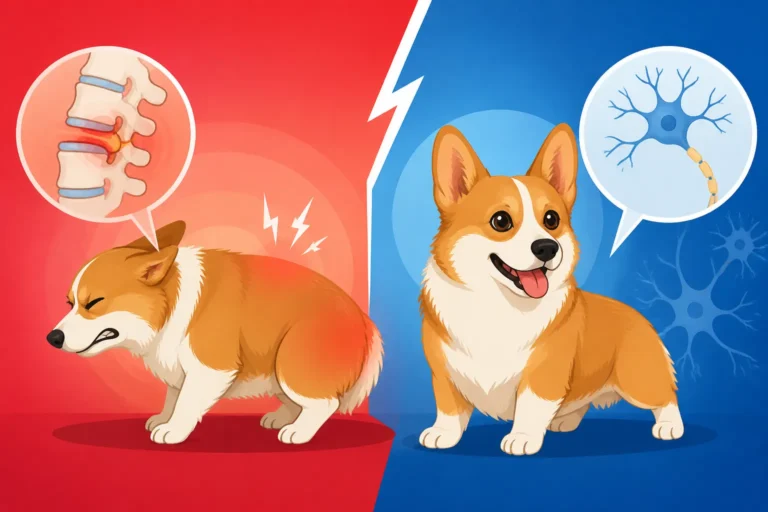
Corgis, with their distinct long backs and short legs, are prone to certain spinal issues that can cause hind leg weakness, wobbliness, and difficulty walking. These symptoms can easily be mistaken for DM, especially in an older Corgi. The most common culprit is Intervertebral Disc Disease (IVDD), where the discs between the vertebrae rupture or bulge, pressing on the spinal cord. A Corgi with IVDD might cry out in pain, be reluctant to move, or suddenly lose the use of its back legs. This is distinct from DM, which is typically not painful in its early stages. Other conditions that can mimic DM signs include:
- Arthritis: Particularly in the hips and knees, common in older Corgis, leading to stiffness and reluctance to move.
- Fibrocartilaginous Embolism (FCE): Often called a "spinal stroke," this occurs when a piece of cartilage blocks blood flow to the spinal cord, causing sudden weakness or paralysis, usually non-painful.
- Tumors: Growths on or near the spinal cord can put pressure on nerves, leading to neurological deficits.
- Lumbosacral Stenosis: A narrowing of the spinal canal in the lower back, common in some breeds, which can compress nerves.
If you observe any changes in your Corgi's gait, especially in the hind legs, it’s imperative to consult your veterinarian. They can conduct a thorough neurological exam to differentiate between these conditions. Getting an accurate diagnosis is the first step towards an appropriate treatment plan. For more information on distinguishing between spinal issues, consider our article Telling Disc Pain From DM in a Corgi.
Managing General Corgi Health for Longevity
Even if your Corgi is a DM carrier, focusing on overall health and well-being is paramount for their longevity and quality of life. Proactive care can help mitigate other common Corgi health concerns and support their spine.
- Weight Management: Corgis love to eat, and it's easy for them to become overweight. Excess weight puts significant strain on their long backs and joints, increasing the risk of IVDD and arthritis. Maintaining a healthy weight is perhaps the single most important thing you can do for your Corgi's back health. This ties into crucial aspects like Why Corgi Weight Is a Spinal Problem.
- Controlled Exercise: Regular, moderate exercise is essential for maintaining muscle tone and joint health. However, avoid high-impact activities like repeated jumping from furniture or extensive stair climbing, which can stress their delicate spines. Ramps and steps are fantastic tools for protecting their back.
- Nutritional Support: A balanced diet is fundamental. Some owners choose to add joint supplements containing glucosamine and chondroitin, or omega-3 fatty acids, to support joint health, although their direct impact on preventing disc issues or DM is still debated.
- Regular Veterinary Check-ups: Routine visits allow your vet to monitor your Corgi's weight, gait, and overall health, catching potential issues early. This includes discussing potential issues like The Corgi Years When the Back End Gives Out.
- Preventative Care: This includes dental care, parasite control, and appropriate vaccinations. Keeping your Corgi healthy overall strengthens their immune system and their ability to cope with any health challenges that may arise. For instance, reputable pet insurance providers like Healthy Paws can offer comprehensive coverage for accidents and illnesses, including many of the issues Corgis might face, providing invaluable financial support should unexpected health problems arise. They can cover diagnostics, surgeries, and even some alternative therapies, which can be a huge relief if your Corgi ever needs specialized care for a back injury or another condition.
By focusing on these general health principles, you can provide your carrier Corgi with the best possible chance at a long, active, and symptom-free life, regardless of their DM genetic status.
The Importance of Responsible Breeding and Genetic Testing
While carrier Corgis are typically asymptomatic, their genetic status does hold significant importance for responsible breeding practices. Understanding a dog's genetic makeup is crucial for making informed decisions that contribute to the health of the entire breed.
Testing Protocols for Corgi Breeders
Responsible Corgi breeders are diligent about health testing their breeding stock for several genetic conditions prevalent in the breed, and DM is at the top of that list. This is not just about identifying "at-risk" dogs, but also understanding the genetic landscape of their breeding lines. Before any breeding takes place, reputable breeders will run a DNA test on both prospective parents for the SOD1 mutation.
Here's how breeders use the results:
- Clear x Clear: All puppies will be Clear (N/N). This is the ideal pairing for ensuring no DM is passed on.
- Clear x Carrier: Approximately 50% of the puppies will be Clear (N/N) and 50% will be Carriers (N/DM). No puppies will be At-Risk (DM/DM). This pairing is often considered acceptable because it reduces the overall "at-risk" population over generations. The carrier puppies from such a pairing will themselves not develop DM.
- Clear x At-Risk: All puppies will be Carriers (N/DM). No puppies will be At-Risk (DM/DM). While all puppies will be carriers, they will not develop DM due to this gene. This pairing is less common but might be considered if the At-Risk dog has exceptional qualities otherwise, with the understanding that all offspring would then need to be bred only to Clear mates.
- Carrier x Carrier: Approximately 25% of the puppies will be Clear (N/N), 50% will be Carriers (N/DM), and 25% will be At-Risk (DM/DM). This pairing is generally avoided by responsible breeders because it can produce "at-risk" puppies.
The goal of these testing protocols is to gradually reduce the prevalence of the SOD1 mutation within the breed's gene pool without excessively limiting genetic diversity. Breeders understand that carriers are valuable parts of a breeding program if paired correctly. Knowing How Many Corgis Carry the DM Mutation emphasizes the scale of this effort within the breed community. Understanding The DNA Tests a Corgi Breeder Should Run covers a broader spectrum of essential health screenings for Corgis.
Making Informed Decisions for Your Corgi's Future
If you own a carrier Corgi, and you're not planning to breed them, their DM carrier status largely becomes a non-issue for their personal health. You can focus on providing them with an excellent quality of life, understanding that DM symptoms are not expected to manifest. However, if you are considering breeding, it's paramount to work with a knowledgeable mentor and a veterinarian who understands Corgi genetics. They can guide you on appropriate pairings and the ethical considerations involved. Additionally, discussing the health history of both parent dogs with your breeder, and reviewing their genetic test results, provides crucial insight into your puppy's predispositions. Companies like Healthy Paws also advocate for responsible pet ownership, including understanding genetic predispositions. This proactive approach to understanding your dog's health background allows you to prepare for their potential needs throughout their life, ensuring you're able to provide the best care possible.
Ultimately, while the initial news of a "carrier" status can be alarming, for the individual Corgi, it typically means they will live a full life without ever showing signs of Degenerative Myelopathy related to the SOD1 gene. The true significance of carrier status lies in responsible breeding decisions, ensuring the continued health of the Corgi breed for generations to come. Many owners find great reassurance in articles like How Few Corgis Actually Develop DM which provides a broader context to the prevalence of the disease even in at-risk individuals. And, of course, if you're ever looking to get a Corgi puppy, always ask your breeder about Whether a Corgi Puppy Should Be Screened for DM and other critical health tests.
Disclaimer
This article is intended for informational purposes only and does not constitute veterinary advice. Always consult with a qualified veterinarian for any health concerns or before making any decisions about your Corgi's care or treatment.