Steroids and Anti-Inflammatories in a Corgi Flare
It’s truly gut-wrenching to watch your lively Corgi suddenly become stiff, cry out when touched, or refuse to move their back legs. This sudden onset of pain, often signaling a "flare-up" of an underlying spinal issue, can send any Corgi parent into a panic, desperately searching for how to alleviate their beloved dog's discomfort. This guide will walk you through the crucial role of steroids and anti-inflammatory medications in treating these acute Corgi back pain episodes, helping you understand their benefits, risks, and how they fit into a comprehensive recovery plan.
Understanding Corgi Back Flares and the Need for Intervention
When your Corgi suddenly exhibits signs of intense back pain, it’s not just a minor ache; it's often a critical situation requiring immediate attention. The unique body structure of a Corgi, with its long back and short legs, unfortunately predisposes them to certain spinal conditions.
What Causes a Corgi Back Flare?
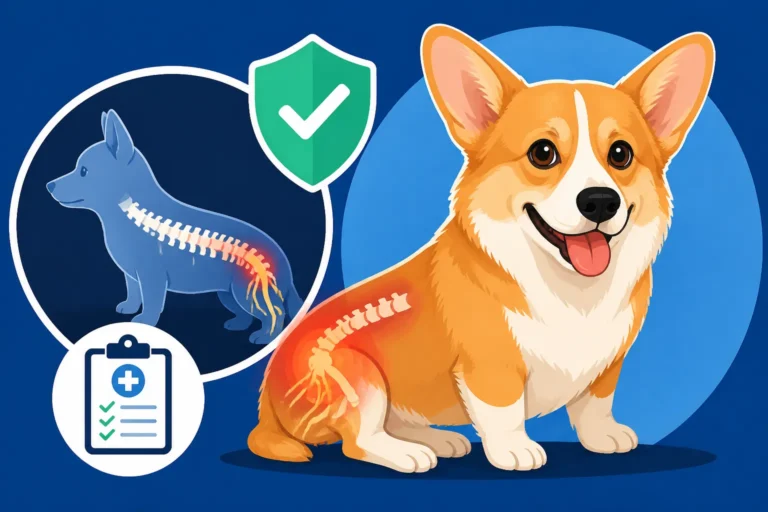
The most common culprit behind a sudden Corgi back flare is Intervertebral Disc Disease (IVDD). Corgis, being a chondrodystrophic breed, meaning they have abnormal cartilage development, are particularly susceptible to this condition. Imagine the discs between their vertebrae as tiny jelly donuts. In IVDD, these discs can degenerate and harden over time, losing their shock-absorbing ability. A sudden movement, a jump, or even just regular activity can cause one of these hardened discs to rupture or bulge, pressing on the sensitive spinal cord or nerves. This pressure causes immense pain, inflammation, and can lead to neurological deficits. While a strong, healthy Corgi spine is designed for their herding duties, the underlying genetics make them vulnerable. You can learn more about the specifics in our article, Disc Disease in a Long-Backed Corgi. Factors like Why Corgi Weight Is a Spinal Problem can also exacerbate these issues, adding more stress to an already delicate system.
Recognizing the Signs of a Flare-Up
Identifying a back flare early is vital. Your Corgi can't tell you they’re in pain with words, so you need to be acutely aware of subtle behavioral changes. One of the most heartbreaking signs is a sudden yelp when you try to pick them up, especially if you lift them A Corgi That Cries When Lifted Under the Chest. Other common indicators include:
- Reluctance to move: They might be hesitant to jump on or off furniture, or even struggle to get up from a lying position. You might notice A Corgi That Will Not Climb the Stairs.
- Arched back or hunched posture: This is often an attempt to alleviate pressure on the spine.
- Lameness or weakness in the hind legs: They might stumble, drag a back paw (A Corgi Dragging One Back Foot), or even lose coordination.
- Trembling or shaking: A sign of intense pain or discomfort.
- Loss of appetite or reluctance to drink: Pain can make them lose interest in basic needs.
- Incontinence: In severe cases, disc compression can affect bladder and bowel control.
- Changes in temperament: A normally friendly Corgi might become withdrawn, irritable, or even snap due to pain.
These signs can be distressing, and it's important to differentiate them from other conditions. Understanding Telling Disc Pain From DM in a Corgi is crucial, as Degenerative Myelopathy presents similarly but has a very different prognosis and treatment.
Why Immediate Veterinary Attention is Crucial
Delaying veterinary care when your Corgi is experiencing a back flare can have serious, irreversible consequences. The longer the spinal cord is compressed or inflamed, the greater the risk of permanent damage. What might start as pain can quickly escalate to partial or complete paralysis. Your vet needs to perform a thorough neurological exam to assess the severity of the spinal cord compression. They will also need to rule out other potential causes of pain and discomfort. Early intervention with the right medications, alongside strict rest, often provides the best chance for a good recovery. This is not something to "wait and see" about; prompt action is key, as detailed in How Fast a Corgi Disc Injury Needs Treating.
The Role of Non-Steroidal Anti-Inflammatory Drugs (NSAIDs)
When your Corgi is in pain, one of the first lines of defense your veterinarian might recommend is a Non-Steroidal Anti-Inflammatory Drug, or NSAID. These medications are powerful tools for managing acute inflammation and pain.
How NSAIDs Work to Reduce Pain and Inflammation
NSAIDs are designed to inhibit specific enzymes in the body (cyclooxygenase enzymes, or COX) that are responsible for producing prostaglandins. Prostaglandins are hormone-like compounds that contribute to inflammation, pain, and fever. By blocking their production, NSAIDs effectively reduce both the pain and the swelling that are often at the root of a Corgi's disc flare.
Common veterinary-approved NSAIDs for dogs include:
- Carprofen (Rimadyl, Novox, Vetprofen): This is one of the most frequently prescribed NSAIDs and has been widely used for canine pain and inflammation. It's generally well-tolerated.
- Meloxicam (Metacam, Loxicom): Often given as an oral suspension, it's particularly useful for chronic pain management but also effective in acute flare-ups.
- Deracoxib (Deramaxx): Another popular choice, often given once daily.
- Firocoxib (Previcox): This is a COX-2 selective inhibitor, meaning it targets the inflammatory pathway more specifically, potentially reducing some side effects.
These medications target the inflammation around the affected disc and spinal nerves, which is often the direct cause of your Corgi's intense pain. Reducing this inflammation can quickly make your Corgi feel more comfortable and allow them to rest more effectively, which is critical for healing.
Benefits and Potential Side Effects
The primary benefits of NSAIDs are clear: effective pain relief and reduction of inflammation. This can dramatically improve your Corgi's quality of life during a painful flare-up, allowing them to rest and begin the healing process. When administered correctly under veterinary guidance, many dogs tolerate them very well.
However, like all medications, NSAIDs come with potential side effects, and it's crucial for Corgi owners to be aware of them:
- Gastrointestinal Upset: This is the most common side effect. It can manifest as vomiting, diarrhea, loss of appetite, or stomach ulcers. Always give NSAIDs with food to help protect the stomach lining.
- Liver or Kidney Problems: In some cases, especially with long-term use or in dogs with pre-existing conditions, NSAIDs can affect liver or kidney function. Your vet might recommend blood tests before and during treatment to monitor these organ systems.
- Lethargy or Behavioral Changes: While less common, some dogs might seem more tired or exhibit subtle changes in their usual demeanor.
It's absolutely imperative that you never give your Corgi human NSAIDs like ibuprofen (Advil, Motrin) or naproxen (Aleve). These can be highly toxic to dogs, causing severe gastrointestinal bleeding, kidney failure, or even death. Only use medications prescribed specifically for dogs by your veterinarian.
Administering NSAIDs Safely
Your vet will determine the correct dosage and frequency for your Corgi based on their weight and the severity of their condition. Always follow these instructions precisely.
- Give with food: This is non-negotiable. A full meal helps protect the stomach and improves absorption.
- Never exceed the prescribed dose: Doubling up on doses if you miss one or giving extra for perceived worse pain can be dangerous.
- Watch for side effects: Be vigilant. If you notice any vomiting, diarrhea, lethargy, or changes in drinking/urination, contact your vet immediately. They may recommend stopping the medication or switching to a different one.
- Inform your vet about all other medications: This includes supplements, over-the-counter remedies, and even heartworm/flea preventatives. NSAIDs can interact with other drugs, and your vet needs the full picture to ensure safety.
Your vet will typically start with a higher "loading" dose for the first day or two, then transition to a maintenance dose. The duration of treatment will depend on your Corgi's response and the underlying cause of the flare.
When Steroids Come into Play for Corgi Back Pain
Sometimes, NSAIDs alone aren't enough, or a Corgi’s condition is so severe that a more potent anti-inflammatory is needed. This is where corticosteroids, often simply called "steroids," enter the picture.
Corticosteroids: Their Power and Purpose
Corticosteroids, such as Prednisone or Dexamethasone, are incredibly powerful anti-inflammatory agents. They mimic the effects of hormones naturally produced by your dog's adrenal glands. In the context of a Corgi back flare, they work by:
- Suppressing the immune response: This significantly reduces the inflammatory cascade around the injured disc and spinal cord.
- Reducing swelling: They are highly effective at decreasing edema (swelling) that can press on nerves, offering faster relief from pain and improving nerve function.
When a disc compresses the spinal cord, rapid reduction of swelling is paramount. Steroids can often provide quicker and more dramatic relief than NSAIDs in acute, severe cases, especially if there's significant neurological impairment. They can be life-saving for a Corgi struggling with sudden paralysis or extreme pain. However, their potency comes with a trade-off. Your vet might suggest an MRI to get a clearer picture of what's happening internally, as detailed in What an MRI Shows in a Corgi Back, before deciding on the most appropriate medication.
Balancing Benefits and Significant Risks
The benefits of rapid pain and inflammation reduction from steroids are huge, but it's crucial to understand their significant potential side effects:
- Increased Thirst and Urination (Polyuria/Polydipsia): This is almost guaranteed and can be quite pronounced. Your Corgi will drink and pee a lot more.
- Increased Appetite (Polyphagia): Steroids can make your Corgi feel constantly hungry, which can be challenging to manage, especially if they are also on crate rest and need to avoid weight gain.
- Panting: Even in cool environments, your Corgi might pant excessively.
- Behavioral Changes: Some dogs can become restless, anxious, or even aggressive. Others might be more lethargic.
- Muscle Weakness and Wasting: Long-term steroid use can lead to muscle atrophy, particularly in the hindquarters, which is already a concern for Corgis.
- Suppressed Immune System: Steroids can make your Corgi more susceptible to infections.
- Gastrointestinal Issues: While NSAIDs are known for GI upset, steroids can also cause stomach ulcers or worsen existing ones, especially when used at higher doses or for prolonged periods.
- Diabetes Mellitus: In some cases, particularly with long-term use, steroids can induce or exacerbate diabetes.
- Adrenal Gland Suppression: The body's natural production of corticosteroids can be suppressed, requiring careful tapering off the medication.
Because of these powerful effects, steroids are typically prescribed at the lowest effective dose for the shortest possible duration. Your vet will create a tapering schedule to gradually reduce the dose, allowing your Corgi's body to resume its natural hormone production.
The Critical "No NSAID and Steroid Together" Rule
This is perhaps the most important safety rule when dealing with these medications: NSAIDs and corticosteroids should never be given simultaneously. Combining these two types of anti-inflammatory drugs dramatically increases the risk of severe gastrointestinal ulceration, bleeding, and potentially perforation, which can be life-threatening.
If your Corgi has been on an NSAID and your vet decides to switch to a steroid (or vice-versa), there must be a "washout period" between the medications. This is a period, typically 3-7 days, where no anti-inflammatory drugs are given, allowing the previous medication to clear your Corgi's system and reduce the risk of adverse reactions. Your veterinarian will advise you on the exact timing and how to manage pain during this washout period, often with alternative pain relief options that are not anti-inflammatory.
Comprehensive Management Beyond Medication
While anti-inflammatories and steroids are crucial for managing the pain and inflammation of a Corgi back flare, they are only one part of a successful recovery plan. Without complementary measures, even the best medication might not prevent further injury or ensure lasting healing.
The Importance of Strict Crate Rest
This cannot be stressed enough: strict crate rest is paramount when your Corgi is recovering from a back injury. Medication reduces pain, but it doesn't heal the underlying disc damage. If your Corgi feels better due to medication and is allowed to move freely, they are at high risk of re-injuring themselves, potentially making the situation much worse.
Strict crate rest means:
- Confined to a small, comfortable space: A crate, small pen, or a very small room where they cannot run, jump, or play.
- Leashed potty breaks only: Carried outside for quick potty breaks, on a leash, and then immediately back inside to rest. No sniffing around, no running, no stairs.
- No jumping, running, or playing: This includes jumping on or off furniture, playing with other pets, or engaging in strenuous activity.
- Duration: Typically, this period of strict rest lasts for at least Six Weeks of Crate Rest With a Corgi, but your vet will give you a specific timeline based on your Corgi's condition.
It sounds tough, both for you and your Corgi, but it's absolutely essential for the disc to heal and scar over, preventing future relapses. Think of it as putting your Corgi in a full-body cast for their back. During this time, you'll need to keep them mentally stimulated with puzzle toys or gentle training sessions within their crate, without allowing much physical movement.
Environmental Modifications for a Recovering Corgi
Beyond crate rest, adjusting your home environment can significantly aid recovery and prevent future injuries. Even after the initial recovery, these modifications are wise long-term investments for your Corgi's spinal health.
- Ramps and Steps: Invest in Ramps and Steps That Save a Corgi's Back for all furniture your Corgi enjoys, like sofas and beds. This eliminates dangerous jumping.
- Non-Slip Surfaces: If you have hardwood, tile, or laminate floors, use runners or area rugs to provide traction. Slipping and sliding can twist the spine and aggravate injuries.
- Orthopedic Bedding: A supportive, orthopedic bed can provide better spinal alignment and comfort during rest. Look for beds with dense, supportive foam, not just soft fluff.
- Limited Access: Use baby gates to block access to stairs or areas where your Corgi might be tempted to jump or run unsupervised.
Making these changes isn't just for recovery; it's about creating a Corgi-safe home that minimizes strain on their unique body structure for their entire life.
Monitoring and Follow-Up Care
Your role doesn't end after administering medication and enforcing rest. Continuous monitoring and follow-up with your vet are critical.
- Observe for improvement: Note if the pain seems to be lessening, if your Corgi is moving more comfortably (within their restricted activity), and if their neurological function (e.g., hind leg coordination) is improving.
- Watch for worsening signs: If your Corgi's pain increases, they show new signs of weakness or paralysis, or develop incontinence, it's an emergency. Contact your vet immediately. This might indicate that conservative treatment isn't enough, and surgery could be necessary.
- Scheduled vet visits: Your vet will likely schedule follow-up appointments to reassess your Corgi's progress, adjust medication, and discuss when to slowly reintroduce activity.
Navigating Treatment Decisions and Financial Considerations
Dealing with a Corgi back flare is stressful enough without the added worry of medical decisions and the associated costs. Understanding your options and how to plan for them can make a big difference.
Working with Your Veterinarian for the Best Plan
Deciding between NSAIDs and steroids, or even conservative treatment versus surgery, is a complex process best done in close consultation with your veterinarian. They will take into account several factors:
- Severity of the injury: How much pain is your Corgi in? Are there any neurological deficits (loss of feeling, paralysis)?
- Specific diagnosis: What exactly caused the flare? Is it a bulging disc, a ruptured disc, or something else entirely? Diagnostic imaging, like X-rays, and potentially an MRI (as discussed in What an MRI Shows in a Corgi Back), helps to pinpoint the problem.
- Your Corgi's overall health: Are there any underlying conditions (e.g., kidney disease, liver issues, heart problems) that might make certain medications riskier?
- Previous history: Has your Corgi had back problems before? How did they respond to treatment?
For mild to moderate cases, conservative treatment, involving medication and strict crate rest, is often the first approach. However, if your Corgi has severe neurological deficits, rapidly worsening symptoms, or doesn't respond to conservative treatment, surgery might be the best, or only, option to decompress the spinal cord. This is a critical discussion to have with your vet, exploring Whether a Corgi Needs Surgery or Rest as soon as possible.
Potential Costs and Insurance
Treating a Corgi back flare, especially if it's severe, can incur significant costs. Emergency vet visits, diagnostics (X-rays, MRI), medications, and potential surgery or rehabilitation can quickly add up. An MRI alone can cost upwards of $2,000-$4,000, and surgery can range from $3,000 to $8,000 or more, depending on your location and the complexity of the procedure.
This is where pet insurance can be a huge relief. Providers like Healthy Paws offer coverage for accidents and illnesses, including IVDD, which can help mitigate the financial burden of these unexpected emergencies. It’s always best to have insurance in place before a problem arises, as conditions like IVDD often become pre-existing once diagnosed, meaning new policies might not cover them. Planning ahead can save you immense stress and allow you to make treatment decisions based on what’s best for your Corgi, rather than solely on your wallet.
Comparison of Common Corgi Back Pain Medications
To help you visualize the differences between NSAIDs and corticosteroids, here's a brief comparison table:
| Feature | Non-Steroidal Anti-Inflammatory Drugs (NSAIDs) | Corticosteroids (Steroids) |
|---|---|---|
| Examples | Carprofen (Rimadyl), Meloxicam (Metacam), Deracoxib (Deramaxx) | Prednisone, Dexamethasone |
| Primary Action | Reduce pain and inflammation by blocking prostaglandin synthesis | Potent anti-inflammatory, immune suppression, reduce swelling |
| Speed of Effect | Generally effective within hours to days | Often provides faster, more dramatic relief |
| Side Effects | GI upset (vomiting, diarrhea), liver/kidney issues (less common) | Increased thirst/urination, increased appetite, panting, muscle wasting, immune suppression, GI ulceration |
| Usage | Mild to moderate pain/inflammation, chronic conditions | Severe acute pain/inflammation, neurological deficits |
| Combination | NEVER combine with steroids; requires washout period | NEVER combine with NSAIDs; requires washout period |
| Long-Term Use | Possible with monitoring | Generally avoided due to significant side effects; tapered off |
Remember, this table is a general guide. Your veterinarian will always provide the most accurate and personalized advice for your Corgi's specific situation.
Disclaimer
The information provided in this article is for educational purposes only and is not a substitute for professional veterinary advice. Always consult with a qualified veterinarian for any health concerns or before making any decisions related to your Corgi's care and treatment.