How Fast a Corgi Disc Injury Needs Treating
It’s a heart-stopping moment for any Corgi parent: you see your beloved furry friend stumble, hesitate before a jump they’ve made a thousand times, or suddenly cry out in pain. The fear that rushes through you is immense, and your mind immediately races to their delicate, long back. When a Corgi suffers a disc injury, the speed at which you react can profoundly impact their prognosis and quality of life. This comprehensive guide will walk you through the critical urgency of a Corgi disc injury, what signs to look for, and the vital steps to take to ensure your little herder gets the immediate care they need.
Understanding the Urgency of a Corgi Disc Injury
Corgis, with their signature long bodies and short legs, are undeniably adorable, but this unique physique comes with a significant predisposition to spinal problems, particularly intervertebral disc disease (IVDD). When a disc injury occurs, it's not just about pain; it can quickly become a neurological emergency that requires swift action. Ignoring or delaying treatment can lead to permanent damage, paralysis, and a much more difficult recovery journey.
The Anatomy of a Corgi's Vulnerable Spine
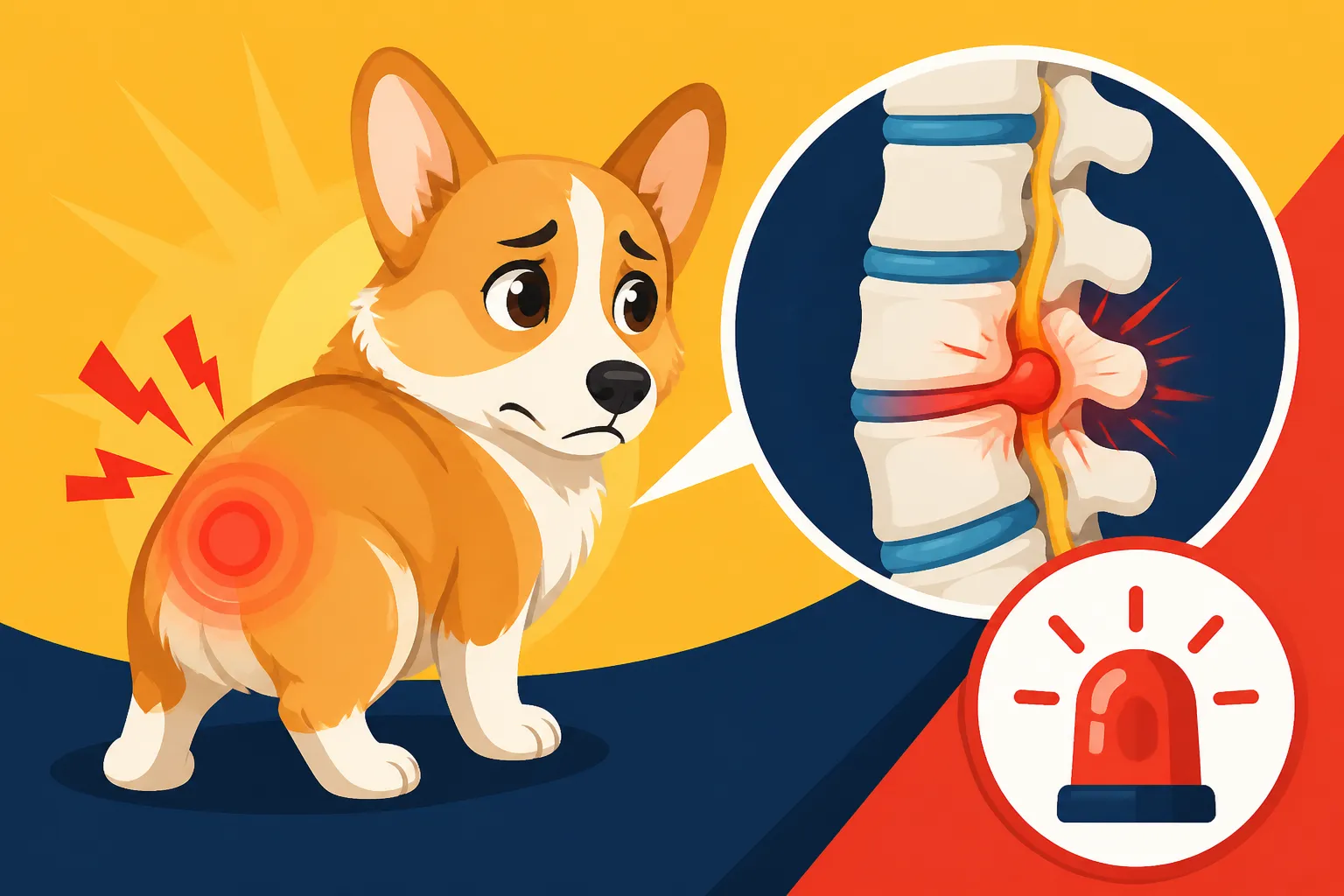
To truly grasp the urgency, it helps to understand why Corgis are so susceptible. Their characteristic body shape is a result of a genetic trait called chondrodystrophy, which affects cartilage development. This trait causes the discs in their spine to prematurely degenerate and harden, making them more prone to rupture or herniation. Instead of acting like resilient shock absorbers, these discs become brittle and can easily bulge or burst, pressing on the spinal cord. This is what we commonly refer to as a "slipped disc."
The spinal cord is a highway for nerve signals between the brain and the rest of the body. When a degenerated disc either bulges (protrusion) or ruptures (extrusion), it puts pressure on this delicate spinal cord, disrupting these signals. Depending on the severity and location of the pressure, this can lead to symptoms ranging from mild pain to complete paralysis. It's a progressive condition that can worsen rapidly, making the time between injury and intervention absolutely critical. If you've ever wondered about Disc Disease in a Long-Backed Corgi, you know this isn't just a casual concern; it's a significant health challenge for our low-riders.
Recognizing the Red Flag Symptoms
The challenge for Corgi owners often lies in recognizing the signs, especially since Corgis are notoriously stoic and excellent at hiding pain. What might seem like a minor limp or stiffness could actually be the early warning of a serious disc injury. Being hyper-vigilant and knowing what to look for can make all the difference. Don't wait for obvious paralysis; subtle changes can be key indicators.
Early signs might include a reluctance to move, an unusual gait, or a change in how they typically carry their tail. They might also show signs of pain, such as yelping when touched or lifted, panting excessively, or trembling. Some Corgis might develop an arched back, hold their head low, or refuse to jump onto furniture they usually access with ease. It's easy to dismiss these as "just getting older" or a minor strain, but for a Corgi, they warrant immediate attention. For a more in-depth look at what to watch for, check out Emergency Signs of a Corgi Disc Injury.
Here's a table summarizing the common symptoms and their potential urgency:
| Symptom Category | Specific Signs | Urgency Level | Action Required |
|---|---|---|---|
| Pain | Crying out when touched, yelping, trembling, panting, reluctance to be handled, hiding | HIGH | Immediate veterinary attention within hours. |
| Mobility Issues | Stiff gait, dragging paws, knuckling over, weakness in hind legs, reluctance to jump/climb stairs, arched back | VERY HIGH | Emergency veterinary visit within 1-2 hours. |
| Coordination | Wobbly walk, drunken gait, crossing hind legs, difficulty balancing | CRITICAL | Immediate emergency vet visit. |
| Paralysis/Paresis | Inability to move one or more limbs, complete collapse of hind end, dragging rear legs | EXTREME EMERGENCY | Seek veterinary care immediately (within minutes if possible). |
| Incontinence | Loss of bladder or bowel control, leaking urine, inability to defecate | EXTREME EMERGENCY | Seek veterinary care immediately (within minutes if possible). |
| Behavioral Changes | Lethargy, loss of appetite, aggression due to pain, unwillingness to play | MODERATE to HIGH | Schedule an urgent vet appointment the same day. |
The Critical Timeline for Veterinary Intervention
When it comes to a Corgi disc injury, time truly is of the essence. The quicker the pressure on the spinal cord is relieved, the better the chances of a full or significant recovery. Vets often talk about a "golden window" for intervention, particularly for surgical options, which can close surprisingly fast.
Immediate First Steps at Home
If you suspect your Corgi has a disc injury, the very first thing you need to do is restrict their movement. This means no running, no jumping, and definitely no stairs. Gently place them in a comfortable, confined space like a crate or a small, secure room. Carrying them safely, supporting their back and hindquarters, is crucial. Avoid letting them twist or strain. Many owners find a sturdy sling helpful for larger Corgis, or simply carrying them like a baby with one hand supporting the chest and the other under the rear. This immediate crate rest is often the initial recommendation from your vet, and understanding Six Weeks of Crate Rest With a Corgi can prepare you for what might be ahead.
Contact your veterinarian or the nearest emergency veterinary clinic immediately. Explain your Corgi's symptoms clearly and the suspected issue. They will advise you on the urgency of getting them in. Even if it's after hours, do not hesitate to call an emergency vet. These situations are precisely what they are there for. Provide details on how you believe the injury occurred, such as The Jump That Ruptures a Corgi Disc or a sudden awkward movement.
The Golden Hour (or Day) for Treatment
For the most severe disc injuries, especially those involving loss of deep pain sensation (meaning they can't feel pinching in their toes), the window for successful surgical intervention can be as short as 12-24 hours from the onset of symptoms. Beyond this, the prognosis for regaining full function significantly decreases. Even for less severe cases where conservative management (rest, medication) is an option, early diagnosis and treatment can prevent the condition from worsening.
Imagine your Corgi suddenly collapses, unable to use their back legs. This is an extreme emergency. Every minute counts because the swelling and inflammation around the spinal cord, caused by the disc material, can compound the damage. Prompt surgical decompression can alleviate this pressure and restore blood flow to the spinal cord. If you have pet insurance, like a policy from Healthy Paws, knowing your coverage for emergency procedures can ease the financial stress during this critical time, allowing you to focus on your Corgi's care without hesitation. Delaying because you're unsure of costs is a risk no Corgi parent should have to take.
The goal is to get your Corgi examined by a vet as quickly as possible. This isn't a situation for a "wait and see" approach over a few days. The progression of IVDD can be rapid and irreversible. Early diagnosis can also differentiate between a disc injury and other conditions like Degenerative Myelopathy. Understanding Telling a Corgi's Slipped Disc From Myelopathy is crucial for effective treatment.
Diagnostic Process and Treatment Options
Once you arrive at the veterinary clinic, the team will spring into action to accurately diagnose the problem and recommend the most appropriate course of treatment. This often involves a thorough neurological exam, which helps pinpoint the affected area of the spine and the severity of the neurological deficits.
Pinpointing the Problem: Diagnostics
While X-rays can show abnormalities in the spine, they often don't provide enough detail to definitively diagnose a disc herniation or determine if surgery is necessary. For a precise diagnosis, advanced imaging is usually required. This includes:
- MRI (Magnetic Resonance Imaging): This is considered the gold standard for diagnosing IVDD. An MRI provides detailed images of soft tissues, allowing the vet to see exactly where the disc material is compressing the spinal cord. It helps determine the severity of the compression and guides surgical planning. Learning What an MRI Shows in a Corgi Back will demystify this process for you.
- CT (Computed Tomography) Scan: A CT scan can also be used and is often quicker than an MRI, providing good bony detail and showing disc material.
- Myelogram: This involves injecting a special dye into the spinal canal and then taking X-rays or a CT scan. The dye highlights the spinal cord, showing areas of compression. However, it's more invasive than an MRI and carries slightly higher risks.
These diagnostic tests are vital for making informed decisions. Without knowing the exact location and severity of the disc injury, treatment can be less effective. The speed at which these diagnostics can be performed often dictates the speed of surgical intervention if needed.
Navigating Emergency Treatment Pathways
Once a diagnosis is made, your vet will discuss treatment options. These generally fall into two categories: conservative management or surgical intervention. The choice depends heavily on the severity of the neurological signs.
- Conservative Management: This is typically recommended for Corgis with mild pain, no neurological deficits, or very minor deficits. It involves strict crate rest (often for 4-6 weeks), pain medication, and anti-inflammatory drugs (steroids or NSAIDs). The goal is to reduce inflammation, allow the disc to stabilize, and prevent further damage. It’s a commitment, and learning about Crate Rest for a Corgi With a Bad Back is essential. During this time, constant monitoring for any worsening symptoms is critical. If your Corgi is covered by pet insurance, such as Healthy Paws, the costs of extended medication and follow-up visits for conservative treatment can be significantly reduced.
- Surgical Intervention: This is the preferred option for Corgis with moderate to severe neurological deficits, especially those with paresis (weakness), paralysis, or loss of deep pain sensation. Surgery aims to remove the disc material that is compressing the spinal cord, relieving the pressure. This is usually performed by a veterinary neurologist or surgeon. The sooner the surgery is performed after onset of severe symptoms, the better the prognosis for recovery. Understanding the specifics of Spinal Surgery on a Corgi can help you prepare for this potential step. The decision on Whether a Corgi Needs Surgery or Rest is one of the most important you'll make with your veterinary team.
It's a terrifying decision to make, especially under pressure. Your vet will guide you through the pros and cons, always keeping your Corgi's best interest at heart. Remember, the faster you get your Corgi evaluated and a plan established, the greater their chance for a positive outcome.
Long-Term Outlook and Prevention
The journey doesn't end after initial treatment. Whether your Corgi undergoes surgery or conservative management, the road to recovery requires dedication, and preventing future incidents is paramount.
Recovery and Rehabilitation
Recovery from a disc injury, particularly after surgery, is a marathon, not a sprint. It often involves weeks of strict confinement followed by a gradual return to activity. This phase might include:
- Physical Therapy/Rehabilitation: Sessions with a certified veterinary rehabilitation therapist can be incredibly beneficial. This might include hydrotherapy (underwater treadmill), therapeutic exercises, massage, and laser therapy to rebuild muscle, improve coordination, and reduce pain. This helps improve Recovery Rates After Corgi Disc Surgery.
- Pain Management: Ongoing pain medication may be necessary to keep your Corgi comfortable during rehabilitation.
- Mobility Aids: For Corgis with persistent weakness, supportive harnesses or even custom wheelchairs can help them regain mobility and improve their quality of life.
It’s an intensive period, and the dedication you put in directly impacts your Corgi's long-term success. It’s important to have realistic expectations, as some Corgis may not fully regain all previous function, especially in severe cases. However, with proper care and rehabilitation, many go on to live happy, active lives. Understanding Whether a Corgi Recovers From a Disc Rupture involves considering all these factors.
Proactive Measures to Protect Your Corgi's Back
The best treatment is prevention. Given their genetic predisposition, Corgi owners must be proactive about protecting their dog's spine.
- Weight Management: Keeping your Corgi at a lean, healthy weight is perhaps the single most important preventative measure. Excess weight puts additional strain on their already vulnerable discs. Talk to your vet about How Much Weight an Overweight Corgi Carries and how to maintain an ideal body condition.
- Discouraging High-Impact Activities: Jumping off furniture, leaping out of cars, or repeatedly going up and down stairs should be strictly limited or eliminated. Invest in ramps or pet stairs for beds, sofas, and vehicles. Training your Corgi to use Ramps and Steps That Save a Corgi's Back can be a game-changer.
- Safe Handling: Always support your Corgi's back when lifting them. Avoid letting them twist or squirm in your arms. Learn the correct way of Picking a Corgi Up Without Hurting It.
- Appropriate Exercise: Regular, moderate exercise is good for muscle tone, which supports the spine. However, avoid sudden, intense bursts of activity or long periods of repetitive jumping. Short, frequent walks on a leash are ideal.
- Regular Veterinary Check-ups: Regular vet visits allow for early detection of any subtle changes in gait or behavior that could indicate spinal issues.
- Harness Use: Opt for a well-fitting harness over a collar to avoid pressure on the neck and spine, especially during walks.
Even after recovery from one incident, there's always a risk of another disc injury, as the underlying disc degeneration often affects multiple discs. Therefore, these preventative measures are a lifelong commitment. While pet insurance companies like Healthy Paws may not cover conditions deemed pre-existing, having a policy in place before any spinal issues arise can be invaluable for covering the high costs associated with diagnostics, emergency surgery, and rehabilitation should an injury occur. Preventing the first incident is key to avoiding future heartache and expense.
Disclaimer
This article is intended for informational purposes only and does not constitute veterinary advice. If you suspect your Corgi has a disc injury or any other medical condition, please consult a qualified veterinarian immediately. Delaying professional veterinary care can lead to serious and irreversible health consequences for your pet.