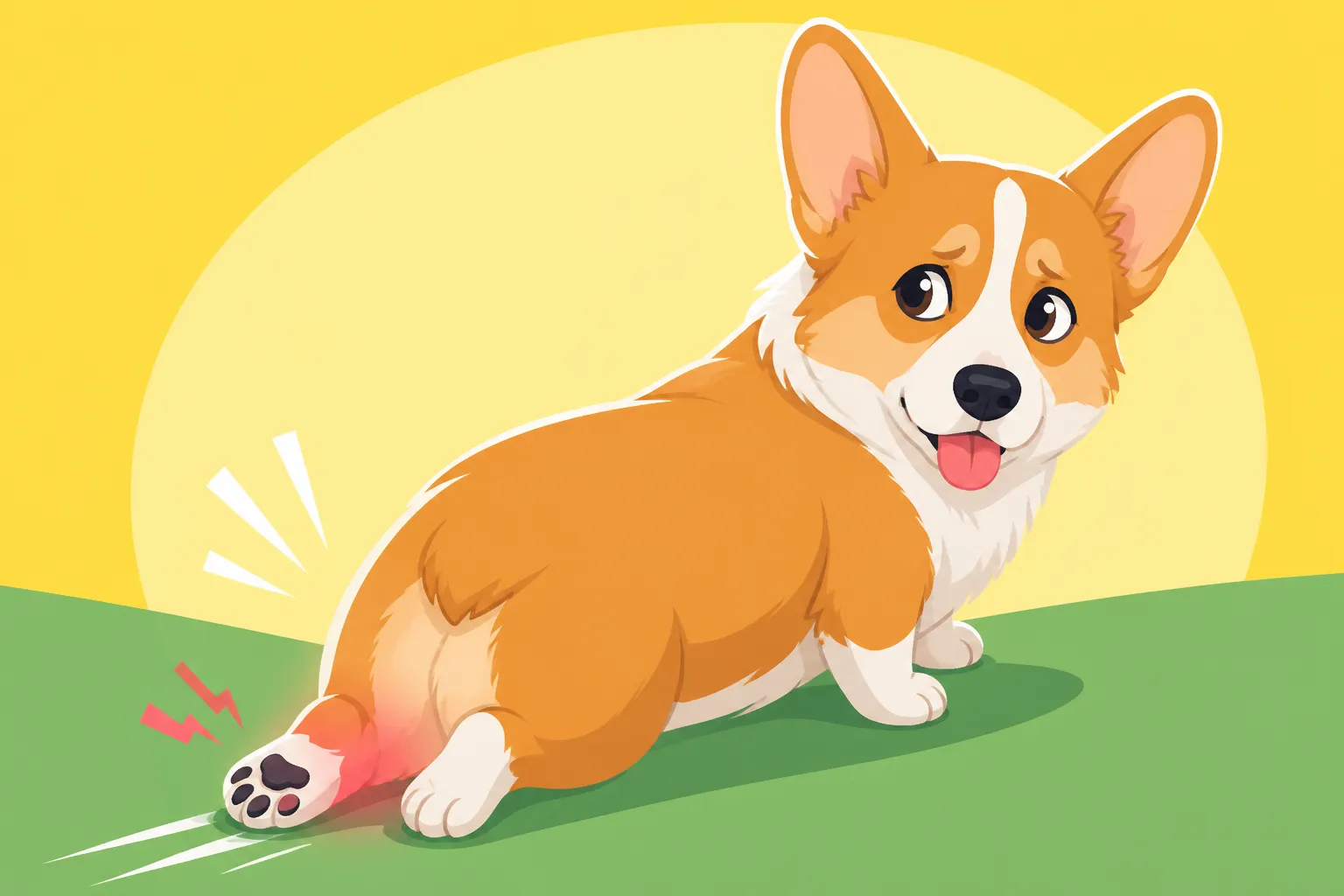
A Corgi Dragging One Back Foot
That heart-stopping moment when you see your beloved Corgi scuff a back paw, or worse, drag a whole foot behind them, can send any Corgi parent into a spiral of worry. It's an alarming symptom that can signal several serious underlying health issues, especially common in our long-backed, low-to-the-ground companions. This comprehensive guide is here to help you understand what might be happening, what steps to take, and how to navigate the road ahead if your Corgi starts dragging a back foot.
Understanding Why Your Corgi Might Drag a Back Foot
Seeing your Corgi suddenly unable to place their foot properly, or dragging it along as they walk, is a profoundly unsettling experience. It's often referred to as "knuckling" or "proprioceptive deficit," meaning they've lost awareness of where their foot is in space. This isn't just a clumsy moment; it's a significant indicator that something is amiss with their neurological or musculoskeletal system. As Corgi parents, we're attuned to their unique gait and spirited movement, so any deviation, especially something as stark as dragging a limb, immediately raises red flags. This symptom should never be dismissed as just a sign of old age or a minor sprain without a professional veterinary assessment.
The Alarming Sight of Knuckling or Dragging
When a Corgi is knuckling, their paw will flip over so they're walking on the top of their toes rather than the pads. If they're dragging, the entire top of their foot might scrape along the ground. You might notice the nails on that paw becoming excessively worn down on the top or even bleeding due to the constant friction. Sometimes, you'll hear the nails scraping as they walk, a sound that quickly becomes etched into your memory. This loss of proprioception, the body's sense of its position and movement, is a classic sign of neurological impairment, particularly affecting the spinal cord or peripheral nerves leading to the limbs. It indicates that the brain isn't receiving accurate information about the limb's position, or it's unable to send the correct signals to control its placement.
The impact isn't just physical; it affects their confidence and mobility. A Corgi who once bounded around might become hesitant, avoid stairs or jumps, and generally seem less enthusiastic about their usual activities. This change in behavior is an important clue that their physical discomfort or neurological deficit is having a real impact on their quality of life. Observing whether the dragging is intermittent or constant, whether it affects one foot or both, and if it's accompanied by any signs of pain can provide crucial information for your vet.
The Underlying Neurological or Orthopedic Causes
For Corgis, with their distinctive long backs and short legs, the most common culprits behind a dragging foot often trace back to issues within the spine or nervous system. These issues can broadly be categorized into two main types: those originating from a problem within the spinal cord itself, like degenerative diseases, or those caused by compression on the spinal cord, such as from a slipped disc. Less commonly, problems with the peripheral nerves (nerves outside the brain and spinal cord) or severe orthopedic issues in the limb itself could be at play.
The Corgi's body structure, while undeniably adorable, unfortunately predisposes them to certain conditions. Their chondrodystrophic (dwarf-like) build means they have abnormally formed cartilage, which can affect their intervertebral discs. This anatomical predisposition means that conditions that might be rare in other breeds are regrettably more common in Corgis, making a dragging foot a symptom that always warrants immediate and serious investigation. Understanding these predispositions is key to being a responsible Corgi owner and recognizing the signs early.
Common Causes Behind a Dragging Corgi Paw
When a Corgi starts dragging a back foot, it's rarely a simple sprain. More often, it's a symptom of a deeper issue, and given their breed characteristics, the top contenders are typically serious spinal conditions. Distinguishing between them can be challenging even for vets without specialized diagnostics, but understanding the possibilities can help you prepare for discussions with your veterinarian.
Degenerative Myelopathy (DM)
One of the most widely recognized and feared conditions among Corgi owners is Degenerative Myelopathy, or DM. This is a progressive neurological disease that affects the spinal cord, particularly in the thoracic (chest) and lumbar (lower back) regions, leading to a loss of coordination and weakness in the hind limbs. What makes DM particularly heartbreaking is that it is typically non-painful in its initial stages, meaning your Corgi isn't yelping or crying out, which can sometimes delay the recognition of how serious the problem truly is.
DM usually manifests with subtle signs, like a slight scuffing of the back paws or a wobbly gait, often starting unilaterally before progressing to affect both hind legs. This means your Corgi might indeed begin by dragging just one back foot, making it one of The First Signs of DM in a Corgi. Over time, as the disease progresses, this weakness and incoordination will worsen, leading to significant mobility challenges. Pembroke Welsh Corgis are highly predisposed due to a specific genetic mutation (SOD1 gene). While a positive genetic test indicates a predisposition, it doesn't guarantee the dog will develop DM, but it certainly puts them at a higher risk. This condition typically appears in middle to older age, often between 8 to 14 years old, which is why owners often observe declining mobility during The Corgi Years When the Back End Gives Out. Early recognition and supportive care, even if not a cure, can help manage the progression and maintain quality of life.
Intervertebral Disc Disease (IVDD)
Intervertebral Disc Disease (IVDD) is another critical concern for Corgis. This condition involves the discs that act as cushions between the vertebrae in the spine. In Corgis, due to their chondrodystrophic nature, these discs can degenerate and calcify prematurely. When a disc ruptures or bulges, it presses on the spinal cord, causing pain, weakness, and potentially paralysis. Unlike DM, IVDD is often acutely painful, although the degree of pain can vary widely.
A disc event can manifest suddenly, with your Corgi yelping in pain, refusing to move, or showing immediate weakness or paralysis in one or both hind legs. A Corgi dragging one back foot could very well be a sign of a partial disc herniation affecting the nerves leading to that limb. The onset is usually much more sudden than DM, making it distinct. For instance, a seemingly normal Corgi might jump off the sofa and suddenly be unable to use a back leg. This acute nature often necessitates immediate veterinary attention due to the severe pain and rapid deterioration. Understanding Disc Disease in a Long-Backed Corgi is crucial for any owner, as is recognizing Emergency Signs of a Corgi Disc Injury which demand swift action. Distinguishing between DM and IVDD can be complex, and often requires a specialist's eye, as explained in Telling a Corgi's Slipped Disc From Myelopathy.
Other Potential Culprits
While DM and IVDD are the most common causes for a Corgi dragging a back foot, it's important not to overlook other possibilities, even if they are less frequent. These can include:
- Traumatic Injury: A severe sprain, fracture, or direct nerve damage from an accident (like being hit by a car, a bad fall, or a fight) could result in acute lameness and dragging.
- Tumors: Growths on the spine or nerves can compress the spinal cord or nerve roots, leading to neurological deficits. These can be insidious in their onset and progressive.
- Fibrocartilaginous Embolism (FCE): Often called a "spinal stroke," an FCE occurs when a small piece of cartilage from a disc blocks a blood vessel in the spinal cord, causing sudden, non-painful (after the initial event) weakness or paralysis. It can sometimes affect just one side.
- Hip Dysplasia or other severe orthopedic issues: While less likely to cause a distinct "dragging" and more likely to cause limping or generalized weakness, severe arthritis or hip dysplasia could, in advanced stages, contribute to a lack of proper limb placement.
- Peripheral Neuropathies: Diseases affecting the nerves outside the spinal cord can also lead to weakness and lack of coordination in the limbs. These are less common but still a possibility.
Because a dragging foot can stem from such a wide range of issues, accurate diagnosis is paramount. Your regular veterinarian will likely start with a thorough physical and neurological exam, and may recommend further diagnostics to pinpoint the exact cause.
The Importance of Prompt Veterinary Evaluation
Seeing your Corgi drag a back foot is a clear signal that it's time to see the vet, and often, it's an emergency. Prompt and accurate diagnosis is critical, not only for pain management but also for determining the best course of action to preserve your Corgi's quality of life and potentially prevent further neurological damage. Delaying a veterinary visit can have serious, irreversible consequences, especially with conditions like IVDD where spinal cord compression needs immediate relief.
What to Expect at the Vet
When you bring your Corgi in for a dragging foot, your veterinarian will conduct a comprehensive physical and neurological examination. This isn't just a quick look-over; it's a systematic assessment to pinpoint where the problem might originate. Expect them to check your Corgi's reflexes, observe their gait, and perform proprioceptive tests, which often involve flipping their paw over to see if they correct it. This "knuckling test" is a key indicator of neurological function, as highlighted in What a Neurologist Checks in a Corgi. They'll assess pain responses, muscle tone, and coordination.
Depending on their initial findings, your vet will likely recommend diagnostic imaging. Standard X-rays can show bone abnormalities, fractures, or calcified discs, but they aren't very effective for visualizing soft tissue like the spinal cord or fresh disc herniations. For definitive diagnosis of spinal cord compression (like with IVDD) or to rule out other causes, advanced imaging like Magnetic Resonance Imaging (MRI) or Computed Tomography (CT) scans are often necessary. These provide detailed images of the spinal cord, discs, and surrounding structures. If DM is suspected, a genetic test for the SOD1 mutation can be performed, though it only indicates a genetic predisposition and not a definitive diagnosis of the disease itself, which often involves ruling out all other possibilities.
Navigating Treatment Options
Once a diagnosis is made, your vet will discuss tailored treatment options. For IVDD, treatment can range from conservative management to surgical intervention. Conservative management typically involves strict Crate Rest for a Corgi With a Bad Back (often for 4-6 weeks), combined with anti-inflammatory medications and pain relief. The goal is to reduce inflammation and allow the disc to heal, hopefully taking pressure off the spinal cord. In severe cases, or if conservative treatment fails, surgery to decompress the spinal cord might be recommended. This is a significant procedure, often performed by a veterinary neurologist or orthopedic surgeon, with its own set of risks and recovery challenges.
For Degenerative Myelopathy, there is currently no cure. Treatment focuses on supportive care to maintain mobility and quality of life for as long as possible. This often includes regular Physiotherapy for a Corgi Losing Its Legs to strengthen muscles and maintain flexibility, along with controlled exercise and potential nutritional supplements. The aim is to slow the progression of muscle atrophy and keep your Corgi active within their capabilities.
Navigating the costs of MRI scans, specialist consultations, and ongoing physiotherapy can be daunting. Many Corgi owners find pet insurance, like a plan from Healthy Paws, invaluable when these unexpected health issues arise. It can help alleviate the financial stress, allowing you to prioritize the best care for your furry family member without agonizing over every bill.
Proactive Steps for Corgi Owners
While we can't prevent all health issues, Corgi owners can take proactive steps to minimize risks and support spinal health. One of the most critical is weight management. What Extra Weight Does to a Corgi Spine cannot be overstated; even a few extra pounds put immense strain on their long backs and delicate discs. Keeping your Corgi at a lean, healthy weight is one of the best preventative measures you can take against IVDD.
Environmental modifications are also key. Corgis should be discouraged from jumping on and off furniture or tackling stairs repeatedly, as these motions can exacerbate spinal issues. Providing Ramps and Steps That Save a Corgi's Back can make a huge difference in their daily lives, allowing them to access favorite spots safely. Ensuring non-slip surfaces throughout your home, especially on hard floors, can prevent slips and falls that could lead to injury.
Regular veterinary check-ups are also crucial for early detection of any subtle changes in gait or behavior. Your vet can often spot minor issues before they become major problems. Establishing a routine of preventative care and considering comprehensive pet insurance like Healthy Paws before any symptoms appear can offer immense peace of mind. Knowing you have that safety net can make a world of difference when faced with expensive diagnostic tests or long-term treatment plans.
Living with a Corgi Who Drags a Foot: Management and Support
Receiving a diagnosis for a condition that causes your Corgi to drag a foot, whether it's progressive like DM or a chronic issue from IVDD, can be overwhelming. However, with dedication and the right support, many Corgis can continue to lead happy, fulfilling lives. The key is adapting their environment and daily routines to accommodate their changing mobility, ensuring their comfort, and maintaining their mental well-being.
Daily Care and Environmental Adjustments
Adapting your home becomes paramount when your Corgi is struggling with mobility. Non-slip mats and runners on hard floors are essential to provide traction and prevent slips, which can worsen existing conditions or lead to new injuries. Consider elevated food and water bowls to make mealtime more comfortable, preventing them from having to bend down too far.
For Corgis with significant hind-end weakness, assisted mobility aids can be a godsend. Slings and supportive harnesses are invaluable for helping them up stairs, in and out of the car, or just for short walks if they need a little extra stability. Products like the Help 'Em Up Harness are often recommended by veterinarians and physical therapists because they support both the front and back ends without putting undue pressure on sensitive spinal areas.
In some cases, especially with DM, your Corgi might develop incontinence. This is a common and frustrating aspect of the disease, often linked to Incontinence in a Corgi With DM. Managing this means frequent potty breaks, using doggy diapers, and maintaining excellent hygiene to prevent skin infections. Regular cleaning and ensuring their bedding is always dry and comfortable will be vital for their health and dignity.
Maintaining Quality of Life
While physical limitations may increase, your Corgi's need for mental stimulation and companionship remains strong. Adapt enrichment activities to suit their mobility. Scent games, puzzle toys, and gentle training sessions can keep their minds engaged without putting strain on their body. Short, controlled walks (with assistance if needed) are still important for muscle maintenance and mental well-being.
As the condition progresses, a dog wheelchair or cart can offer incredible freedom and allow your Corgi to remain active and enjoy walks. Companies like Eddie's Wheels and Walkin' Pets specialize in custom-fit carts that can dramatically improve a Corgi's quality of life. Exploring Carts and Wheels for a Corgi With DM can open up a world of possibilities for renewed mobility and joy. Finding the right cart that fits their specific needs will allow them to run, play, and explore, albeit with a little extra help.
Even with the best care, the long-term management of conditions like DM or chronic IVDD can incur significant expenses for specialized equipment, medications, and regular therapy. Having a robust insurance plan, such as one from Healthy Paws, can lighten that financial burden, allowing you to focus on your Corgi's comfort and happiness rather than stress over costs. When facing the realities of these conditions, pet parents often look for ways to ensure their Corgi receives the best possible care without added financial stress. This is where a trusted partner like Healthy Paws can truly make a difference, providing support for eligible veterinary costs.
Recognizing When It's Time for Difficult Decisions
This is perhaps the hardest part of caring for a Corgi with a progressive or severe mobility issue. While we want to provide the best for our pets, there comes a point where their quality of life must be carefully assessed. Your veterinarian will be an invaluable resource in these discussions. They can help you objectively evaluate your Corgi's pain levels, ability to perform basic bodily functions, appetite, and engagement with life.
There's no single right answer, and it's a deeply personal decision. Key questions to consider are: Is your Corgi still enjoying their favorite activities? Are they pain-free and comfortable? Are there more bad days than good? It's about ensuring your Corgi is not suffering unnecessarily. Learning Whether a Corgi With DM Is Suffering can help guide these compassionate discussions. While heartbreaking, making the difficult decision to say goodbye is often the final act of love and kindness we can offer to ensure they leave us with dignity and peace.
Disclaimer
The information provided in this article is for general informational purposes only and is not intended as a substitute for professional veterinary advice, diagnosis, or treatment. Always seek the advice of your veterinarian or other qualified health provider with any questions you may have regarding a medical condition. Never disregard professional veterinary advice or delay in seeking it because of something you have read in this article.