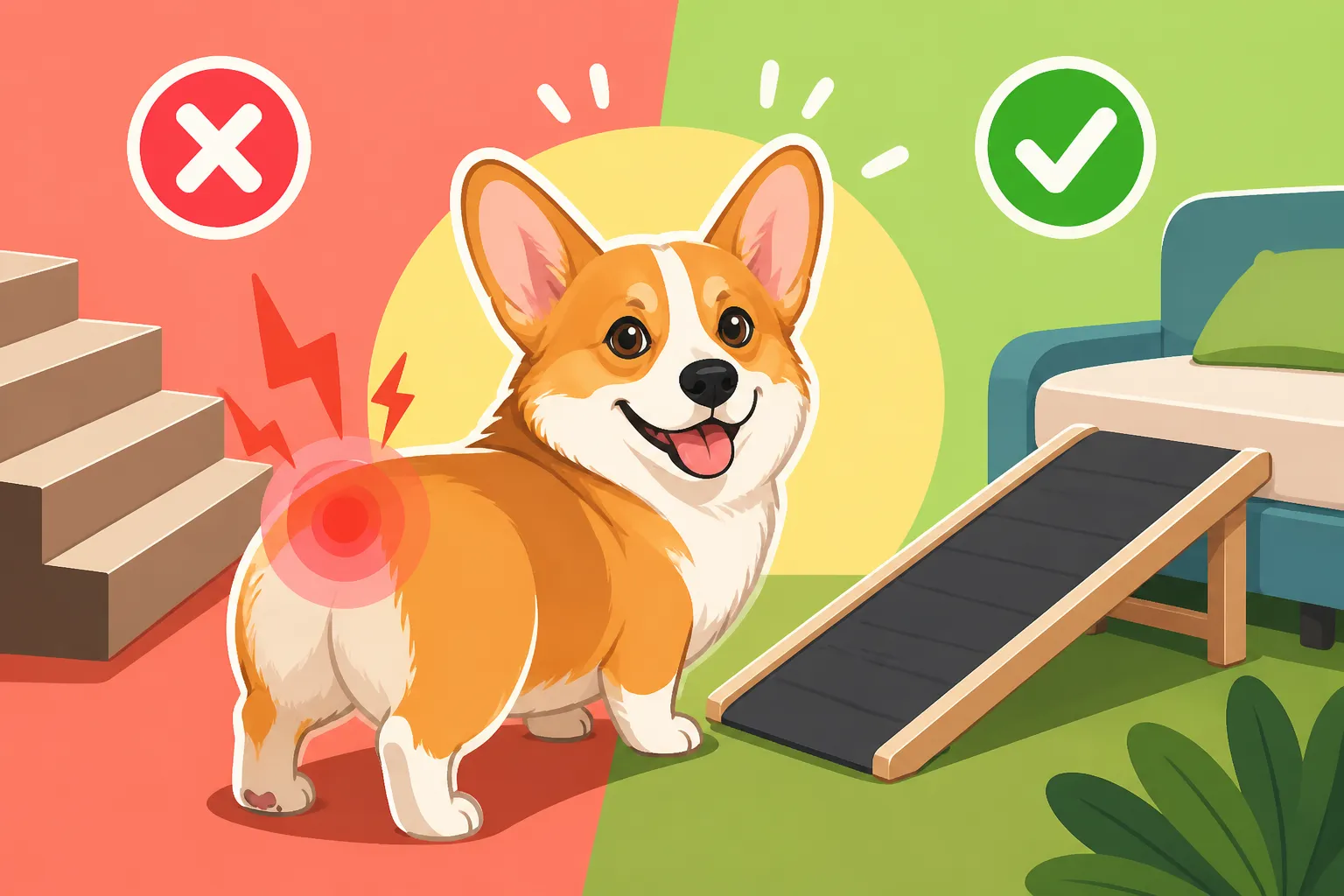
Ramps and Steps That Save a Corgi’s Back
One of the most heart-wrenching moments for any Corgi owner is witnessing their beloved companion suffer a back injury, often caused by a seemingly innocent jump from the sofa or bed. These low-slung, long-bodied dogs are uniquely prone to spinal issues, and a single misstep can lead to excruciating pain and costly veterinary emergencies. This guide will walk you through why protecting your Corgi's back from everyday impacts is so crucial and how strategic use of ramps and steps can be a game-changer for their long-term health and mobility.
The Inherent Vulnerability of a Corgi's Spine
It’s no secret that Corgis are adorable, but their unique physique, while charming, comes with a significant predisposition to spinal problems. Understanding why their back is so vulnerable is the first step in truly protecting them.
Why Their Long Bodies Pose a Risk
Corgis, both Pembrokes and Cardigans, are what we call "chondrodystrophic" breeds. This fancy term simply means they have disproportionately short legs and long bodies, a trait selectively bred into them. While it made them excellent cattle drovers, nipping at the heels of livestock without getting kicked, it also means their spines are under constant, unique stress. Imagine a bridge that's much longer than its support pillars – that's somewhat how a Corgi's spine functions.
This elongated back structure means the intervertebral discs – the jelly-filled cushions between each vertebra that act as shock absorbers – are especially prone to degeneration and herniation. Unlike other breeds where disc issues might only arise from severe trauma, Corgis can suffer a disc rupture from everyday movements that other dogs shrug off, like a sudden leap or an awkward landing. This is often referred to as Disc Disease in a Long-Backed Corgi, a condition that can manifest at any age but becomes more prevalent as they mature. The integrity of these discs is paramount, and any activity that puts undue strain on them is a risk factor.
The Impact of Jumping on Discs
When a Corgi jumps up or down from furniture, out of a car, or even over a small obstacle, their spine experiences a sudden compression and torque. Think about the physics: a short-legged dog has to generate a lot more power to get airborne, and the impact of landing is concentrated directly on those vulnerable spinal discs. Over time, or sometimes in a single traumatic event, this repetitive stress can cause a disc to bulge, protrude, or even rupture entirely.
A ruptured disc, also known as Intervertebral Disc Disease (IVDD), is incredibly painful and can lead to a range of debilitating symptoms, from mild back pain and reluctance to move, to complete paralysis of the hind legs. If your Corgi loves to launch themselves off the sofa, you're looking at a significant risk for The Jump That Ruptures a Corgi Disc. It’s not just the big jumps either; even smaller, frequent jumps can contribute to the gradual wear and tear that ultimately leads to a crisis. This cumulative stress is often unseen until it's too late, and the signs can come on suddenly, leaving owners scrambling to understand what happened.
Compounding Factors: Weight and Age
While jumping is a primary culprit, other factors exacerbate a Corgi's spinal vulnerability. Excess weight is a massive one. Every extra pound a Corgi carries puts additional strain on their already delicate spine and joints. An overweight Corgi's discs work harder to support their body, making them even more susceptible to injury. It’s vital to monitor Why Corgi Weight Is a Spinal Problem and ensure your Corgi maintains a healthy The Body Condition Score a Corgi Should Hold.
As Corgis age, their discs naturally lose some of their elasticity and hydration, making them stiffer and more brittle. This means an older Corgi is at an even higher risk for disc issues. What might have been a minor strain in their youth could become a severe injury in their senior years. This age-related degeneration, combined with years of jumping and landing, creates a perfect storm for spinal health crises. Preventative measures, like using ramps and steps, become non-negotiable as they enter their middle and senior years.
Selecting the Right Ramps and Steps for Your Corgi
Once you understand the 'why,' the next step is implementing the 'how.' Choosing the right ramps and steps isn't just about picking something pretty; it's about finding functional, safe, and durable solutions that your Corgi will actually use.
Understanding Different Types and Materials
Ramps and steps come in a surprising variety, each with its own benefits and drawbacks. Your choice will depend on where you need them and how your Corgi responds.
- Freestanding Ramps: These are typically portable and can be used for cars, outdoor stairs, or even moved around the house. Look for models with a gentle incline, a non-slip surface, and sturdy construction. Aluminum ramps are often lightweight and durable for outdoor use, while wooden ones can blend better with home décor. Brands like Pet Gear and Solvit offer excellent portable car ramps that fold up for easy storage. The surface is key – carpeted or gritty surfaces provide much-needed traction for little Corgi paws.
- Furniture Ramps: Designed specifically for beds, sofas, and chairs, these are often more aesthetically pleasing. They tend to be lower in height and have a gentler slope than car ramps. Some are made of wood to match furniture, while others are covered in soft carpet. The most crucial feature is stability; a wobbly ramp will deter your Corgi and could even be dangerous.
- Pet Steps: For furniture that isn't excessively high, pet steps can be a great alternative. They take up less floor space than ramps but require a bit more coordination from your Corgi. Look for wide, deep steps with a low rise and a non-slip surface. The ideal rise for a Corgi is generally no more than 6-8 inches per step. They should also be stable and not tip when your Corgi uses them.
- Material Considerations:
- Wood: Often sturdy and can be stained to match home decor, but can be heavy. Ensure the walking surface is carpeted or has rubber strips for grip.
- Plastic: Lightweight and portable, often more affordable. Check for durability and stability, as some can feel flimsy. Again, a textured surface is crucial.
- Carpeted: Provides excellent traction and is softer on paws. Ensure the carpeting is securely attached and durable enough to withstand daily use.
- Foam: Usually found in pet steps, these are lightweight and soft, but ensure they are dense and firm enough to support your Corgi's weight without compressing too much.
When considering options, think about the highest point your Corgi needs to access regularly. A bed, for instance, might need a longer ramp with a gentler incline than a sofa.
Essential Features for Corgi Safety
Beyond the basic type and material, several features are paramount for ensuring a ramp or steps are truly safe and effective for your Corgi.
- Non-Slip Surface: This is non-negotiable. Corgis, with their short legs and often enthusiastic nature, need excellent traction. Look for carpeted surfaces, rubberized treads, or textured plastic. A smooth, slick surface is an accident waiting to happen.
- Gentle Incline (for ramps): The steeper the incline, the harder it is for your Corgi to use, and the more strain it puts on their back. Aim for a ramp that's long enough to provide a gradual slope. For every foot of height you need to reach, ideally, you want about 4-5 feet of ramp length. So, for a 2-foot high bed, a 8-10 foot ramp would be ideal.
- Stability: The ramp or steps must be rock-solid. Any wobble or movement can scare your Corgi, making them reluctant to use it. Look for wide bases, non-slip feet, and robust construction. Many ramps come with rubberized feet to prevent sliding on hard floors.
- Weight Capacity: Always check the manufacturer's weight limit to ensure it can safely support your Corgi, especially if you have a larger Cardigan or a Pembroke that tends towards the higher end of the breed standard weight.
- Edge Rails/Side Barriers: While not always present on pet steps, ramps benefit greatly from raised side rails. These act as a visual guide and a physical barrier, preventing your Corgi from accidentally stepping or falling off the side, especially when they're still getting used to it.
Here’s a quick overview of ramp and step characteristics:
| Feature | Ramps (Ideal for Corgis) | Steps (Ideal for Corgis) |
|---|---|---|
| Incline/Rise | Gentle slope, longer length for less strain | Low rise (max 6-8 inches), wide and deep steps |
| Surface | Non-slip, carpeted or textured rubber | Non-slip, carpeted or textured rubber |
| Stability | Very stable, wide base, non-slip feet | Solid, firm construction, won't tip or compress |
| Space Required | More floor space due to length | Less floor space |
| Portability | Often foldable/collapsible for car/travel | Less often portable for travel, usually for home use |
| Best For | Beds, higher sofas, cars, dogs with existing mobility issues | Lower sofas, chairs, younger dogs, less severe mobility concerns |
Where to Place Ramps and Steps in Your Home
Think about all the places your Corgi currently jumps. These are your target zones. Common areas include:
- Sofas and Chairs: Place a ramp or steps directly in front of their favorite lounging spots.
- Beds: A ramp for the bed is critical, especially if your Corgi sleeps with you. A sudden jump down in the middle of the night could be disastrous.
- Vehicles: A portable car ramp is indispensable for safe entry and exit, preventing both jumping out and being lifted in (which can also strain a back if done incorrectly).
- Outdoor Stairs: If you have a deck or a few steps leading into your yard, a sturdy outdoor ramp can save their back from repeated impact.
- Stairs Inside the Home: While some Corgis can navigate stairs, repeated climbing and descending can be taxing on their spine. Consider baby gates to limit access to stairs or install a short, wide ramp for a set of a few steps. You might also want to look into Whether Stairs Are Safe for a Corgi for a deeper dive.
Remember, the goal is to eliminate all opportunities for jumping, making safe access the only option. This might mean having multiple ramps or sets of steps throughout your home.
Training Your Corgi to Embrace Ramps and Steps
Getting your Corgi to use a new ramp or set of steps can be an exercise in patience. Corgis are intelligent but can also be notoriously stubborn. Positive reinforcement is key here.
The Art of Positive Reinforcement
Just like Teaching a Corgi to Use a Ramp, consistency and positive reinforcement are your best friends. Never force your Corgi onto the ramp or steps, as this can create a negative association and make them even more resistant.
- Introduce it Slowly: Place the ramp or steps in a low-stress area first, not immediately in front of the sofa. Let your Corgi sniff it and explore it on their own terms. Praise and reward them for any curiosity.
- Lure with Treats: Use high-value treats (like small pieces of cooked chicken, cheese, or their favorite commercial training treats) to lure them onto and over the ramp/steps. Place treats directly on the ramp, starting with just one step or a small section of the incline.
- Short, Frequent Sessions: Keep training sessions brief – 5 to 10 minutes at a time – and end on a positive note. Multiple short sessions throughout the day are more effective than one long, frustrating one.
- Practice Up and Down: It's often easier for dogs to go up a ramp than down. Ensure you practice both directions. Stand at the bottom of the ramp and lure them down, praising them generously.
- Be Patient: Some Corgis will take to it immediately; others may need weeks. Don't get discouraged. Celebrate small successes and maintain a calm, encouraging demeanor. If you find yourself frustrated, take a break.
- Make it the Only Option: Once your Corgi understands the concept, start making the ramp or steps the only way to access their favorite spots. Block off other routes to the sofa or bed.
Remember, every Corgi is an individual. What works for one might not work for another. The key is to be consistent, patient, and make the experience as positive as possible.
Overcoming Corgi Stubbornness
Corgis are known for their strong will, and sometimes that extends to new objects in their environment. If your Corgi is giving you the side-eye and refusing to use their new ramp, don't despair.
- The "Fear" Factor: Sometimes, it's not stubbornness but fear. The ramp might feel wobbly, the surface might be unfamiliar, or the incline might seem daunting. Double-check the stability and surface of your ramp. You can also try covering the ramp with a familiar blanket or towel that smells like them to make it more inviting.
- High-Value Rewards: Is your Corgi turning up their nose at their usual kibble? Up the ante! Find the treat that makes their eyes light up and use only that for ramp training. This could be anything from freeze-dried liver to a tiny dollop of peanut butter on a spoon.
- Lead by Example (Carefully): While you can't walk on a pet ramp, you can demonstrate confidence. Walk next to the ramp, place your hand on it, and show them it's safe. If you have another dog who is already comfortable with ramps, have them demonstrate.
- Trial and Error with Location: Maybe the ramp is in a high-traffic area, or it feels too exposed. Try moving it to a quieter spot for initial training, then gradually moving it closer to its intended location.
- Consult a Professional: If you're truly struggling, a professional dog trainer specializing in positive reinforcement can offer tailored advice and help you troubleshoot. They can assess your Corgi's body language and offer specific strategies.
It’s an investment of time, but successfully training your Corgi to use ramps and steps will protect their precious back and prevent countless worries down the line.
Long-Term Back Protection and Home Adjustments
Protecting your Corgi’s back is an ongoing commitment, not a one-time fix. It involves creating a safe environment and understanding how to manage their daily life to minimize strain.
Creating a Corgi-Safe Home Environment
Beyond ramps and steps, there are other adjustments you can make to safeguard your Corgi's spine.
- Non-Slip Flooring: Hardwood, tile, and laminate floors can be slippery hazards for Corgis. Their short legs and long bodies mean they can easily splay out or slip, leading to painful strains or even disc injuries. Consider runners, area rugs, or anti-slip mats in high-traffic areas where your Corgi walks. This gives them better traction and confidence.
- Appropriate Beds: Invest in an orthopedic bed that provides firm, even support for their long spine. A bed that sags or is too soft won't offer the necessary spinal alignment. Look for options with memory foam or dense, supportive cushioning.
- Lifting Techniques: If you ever need to lift your Corgi, do it correctly. Support their chest and hindquarters simultaneously, keeping their back straight and level. Avoid picking them up by only supporting their front or back end, as this can twist their spine. This is especially important for preventing injuries when getting them in and out of the car if a ramp isn't feasible for every situation. You might find more specific guidance on Picking a Corgi Up Without Hurting It.
- Containment: During times of recovery from an injury, or for a particularly rambunctious Corgi, using baby gates to block off stairs or restrict access to certain rooms can be beneficial.
These small changes collectively create a home environment where your Corgi can move freely and safely without risking their fragile spine.
The Cost of Ignoring Spinal Health
It's easy to think "my Corgi won't get hurt," but the statistics for long-backed breeds like Corgis speak for themselves. The reality is that spinal injuries can be incredibly expensive and emotionally taxing.
- Veterinary Bills: A disc rupture often requires immediate veterinary attention. This can range from weeks of strict Crate Rest for a Corgi With a Bad Back and medication to emergency Spinal Surgery on a Corgi. Diagnostic imaging like X-rays and MRI scans can be thousands of dollars, and surgery can easily run into the tens of thousands, depending on the severity and location of the injury. Even conservative management with medication, laser therapy, and rehabilitation can add up quickly. It's truly eye-opening to consider What a Corgi Spinal MRI Costs compared to the upfront investment in preventative measures.
- Long-Term Care: Even after initial treatment, many Corgis with spinal issues require ongoing physical therapy, pain management, and significant lifestyle adjustments. Some may even need mobility aids like Carts and Wheels for a Corgi With DM if the damage is severe.
- Emotional Toll: Watching your beloved Corgi in pain or struggle with mobility is incredibly distressing for any owner. The stress of managing their care, the financial burden, and the worry about their quality of life can be overwhelming.
This is where having pet insurance can be a literal lifesaesaver. Companies like Healthy Paws offer comprehensive plans that can cover a significant portion of unexpected veterinary costs, including those associated with spinal injuries and their treatments. While preventative measures are always the best approach, knowing you have a safety net like Healthy Paws in place can provide immense peace of mind should the worst happen. It allows you to make decisions based on what's best for your Corgi's health, rather than solely on your bank account. Proactive steps with ramps and good care, coupled with a solid insurance plan from a provider like Healthy Paws, represent a complete strategy for protecting your Corgi.
Encouraging a Lifetime of Safe Movement
Making ramps and steps a part of your Corgi's life from a young age can instill good habits and significantly reduce their risk of injury. Start them early, even as puppies, so they learn that these aids are normal and safe ways to navigate their world. Continue to monitor their activity levels, ensuring they get appropriate exercise without excessive jumping or rough play that could jar their spine.
By being proactive, providing the right tools, and making thoughtful adjustments to your home, you're not just buying a piece of equipment; you're investing in your Corgi's comfort, longevity, and overall quality of life. You're giving them the best chance at a happy, healthy life free from the pain of spinal injuries.
Disclaimer
The information provided in this article is for general informational purposes only and is not a substitute for professional veterinary advice. Always consult with a qualified veterinarian for any health concerns or before making any decisions about your Corgi's care.