The Body Condition Score a Corgi Should Hold
It’s a tale as old as time for Corgi owners: you look at your adorable, low-riding companion, and wonder if that round little barrel of a body is healthy, or if those love handles are a sign of trouble. Their unique shape and incredibly dense double coat can make it incredibly difficult to tell what’s fluff and what’s actual extra padding, leaving many of us scratching our heads about our Corgi's true physical condition. This guide is all about demystifying the Body Condition Score (BCS) for Corgis, helping you accurately assess your furry friend's physique and keep them at their optimal, healthy weight.
Understanding the Body Condition Score System for Corgis
When it comes to our beloved Corgis, that number on the scale can be incredibly misleading. Their sturdy, low-slung build and deep chests mean that two Corgis who weigh the exact same might actually be in vastly different physical conditions. This is where the Body Condition Score (BCS) system steps in, offering a much more nuanced and accurate way to evaluate your Corgi’s health. It’s less about a specific weight in pounds and more about what you can see and feel, giving you a real understanding of their body fat and muscle mass.
Why Traditional Weight Scales Aren't Enough for Corgis
Imagine you have two Corgis, both weighing in at a respectable 28 pounds. One might be a lean, muscular working dog, while the other could be a more sedentary, slightly overweight pet whose weight is mostly excess fat. If you only looked at the number on the scale, you’d assume they were both perfectly fine, but in reality, only one might be in ideal condition. Corgis, being chondrodystrophic breeds – meaning they have that characteristic dwarfism affecting their cartilage and bone growth – have a different body composition than many other dogs. Their short legs and long backs necessitate a very specific, strong, and lean build to support their spine and joints properly.
A Corgi's weight can fluctuate based on muscle mass, bone density, and even hydration, none of which directly tell you about their fat reserves. Moreover, their thick, luscious double coat acts like a wonderful furry illusion, easily hiding pounds of extra weight underneath. You might think your Corgi is just "fluffy," when in fact, they’re carrying a significant amount of unhealthy fat that's putting strain on their crucial structures. This is why relying solely on a number on the bathroom scale can give us a false sense of security and potentially allow unhealthy weight gain to go unnoticed for too long, setting the stage for problems down the road.
The 5-Point vs. 9-Point BCS Scale
When you talk to your vet about your Corgi's body condition, you might hear them refer to either a 5-point or a 9-point scale. Both systems aim to categorize a dog's body fat based on visual and tactile cues, but they offer slightly different levels of detail.
The 5-point BCS scale is often used for quick assessments and is a bit easier for owners to grasp initially. On this scale, a score of 1 indicates a severely underweight dog, 3 is ideal, and 5 is severely obese. It provides broader categories, making it clear if a dog is clearly underweight, ideal, or overweight.
The 9-point BCS scale is more detailed and is widely preferred by veterinarians for its precision. Here, 1 is emaciated, 4-5 is ideal, and 9 is morbidly obese. This scale allows for finer distinctions in body fat, which can be particularly helpful when monitoring a dog’s weight management progress or identifying subtle shifts. For instance, a Corgi might be a 6/9, meaning slightly overweight, but not yet a 7/9, which would be significantly overweight. While it might seem like more numbers to remember, the 9-point scale truly helps pinpoint exactly where your Corgi stands on the spectrum and allows for more nuanced discussions with your vet about specific goals. Your vet will often convert their findings from one scale to the other, but understanding that a 5 out of 9 is generally the sweet spot for a Corgi is a good place to start.
How to Assess Your Corgi's Body Condition Score
Assessing your Corgi's Body Condition Score isn't just about looking at them; it's a hands-on experience that helps you feel past that glorious, fluffy coat to what's truly underneath. This tactile examination is crucial for Corgis, whose dense fur can easily obscure their true shape. It's a quick, simple process you can do at home regularly, helping you stay attuned to any changes in their physique before they become major issues.
Feeling for Ribs, Spine, and Hip Bones
This is perhaps the most important part of assessing a Corgi's BCS. You need to get your hands on your dog and really feel their structure.
Start with their ribs. Gently run your hands along your Corgi's sides, just behind their front legs. You should be able to feel their ribs quite easily, much like feeling the knuckles on the back of your hand when you make a fist. You shouldn't see them prominently, but you should be able to discern each individual rib without having to press hard. If you have to dig your fingers in to feel them, your Corgi is likely carrying too much fat. Conversely, if the ribs are extremely prominent and easy to see and feel with no fat cover, they might be underweight.
Next, move to their spine. Run your hand down the length of your Corgi's back. You should be able to feel the tops of the vertebrae, much like feeling the bumps of your knuckles when your hand is flat. They shouldn’t stick out sharply, nor should they be completely covered by a thick layer of fat. If you can't feel the individual bumps of the spine, or if it feels like a smooth, well-padded ridge, it's a sign of excess weight.
Finally, check the hip bones. These are located on either side of the base of their tail. In an ideal Corgi, you should be able to feel the points of the hip bones with just light pressure. They shouldn't be sharp or protruding drastically, but they shouldn't be completely buried under fat either. If you can't easily locate them, your Corgi is likely overweight. The ability to feel these bony prominences without seeing them is key to a good body condition score.
Observing the Waistline and Abdominal Tuck
While feeling is primary for Corgis, visual cues still play a role, especially from certain angles.
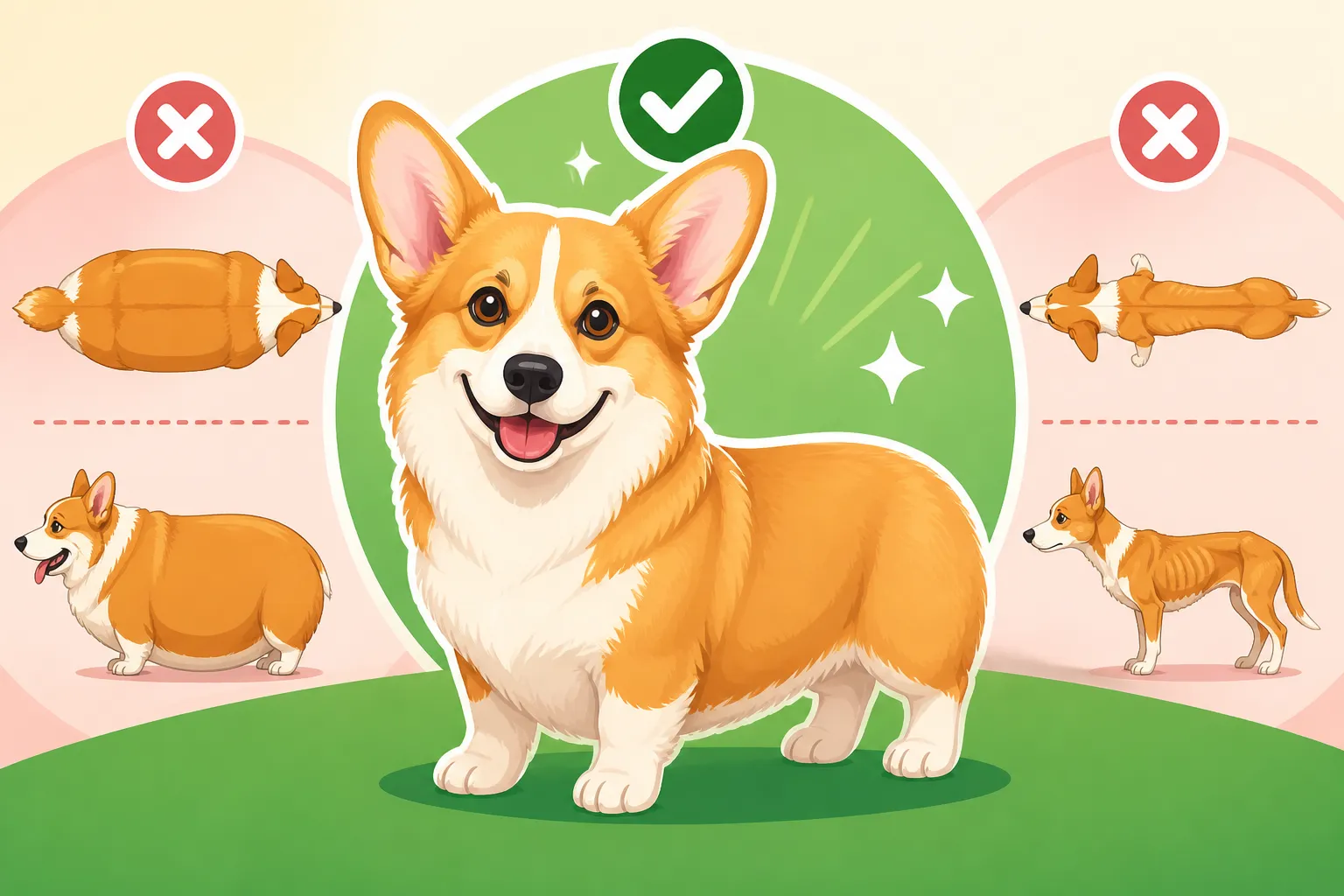
The Waistline: Look at your Corgi from directly above. In an ideal body condition, you should observe a slight indentation or "waist" behind their rib cage, where their abdomen narrows before flaring out again at their hips. For Corgis, this can be tricky because of their deep chests and long bodies, but that subtle narrowing should still be there. If your Corgi looks like a perfectly straight rectangle, or worse, if their sides bulge out, they are carrying too much weight. This "straight barrel" look is a common indicator of an overweight Corgi, and it’s something many owners miss due to their low stature and long bodies.
The Abdominal Tuck: Now, look at your Corgi from the side. An ideal Corgi should have an "abdominal tuck" – meaning their belly should tuck up slightly from their chest to their hind legs, rather than hanging low or being parallel to the ground. This tuck indicates good muscle tone and appropriate fat levels. If their belly hangs down, or if there's no visible tuck at all, appearing straight from chest to tail, your Corgi is likely overweight. It's important to remember that a little bit of a pendulous belly can develop with age, but a significant lack of tuck usually signals excess fat.
The Role of the Corgi's Double Coat in Assessment
Ah, the glorious Corgi coat! It's one of their most endearing features, but it's also a master of disguise when it comes to body condition. Their thick, plush double coat—a dense undercoat for insulation and a coarser outer coat for protection—can make even a significantly overweight Corgi appear merely "fluffy."
This is precisely why the tactile assessment (feeling for ribs, spine, and hip bones) is so critical. You cannot simply look at your Corgi and accurately judge their weight. You must run your hands over their body, pressing gently through the fur to feel their underlying structure. What looks like a sleek, well-proportioned dog from a distance might, upon closer inspection, reveal rolls of fat and ribs that are impossible to feel.
Regular grooming helps, as a well-maintained coat is less prone to matting and can allow for easier assessment. However, even with the best grooming, the visual aspect will always be a challenge. Embrace the hands-on approach. Make it a part of your regular petting routine. A quick run of the hands over their ribs, spine, and hips takes only seconds and gives you invaluable information about their health. This consistent, tactile check is the only reliable way to cut through the fluff and truly understand if your Corgi is holding the ideal body condition. Remember, even with the densest coats, you should still be able to feel those key bony landmarks with light pressure. This is particularly important for Spotting Weight Gain Hidden Under a Corgi Coat.
What an Ideal Body Condition Score Looks Like for a Corgi
Achieving and maintaining an ideal Body Condition Score (BCS) is not just about aesthetics for your Corgi; it's a cornerstone of their long-term health and well-being. Given their unique physical structure, a Corgi at their prime body condition is better equipped to handle the rigors of daily life, ward off disease, and enjoy a vibrant lifespan. It’s truly a testament to responsible pet ownership when you see a Corgi in their optimal shape, moving with agility and zest.
The "Just Right" Score: BCS 5/9 or 3/5
When we talk about the "just right" score for a Corgi, we're aiming for a 5 out of 9 on the more detailed scale, or a 3 out of 5 on the simpler scale. This is the sweet spot where your Corgi isn't too thin and certainly not too heavy.
Here’s what that looks and feels like:
- Ribs: When you gently run your hands over your Corgi’s sides, you should be able to feel their ribs easily, almost like touching the back of your hand. They shouldn't be visible to the naked eye, especially with their coat, but they shouldn't require you to press hard to locate them. There's a minimal layer of fat covering them, just enough to be smooth without feeling padded.
- Spine: Running your hand down their back, you should be able to feel the individual bumps of their vertebrae, but they won't feel sharp or prominent. Again, a thin layer of muscle and fat covers them, but the spinal column's structure is discernible.
- Hip Bones: The points of their hip bones should be palpable with light pressure, but not sticking out. They should transition smoothly into the surrounding musculature.
- Waistline: Looking from above, you should see a discernible waist behind the ribs, a slight narrowing before their hips. It won't be dramatic like in some leaner breeds, but it should definitely be present, not a straight or bulging line.
- Abdominal Tuck: From the side, their abdomen should tuck up slightly from the bottom of their chest to their hind legs, indicating good muscle tone and an absence of excess belly fat. It won't be a deep tuck, but a gentle upward slope.
A Corgi in this ideal condition feels firm and muscular, not soft or squishy. Their movements will be fluid, and they'll have plenty of energy for their daily activities. This is the condition that supports their long back and robust build most effectively.
Why This Ideal is Crucial for Corgi Health
Maintaining this ideal body condition is absolutely paramount for a Corgi, primarily because of their unique, chondrodystrophic build. Their long backs and short legs make them predisposed to certain musculoskeletal issues, and excess weight significantly exacerbates these risks.
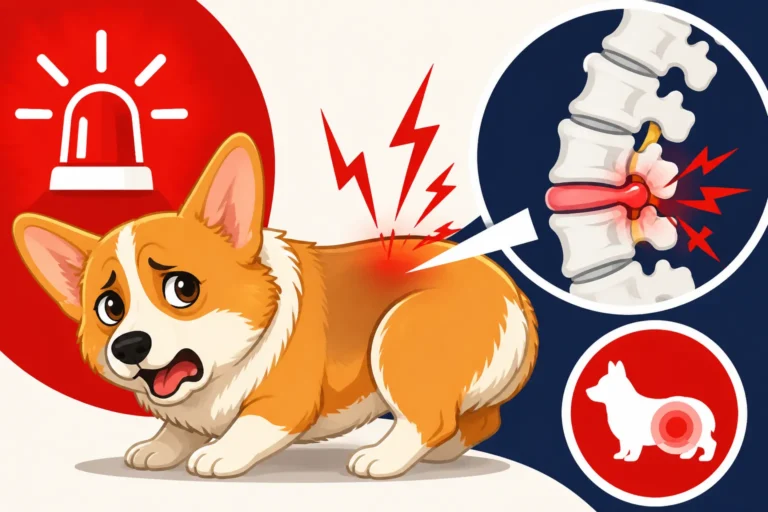
Firstly, an ideal weight is critical for spinal health. Corgis are notoriously prone to intervertebral disc disease (IVDD), where the discs in their spine degenerate and can rupture, leading to immense pain, nerve damage, and even paralysis. When a Corgi carries extra weight, it places immense, undue pressure on these delicate spinal discs. Each extra pound translates to exponentially more strain on their back, making them far more susceptible to a disc injury. You can explore this further in articles like Why Corgi Weight Is a Spinal Problem and What Extra Weight Does to a Corgi Spine. Keeping them lean helps cushion the spine and minimize this constant stress.
Secondly, optimal weight protects their joints. Corgis, like many dogs, can develop arthritis as they age, particularly in their hips and elbows. Excess weight significantly increases the load on all their joints, accelerating the wear and tear on cartilage and leading to earlier onset and more severe forms of arthritis. It can also contribute to conditions like hip dysplasia. A lean Corgi will experience less joint pain and maintain better mobility well into their senior years.
Beyond musculoskeletal concerns, being overweight impacts a Corgi's overall lifespan and quality of life. It increases their risk for other serious health problems such as diabetes, heart disease, respiratory issues, and certain types of cancer. Overweight dogs often have less stamina, are less enthusiastic about play, and can even suffer from heat intolerance due to their thick coats. By keeping your Corgi at their ideal BCS, you are not just preventing problems; you are actively contributing to a longer, healthier, and happier life for your furry family member. It ensures they can enjoy their daily walks, playtime, and adventures with you without being hindered by preventable health issues.
Recognizing Underweight and Overweight Corgis
Just as important as knowing what an ideal Corgi looks and feels like is being able to spot when they've strayed too far from that healthy middle ground. Both being underweight and overweight come with their own set of health risks and can significantly impact your Corgi's well-being and longevity. Early recognition allows for timely intervention, whether that means adjusting their diet, exercise, or seeking veterinary advice.
Signs of Being Underweight (BCS 1-4/9 or 1-2/5)
While less common in Corgis than being overweight, an underweight condition is still a serious concern. A Corgi that is too thin will have a BCS ranging from 1 to 4 on the 9-point scale or 1 to 2 on the 5-point scale.
Physical Signs:
- Ribs, Spine, and Hip Bones: These will be very prominent and easily visible to the naked eye, even through their coat, especially the ribs. They'll feel sharp and angular, with virtually no fat or muscle covering them.
- Waistline and Abdominal Tuck: The waist will be extremely exaggerated when viewed from above, and the abdominal tuck from the side will be very pronounced.
- Muscle Wasting: You might notice a general loss of muscle mass, particularly over their back, hips, and thighs. They might look gaunt or "bony" despite their fluff.
Potential Causes and Risks:
Being underweight can stem from a variety of issues. It might be something as simple as not being fed enough food or not getting enough calories for their activity level. However, it can also signal underlying health problems, such as:
- Parasites: Intestinal worms can steal nutrients, leading to weight loss.
- Dental Disease: Painful teeth can make eating difficult or uncomfortable.
- Gastrointestinal Issues: Conditions like inflammatory bowel disease or malabsorption can prevent proper nutrient uptake.
- Metabolic Diseases: Hyperthyroidism or certain types of cancer can cause a dog to burn through calories too quickly.
- Stress or Anxiety: Some dogs lose their appetite when stressed.
The risks associated with being underweight include a weakened immune system, poor muscle mass making them more susceptible to injury (especially to their back), reduced energy levels, and an inability to maintain body temperature effectively. If you suspect your Corgi is underweight, a visit to your veterinarian is crucial to diagnose the cause and develop a healthy weight gain plan.
Signs of Being Overweight or Obese (BCS 6-9/9 or 4-5/5)
This is the more common scenario for Corgis, unfortunately. An overweight Corgi will have a BCS of 6 or higher on the 9-point scale, and an obese Corgi will be 8 or 9. On the 5-point scale, this translates to a 4 or 5.
Physical Signs:
- Ribs, Spine, and Hip Bones: These will be difficult or impossible to feel without pressing firmly. They'll be covered by a thick layer of fat. The area over the ribs might feel soft and squishy.
- Waistline and Abdominal Tuck: When viewed from above, there will be no discernible waist; your Corgi will look like a solid, straight rectangle or even bulge at the sides. From the side, there will be no abdominal tuck, and their belly might hang low or be visibly distended.
- Fat Deposits: You might notice obvious fat deposits over their lumbar spine, at the base of their tail, and around their neck and shoulders. Their face might look rounder.
- Labored Breathing/Movement: Overweight Corgis often pant more, move more slowly, or show less enthusiasm for exercise. They might struggle to jump or climb stairs.
Health Risks:
The list of health problems linked to excess weight in Corgis is extensive and serious:
- Intervertebral Disc Disease (IVDD): As mentioned, extra weight places immense strain on their already vulnerable long backs, drastically increasing the risk of disc rupture. This is a critical point, and you can learn more about Why a Corgi's Back Is Built the Way It Is and Telling a Corgi's Slipped Disc From Myelopathy.
- Joint Damage and Arthritis: The increased load on their joints leads to faster wear and tear, exacerbating or causing conditions like hip and elbow dysplasia and early onset arthritis. Articles like Joint Damage From Corgi Weight Gain highlight these specific dangers.
- Diabetes: Obesity is a significant risk factor for developing canine diabetes.
- Heart and Respiratory Disease: Excess fat can put a strain on their cardiovascular and respiratory systems, leading to reduced stamina and breathing difficulties.
- Reduced Lifespan: Studies consistently show that overweight dogs live shorter lives than their lean counterparts.
- Heat Intolerance: Their double coat combined with extra fat makes them very susceptible to overheating, especially in warmer climates.
- Increased Surgical Risk: Anesthesia and recovery are more complicated for overweight dogs.
- Lower Quality of Life: They often have less energy, are less playful, and simply enjoy life less due to discomfort.
Recognizing these signs early is crucial. If your Corgi is showing any of these indicators, it's time to work with your vet to implement a weight management plan. It's often the single most impactful thing you can do to improve their health and extend their happy years with you. Understanding How Much Weight an Overweight Corgi Carries can be a real eye-opener.
Here's a quick reference table to help visualize the differences across the BCS scale:
| BCS (9-Point Scale) | Visual Cues (from above/side) | Tactile Cues (ribs, spine, hips) | Corgi Appearance |
|---|---|---|---|
| 1-3 (Underweight) | Ribs, spine, hip bones easily visible. Exaggerated waist/tuck. | Ribs, spine, hips sharp to the touch, no fat cover. | Emaciated/very thin, even under fluff. |
| 4-5 (Ideal) | Ribs not visible, but slight waist and tuck present. | Ribs, spine, hips easily felt with light pressure, minimal fat cover. | Lean, muscular, well-proportioned. |
| 6-7 (Overweight) | No waist, body appears straight or slightly bulging. Reduced/absent tuck. | Ribs, spine, hips palpable with firm pressure; moderate fat. | Rounder appearance, soft padding over bony areas. |
| 8-9 (Obese) | Obvious bulging, no waist or tuck. Fat deposits visible. | Ribs, spine, hips difficult/impossible to feel; heavy fat cover. | Very round, barrel-like, obvious fat rolls. |
Practical Steps to Maintain an Ideal Corgi BCS
Maintaining an ideal Body Condition Score for your Corgi is an ongoing commitment, but it's one that pays dividends in their health and happiness. It’s about more than just food; it’s a holistic approach that incorporates careful nutrition, appropriate exercise, and regular professional oversight. Making these practices a consistent part of your Corgi’s routine will set them up for a long and vibrant life.
Diet and Portion Control Tailored for Corgis
This is arguably the most critical component of weight management for Corgis. Their short stature and often enthusiastic appetites mean they can easily overconsume calories.
Weighing Food, Not Scooping: The number one tip for accurate portion control is to weigh your Corgi’s food using a kitchen scale, rather than relying on measuring cups. The density of kibble can vary wildly, and a "cup" of food can have significantly different calorie counts depending on the brand and how packed it is. A small variation can lead to hundreds of extra calories over a week, especially for a small breed like a Corgi. Consult with your vet to determine The Calorie Target for a Twenty-Eight Pound Corgi based on their ideal weight and activity level. You'd be surprised how little an adult Corgi actually needs. This is why Why a Corgi's Food Is Weighed, Not Scooped is so important.
Suitable Kibble and Treats: Choose a high-quality dog food appropriate for their life stage and activity level. Avoid "free feeding" where food is left out all day; instead, feed measured meals twice a day. If you use treats for training or rewards, ensure they are low-calorie options like small pieces of carrot, green beans, or specialized low-calorie dog treats. Remember to factor these treats into their daily calorie allowance. Many Corgis tend to beg, so be firm and consistent.
No Table Scraps: Resist the urge to share human food, no matter how much those big Corgi eyes plead. Even small amounts of high-fat or high-sugar human foods can quickly add unnecessary calories and potentially lead to digestive upset or even toxicity.
Appropriate Exercise Without Overstraining the Back
Exercise is vital for maintaining muscle tone, burning calories, and supporting overall health, but for Corgis, it needs to be approached with their long backs in mind. Their chondrodystrophic structure means they are prone to back injuries, so vigorous or high-impact activities should be minimized or avoided.
Moderate, Consistent Activity: Aim for regular, moderate exercise. This typically means two to three walks per day, totaling about 45-60 minutes, depending on their age and individual stamina. Leash walks on varied terrain (like grass and dirt, avoiding hard pavement for extended periods) are excellent. Consider engaging activities like scent work or puzzle toys that challenge their minds without stressing their bodies.
Avoid High-Impact Activities: Jumping on and off furniture, repetitive stair climbing (especially up and down), and intense, uncontrolled play that involves twisting or sudden stops should be discouraged. Use ramps or steps for furniture and vehicles, and if you live in a multi-story home, carry your Corgi up and down stairs if possible, especially when they are young or older. Even seemingly innocent actions like zoomies can potentially damage their back, so be mindful of How Much Running Is Safe for a Corgi.
Back-Friendly Sports: If you're interested in dog sports, consider options like obedience, rally, or even modified agility that focuses on low jumps and weaves to minimize strain on their spine. Swimming can be fantastic as it's non-weight-bearing and builds core strength. For more ideas, check out Agility With a Corgi's Back in Mind.
Maintain Muscle Tone: Exercise helps build and maintain strong core muscles, which act as a natural brace for their spine. A Corgi with good muscle tone will be more resilient to back issues.
Regular Veterinary Check-ups and Monitoring
Your veterinarian is your most valuable partner in maintaining your Corgi's ideal BCS and overall health. They can provide an objective assessment and tailored advice.
Annual Exams: Regular annual (or bi-annual for seniors) veterinary check-ups are essential. During these visits, your vet will perform a professional BCS assessment, check their weight, and discuss their diet and exercise routine. They can spot subtle changes that you might miss and catch potential issues early. This is a great time to discuss The Annual Exam Where a Corgi's Back Gets Checked.
Guidance on Diet and Exercise: Your vet can recommend specific food brands, calculate precise calorie requirements based on your Corgi's individual needs, and advise on safe and effective exercise plans. If your Corgi is already overweight, they can help you formulate a weight loss strategy that is healthy and sustainable.
Addressing Underlying Issues: If your Corgi is struggling to lose weight despite your best efforts, or if they are unexpectedly underweight, your vet can conduct tests to rule out any underlying medical conditions like thyroid issues or digestive problems. They can also offer prescriptions for specific weight management diets if necessary.
Insurance for Peace of Mind: Unexpected health issues can arise, especially when weight-related complications surface. Having pet insurance can provide significant peace of mind. Companies like Healthy Paws offer comprehensive coverage for accidents and illnesses, which can be invaluable if your Corgi develops a condition like IVDD or arthritis, both of which can lead to costly treatments, diagnostics, and long-term care. Knowing you have support like Healthy Paws can allow you to focus on your Corgi's health rather than the financial strain.
Addressing Common Corgi Weight Management Challenges
Let's be real: managing a Corgi's weight isn't always easy. They are notoriously food-motivated, incredibly intelligent, and their double coats throw a wrench into visual assessments. But understanding these common challenges can help you develop strategies to overcome them and keep your Corgi thriving at a healthy weight.
The Corgi's Insatiable Appetite and Begging Behavior
If you own a Corgi, you know this struggle intimately. These dogs act like they haven't eaten in weeks, even moments after finishing a meal. Their begging can be relentless, charming, and incredibly difficult to resist. This insatiable appetite is often rooted in their herding dog genetics, where finding and guarding food was a survival skill.
Strategies to Manage Begging:
- Strict Meal Times and Portions: Stick to a consistent feeding schedule with pre-measured meals. Do not give in to begging between meals. This teaches them that food only comes at specific times from their bowl.
- Healthy, Low-Calorie Snacks: If you absolutely must give a treat, make it a very small piece of a healthy, low-calorie vegetable like carrots, green beans, or apple slices (without seeds). These can satisfy their chewing urge without adding many calories. You can read more about Whether Carrot Sticks Satisfy a Corgi.
- Puzzle Feeders and Enrichment Toys: Make them work for their food! Slow feeder bowls, Kongs stuffed with a small amount of their kibble, or other puzzle toys can extend mealtime, provide mental stimulation, and make them feel more satisfied.
- Ignore and Redirect: When your Corgi starts to beg, ignore them completely. Turn away, don't make eye contact, and don't speak to them. Once they give up, you can reward calm behavior with praise or a non-food toy. Never reward the begging itself. For more insights into this, check out Whether Corgis Beg Harder Than Other Breeds.
- Involve the Whole Family: Consistency is key. Everyone in the household needs to be on board with the feeding rules, or your Corgi will quickly learn who the "easy mark" is.
- Manage Calories During Confinement: If your Corgi is on crate rest for a back injury, their activity level will drop dramatically. This is a time when Cutting Calories While a Corgi Is Confined becomes even more critical to prevent rapid weight gain.
Overcoming the "Fluffy" Factor and Dense Undercoat
We touched on this earlier, but it deserves a deeper dive. The Corgi's magnificent double coat, while beautiful, is a master illusionist when it comes to body shape. It can make a genuinely chunky Corgi appear merely robust, leading owners to underestimate the severity of their weight problem.
Tips for Accurate Assessment Despite Fur:
- The Hands-On Approach is Non-Negotiable: You simply cannot rely on visual inspection alone. Regularly run your hands over their ribs, spine, and hip bones. Press firmly enough to feel through the fur to the underlying bone structure. You should feel ribs like slats of a venetian blind, not a plush mattress.
- Grooming for Clarity: Regular brushing, especially during shedding seasons, helps to remove loose undercoat, which can sometimes give the impression of even more bulk. While you should never shave a Corgi, keeping their coat well-maintained can make assessments slightly easier.
- Wet the Coat: If you're really struggling to gauge their shape, a damp coat (like after a bath, or just with a wet towel) will lie flatter and temporarily reveal their true contours more accurately. This is an occasional trick, not a daily routine, but it can provide a useful reality check.
- Photographs: Take photos from above and the side periodically. Sometimes, looking at a still image can reveal changes that are harder to spot in real-time, especially when comparing current photos to older ones of when your Corgi was at a healthier weight. This helps in Spotting Weight Gain Hidden Under a Corgi Coat.
The Importance of a Proactive Approach
When it comes to your Corgi's weight, prevention is always better than cure. Losing weight for a dog can be a slow, frustrating process, and the damage caused by excess weight, particularly to their spine and joints, can be irreversible.
Start Early: Establish good feeding habits from puppyhood. While Corgi puppies tend to be round and adorable, it's crucial not to let them become truly chubby. Keep them on the lean side as they grow to build healthy habits and a robust skeletal system. Discuss Keeping a Growing Corgi Puppy on the Thin Side with your breeder and vet.
Monitor Constantly: Don't wait until your Corgi is obviously overweight to take action. Make monthly BCS checks a habit. Notice if their collar or harness starts to feel tighter. Pay attention to changes in their energy levels or reluctance to perform activities they once enjoyed.
Consult Professionals: If you notice any upward trend in their BCS, don't hesitate to reach out to your veterinarian. They can help you tweak their diet and exercise regimen before the problem becomes severe. They are your best resource for personalized advice and can help rule out any medical reasons for weight gain.
Having pet insurance, such as Healthy Paws, can also encourage a proactive approach. Knowing that you have coverage for potential health issues allows you to pursue diagnostics and treatments promptly, rather than waiting until conditions worsen due to financial concerns. Healthy Paws supports responsible pet ownership by helping manage the costs associated with health challenges, encouraging early intervention and maintenance of your Corgi's health. Their commitment to covering eligible accidents and illnesses means you can always prioritize your Corgi's well-being without undue stress. Ultimately, a proactive approach to your Corgi’s weight is one of the most loving and impactful things you can do for their long-term health and happiness.
Disclaimer
This article is intended for informational purposes only and does not constitute veterinary advice. Always consult with a qualified veterinarian for any health concerns or before making any changes to your Corgi's diet, exercise, or medical care.