Trimming Whiskers on a Corgi
Corgi whiskers act as specialized sensory tools and touch receptors that provide crucial spatial awareness and navigation help.
The daily stuff, done right.
Feeding amounts by life stage, coat and skin routines, dental and nail care, exercise needs, and what changes as they age.

Corgi whiskers act as specialized sensory tools and touch receptors that provide crucial spatial awareness and navigation help.

Corgi sleep surfaces and floor sleeping risks cause joint pressure, calluses, and spinal strain for short-legged dogs.

Corgi double coats shed constantly throughout the year, leaving heavy fur accumulations in their sleeping beds daily.

Corgi shedding rates in senior years and seasonal blowouts explain why double coats require regular maintenance for owners.
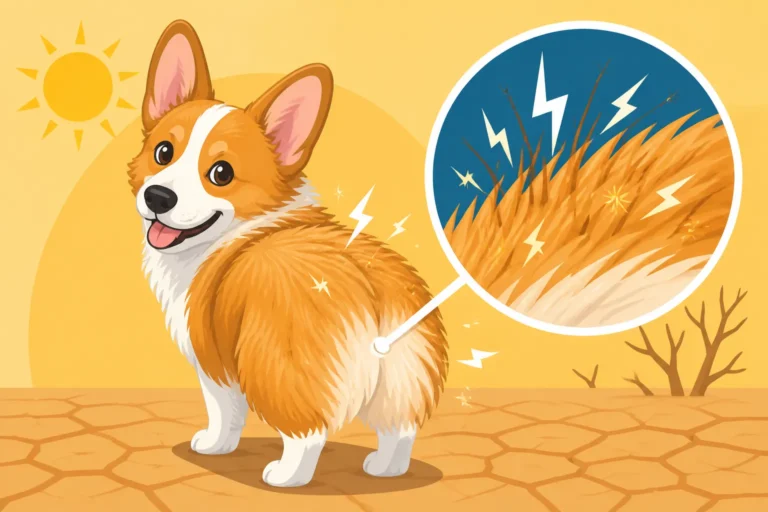
Corgi coat static electricity happens in dry weather when friction causes electrical charge imbalances in double coats.

A damp Corgi belly risks skin infections and hot spots because their dense double coat traps moisture close to the skin.

Corgi incontinence management strategies explain how to clean your dog and protect your home during health issues.

Grooming a Corgi that cannot stand requires practical techniques for dogs affected by arthritis or degenerative myelopathy.

Soft food options help Corgis manage dental pain and periodontal disease caused by plaque and tartar buildup on teeth.

Lower calorie intake for an aging Corgi prevents joint damage, arthritis, and diabetes while extending quality of life.