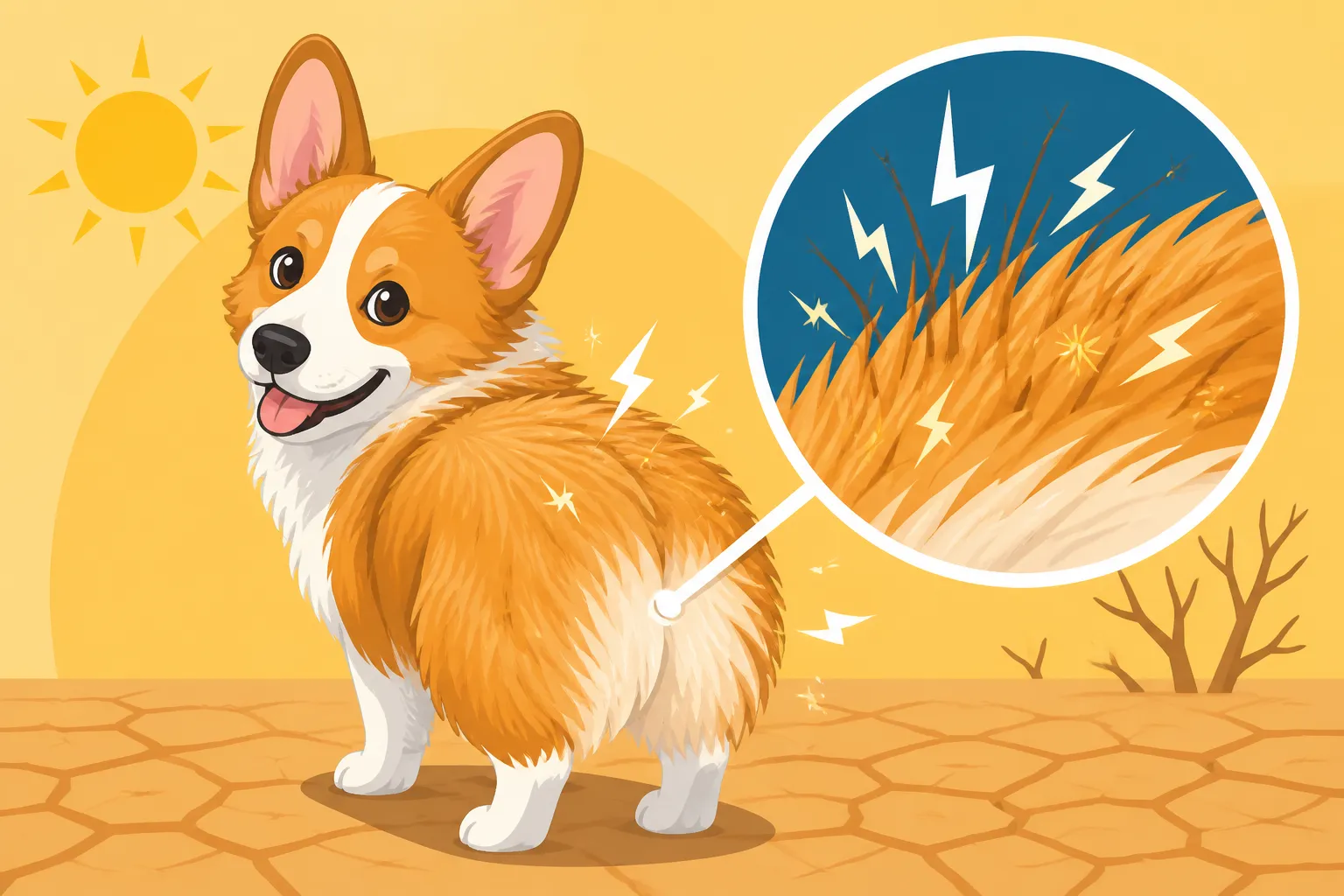
Why a Corgi Coat Crackles in Dry Weather
That little zap you sometimes get when you pet your beloved Corgi, or the way their hair seems to fly off them with a life of its own in the winter months – it's a super common, albeit annoying, frustration for many Corgi owners. This guide is here to unravel the mystery of why your Corgi's luxurious double coat seems to crackle with static electricity, especially when the air is dry, and, more importantly, what you can do about it to make life more comfortable for both of you.
The Shocking Truth: Understanding Corgi Coat Static
It's not just a quirky Corgi thing, though their specific coat type certainly plays a role. Static electricity is a natural phenomenon that happens when there's an imbalance of electric charges on the surface of an object, or in this case, on your Corgi's hair. It's the same principle that makes your clothes cling together in the dryer or gives you a jolt when you touch a doorknob after shuffling across a carpet.
What Even Is Static Electricity in a Dog's Coat?
Think back to those science experiments in school where you rubbed a balloon on your hair and it stood on end. That’s static electricity at play! When two different materials rub against each other, electrons can transfer from one surface to the other. One surface ends up with an excess of electrons (a negative charge), and the other ends up with a deficit (a positive charge). Since opposite charges attract and like charges repel, your Corgi's hairs, which often pick up the same charge, will try to push away from each other, leading to that wild, fly-away look, or they might be attracted to your hand or clothes, causing that little spark.
In the case of your Corgi's coat, this usually happens when you're petting them, brushing them, or even just when they're rubbing against furniture or carpeting. The friction causes a charge separation. Normally, this charge would dissipate quickly, especially if there's enough moisture in the air or on the fur to conduct the electricity away. But when the air is dry, there's nothing to help those charges balance out, and they just build up, waiting for an opportunity to discharge – often through your unsuspecting fingertip!
Why Corgis Are Particularly Prone to the Crackle
Corgis, with their magnificent double coats, are almost perfectly designed to be static electricity generators, especially in certain conditions. Their undercoat is incredibly dense, soft, and fine, while their outer coat consists of coarser guard hairs. This combination of different hair types, all rubbing against each other and against environmental surfaces, creates ample opportunity for electron transfer. When you groom your Corgi, you're essentially creating friction, and without sufficient humidity, that friction translates directly into static.
Beyond the sheer mechanics, the Corgi’s natural oils in their skin and coat play a protective role, but in very dry environments or if their skin is a little on the dry side, this natural barrier can be less effective. A dry coat is a prime candidate for static build-up because moisture is a conductor of electricity. If the hair itself is dry, it can't conduct the charge away, allowing it to accumulate. This is why you might notice it more acutely during winter, when indoor heating dries out the air considerably, or in naturally arid climates. Understanding this helps us move toward solutions that keep their coat healthy and reduce that annoying crackle.
Environmental Culprits: Why Your Home Might Be a Static Magnet
You might be doing everything right with your Corgi's grooming, but if your home environment is working against you, the static will persist. Our homes, especially during certain seasons, can be perfect breeding grounds for static electricity, making your Corgi's coat a magnet for those irritating zaps.
The Role of Dry Air and Indoor Heating
The biggest culprit for static electricity in many homes is low humidity. As we discussed, moisture in the air helps to conduct static charges away, preventing them from building up. In colder months, when the outdoor air is naturally drier, we crank up our indoor heating, which further strips moisture from the air inside our homes. This creates an environment where static charges on your Corgi's fur have nowhere to go. Imagine your home turning into a giant, cozy, but very dry, static factory!
This dry air can also affect your Corgi's skin and coat health. Just like human skin, a dog's skin can become dry and flaky in low humidity. This dryness can reduce the natural oils that would normally help keep the coat conditioned and less prone to static. It's a vicious cycle: dry air leads to dry skin and coat, which then leads to more static. Monitoring the humidity in your home, especially during these periods, can give you a clear indication of why your Corgi might be feeling more "electric" than usual. Investing in a hygrometer (a device that measures humidity) can be quite insightful.
Friction From Everyday Activities and Materials
Your Corgi's daily life involves a lot of friction, and certain materials in your home can exacerbate static build-up. Every time your Corgi walks across a carpeted floor, rubs against the sofa, or even just lies on their favorite bed, friction is generated. Synthetic materials like polyester, nylon, and certain types of carpet are particularly good at creating and holding static charges. If your Corgi's bed is made of a synthetic fleece, or if they love snuggling into a plush blanket, these items could be contributing to the problem.
Even your choice of grooming tools can make a difference. Brushes with synthetic bristles or certain types of plastic combs can generate more static than those made from natural materials like boar bristles or metal. It's a subtle but significant factor. Consider the common scenario: your Corgi bounds off their synthetic dog bed, crosses a carpeted room, and then you reach down to pet them. Each of those interactions could be building up a charge, leading to that surprising little jolt. Understanding these daily friction points can help you make small but effective changes around your home. You might consider Flooring Changes a Corgi Owner Makes to help reduce slipping and static.
Practical Steps to a Smoother, Static-Free Corgi Coat
Now that we've pinpointed the culprits, let's talk about actionable steps you can take to make your Corgi's coat less crackly and more comfortable. A multi-pronged approach usually works best, addressing both the environmental factors and your Corgi's coat health directly.
Hydration from the Inside Out and Outside In
Keeping your Corgi's coat healthy and hydrated is crucial for combating static. This starts with their diet. A high-quality diet rich in essential fatty acids, particularly Omega-3s and Omega-6s, can do wonders for skin and coat health. These fatty acids help maintain the skin's natural moisture barrier, leading to a healthier, less static-prone coat. Look for dog foods that list ingredients like fish oil, flaxseed, or other healthy fats. Some owners find that supplementing their Corgi's diet with a good quality fish oil can make a noticeable difference.
Hydration also means ensuring your Corgi always has access to fresh, clean water. While this won't directly affect coat static, a well-hydrated dog is generally healthier overall, and healthy skin and coat follow suit. From the outside in, consider using a conditioning spray specifically designed for dogs. These often contain anti-static agents and moisturizers that can be spritzed lightly onto the coat before or during brushing. You can find excellent options on retailers like Chewy or Amazon. Some people even use a tiny amount of diluted human conditioner (sulfate-free, very small amount, and dog-safe ingredients only, if your vet approves) but dog-specific products are always safer. After a bath, ensuring your Corgi is thoroughly, but gently, dried is also important. Getting a Corgi Dry Through the Undercoat is key to preventing skin issues and maintaining coat health.
Smart Grooming Choices to Reduce Static
Your grooming routine is a primary interaction with your Corgi's coat, so it's a perfect place to implement static-reducing strategies.
| Grooming Action | Static-Reducing Strategy | Why It Works |
|---|---|---|
| Brushing | Use metal combs or brushes with natural bristles (e.g., boar bristle). Lightly mist the brush or coat with a conditioning spray before brushing. | Metal conducts static away. Natural bristles generate less friction. Conditioning sprays add moisture and anti-static agents. |
| Bathing | Use a hydrating or anti-static dog shampoo and a good conditioner. Avoid over-bathing, which can strip natural oils. | Hydrating shampoos and conditioners replenish moisture in the coat. Over-bathing can dry out skin and coat. |
| Drying | Towel dry as much as possible, then use a low-heat dryer if needed. Finish with a conditioning spray. | Excessive heat can dry out the coat and increase static. Gentle drying with conditioning helps. |
| Frequency | Brush regularly to distribute natural oils, but avoid excessive brushing on a completely dry coat. | Regular brushing spreads natural oils, but too much friction on a dry coat builds static. |
When it comes to bathing, choose shampoos and conditioners formulated to moisturize. There are many great products available on Chewy that are designed for double coats and dry skin. Don't over-bathe your Corgi, as this can strip their natural oils, leading to a drier coat that's more prone to static. How Often a Corgi Actually Needs Washing depends on their lifestyle, but generally, not too frequently. After a bath, ensure you rinse thoroughly, as residue can also contribute to a dull, static-prone coat.
Using the right tools makes a huge difference. The Rake and Comb a Corgi Coat Actually Needs should be chosen carefully. A good metal comb, rather than a plastic one, can help dissipate static as you work through their fur. For brushing, consider brushes with natural bristles or those specifically advertised as anti-static. A final light mist of a dog-safe leave-in conditioner or anti-static spray can seal the deal, keeping their coat smooth and static-free for longer.
Household Adjustments for a More Comfortable Corgi
Beyond grooming, making a few tweaks to your home environment can significantly reduce static. The most impactful change you can make is to increase the humidity, especially during those dry winter months. A humidifier, particularly in the rooms where your Corgi spends the most time or sleeps, can add much-needed moisture back into the air. This helps charges dissipate naturally, making both your Corgi's coat and your own skin more comfortable. Even something as simple as placing bowls of water near heat sources can slightly increase ambient humidity, though a dedicated humidifier is far more effective. For tips on managing the air quality, you might be interested in Air Purifier Costs in a Corgi House.
Secondly, consider the materials your Corgi interacts with. If your dog bed is made of a static-prone synthetic fabric, try switching to one with natural fibers or covering it with a cotton sheet that you wash regularly. Adding moisture to the air also helps reduce static on carpets and furniture, but you can also use anti-static sprays designed for fabrics on dog beds, blankets, and even carpets. Always test these in an inconspicuous area first to ensure they don't stain or irritate. Sometimes, just changing the blankets your Corgi snuggles with from synthetic fleece to cotton can make a noticeable difference. Also, consider products like those from Ollie, which often focus on whole, fresh ingredients that can contribute to overall skin and coat health, reducing dryness from the inside out.
When the Crackle Signals More: Beyond Just Static
While static electricity is usually a harmless annoyance, sometimes persistent static, coupled with other symptoms, can point to underlying issues that need more attention than just a spritz of conditioner.
Distinguishing Static from Other Skin Concerns
It's important to remember that a dry, static-prone coat can sometimes be a symptom of dry skin. While low humidity is often the cause, persistent dry, flaky, or itchy skin could indicate allergies, nutritional deficiencies, or other dermatological conditions. If you notice your Corgi scratching excessively, licking specific areas, or if their skin appears red, inflamed, or has scabs, then it's time to investigate further. A static coat doesn't usually cause discomfort beyond the occasional "zap," but dry skin can be genuinely irritating for your Corgi.
Always keep an eye on your Corgi's overall coat quality. A dull, brittle, or excessively shedding coat, combined with static, could signal a need for dietary adjustments or a visit to the vet. For instance, whether a Corgi sheds all year and not just twice is a common concern for owners, but excessive shedding with poor coat quality can be a sign of underlying issues. Static is just one piece of the puzzle; it's about looking at the whole picture of their skin and coat health.
Seeking Professional Guidance
If you've tried all the environmental and grooming solutions and your Corgi's coat remains stubbornly static-charged, or if you're concerned about accompanying skin issues, it's always best to consult your veterinarian. They can help rule out any underlying medical conditions, such as thyroid imbalances, allergies, or other dermatological problems that might be contributing to a dry, static coat. They can also recommend specific supplements or prescription diets, perhaps specialized brands that target skin health, or topical treatments if necessary.
A professional groomer can also offer invaluable advice. They work with many different coat types and can recommend specific tools, shampoos, and conditioners that are particularly effective for Corgi coats. They can also demonstrate proper brushing techniques to minimize static and maximize coat health. Sometimes, a fresh perspective and expert advice are all you need to get your Corgi's coat back to its smooth, shiny, and static-free best.
Disclaimer
This article is for general informational purposes only and does not constitute professional advice. Laws, prices and regulations vary by location and change over time. Consult a qualified professional for guidance on your specific situation.