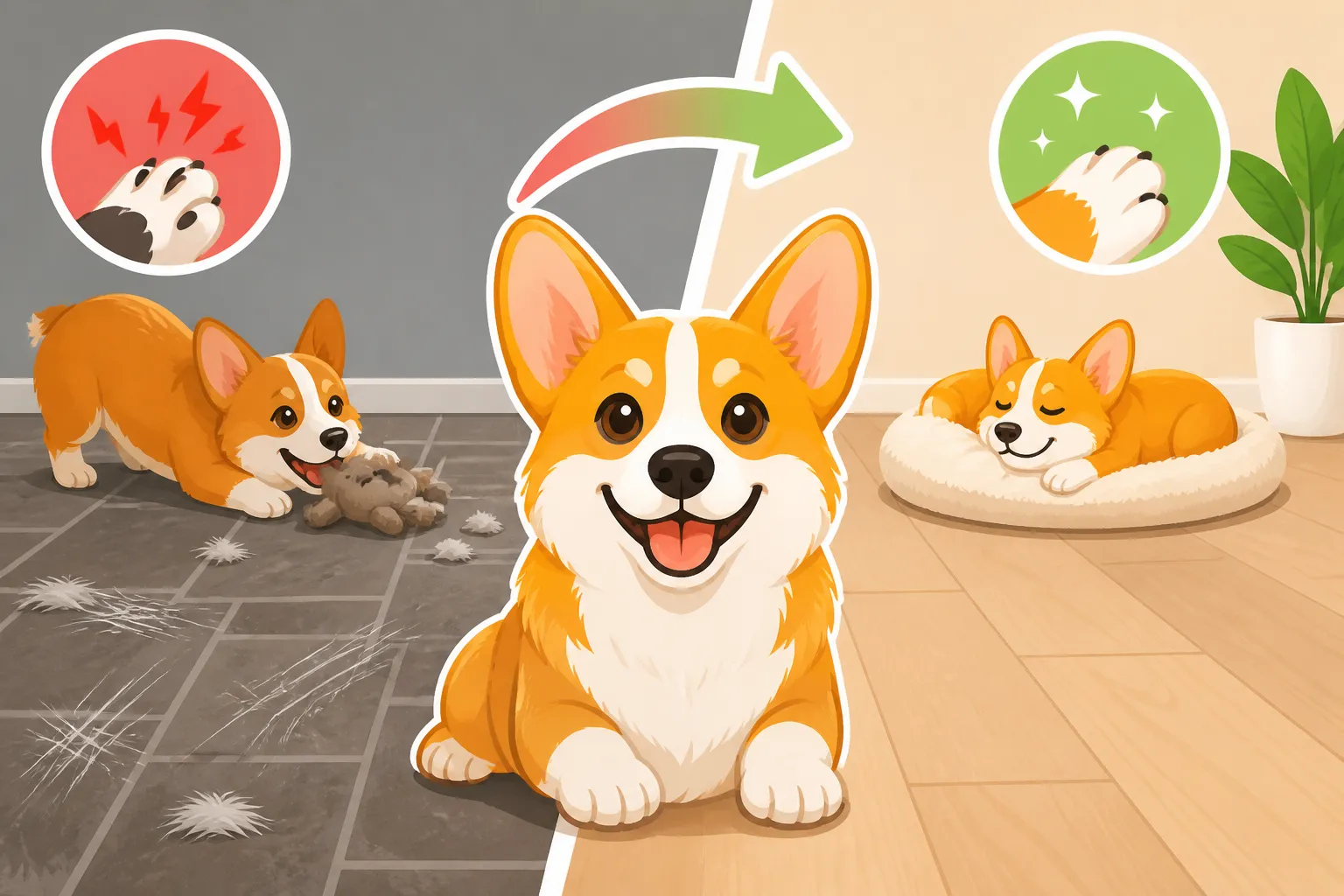
Flooring Changes a Corgi Owner Makes
Owning a Corgi is an absolute joy, but it also comes with a unique set of responsibilities, especially when it comes to safeguarding their precious, long backs. One common but often overlooked hazard in many homes is slippery flooring, which can put immense strain on a Corgi's spine and joints every single day. This guide is here to walk you through understanding why your Corgi is at risk and what practical flooring changes you can make to create a safer, more comfortable home environment for your beloved companion.
The Hidden Dangers of Slippery Floors for Corgis
If you've ever watched your Corgi scurry across a slick kitchen floor, legs splayed out in a comical, yet worrying, scramble for purchase, you've witnessed the struggle firsthand. It might look funny for a second, but for a dog with their specific body type, those slips and slides are anything but harmless. They are repetitive micro-traumas that accumulate over time, setting the stage for serious health issues down the line.
Why a Corgi's Unique Anatomy Puts Them at Risk
Corgis, with their signature long bodies and adorably short legs, are built like little tanks. They were bred to be low to the ground, allowing them to nip at the heels of cattle without getting kicked. This unique build, while perfect for herding, makes them particularly vulnerable to injuries on slippery surfaces. Their low center of gravity combined with a longer spinal column means that any sudden, uncontrolled movement – a slip, a slide, a missed step – translates directly into torsion and impact on their discs and joints. Think about it: a dog with longer legs has more room to adjust their stride and recover balance, but a Corgi's short legs mean less leverage and less time to correct a slip. Each time they push off, land, or try to stop on a slick surface, their muscles are working overtime, and their joints are absorbing forces they weren't designed to handle in that manner. It's like asking a small, heavy wagon to navigate an ice rink. You can read more about Why a Corgi's Back Is Built the Way It Is to understand these mechanics better.
The Long-Term Consequences of Constant Slipping
These seemingly minor slips don't just disappear. Over time, the constant jarring and instability take a severe toll. For Corgis, a breed already predisposed to spinal issues like Intervertebral Disc Disease (IVDD), slippery floors can dramatically accelerate the onset and severity of problems. Each slide can cause tiny tears in the spinal discs, leading to inflammation and weakening over time. Eventually, these discs can bulge or rupture, causing excruciating pain, nerve damage, and potentially paralysis. This is often referred to as Disc Disease in a Long-Backed Corgi. Beyond the spine, the constant splaying of their legs puts undue stress on their hips, knees, and even shoulders, paving the way for early-onset arthritis and chronic joint pain. Imagine living your entire life walking on a surface that constantly threatens your stability; it's mentally and physically exhausting, leading to anxiety about movement and a reduced quality of life. Owners might even notice a change in their Corgi's gait, a reluctance to play, or difficulty getting up, all subtle signs that their body is suffering.
Identifying Problem Areas in Your Home
It's easy to assume that all your floors are fine, but when you start looking at your home from your Corgi's perspective, you'll likely spot several hazard zones. These are the places where their little paws are struggling most, even if you haven't fully noticed it yet. Being proactive about these areas can make a world of difference for their long-term health.
High-Traffic Zones and Launchpads
Consider the pathways your Corgi uses most frequently. Is it the route from the couch to the kitchen? The dash to the front door when the doorbell rings? These high-traffic areas, especially if they are hard, polished surfaces, become prime slipping territories. Even more critical are the "launchpads" – the spots where your Corgi gains momentum to jump onto or off furniture. A sudden leap from a smooth floor onto a sofa can result in a dangerous misstep, wrenching their back or twisting a joint. That split second of pushing off can easily lead to a slip, causing an uncontrolled landing that puts immense force on their spine. This is a common trigger for conditions like a ruptured disc, as highlighted in The Jump That Ruptures a Corgi Disc. Many Corgis love to join their humans on the sofa or bed, but if they're launching off a slippery surface, the risk is amplified significantly.
The Perils of Entryways and Kitchens
Entryways are notorious for being slippery, especially when it rains or snows. Wet paws on tile, linoleum, or polished wood floors are a recipe for disaster. A Corgi bounding in from outside can easily lose their footing, leading to a nasty tumble right as they greet you. Kitchens are another high-risk area. Spills are inevitable, and even a small puddle of water, a dropped piece of food, or a slight residue from cleaning products can turn the floor into a skating rink for your low-slung friend. Corgis often spend a lot of time in the kitchen, hoping for dropped crumbs, or simply following their humans around. The sudden stops, starts, and turns they make while navigating this busy space amplify the risk of slipping and straining their already vulnerable backs and joints.
Practical Flooring Solutions to Protect Your Corgi
The good news is that you don't necessarily need to rip out all your flooring to make your home Corgi-safe. There are many practical and aesthetically pleasing solutions that can dramatically improve traction and reduce the risk of injury. It's about making thoughtful choices that prioritize your Corgi's well-being without completely redesigning your living space.
The Best Flooring Materials for Corgi Homes
When considering new flooring or the most Corgi-friendly options, the key is texture and grip.
- Carpeting: Wall-to-wall carpeting is arguably the safest option for Corgis. It provides excellent traction, cushions falls, and reduces impact on joints. Opt for low-pile carpets, which are easier to clean and less likely to trap allergens. While shedding is a part of Corgi life, a good vacuum can handle it.
- Cork Flooring: Cork is a fantastic choice. It's naturally non-slip, resilient, antimicrobial, and has excellent shock-absorbing properties, making it much softer on joints than wood or tile. It also has a lovely natural aesthetic.
- Matte Ceramic or Porcelain Tile: If you love the look of tile, choose options with a matte finish or a slight texture. Avoid highly polished or glazed tiles, which are incredibly slick. Adding larger grout lines can also provide a bit more grip.
- Vinyl Plank Flooring: Modern luxury vinyl plank (LVP) and sheet vinyl can be a good option, but you need to be selective. Look for products specifically marketed as slip-resistant or those with a textured surface. Some of the newer LVP options mimic wood beautifully but offer far better traction. Chewy often carries fantastic grip mats that can be used on top of existing vinyl too, for extra peace of mind.
Here's a quick comparison of common flooring types and their Corgi-friendliness:
| Flooring Type | Corgi-Friendliness | Pros for Corgis | Cons for Corgis |
|---|---|---|---|
| Wall-to-Wall Carpet | High | Excellent grip, cushioning, reduces impact | Can be harder to clean, traps hair/allergens |
| Cork Flooring | High | Natural grip, shock-absorbing, antimicrobial | Can be susceptible to scratches, higher initial cost |
| Textured/Matte Tile | Medium-High | Durable, easy to clean (if sealed correctly) | Still harder than carpet, can be cold |
| Luxury Vinyl Plank (LVP) | Medium | Durable, water-resistant, some texture options | Can still be slick if very smooth, cheaper versions lack grip |
| Hardwood/Laminate | Low | Aesthetically pleasing | Very slick, unforgiving on joints, prone to slips |
| Polished Tile/Linoleum | Very Low | Easy to clean | Extremely slippery, no cushioning |
Area Rugs and Runners: An Immediate Fix
If replacing your entire floor isn't an option (and for most of us, it's not a quick fix!), strategically placed area rugs and runners are your best friend. They offer an immediate, cost-effective solution.
- Placement is Key: Focus on high-traffic pathways, in front of sofas and chairs, at the base of stairs (if your Corgi is allowed on them), and in any area where your Corgi tends to run or play. Don't forget areas near food and water bowls, as spills can make these spots extra hazardous.
- Non-Slip Backings: This is crucial. A rug that slides around is almost as dangerous as no rug at all. Always choose rugs with a built-in non-slip backing, or invest in high-quality non-slip rug pads that grip both the rug and the floor. You can find a wide variety of sizes and styles online, including through pet supply retailers like Chewy, which makes it easy to shop for durable options designed for homes with pets.
- Material Matters: Look for rugs with a denser pile or natural fibers that offer better traction. Avoid thin, silky rugs that can bunch up or slide easily. Consider washable rugs for areas prone to accidents, making clean-up much less stressful.
Non-Slip Treatments and Coatings
For existing hard floors that you can't cover or replace, there are professional and DIY non-slip treatments available. These products create a microscopic texture on the surface of the floor, increasing friction without significantly changing the appearance of the flooring.
- DIY Application: Many products come in kits that you can apply yourself, often involving a cleaner and then a sealant or treatment that enhances grip. Always test a small, inconspicuous area first to ensure you're happy with the results. Read reviews carefully to choose a product that is safe for pets and durable enough to withstand everyday wear and tear.
- Professional Services: For larger areas or more delicate flooring types, you might consider hiring a professional service that specializes in anti-slip treatments. They can assess your specific flooring and apply a more robust solution that often lasts longer than DIY options. This can be a worthwhile investment if your Corgi is already showing signs of discomfort or if you're trying to prevent future problems that could lead to significant vet bills. In the event of an unexpected injury, pet insurance like Healthy Paws can be a lifesaver, so thinking preventatively now is wise.
Beyond Flooring: Complementary Home Modifications
While flooring is a huge piece of the puzzle, a truly Corgi-safe home involves a holistic approach. It’s about minimizing risks and supporting their physical well-being in every way possible. These additional modifications work hand-in-hand with your flooring changes to create the safest environment for your low-rider.
Nail Care and Paw Health for Better Grip
It might seem small, but your Corgi’s nails and paw pads play a critical role in their ability to grip surfaces. Overly long nails can actually act like skates on hard floors, reducing the natural traction their paw pads would otherwise provide. When nails are too long, the paw can’t spread out properly, and the nails hit the ground before the paw pads can make full contact. This is why you often hear a clicking sound when a dog with long nails walks on a hard floor. Keeping their nails trimmed short, to the point where they don’t touch the ground when your Corgi is standing, dramatically improves their grip. Regular trims, either at home or by a groomer, are essential. Additionally, inspect their paw pads. Sometimes, excessive fur between the pads can also reduce traction. A quick trim of this fur can also help. Moisturizing paw balms can keep pads healthy and less prone to cracking, which can also affect comfort and grip. For a deeper dive into how proper nail length impacts movement, take a look at Nail Length and What It Does to a Corgi's Gait.
Ramps, Steps, and Smart Furniture Placement
Even with improved flooring, jumping on and off furniture remains a high-risk activity for a Corgi's spine. Incorporating ramps and steps is a game-changer.
- Ramps for Couches and Beds: Train your Corgi to use ramps or pet stairs to access their favorite lounging spots. This eliminates the dangerous impact of jumping down and the strain of leaping up. You can find stylish and sturdy options online, many of which can blend seamlessly with your home decor. Consistently encouraging their use is key. Ramps and Steps That Save a Corgi's Back offers excellent guidance on this.
- Car Ramps: Don't forget the car! Lifting a Corgi in and out might seem harmless, but repeated lifting, especially if they squirm, can put a surprising amount of strain on your back and theirs. A portable car ramp is a fantastic investment, preserving their spine and your own.
- Strategic Furniture Placement: Consider the layout of your home. Can you arrange furniture to block access to particularly high jumps, or to create a more direct, safe path to a ramp?
- Orthopedic Beds: Beyond ramps, invest in a high-quality orthopedic bed. These beds provide superior support for their joints and spine, which is especially important for a breed prone to back issues. Even a young Corgi benefits from proper support, preventing premature wear and tear. Older Corgis, or those with early signs of Early Arthritis in a Corgi, will find immense comfort in these supportive beds. Check out options like those found at Chewy or other reputable pet retailers, often featuring memory foam or supportive bolster designs. Giving them a comfortable, supportive place to rest is just as important as protecting them when they're active. Regular feeding with high-quality, balanced food like Ollie can also help maintain a healthy weight, which significantly reduces strain on their back and joints, making all these modifications even more effective. A lean Corgi is a happier Corgi!
Making these flooring changes and home modifications might seem like a lot, but believe me, the peace of mind knowing you're doing everything you can to protect your Corgi's long-term health is priceless. It's an investment in their comfort and longevity, allowing them to enjoy their bouncy, happy lives with fewer risks and less pain down the road.
Disclaimer
This article is for general informational purposes only and does not constitute professional advice. Laws, prices and regulations vary by location and change over time. Consult a qualified professional for guidance on your specific situation.