Whether a Grinder Is Easier on Corgi Nails
One of the most common battles in a Corgi owner's life revolves around nail trims. If you've ever found yourself wrestling a wiggly, protesting Corgi, trying to avoid that dreaded quick, you know the frustration is real. This guide dives deep into whether a nail grinder might be the kinder, gentler solution for keeping your Corgi's paws healthy and your sanity intact.
The Challenge of Corgi Nail Trims
Let's be honest, getting those Corgi nails trimmed often feels like an Olympic sport, and neither you nor your dog is winning gold. Corgis, with their short legs and robust bodies, rely heavily on proper foot health for their comfort and overall well-being. Long nails can throw off their gait, impact their joints, and even contribute to spinal issues, which is a big concern for our long-backed friends.
Understanding the Corgi Nail and Quick
Corgi nails, especially on darker-colored dogs, can be notoriously difficult to trim without causing discomfort. Unlike human nails, dog nails have a blood vessel and nerve ending called the "quick" running through them. If you cut into the quick, it's painful for your Corgi and can lead to bleeding. This is often why a Corgi will protest so vehemently – a bad experience can make them dread future trims, creating a vicious cycle of fear and resistance.
For Corgis, whose structure means their legs are often splayed slightly for stability, maintaining short nails is paramount. Their paws are their foundation, and if their nails are too long, they can't get proper traction. It's like walking in ill-fitting shoes all the time. Over time, persistently long nails can force their toes to spread and their weight to shift unnaturally, potentially exacerbating issues like Corgi Hips and Front-End Structure or adding strain to their delicate spines. We often talk about Nail Length and What It Does to a Corgi's Gait as a direct impact, and it's a critical point for a breed already prone to back issues.
The Anxiety of Traditional Clippers
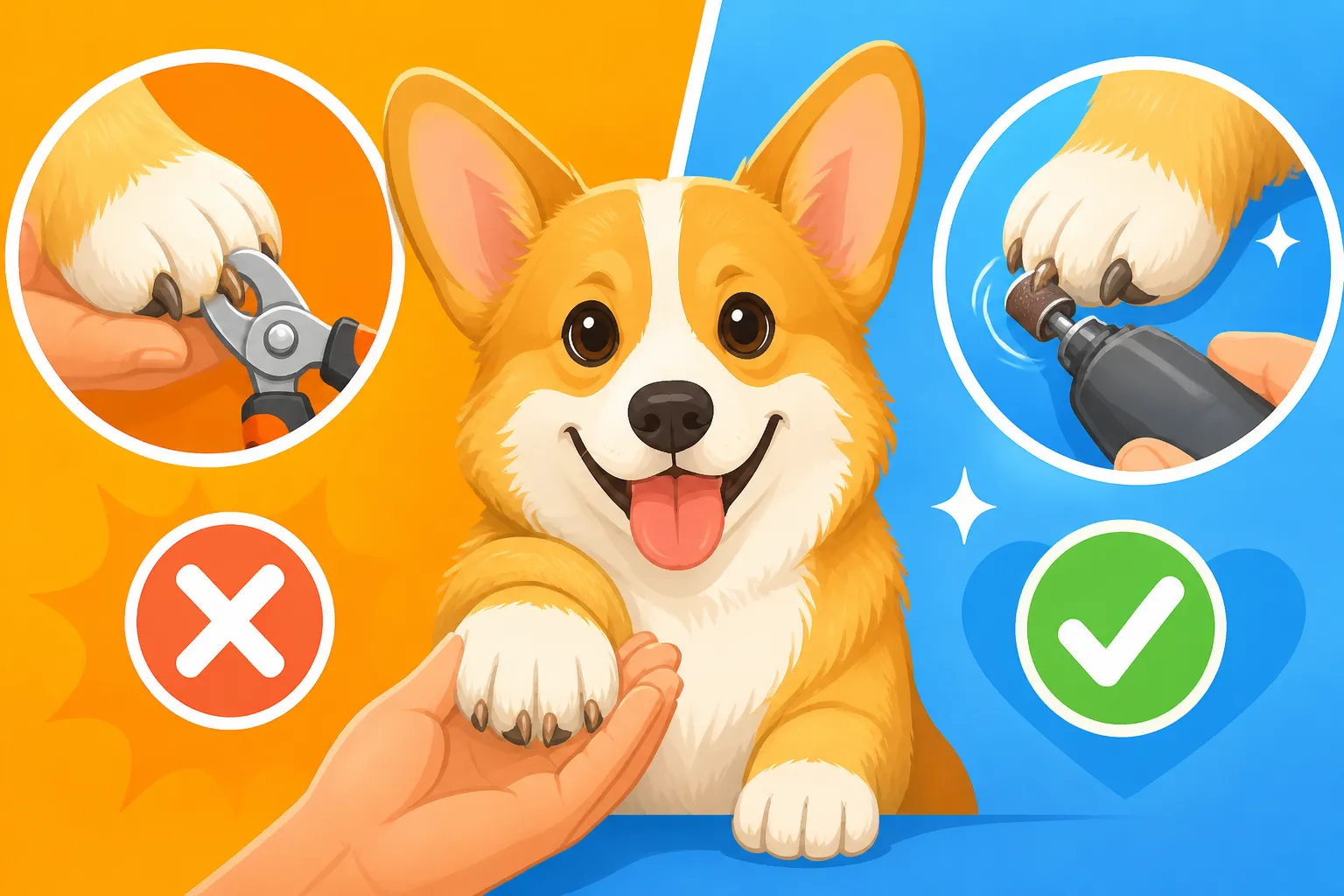
Traditional clippers, while effective for many dogs, can be a source of significant anxiety for Corgis and their owners. The sudden snip, the pressure on the nail, and the very real risk of cutting too deep create a high-stress situation. Many Corgis learn to associate the sight of clippers with pain or discomfort, leading to them pulling their paws away, squirming, or even resorting to nipping. This isn't stubbornness; it's often a learned fear response.
Think about it from your Corgi's perspective: a large, looming hand grabs their paw, applies pressure, and then a sharp, sudden noise and sensation. If they’ve ever been quicked, they remember that sharp sting. This can lead to them becoming "touchy" about their feet, making even routine inspections difficult. Getting them to cooperate for Clipping Nails on a Corgi That Objects becomes a monumental task, and you might find yourself dreading it as much as they do. This is where many owners throw in the towel and either pay a groomer for every trim or let the nails get longer than they should.
How Nail Grinders Work and Their Benefits for Corgis
Enter the nail grinder. This tool, often battery-operated, files down the nail gradually rather than clipping it suddenly. It typically has a rotating abrasive head that slowly wears away the nail, offering a very different experience from traditional clippers. Many Corgi owners find it to be a game-changer, turning a dreaded chore into a manageable routine.
The Gentle, Gradual Approach
The primary benefit of a nail grinder is its gentle, gradual action. Instead of a sudden squeeze and cut, the grinder files the nail down a little bit at a time. This allows you, the owner, much more control. You can take tiny amounts off, inspect the nail, and then take a little more, significantly reducing the risk of hitting the quick. This means less pain and stress for your Corgi, and less anxiety for you. Imagine the relief of not having to worry about that sudden yelp or the sight of blood!
This incremental approach is particularly beneficial for Corgis who have had negative experiences with clippers. It's a less intimidating sensation, often perceived as a vibration rather than a sharp pressure. This can help rebuild trust and make your Corgi more cooperative over time. You're not forcing a quick, scary event on them; you're engaging in a slower, more controlled grooming session. Many owners find that high-value treats, perhaps some yummy tidbits from a brand like Ollie, make this process even more positive and rewarding.
Achieving Shorter Quicks Over Time
One of the most remarkable advantages of consistent grinding is its ability to encourage the quick to recede. Because you're constantly taking off tiny bits of the nail without quicking it, the quick has a chance to pull back further into the nail bed. This means that over weeks and months of regular grinding, you can gradually achieve shorter nails than might be possible with clippers alone, especially if your Corgi's quicks are already quite long.
This receding quick is a huge win for Corgi health. Shorter nails allow your Corgi's paws to function properly, giving them better grip and improving their overall comfort. This, in turn, can alleviate some of the subtle strains on their joints and spine that long nails can cause. It's a proactive step towards supporting their long-term mobility, which is crucial for a breed predisposed to back issues like Disc Disease in a Long-Backed Corgi.
Quieter Alternatives and Desensitization
While grinders offer many benefits, one common hurdle is the noise and vibration they produce. Some Corgis can be quite sensitive to new sounds and sensations. However, many brands now offer quieter grinders, often advertised as "low noise" or "whisper quiet," which can be a good starting point. You can find a wide selection of these, along with different grit sizes, on platforms like Amazon or Chewy.
The key to success with a grinder, especially for a sensitive Corgi, is desensitization. Start by simply letting your Corgi sniff the unpowered grinder, giving treats. Then, turn it on in another room so they get used to the sound from a distance. Gradually move closer, offering treats, until they are comfortable with it being on in the same room. Next, let it gently touch their paw pad, then briefly touch a nail, always pairing it with positive reinforcement. It's a slow process, but patience pays off. You're building a positive association, which is far more effective than forcing the issue.
Potential Drawbacks and Considerations for Grinders
While nail grinders can be a fantastic tool, they're not without their own set of challenges. It's important to go into this with realistic expectations and understand that every Corgi is an individual. What works wonders for one might require more patience for another.
Noise and Vibration Sensitivity
As mentioned, the noise and vibration from a nail grinder can be a significant issue for some Corgis. While some dogs might barely notice it, others react as if a tiny monster is attacking their paw. This isn't just about the sound; the vibration can also be unsettling. A Corgi with a sensitive temperament might initially resist, pulling their paw away, barking, or even trying to bite. It requires a lot of patience and very gradual introduction to overcome this.
For owners, this can be frustrating. You've invested in a new tool, hoping for an easier life, only to find your Corgi is still protesting. It truly takes time and consistent positive reinforcement. Think of it as a long-term project in building trust, not a quick fix. If you're really struggling, a professional groomer or trainer might be able to offer guidance on desensitization techniques specific to your Corgi's level of anxiety.
Time and Patience Required
Using a nail grinder is generally a slower process than clipping. While a quick clip might take seconds per nail, grinding takes a bit longer because you're filing down the nail in small increments. For Corgis with thick, strong nails, this can mean several passes on each nail. If you have a particularly wiggly Corgi, or one with a short attention span (which, let's face it, describes many Corgis!), getting through all 18 nails (including dewclaws, if present) can take a considerable amount of time.
This means you need to dedicate sufficient time and patience to each grooming session. Rushing the process can undo all the positive association work you've done. It's often better to do a few nails at a time over several days, rather than trying to get them all done in one stressful session. This slow, steady approach is key to making the grinder a positive experience for your Corgi.
Maintenance and Cost Considerations
Nail grinders, like any tool, require some maintenance. The abrasive bands or grinding heads wear down over time and need to be replaced. Depending on how frequently you use it and how many nails you're grinding, this could mean purchasing replacement parts periodically. While these are typically not expensive, it's an ongoing cost to consider. Many models are cordless and battery-operated, which means you'll also need to keep them charged, or replace batteries.
While the initial investment in a quality grinder might be a bit more than a basic pair of clippers, many owners find the long-term benefits of reduced stress and better nail health for their Corgi well worth it. You're also saving on professional grooming costs if you're able to do it yourself at home. When browsing for grinders, check for the availability and cost of replacement heads on sites like Chewy or Amazon to get a full picture of the ongoing expense.
Making the Choice: Grinders vs. Clippers for Your Corgi
Deciding between a nail grinder and traditional clippers isn't a one-size-fits-all answer for Corgi owners. Both have their merits and drawbacks, and the best choice truly depends on your individual Corgi, your comfort level, and the time you're willing to invest.
Assessing Your Corgi's Temperament
Your Corgi's personality and past experiences will be the biggest determinant in which method is "easier." If your Corgi is already terrified of clippers, shaking and struggling at the mere sight of them, a grinder might offer a fresh start with a less traumatic sensation. The gentle filing action could be a much-needed change, allowing you to gradually desensitize them to the process. However, if your Corgi is highly sensitive to noise or vibration, the grinder might present its own set of challenges, at least initially.
On the other hand, if your Corgi tolerates clippers well and simply has dark nails that make quicking a concern, a grinder offers that extra layer of safety and the benefit of quick recession. Observe your Corgi: are they more startled by sudden movements and noises (clippers), or by continuous buzzing and vibration (grinder)? Their reaction to other noisy appliances, like a vacuum cleaner or hair dryer, might give you a clue.
A Hybrid Approach
Many experienced Corgi owners and groomers find that a hybrid approach works best. This involves using clippers to take off the bulk of a long nail quickly and efficiently, then switching to a grinder to smooth the edges, shape the nail, and gradually push back the quick. This combines the speed of clipping with the precision and quick-receding benefits of grinding. It's a method that can save time while still prioritizing nail health and minimizing quicking incidents.
This dual approach means you get the best of both worlds. The clippers can handle the initial length, and then the grinder perfects the shape, making sure the nails are short enough to prevent toe splaying and undue pressure on your Corgi's joints. This is especially useful for older Corgis, or those with underlying conditions like Screening an Older Corgi's Spine, where every little bit of comfort and proper weight distribution makes a difference.
Tips for Successful Grinding
If you decide to try a nail grinder, here are some actionable tips to make the process as smooth as possible for your Corgi:
- Start Slow with Desensitization: As mentioned, introduce the grinder gradually. Let your Corgi see, smell, and hear it without pressure. Pair every step with high-value treats and praise. Consistency is key, even if it's just for a few seconds at a time.
- Choose a Quiet Grinder: Research models known for low noise and vibration. You can check reviews on Chewy or Amazon for specific recommendations from other dog owners.
- Use a Restraint, But Not Force: A gentle head halter or a soft muzzle can help for safety, but never force your Corgi if they are truly panicking. The goal is a positive experience.
- Hold the Paw Firmly but Gently: Support the toe you are working on, pushing back any fur that might get caught in the grinder.
- Grind in Short Bursts: Don't hold the grinder on the nail for too long, as friction can create heat and cause discomfort. Work in 1-2 second bursts, then move to the next nail or take a short break.
- Check for the "Dot": As you grind, you might see a small, dark dot appear in the center of the nail. This is the beginning of the quick, signaling you to stop grinding that nail to avoid pain.
- Keep it Positive: Always end the session on a good note, even if you only managed one nail. Give treats, praise, and engage in a favorite activity immediately afterward.
Here's a quick comparison of grinders versus clippers for Corgi nails:
| Feature | Nail Clippers | Nail Grinders |
|---|---|---|
| Method | Quick, decisive cut | Gradual filing and sanding |
| Speed | Faster per nail | Slower per nail, but often safer |
| Risk of Quicking | Higher, especially with dark nails | Significantly lower, due to gradual removal |
| Quick Recession | Can be achieved, but harder to do safely | More effective and safer for receding the quick |
| Noise/Sensation | Sudden snip, pressure | Buzzing, vibration |
| Ease of Use | Requires confidence and practice | Requires patience and desensitization |
| Maintenance | Keep blades sharp | Replace abrasive bands/heads, charge battery |
| Best For | Corgis tolerant of clipping, quick removal | Corgis fearful of clippers, long quicks, precision |
Ultimately, whether a grinder is "easier" depends on your Corgi and your approach. For many, it transforms a stressful chore into a manageable one, promoting healthier paws and a happier Corgi. Give it a try with patience and positive reinforcement, and you might just find your new favorite grooming tool.
Disclaimer
This article is for general informational purposes only and does not constitute professional advice. Laws, prices and regulations vary by location and change over time. Consult a qualified professional for guidance on your specific situation.