Air Purifier Costs in a Corgi House
If you share your home with a Corgi, you know the truth: they are absolutely charming, incredibly clever, and shed like it's their job. That beautiful double coat, so perfect for herding in the Welsh hills, becomes a constant source of airborne fur and dander in our modern homes. Many Corgi owners, myself included, eventually find themselves battling not just visible tumbleweeds of fluff, but also persistent dust, lingering pet odors, and even seasonal allergies for both humans and their furry companions. This guide is here to walk you through the world of air purifiers, helping you understand their costs and how they can significantly improve the air quality in your Corgi-loving household.
Why Your Corgi Household Might Need an Air Purifier
Let's be honest, living with a Corgi is a joyous adventure, but it comes with its unique challenges, and one of the biggest is managing their prodigious shedding. It’s not just a little hair here and there; it’s a constant, never-ending snowfall of fluff. This isn't just an aesthetic issue, though trying to keep your floors and furniture clear is a battle in itself. The real concern is what all that airborne pet dander and hair means for your home's air quality, and ultimately, for everyone's health.
The Corgi Shedding Reality
Corgis, whether Pembrokes or Cardigans, are equipped with a dense double coat. This means they have a soft, insulating undercoat and a coarser, protective outer coat. While this served them well as working dogs, it means they shed constantly, not just seasonally. You might experience what feels like an explosion of fur a couple of times a year, often referred to as "blowing their coat," where the sheer volume is staggering. This constant shedding releases not just hair, but also microscopic particles of dander – tiny flakes of skin that are a common allergen.
Even with regular grooming, using tools like undercoat rakes and specialized brushes, you can only capture so much before it becomes airborne. The issue isn't just the visible clumps, but the invisible particles floating around, settling on surfaces, and getting inhaled. This is the reality for Corgi owners, and it's a frustration many of us know all too well. It’s why you might find yourself saying, "Where did all this fur come from again?" just hours after vacuuming. You're not alone in feeling like you're fighting a losing battle against the fluff.
Impact on Air Quality and Allergies
Beyond the visible fur, the constant presence of pet dander, dust mites, and other allergens can significantly degrade the air quality in your home. For those who suffer from allergies, whether to pets or environmental factors like pollen, a Corgi household can be a persistent trigger. Symptoms like sneezing, itchy eyes, a runny nose, or even asthma can be exacerbated by poor indoor air quality laden with these irritants. And it's not just humans who suffer; many Corgis themselves can develop environmental allergies, showing symptoms like itchy skin, paw licking, or recurrent ear infections, which can be triggered by airborne allergens.
Moreover, pet odors can become embedded in carpets, furniture, and even the air itself. While we love the smell of our furry friends, a persistent "dog smell" isn't usually what we're going for in our living spaces. An air purifier helps to actively remove these particles and odors from circulation, offering a noticeable improvement in the freshness of your home. It's about creating a more comfortable, breathable environment for both you and your beloved Corgi.
How Air Purifiers Tackle Pet-Related Air Issues
When you're constantly finding Corgi fluff in places you didn't even know existed, it's natural to wonder if anything can truly make a difference. Air purifiers aren't magic wands, but they are incredibly effective tools designed to capture and neutralize many of the airborne irritants that come with living with a shedding breed. They work by drawing in air, filtering out pollutants, and then releasing cleaner air back into the room.
The Role of HEPA Filters
At the heart of most effective air purifiers for pet owners is the High-Efficiency Particulate Air (HEPA) filter. This isn't just any filter; a true HEPA filter is designed to capture 99.97% of airborne particles as small as 0.3 microns. To give you some perspective, pet dander, pollen, and dust mites are all larger than 0.3 microns, making them prime targets for a HEPA filter. This means it's incredibly effective at trapping the very particles that trigger allergies and contribute to that "dusty" feeling in your home.
When air passes through a HEPA filter, these tiny particles get caught in the dense mesh of fibers, preventing them from recirculating. This is crucial for Corgi owners because it directly addresses the constant influx of dander and fine hair that escapes even the most rigorous grooming routine. Without a HEPA filter, many air purifiers simply move air around rather than truly cleaning it. Always look for "True HEPA" on the product specifications to ensure you're getting this level of filtration.
Activated Carbon for Odors
While HEPA filters are fantastic for particulate matter, they don't do much for odors. That's where activated carbon filters come into play. Activated carbon is a highly porous material that has an enormous surface area. As air passes through it, odor molecules are absorbed and trapped within the carbon's structure. This is incredibly beneficial in a Corgi home, where pet odors can sometimes linger, especially in smaller spaces or if your pup decides to roll in something questionable outside.
An activated carbon filter is essential for tackling those characteristic doggy smells, as well as other household odors like cooking fumes or general stuffiness. Many quality air purifiers designed for pets will include both a HEPA filter and an activated carbon filter as part of their multi-stage filtration system. This combination ensures that both the physical particles (dander, hair, dust) and the gaseous molecules (odors) are effectively removed from the air, leaving your home smelling fresher and feeling cleaner.
Air Purifier Costs in a Corgi House
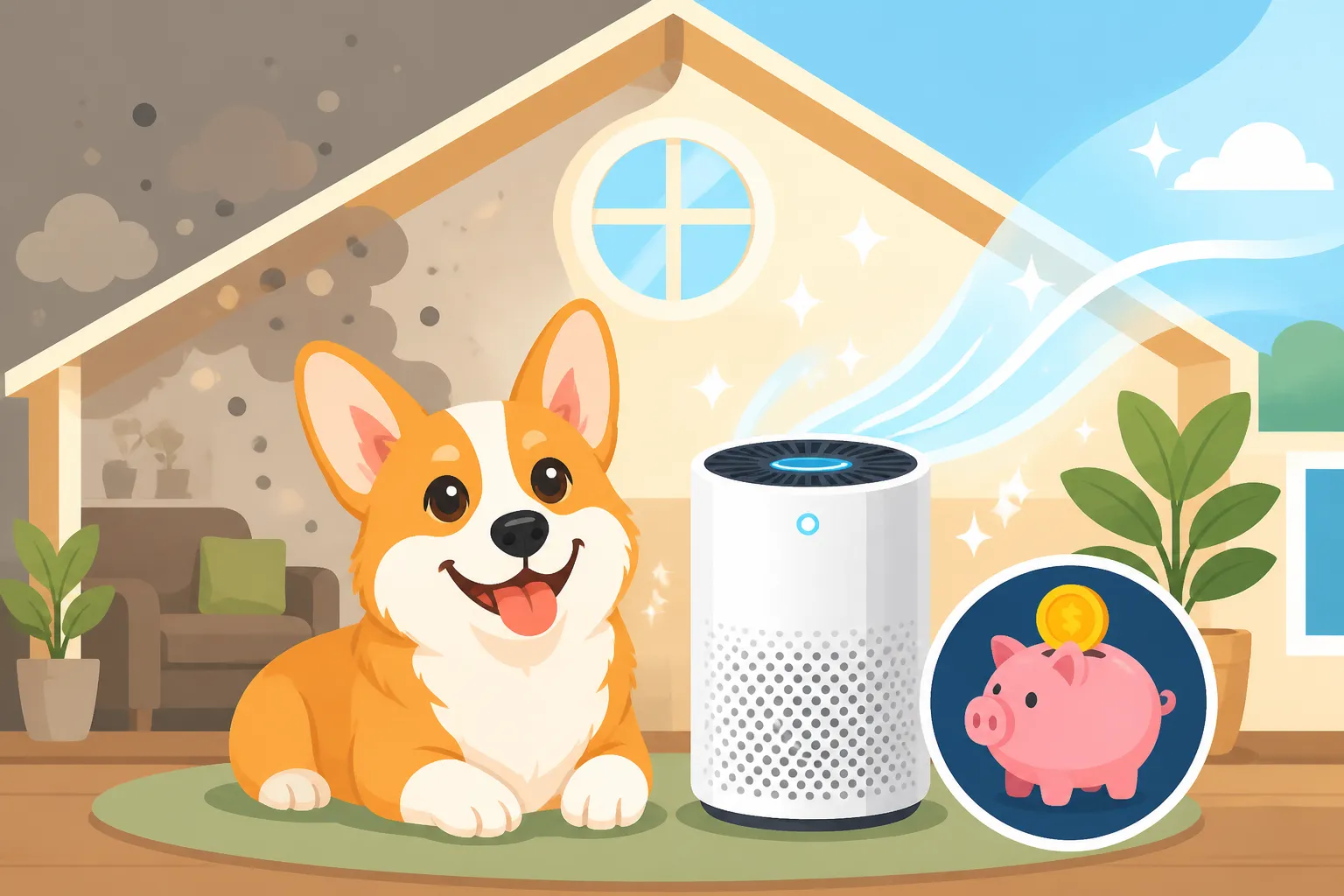
When considering an air purifier for your Corgi-filled home, it’s not just about the initial sticker price. There are several factors that contribute to the overall cost of owning and operating one. It's an investment, certainly, but one that many Corgi owners find pays dividends in improved comfort and health. Thinking about these costs upfront helps you make a more informed decision and avoids any surprises down the line. You want a solution that works for the long haul, especially when battling persistent Corgi shedding.
Initial Purchase Price
The upfront cost of an air purifier can vary widely based on several factors, including the brand, the coverage area (how many square feet it can effectively clean), its features (like smart controls, multiple fan speeds, or UV-C lights), and the overall quality of its filtration system. You can find small, personal-sized purifiers that are fairly inexpensive, but these are rarely sufficient for a Corgi household. For a unit capable of cleaning the air in a significant living space, or even multiple rooms, the price range can extend upwards considerably.
Think about the size of the room or the area you want to treat. A larger unit with a higher Clean Air Delivery Rate (CADR) will naturally cost more, but it will also be more effective in a bigger space or a room where your Corgi spends a lot of time, like the living room or your bedroom. Some owners choose to place smaller units in individual rooms, while others opt for one powerful unit for an open-concept living area. Websites like Chewy often carry a wide range of options, allowing you to compare models and features from different manufacturers to find something that fits your budget and needs.
| Feature / Type | Entry-Level Option | Mid-Range Option | Premium Option |
|---|---|---|---|
| Coverage Area (CADR) | Small room (under 150 sq ft) | Medium room (150-300 sq ft) | Large room/Open concept (300+ sq ft) |
| Filtration | Basic HEPA + Carbon | True HEPA + Enhanced Carbon | Multi-stage (True HEPA, Carbon, UV-C) |
| Features | Basic fan speeds, manual | Auto mode, timer, filter indicator | Smart controls, air quality sensor |
| Noise Level | Variable, noticeable on high | Quieter operation, sleep mode | Whisper-quiet, advanced fan design |
Ongoing Filter Replacement Costs
This is where many people overlook a significant part of the total cost of ownership. Air purifiers rely on consumable filters that need to be replaced periodically. How often depends on the type of filter, how much your Corgi sheds, how often you run the unit, and the general air quality in your home. True HEPA filters typically last anywhere from six months to a year, while activated carbon filters might need replacing more frequently, sometimes every three to six months, especially if you're battling strong odors.
The cost of these replacement filters varies by brand and model. Some proprietary filters can be quite expensive, sometimes a significant percentage of the unit's original purchase price. Before you buy an air purifier, always check the cost and availability of replacement filters. A fantastic deal on the unit itself can quickly become an ongoing expense if the filters are pricey. Some people prefer to buy their filters in bulk from retailers like Chewy when they find a good price, or even subscribe to a filter delivery service if available, to ensure they always have fresh filters on hand.
Energy Consumption
While air purifiers typically don't consume a huge amount of electricity, it's still a factor to consider, especially if you plan to run your unit continuously, which is often recommended for optimal air quality in a pet home. The wattage of the unit will dictate its energy usage. Smaller, lower-powered units will naturally use less electricity than large, powerful ones.
Look for models that are Energy Star certified, as these are designed to be more energy-efficient without sacrificing performance. Many modern purifiers also come with an "auto mode" feature, where they sense the air quality and adjust their fan speed accordingly. This can save energy by only running at higher speeds when needed. While the individual impact on your monthly electricity bill might be small, it's still a part of the overall cost picture that adds up over time, especially if you're running multiple units.
Making the Right Choice for Your Corgi Home
Choosing the best air purifier for your Corgi household means balancing performance with practicality and budget. It's about finding a unit that can handle the specific challenges of Corgi shedding and pet dander without becoming another burden. A little research goes a long way in ensuring you get an effective solution that you'll be happy with for years to come.
Assessing Your Specific Needs
Before diving into different models, take a moment to assess your home's unique situation. How many Corgis do you have? Where do they spend most of their time? Do you or anyone in your family suffer from pet allergies? Are pet odors a significant concern? The answers to these questions will help guide your selection. For example, if your Corgi sleeps in your bedroom, you might prioritize a quieter unit for that space. If you have an open-concept living area, you'll need a unit with a higher CADR to cover a larger square footage.
Consider the layout of your home. Do you need one powerful unit in a central location, or several smaller units spread throughout different rooms? Remember that air purifiers are most effective in enclosed spaces, so closing doors and windows will help them do their job more efficiently. If you find yourself constantly dealing with Corgi Hair Woven Into Carpet or battling a thick layer of dander on your surfaces, a robust air purification system can be a game-changer alongside your regular cleaning routine.
Key Features to Look For
When you're comparing air purifiers, these are the features that truly matter for a Corgi owner:
- True HEPA Filter: As discussed, this is non-negotiable for capturing pet dander and fine hair. Don't settle for "HEPA-type" or "HEPA-like" filters, which don't meet the same strict standards.
- Activated Carbon Filter: Essential for eliminating pet odors and other volatile organic compounds (VOCs). Look for a substantial carbon filter, not just a thin layer.
- CADR Rating: This indicates how quickly the purifier cleans a room. Higher numbers mean faster cleaning. Match the CADR to your room size.
- Noise Level: Measured in decibels (dB). A quieter unit, especially for bedrooms or living areas, will be more pleasant to live with. Look for models with a "sleep mode" or low-noise settings.
- Filter Life and Cost: Always investigate how often filters need replacing and how much they cost. This ongoing expense is a crucial part of your long-term budget.
- Energy Efficiency: Look for Energy Star certification to help keep operating costs down.
- Smart Features (Optional but nice): Things like auto mode (which adjusts fan speed based on detected air quality), a timer, filter replacement indicators, or even app control can enhance convenience.
It's about finding a balance that works for your specific home and your Corgi's habits. For instance, if your Corgi spends a lot of time on furniture, you might consider smaller, targeted units for those specific rooms, or perhaps combine it with other strategies to Keep a Corgi's Bed Free of Hair. While pet insurance like Healthy Paws is invaluable for your Corgi's health emergencies, investing in an air purifier is a preventative measure that contributes to their everyday comfort and respiratory well-being, reducing environmental triggers.
Placement and Maintenance
Once you've chosen your air purifier, proper placement and regular maintenance are key to its effectiveness. Place the unit in a central location within the room you want to purify, ideally away from walls or furniture that might obstruct airflow. Don't tuck it away in a corner where it can't circulate air properly. For Corgis, consider placing it near where they sleep or spend most of their time.
Regular maintenance, primarily changing those filters, is paramount. An old, clogged filter is an ineffective filter. The unit's performance will diminish, and it might even start to circulate dust again. Make a note of when you need to replace them, or utilize any built-in filter indicators your unit might have. Remember, a clean filter is a happy filter, and a happy filter means cleaner air for you and your beloved Corgi. Alongside managing How Much Hair a Twenty-Eight Pound Corgi Drops with regular brushing, an air purifier becomes another vital tool in your arsenal against the ubiquitous Corgi fluff.
Disclaimer
This article is for general informational purposes only and does not constitute professional advice. Laws, prices and regulations vary by location and change over time. Consult a qualified professional for guidance on your specific situation.