Teaching a Corgi to Use a Ramp
It's a common sight, isn't it? Our adorable, low-slung Corgis, with their boundless energy, will often try to launch themselves off the sofa or bed without a second thought. But for these long-backed, short-legged pups, every jump and twist poses a significant risk to their delicate spines. This comprehensive guide will walk you through everything you need to know about successfully teaching your Corgi to use a ramp, protecting their back from injury, and ensuring a lifetime of comfortable mobility.
Why Ramps Are Non-Negotiable for a Corgi's Spine
Let's be honest, those short little legs and long bodies are what make Corgis so uniquely charming. But they also come with a built-in vulnerability, especially when it comes to their spines. As much as we love watching them rocket around the house, those sudden impacts from jumping can lead to serious, painful, and often expensive health issues. Thinking about ramps isn't about coddling your Corgi; it's about preventative care that truly makes a difference in their quality of life.
The Silent Threat of IVDD and Joint Strain
Many Corgi owners become acutely aware of Intervertebral Disc Disease (IVDD) the moment they bring their puppy home. It's a condition where the discs between the vertebrae, which normally act as shock absorbers, either bulge or rupture, pressing on the spinal cord. This can lead to excruciating pain, nerve damage, and even paralysis. Every time a Corgi jumps down from a height – whether it's the bed, the couch, or the back of a car – that long back takes a jarring impact. Over time, these repeated stresses chip away at the integrity of those discs. It’s not usually one catastrophic leap that causes the problem, but rather the cumulative effect of hundreds of smaller jumps throughout their life. Disc Disease in a Long-Backed Corgi is a very real concern for our breed. Beyond IVDD, the constant jarring also puts undue strain on their joints, particularly in their shoulders and elbows, which are already working harder to support their compact bodies. Imagine the force on those tiny legs as they absorb the landing from a jump that, to them, is a significant drop!
Preventing Accidents Before They Happen
The beauty of ramp training is that it's proactive. Instead of waiting for the dreaded yelp or the sudden inability to move their back legs, you're setting your Corgi up for success from day one. Picture this: your Corgi is playing fetch, gets excited, and decides to jump off the armchair to get the ball. In that split second, a disc could slip. Or perhaps they're old and stiff, and a misstep from a height could lead to a fall and a fracture. By teaching them to use a ramp, you're removing that moment of high-impact risk entirely. It’s like building a safety net around their everyday movements. This prevention is especially crucial as they age, when their bodies naturally become less resilient, and recovery from injury is much harder. We know that The Corgi Years When the Back End Gives Out often bring these concerns to the forefront, so starting early is key.
Addressing the Corgi's Natural Jumping Tendency
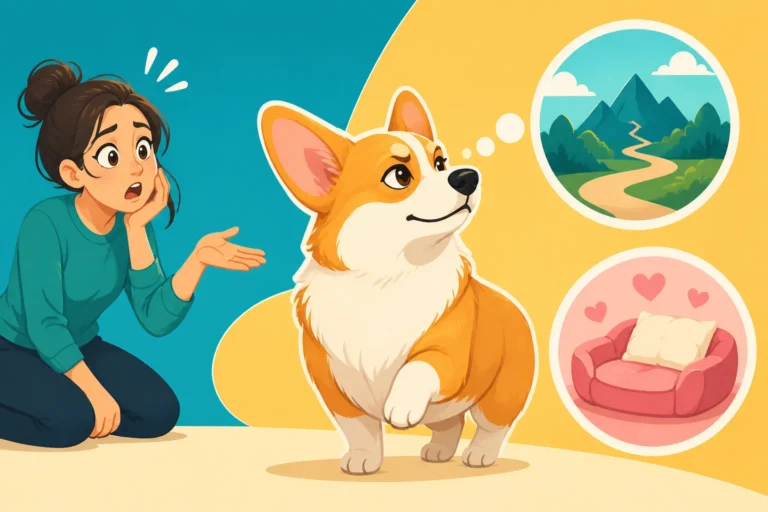
Corgis, for all their low-rider stature, often seem to think they're mountain goats. They have an innate desire to be with their people, which often means joining you on the sofa or bed. And let's be honest, it's hard to resist their pleading eyes when they want to snuggle up. This isn't a problem, unless they're jumping down unassisted. Their history as herding dogs, quick and agile despite their build, means they have a natural inclination for sudden bursts of movement. They might not perceive the height of a couch as dangerous, but their anatomy tells a different story. It’s not enough to just say "no jumping"; you need to provide a safe, accessible alternative. A ramp becomes that safe pathway, allowing them to participate in family life without putting their precious spine at risk. Whether a Corgi Should Ever Jump Off a Sofa is a question many owners ponder, and the answer is almost always no, unless a ramp is involved.
Choosing the Right Ramp for Your Corgi and Your Home
Selecting the perfect ramp isn't a one-size-fits-all situation. You'll need to consider a few factors related to your Corgi's size, where the ramp will be used, and your budget. Think of this as an investment in your Corgi's long-term health and happiness. A good ramp can last for years, protecting them through all stages of their life.
Assessing Ramp Length, Incline, and Surface
When picking a ramp, the most critical aspects are its length, the resulting incline, and the surface material. A Corgi's short legs mean they need a much gentler incline than a taller dog. If the ramp is too steep, they'll find it difficult to climb and might even slip, defeating the purpose. For a standard sofa, you're often looking for a ramp that's at least 3-4 feet long to achieve a gentle slope. For a bed, which is usually higher, you might need a ramp closer to 5-6 feet.
The surface is equally vital. It needs to provide excellent traction. Smooth plastic or bare wood ramps are a no-go; your Corgi's paws will slip, making them hesitant or even causing injury. Look for ramps with carpet, sandpaper-like textures, or rubberized treads. Many pet ramps available on sites like Amazon offer textured surfaces specifically designed for traction. If you have an older Corgi, or one recovering from an injury, a wider ramp can also be beneficial, providing more stability and confidence as they ascend and descend.
Indoor Ramps vs. Outdoor Ramps for Different Needs
Your needs will likely vary depending on where the ramp is intended for use.
- Indoor Ramps: These are typically for sofas, beds, or even getting onto a favorite chair. They often prioritize aesthetics (to blend with home decor) and are generally lighter, easier to move, and might have a softer carpeted surface. You might need several indoor ramps if your Corgi accesses multiple pieces of furniture. When choosing one, consider how often you'll need to move it or if it will be a permanent fixture. Look for sturdy models that don't wobble, which can spook a nervous dog.
- Outdoor Ramps: These are primarily for vehicle access – getting into cars, SUVs, or even onto outdoor steps. They need to be more durable, weather-resistant, and typically feature a higher-traction surface, like a gritty, non-slip texture. Portability is a huge factor here, so many outdoor ramps fold or telescope for easy storage in your car. Make sure any outdoor ramp you choose has a secure locking mechanism when extended and stable feet to prevent tipping. For Corgis, a shorter, wider ramp specifically designed for car access is often ideal, as it provides a manageable slope into the vehicle.
Portable and Travel Ramps for On-the-Go Protection
Life with a Corgi isn't confined to your home, and neither should their spinal protection be! Portable and travel ramps are indispensable for those adventures. Imagine you're visiting a friend whose house has a few steps, or you're taking your Corgi on a road trip. Having a lightweight, foldable or telescopic ramp means you can easily get them in and out of the car without putting stress on their back.
These ramps are usually made from aluminum or durable plastics, designed to be compact when stored but robust when in use. They're often slightly narrower than permanent indoor ramps but still need to offer good traction. When selecting a travel ramp, pay attention to its weight capacity and how easily you can maneuver and set it up. The faster and more stable you can deploy it, the more likely you are to use it consistently. Remember, consistency is key for your Corgi's safety, so invest in a ramp that you'll actually use every time you need it. Ramps and Steps That Save a Corgi's Back come in all shapes and sizes, and having a portable option is a lifesaver.
Getting Started: The First Steps to Ramp Training
Teaching your Corgi to use a ramp is a process that requires patience, positive reinforcement, and a breakdown into small, manageable steps. Remember, your Corgi might be wary of new things, especially something that feels unstable or looks daunting. The goal is to make it a positive, rewarding experience.
Introducing the Ramp in a Calm Environment
The very first step is to introduce the ramp in a low-stress, quiet area of your home, away from distractions. Don't immediately place it against the sofa or car. Lay the ramp flat on the ground first, or with only a very slight incline. Let your Corgi approach it, sniff it, and investigate it at their own pace. Don't force them or push them onto it. The initial interaction should be purely about exploration and forming a positive association.
Have some high-value treats ready – little pieces of cooked chicken, cheese, or their absolute favorite kibble. When they show any interest in the ramp, even just looking at it, reward them with praise and a treat. If they walk over the flat ramp, even better! Keep these early sessions short and positive. You want them to think, "Oh, this new thing means good things happen." This calm introduction builds a foundational trust that's crucial for the next steps.
Luring and Positive Reinforcement Techniques
Once your Corgi is comfortable being near the ramp, you can start using luring and positive reinforcement to guide them onto it.
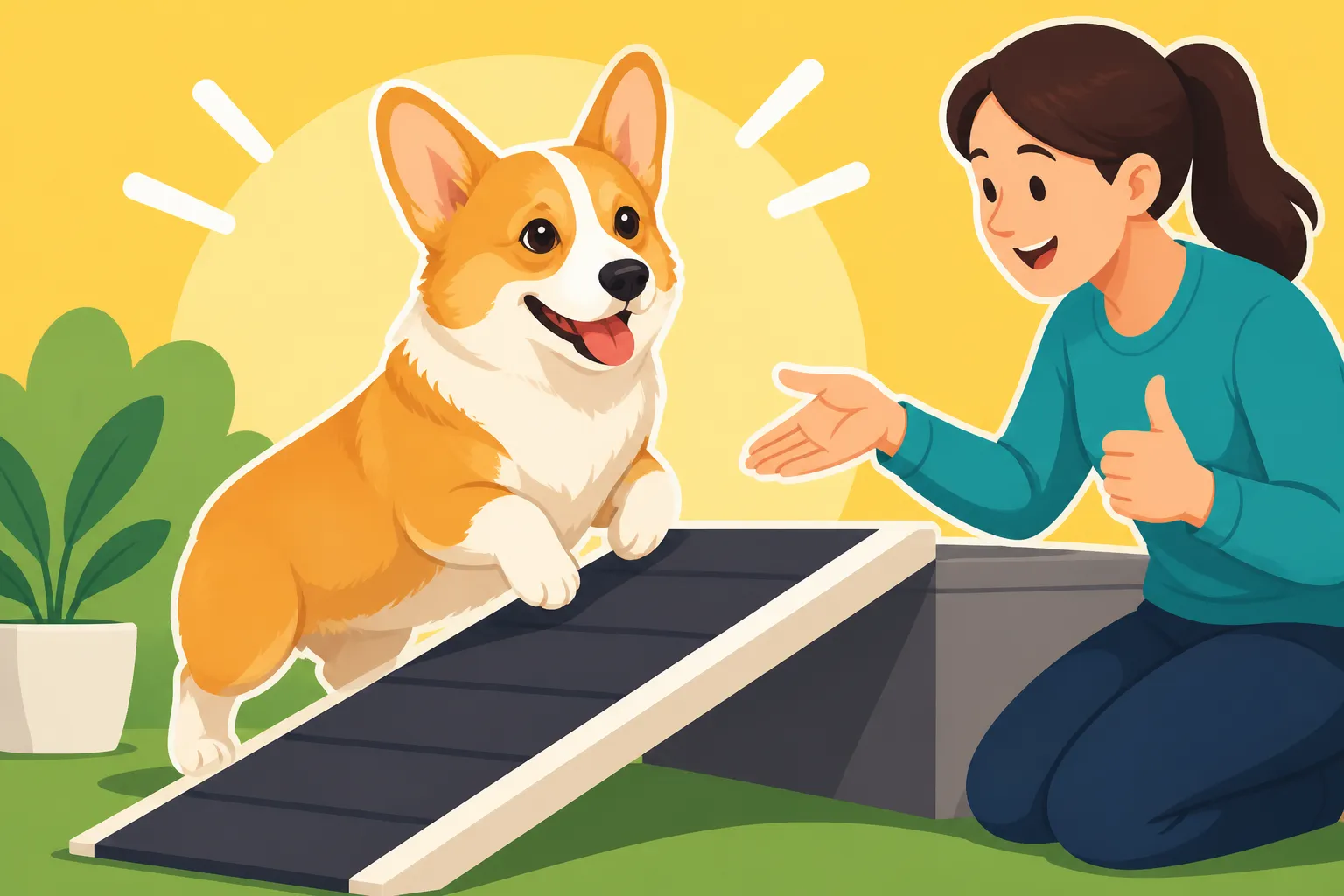
- Luring Up: Start with the ramp at a very gentle incline. Hold a high-value treat right at your Corgi's nose, and slowly move it up the ramp, enticing them to follow. As soon as they put one paw on the ramp, give a treat and praise. Repeat. Gradually, move the treat further up, encouraging them to take another step, and another. The moment they walk all the way up, throw a small party – lots of praise, several treats, maybe even a quick game of tug.
- Luring Down: This is often harder for Corgis. They might be confident going up, but hesitant to come down. Use the same luring technique, guiding the treat down the ramp. Be very patient. If they only take one step down, reward that one step. If they stop halfway, reward them there, then try again. Never pull or push them down. It needs to be their decision to follow the treat.
- Clicker Training (Optional but Effective): If you use a clicker, this is an excellent time to incorporate it. Mark the exact moment your Corgi touches the ramp, takes a step, or completes the ramp traversal with a click, followed immediately by a treat. This precise feedback helps them understand exactly what action earned the reward. For those looking for structured guidance, programs like BAXTER & Bella offer comprehensive online training resources that can be immensely helpful in mastering positive reinforcement techniques like this. Remember, Whether a Corgi Works for Anything but Food is a question with a pretty clear answer: food is usually a very strong motivator!
Breaking Down the Process Into Small, Achievable Steps
The key to successful ramp training, especially with a breed that can be as opinionated as a Corgi, is to break it down into tiny, almost imperceptible steps. Don't expect them to master a steep ramp to the bed on day one.
Here’s a possible progression:
- Step 1: Flat Ramp Familiarization: Lay the ramp flat on the floor. Reward them for walking over it casually.
- Step 2: Slight Incline: Elevate one end of the ramp by just a few inches (e.g., resting it on a thick book). Practice luring up and down.
- Step 3: Gradually Increase Height: Slowly increase the height of the ramp over several sessions or days, always ensuring the incline remains manageable for your Corgi.
- Step 4: Introduce to Target Location: Once they are confidently using the ramp at a reasonable height, move it to its intended location (e.g., the sofa). Keep the first few sessions at the new location extra rewarding.
- Step 5: Practice Consistency: Don't just practice once and assume they've got it. Short, frequent practice sessions throughout the day will solidify the behavior. Always end on a positive note, even if it's just for one successful step. This process helps prevent frustration for both you and your Corgi, making it a more enjoyable learning experience. Asking a Corgi to Wait for a Lift is a good foundational command that can be adapted to waiting for the ramp.
Overcoming Common Corgi Ramp Reluctance
Even with the best intentions and the tastiest treats, some Corgis might still be a bit wary of ramps. It's totally normal! Their independent nature and sometimes cautious temperament mean they won't always just follow your lead blindly. Don't get discouraged; there are strategies to help even the most hesitant Corgi become a ramp pro.
Fear of the Unknown: Desensitization Strategies
For many Corgis, the ramp is a new, unfamiliar object. It might look strange, feel different under their paws, or even make unfamiliar noises if it's a portable ramp with moving parts. This can trigger a natural fear or reluctance. The key here is desensitization.
- Go Slow, Really Slow: We talked about introducing the ramp flat. Don't rush past this stage. Let the ramp sit in your living room for a few days, even a week, without asking anything of your Corgi. Let them see it, smell it, and realize it's not a monster.
- Positive Associations, No Pressure: Place treats around the ramp, not just on it. Toss toys near it. You can even eat your own snack nearby, showing them that the ramp is just a normal, harmless part of the environment. The goal is for them to associate the ramp with calm, positive experiences, rather than feeling pressure to perform.
- Expose to Sounds/Movements: If your ramp folds or makes any noise, gently operate it a few times a day while your Corgi is relaxed nearby, again associating the sound with treats or praise. This helps them get used to any operational noises without fear. Sometimes, the initial instability or slight "give" of a new ramp can scare them; make sure it's absolutely solid and still during initial training.
The Stubborn Streak: Patience and Consistency
Corgis are known for their intelligence, but also for their strong will. If they decide they don't want to do something, they can be remarkably stubborn! This isn't defiance; it's often their way of saying "I'm not sure about this" or "What's in it for me?"
- Keep Training Sessions Short and Sweet: Marathon training sessions are counterproductive. Aim for 2-5 minute sessions, several times a day. End on a high note, even if it's just for a small success. This keeps them engaged and prevents them from becoming overwhelmed or bored.
- Vary Rewards: While food is usually a strong motivator, some Corgis might also respond well to a favorite toy or a quick game of tug as a reward. Experiment to see what truly excites your dog.
- Never Punish: Yelling, scolding, or physically forcing your Corgi onto the ramp will only create negative associations and make them more resistant. It's crucial to maintain a positive, encouraging tone. If they refuse, simply end the session calmly and try again later. Sometimes, a break is all they need to reset. Remember, you're building trust and teaching a life-saving skill, not just a trick.
Making the Ramp More Appealing (Traction, Treats, Toys)
Sometimes, a little extra incentive or modification can make all the difference.
- Improve Traction: If your Corgi seems hesitant due to slipping, consider adding extra traction. You can temporarily tape down a yoga mat or a non-slip bath mat to the ramp surface. For a more permanent solution, some ramps allow for adding self-adhesive stair treads or carpet runners.
- The Treat Trail: Instead of just luring with a single treat, create a "treat trail." Place several small, high-value treats spaced out along the ramp, leading them up or down. This makes each step its own mini-reward and encourages forward momentum.
- Favorite Toy at the Top/Bottom: If your Corgi is toy-motivated, place their absolute favorite toy at the top of the ramp (on the sofa or bed) or at the bottom. This can act as a powerful lure. As they get comfortable, you can start tossing the toy up the ramp, encouraging them to retrieve it using the ramp.
- Your Presence is Key: Make sure you are right there, encouraging them, praising them, and making eye contact. Your calm, confident presence can be very reassuring for a nervous Corgi. Show them that you trust the ramp, and they're more likely to trust it too. If they seem to have pain or discomfort when attempting the ramp, it's always wise to rule out any underlying physical issues with your vet, as reluctance could sometimes stem from pain, not just stubbornness. Physiotherapy for a Corgi Losing Its Legs can even involve ramp training, showing its importance for dogs with mobility challenges.
Integrating Ramps into Your Corgi's Daily Routine
Once your Corgi has mastered the basic concept of using a ramp, the next crucial step is to weave this behavior seamlessly into their everyday life. This means making ramps a consistent, expected part of their environment, rather than an occasional tool.
Consistency Across Multiple Locations
It's common for Corgis to learn a behavior in one specific spot but struggle to generalize it to others. If you've successfully trained them on a ramp to the living room sofa, don't assume they'll automatically use a different ramp to the bed, or the one for the car.
- Introduce New Ramps Gradually: When you introduce a new ramp in a new location, treat it almost like a mini-training session again. Start with gentle encouragement and high-value rewards. The foundational training will make it quicker, but don't skip the positive reinforcement.
- Strategic Placement: Think about all the elevated surfaces your Corgi might try to access. This could be multiple sofas, beds, even certain chairs, or the entrance to your car. Place ramps strategically and leave them there. The more readily available and consistently present the ramps are, the more your Corgi will default to using them. For instance, having a sturdy ramp next to your bed and another one by the living room couch should become the new normal.
- Family Involvement: Ensure everyone in the household is on the same page. If one family member lifts the Corgi onto the sofa while another insists on the ramp, it creates confusion. Consistency from all humans will reinforce the desired behavior much faster.
Supervising and Reinforcing Good Habits
Even after your Corgi seems to be a pro, occasional supervision and reinforcement are important, especially in the early stages of integration.
- Catch Them Doing It Right: Actively look for opportunities to praise and reward your Corgi when they choose to use the ramp on their own. A simple "Good ramp!" followed by a small treat or a loving ear scratch reinforces the positive choice.
- Gentle Reminders: If you see your Corgi winding up for a jump, gently interrupt them with a verbal cue like "Ramp!" or "Wait!" and redirect them towards the ramp. Physically blocking their jump without being harsh can also work. The goal is to make the ramp the only option they consider for elevated surfaces.
- Consistency is Your Best Friend: This cannot be stressed enough. Every single time your Corgi needs to get up or down from a height, the ramp must be used. One accidental jump, or one time you're in a hurry and just lift them, can undermine weeks of training. If your Corgi has had a Crate Rest for a Corgi With a Bad Back, you know how vital strict adherence to safety protocols is, and ramps are part of that long-term commitment.
Troubleshooting and Adapting as Your Corgi Ages
As your Corgi gets older, their needs might change, and you might encounter new challenges with ramp usage.
- Physical Changes: An older Corgi might develop arthritis, hip dysplasia, or other age-related joint issues, making even a gentle ramp more challenging. Early Arthritis in a Corgi can make them hesitant. You might need to adjust the ramp's incline to be even shallower, ensure the traction is impeccable, or provide extra encouragement. If they seem to be struggling physically, a vet visit is in order to manage any pain.
- Cognitive Decline: Some older Corgis might experience cognitive dysfunction, which can lead to confusion or forgetting learned behaviors. In these cases, very simple, consistent cues and a calm, patient approach are essential. You might need to go back to basics with luring and very frequent, short sessions.
- Ramp Wear and Tear: Over time, ramp surfaces can wear down, reducing traction. Regularly inspect your ramps for any loose carpeting, worn-down treads, or instability. Replace or repair them as needed to ensure they remain safe and appealing for your Corgi. A ramp is a long-term tool, and like any tool, it needs maintenance.
| Ramp Type | Primary Use | Key Features to Look For | Corgi Specific Considerations |
|---|---|---|---|
| Indoor Fixed | Sofa, Bed | Gentle incline, stable, blends with decor, good carpet/traction | Must be long enough for shallow angle, non-slip surface crucial, consider multiple locations |
| Indoor Portable | Specific chairs, visiting | Lightweight, easy to move, good traction, sturdy | Stability is paramount for nervous Corgis; ensure it doesn't wobble when in use |
| Outdoor Folding/Telescoping | Car, SUV, outdoor steps | Durable, weather-resistant, compact, excellent grit/rubberized traction | Ensure secure attachment to vehicle, easy for you to deploy and store, good weight capacity |
Beyond Ramps: Other Ways to Protect Your Corgi's Back
While ramps are a cornerstone of spinal protection for Corgis, they are part of a larger picture of responsible care. Thinking holistically about your Corgi's physical well-being ensures you're doing everything possible to prevent injuries and promote a long, healthy life.
Smart Lifting Techniques
Sometimes, despite your best ramp training efforts, or in emergency situations, you'll need to lift your Corgi. Knowing how to do this correctly is vital to avoid putting strain on their back.
- Two-Handed Lift: Always use two hands. One hand should support their chest and front legs, while the other hand supports their hindquarters and belly. This keeps their spine straight and minimizes any twisting or arching. Never lift a Corgi by only holding them under their armpits or by their front legs, as this puts immense stress on their long back.
- Keep Them Close: Hold your Corgi close to your body when lifting. This gives you more leverage and reduces the strain on your own back, while also making your Corgi feel more secure.
- Practice for Emergencies: It's a good idea to practice proper lifting occasionally, so both you and your Corgi are comfortable with it. This way, if you ever need to lift them quickly due to an emergency or after an injury, it won't be a jarring, unfamiliar experience for them. Picking a Corgi Up Without Hurting It is a skill every Corgi owner should master.
Managing Weight for Spinal Health
One of the absolute biggest favors you can do for your Corgi's back is to keep them at a healthy weight. Extra pounds are not just "more to love" for a Corgi; they are a direct load on their spine and joints, exponentially increasing the risk of IVDD and other mobility issues.
- Strict Portion Control: Corgis are notorious food hounds and will often act like they're starving, even after a full meal. Their compact size means even a few extra pounds can be significant. Measure their food precisely and resist the urge to free-feed or over-treat.
- Healthy Body Condition Score: Learn what a healthy Corgi looks and feels like. You should be able to easily feel their ribs without seeing them prominently, and they should have a discernible waist when viewed from above. Their belly should tuck up slightly when viewed from the side. If they're shaped more like a sausage, it's time to talk to your vet about a weight management plan. What an Ideal Corgi Weighs is often less than you think for a healthy back.
- Calorie-Conscious Treats: If you use treats for training (and you should!), factor those calories into their daily food allowance. Opt for low-calorie options like small pieces of carrot, green bean, or prescription dental chews, rather than calorie-dense commercial treats. What Extra Weight Does to a Corgi Spine is profound, so this isn't an area to take lightly.
Safe Play and Exercise Habits
While Corgis are energetic, their exercise needs to be tailored to their unique physique to protect their back.
- No High-Impact Activities: Avoid activities that involve a lot of jumping, twisting, or sharp turns, such as aggressive fetch games with sudden stops, or jumping over obstacles. While agility can be adapted for Corgis, it needs to be done with spinal safety in mind, using low jumps and careful handling.
- Leash Walks and Sniffing: Regular, moderate leash walks are excellent for Corgis. They provide mental stimulation through sniffing and gentle physical exercise without undue strain. Allow them to explore; it's mentally enriching.
- Swimming and Hydrotherapy: If your Corgi enjoys water, swimming is a fantastic, low-impact exercise that strengthens muscles without stressing joints or the spine. It's often recommended for Corgis with existing back issues or those recovering from surgery.
- Mental Stimulation: Don't forget that a tired Corgi isn't just physically tired; they're mentally tired too. Puzzle toys, scent work, and short training sessions are great ways to burn energy without impacting their spine. This can also help prevent boredom-related destructive behaviors.
By integrating ramps, smart lifting, weight management, and safe play into your Corgi's routine, you're giving them the best possible chance at a comfortable, active, and long life. It's a commitment, but one that is absolutely worth it for these wonderful, low-riding companions.
Disclaimer
This article is for general informational purposes only and does not constitute professional advice. Laws, prices and regulations vary by location and change over time. Consult a qualified professional for guidance on your specific situation.