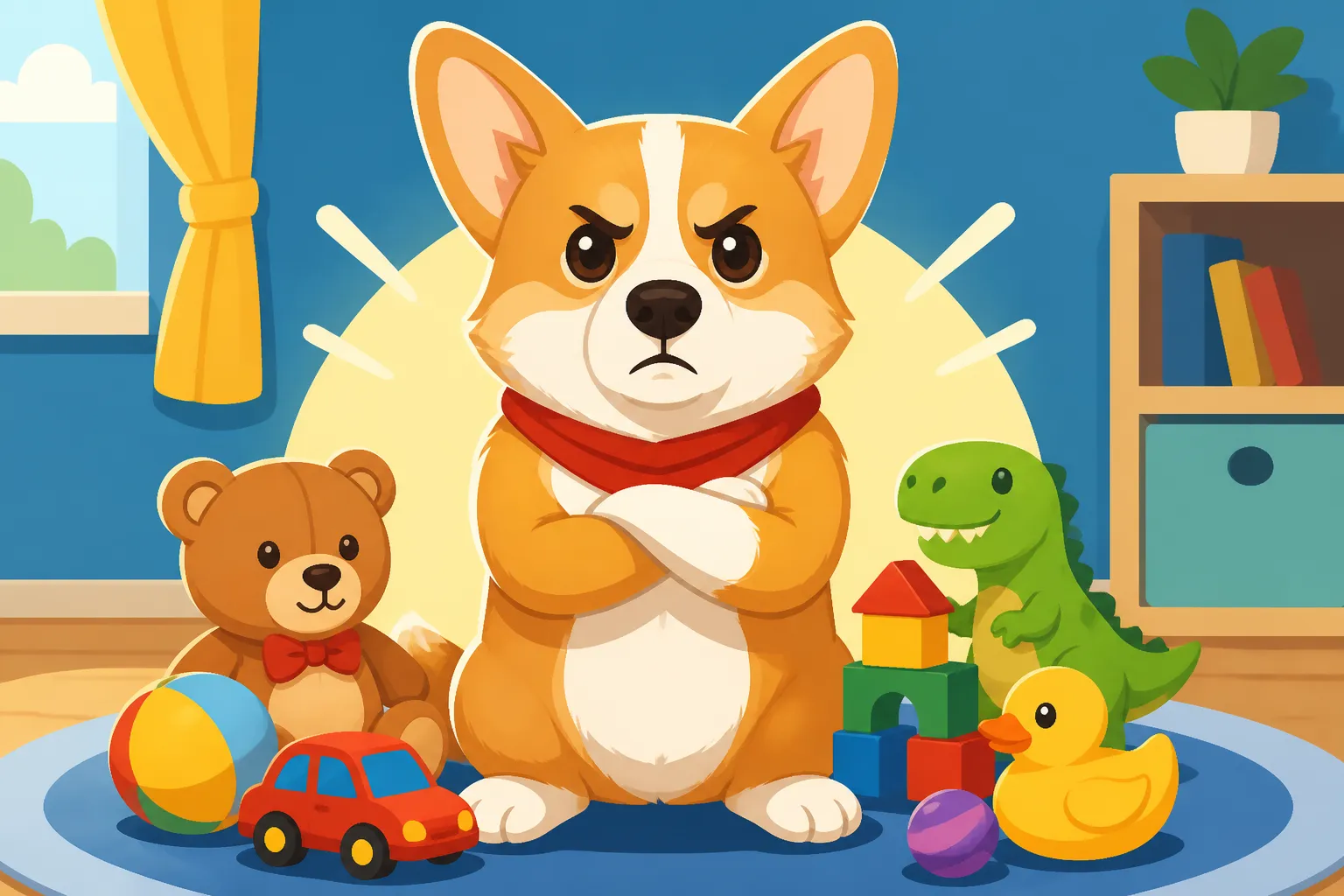
A Corgi That Guards a Child’s Toys
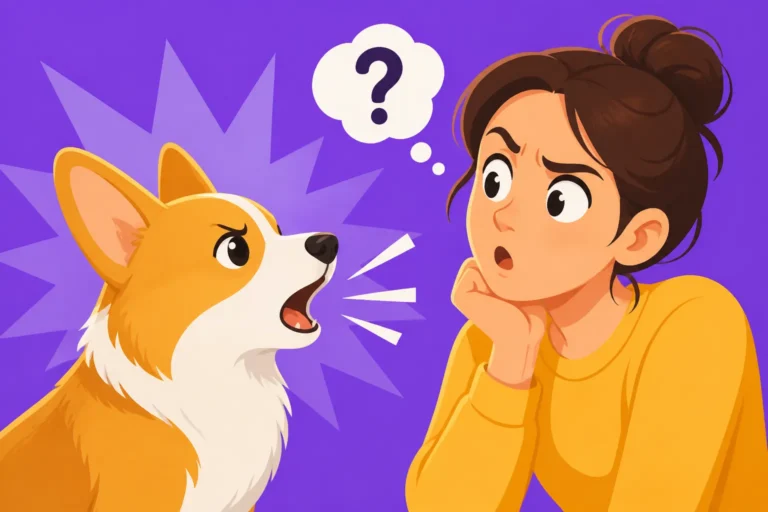
It’s a scenario that can send a chill down any Corgi owner's spine: your beloved, usually goofy Corgi suddenly stiffens, growls, or even snaps when your child reaches for a toy that the dog has claimed. This isn't just "being possessive"; it's a serious form of resource guarding, and it can be incredibly upsetting and create a very real safety concern in a family home. You might feel confused, frustrated, or even a little scared about how to handle it. This guide is here to unravel why your Corgi might be guarding your child's toys and, more importantly, to give you clear, actionable steps to manage and prevent this challenging behavior, helping to restore peace and safety in your home.
Understanding Why Your Corgi Guards Toys
When a Corgi decides to guard a child's toy, it's not because they're being "mean" or "dominant" in the human sense. Their behavior is rooted in instinct, learning, and sometimes, a lack of clear understanding about household rules. It’s important to remember that for a dog, possessing valuable items is a survival strategy, even if that item is a sparkly unicorn plushie.
The Instinctual Drive to Gather and Protect
Let's dive into the Corgi's heritage for a moment. These adorable, low-slung dogs were bred for centuries to be working dogs, specifically driving cattle. Think about that job: nipping at heels, guiding, and controlling large animals. This isn't about aggression, but about a deep-seated instinct to manage resources and territory. A Corgi's mind is wired to gather and keep things where they "belong," or where the Corgi thinks they belong.
Now, translate that powerful instinct to your living room. To a Corgi, a child’s toy, especially one that gets a lot of attention, can easily become a "resource" to be managed or protected. They might see it as something valuable, something they want to keep, or something they need to control the movement of, much like they would a stray calf. If your child is playing with a toy and then leaves it, your Corgi might simply decide, "Ah, this is now mine to oversee." This is particularly true if the toy is soft, squeaky, or has an interesting texture, making it appealing even if it's not a designated dog toy. It's not personal; it's just how their ancient herding brains sometimes interpret the world around them. You might notice similar instincts at play if your Corgi tries to round up other pets or even family members, demonstrating The Cattle-Driving Nip a Corgi Still Has.
Resource Guarding 101: More Than Just Food
When most people think of resource guarding, they picture a dog aggressively protecting its food bowl. But resource guarding is far broader than that. It’s when a dog perceives any item as valuable enough to defend against perceived threats. And let me tell you, what a dog considers "valuable" can be surprising! It could be a favorite chew, a comfy bed, a prime spot on the sofa, a specific human, or yes, even a child's teddy bear.
The behavior can manifest on a spectrum. It might start subtly: a Corgi stiffening its body over a toy as a child approaches, giving a hard stare, or quickly moving its body to cover the item. If these subtle cues are ignored, it can escalate to growling, lip curling, snapping in the air, or even biting. For a Corgi, with their strong personalities and often independent streak, they can quickly decide that they are the rightful owner of an item. Their intelligence and determination, which we often love, can make resource guarding a persistent challenge if not addressed appropriately and with clear, consistent boundaries. In homes with multiple pets or children, understanding who "owns" what can become a complex negotiation for a dog, leading them to take matters into their own paws. Consider how this behavior might be perceived in a busy A Corgi in a House Full of Children and Animals.
Confusion and Lack of Clear Boundaries
One of the biggest contributors to resource guarding, especially around children’s toys, is often unintentional human behavior. Dogs learn through consequences. If a Corgi growls over a toy and the child retreats, the Corgi learns, "Aha! That worked. Growling keeps the 'threat' away and I get to keep my valuable item." This success reinforces the guarding behavior, making it more likely to happen again.
Our homes, with their myriad objects and fluctuating rules, can be incredibly confusing for dogs. We might accidentally leave child toys within reach, allow the Corgi to play with them sometimes, and then scold them for it other times. This inconsistency makes it impossible for the dog to understand what the rules truly are. If there are no clear boundaries – for instance, "dog toys live here, child toys live there, and child toys are never for you" – then the Corgi might default to its natural instinct to claim what it perceives as valuable. Without consistent guidance and management, your Corgi, being the intelligent and self-directed little dog they are, will inevitably make their own decisions about what’s theirs and what isn't. This is part of Training a Corgi That Makes Its Own Decisions.
Recognizing the Early Warning Signs
Before a Corgi resorts to a growl or a snap, they are almost always communicating their discomfort and possessiveness through more subtle signals. Learning to recognize these early warning signs is crucial for preventing escalation and ensuring everyone's safety. Ignoring these initial cues forces your Corgi to escalate their communication, which is the last thing anyone wants.
Subtle Body Language Cues
Dogs are masters of body language, and Corgis are no exception, even with their compact size. When a Corgi starts to guard an item, you might notice a shift in their demeanor even before any vocalization. They might:
- Stiffen their body: Their muscles tense, and their posture becomes rigid, often over or next to the item. They might look like they're trying to cover the toy with their body.
- Give a hard stare: Their gaze will become fixed and intense, often directed at the person or animal approaching the item. There's no softness in their eyes.
- Freeze: They might stop whatever they're doing and become completely still, a clear signal to "back off."
- Show "whale eye": This is when you can see the whites of their eyes on either side of their iris, indicating stress or discomfort.
- Low growl or soft rumble: This is often the first vocal warning, a quiet but firm "don't come closer."
- Curled lip or baring teeth: This is a clear escalation, showing a readiness to defend.
- Moving away with the toy: If they can, they might try to pick up the toy and move it to a more "secure" location, perhaps under a table or into their bed.
These are all attempts by your Corgi to communicate, "I'm uncomfortable, and I want you to leave this alone." It’s vital to respect these signals and avoid pushing them further. Remember, punishing a growl doesn't stop the guarding; it just teaches the dog not to warn you next time, which can be far more dangerous.
Escalation Patterns and Triggers
Resource guarding often follows a predictable pattern, especially if the early warning signs are ignored. It's like a ladder, and if the lower rungs are repeatedly stepped on, the dog is forced to climb higher.
Common triggers for escalation include:
- Approaching the guarded item: Simply walking towards the toy can be enough to trigger a response.
- Reaching for the item: If a child extends their hand, even without touching, it can be seen as a direct threat.
- Hovering over the dog or toy: Leaning over a Corgi who is guarding a toy can be perceived as an intimidating gesture.
- Child crying or making sudden movements near the toy: High-pitched noises or quick actions can be startling and trigger a defensive reaction.
If the Corgi learns that a growl gets results, the next time they might go straight to a snarl. If the snarl is ignored, they might snap. It’s a progression of behavior that becomes more intense and quicker to deploy. This is why addressing the issue early and understanding your Corgi's communication is so important. It's also why preventing opportunities for guarding is critical. For instance, if your Corgi has a habit of claiming items, simply picking up all child's toys before children play or before the dog enters the room can cut off the problem before it even begins. Pay attention to how your Corgi reacts to movement and sudden approaches, especially if they are prone to chasing or A Corgi That Grabs Trouser Legs.
Strategies for Managing and Preventing Toy Guarding
Addressing toy guarding in your Corgi requires a multi-faceted approach, focusing on clear communication, consistent training, environmental management, and, above all, patience. The goal isn't to punish your Corgi for their instincts, but to teach them acceptable behaviors and foster trust.
Creating Clear Ownership Boundaries
One of the most effective initial steps is to clearly differentiate between "dog toys" and "child toys." This might seem obvious to us, but to a Corgi, a soft, squeaky toy is a soft, squeaky toy, regardless of who it "belongs" to.
Here’s how to establish these boundaries:
- Designated Dog Toys: Ensure your Corgi has a variety of their own appealing toys. Rotate these toys regularly to keep them interesting. You can find a huge selection of durable dog toys on Amazon, designed for canine play.
- Child Toy Storage: All child toys should be stored out of your Corgi's reach when not in active use. This means bins with lids, shelves, or dedicated playrooms with a baby gate. If the Corgi never has access to child toys, they can't guard them.
- Supervised Play Only: When children are playing with their toys, your Corgi should either be actively engaged with their own toy in a separate, safe space (like their crate or a dog-gated area) or under strict supervision. Never allow your Corgi to play with child toys, even if it seems innocent. Inconsistency confuses them.
- The "Trade" Game: This is a powerful tool to build trust and teach your Corgi that giving up an item is rewarding. If your Corgi has a child's toy, instead of trying to grab it, approach with a truly high-value treat (like a piece of cooked chicken or cheese). Offer the treat, and when they drop the toy to take the treat, immediately praise them and let them have the treat. Then, calmly pick up the child’s toy. This teaches them that good things happen when they relinquish an item. Platforms like BAXTER & Bella offer excellent resources for positive reinforcement training techniques like this, often in their comprehensive online programs. Remember, the goal is always to make them want to give it up.
Teaching "Drop It" and "Leave It" Reliably
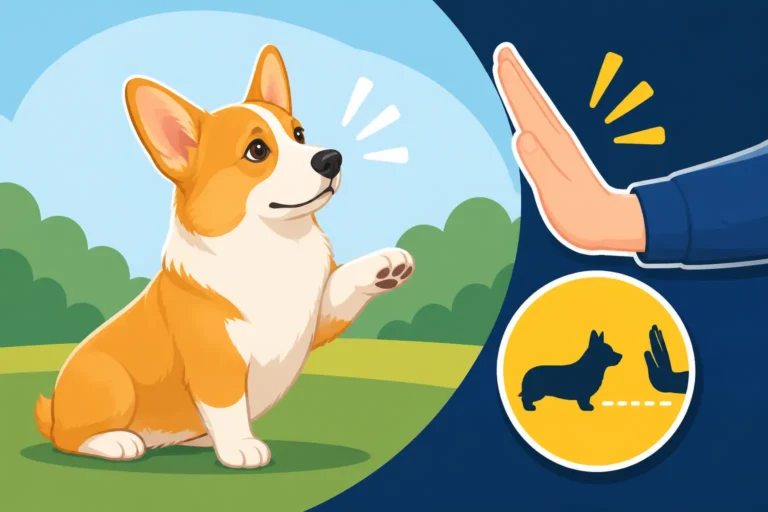
These two commands are indispensable for managing any resource guarding behavior. They empower you to safely remove your Corgi from a situation or an item without confrontation.
- "Drop It" Training:
- Start with a low-value dog toy. Engage your Corgi in play.
- When they have the toy in their mouth, hold a high-value treat near their nose.
- As they open their mouth to investigate the treat, say "Drop It!" and reward them instantly with the treat.
- Pick up the toy, put it behind your back, and quickly re-offer it for play. This teaches them that "Drop It" isn't about losing the toy forever, but about getting something better and then getting the toy back.
- Practice this many times, gradually increasing the value of the toy you're asking them to drop, and eventually, the distance from which you ask.
- "Leave It" Training:
- Start with a treat in your closed fist. Let your Corgi sniff and try to get it.
- As soon as they back away, even slightly, say "Leave It!" and reward them with a different treat from your other hand.
- Repeat this, gradually opening your hand. If they try to grab the treat in your open palm, quickly close your hand. Reward only when they "leave it" alone.
- Progress to placing a low-value item (like a piece of kibble) on the floor and asking them to "Leave It," stepping on it if they try to grab it.
- The ultimate goal is for them to ignore an item on the floor when you give the command.
Consistency is key. Practice these commands in short, fun sessions daily, not just when a problem arises. Your Corgi’s independent nature means they need clear incentives and frequent reinforcement. Short Bursts of Training a Corgi Will Take will be far more effective than long, drawn-out sessions. And figure out Whether a Corgi Works Better for Food or a Toy to ensure you're using the most motivating rewards.
Managing the Environment and Supervising Interactions
Environmental management is your first line of defense against toy guarding. It’s about setting up your home for success, not failure.
- Physical Barriers: Baby gates and playpens are your best friends. Use them to create dog-free zones where children can play with their toys unmolested. Conversely, use them to create a safe, quiet space for your Corgi when children are playing, or if you simply can't supervise 100%. This also ties into managing a Corgi who might be on crate rest for health reasons, as discussed in Confining a Corgi After a Disc Injury.
- Constant Supervision: This cannot be stressed enough. Never leave your child and your Corgi unsupervised, especially when toys are present. Even if you think the problem is resolved, it's always better to be safe. An adult should always be actively watching and ready to intervene if necessary.
- Clear the Decks: Before your Corgi comes into a room where children have been playing, make it a habit to quickly pick up and store all child toys. This removes the temptation and the opportunity for guarding. Products from Amazon, such as toy organizers or child-proof bins, can be incredibly helpful for maintaining tidiness and safety.
- Structured Playtime: Instead of free-for-all play, consider structured playtime. For the Corgi, this might involve puzzle toys or chew toys in their designated area. For the child, it’s about having specific times and places for toy play that are separate from the dog's activities. You might even teach your Corgi to wait for a lift when you need to move them from one area to another safely.
Desensitization and Counter-Conditioning
These are more advanced training techniques aimed at changing your Corgi's emotional response to the presence of people near their valuable items. It’s a slow, methodical process that requires patience and never, ever forcing the issue.
- Desensitization: This involves gradually exposing your Corgi to the trigger (e.g., a child approaching a toy) at a low intensity, without eliciting a guarding response. You start at a distance where your Corgi doesn't react negatively, then slowly decrease the distance over many sessions, only moving closer if your Corgi remains calm.
- Counter-Conditioning: This means changing your Corgi's negative association with the trigger into a positive one. The classic method is the "treat-and-retreat."
- Have your Corgi with a low-value dog toy (not a child's toy, to start).
- Walk towards them, stopping at a distance where they show no signs of guarding.
- Toss a high-value treat past them, so they have to move slightly away from the toy to get it.
- As they eat the treat, calmly walk away.
- Repeat this many, many times over days or weeks. The idea is that they learn, "Human approaching my toy means delicious treat!"
- Gradually decrease the distance, always ensuring they remain relaxed. If they stiffen or growl, you've gone too fast; back up to an easier step.
This process essentially rewires your Corgi's brain to associate an approaching hand or person with something good happening, rather than something threatening. It takes time, consistency, and a keen eye for your Corgi's body language. It's about building positive associations rather than fear. You're teaching your Corgi a new narrative around their possessions, which can be particularly challenging with their inherent Corgi Sass and What to Do About It.
When to Seek Professional Help
Sometimes, despite your best efforts, a Corgi's resource guarding can be too intense, too dangerous, or simply beyond your experience to manage alone. There is absolutely no shame in seeking professional help; in fact, it's a sign of a responsible pet owner committed to the safety of their family and the well-being of their dog.
Recognizing When You're Out of Your Depth
It can be hard to admit when you need help, especially when you love your Corgi so much. But knowing when to call in a professional is critical for everyone's safety. You should seriously consider professional intervention if:
- The guarding behavior is severe: This means frequent growling, snapping, or actual biting attempts. If your Corgi has broken skin or come close, it's a serious red flag.
- The behavior is escalating rapidly: If the intensity or frequency of the guarding is getting worse quickly, it suggests your current methods aren't working or might even be exacerbating the problem.
- You feel unsafe or fear for your child's safety: Trust your gut. If you're constantly on edge, worried about interactions between your Corgi and your child, or find yourself physically avoiding situations, it's time for help.
- Previous attempts to manage the behavior have failed or made it worse: If you've tried different strategies and haven't seen improvement, or if the Corgi seems more stressed, a professional can offer new perspectives and tailored techniques.
- Your Corgi is showing guarding behavior with other items or people: If the problem isn't just about child toys but extends to food, their bed, specific family members, or other dogs, it indicates a more generalized guarding issue that needs expert guidance. This might even be a deeper manifestation of issues like A Corgi That Guards Its Food Bowl.
Finding a Qualified Trainer or Behaviorist
Choosing the right professional is crucial. The dog training and behavior world isn't always regulated, so it's important to do your homework.
- Look for certified professionals: Seek out Certified Professional Dog Trainers (CPDT-KA), Certified Behavior Consultants (CBCC-KA), or a Veterinary Behaviorist (DACVB). These individuals have undergone rigorous education, testing, and have experience.
- Prioritize positive reinforcement methods: For resource guarding, positive reinforcement and fear-free techniques are paramount. Avoid any trainer who suggests using punishment, shock collars, prong collars, or who talks about "dominance theory" (e.g., needing to show your dog who's "alpha"). These methods can suppress the warning signs (like growling) without addressing the underlying anxiety, making the dog more likely to bite without warning. They can also damage your relationship with your Corgi.
- Ask about their experience with resource guarding and Corgis: A professional familiar with the unique personality and instincts of Corgis will be better equipped to understand and address the issue.
- What to expect: A good professional will start with a thorough assessment of your Corgi's behavior, your home environment, and your family's routine. They will then develop a customized behavior modification plan, which will likely include elements of environmental management, management tools, specific training exercises (like those discussed above), and clear instructions for you. They should also provide ongoing support and adjustments as needed. They will help you understand the specific nuances of what an adult Corgi is a known quantity in terms of their behaviors and predispositions.
Taking steps to address resource guarding ensures a safer, happier home for everyone – your Corgi included. It’s an investment in your family's well-being and your Corgi's future.
Here's a quick comparison of effective vs. ineffective responses to resource guarding:
| Ineffective Responses | Effective Responses |
|---|---|
| Punishing growls or snarls | Respecting warning signals |
| Forcing the dog away from the item | Using "Drop It" with high-value trades |
| Yelling or scolding | Calm, consistent communication and commands |
| Grabbing the item from the dog | Managing the environment to prevent guarding |
| Inconsistent rules about toys | Clear boundaries for dog and child toys |
| Allowing unsupervised interactions | Constant supervision with children |
| Assuming the dog will "grow out of it" | Proactive training and behavior modification |
Disclaimer
This article is for general informational purposes only and does not constitute professional advice. Laws, prices and regulations vary by location and change over time. Consult a qualified professional for guidance on your specific situation.