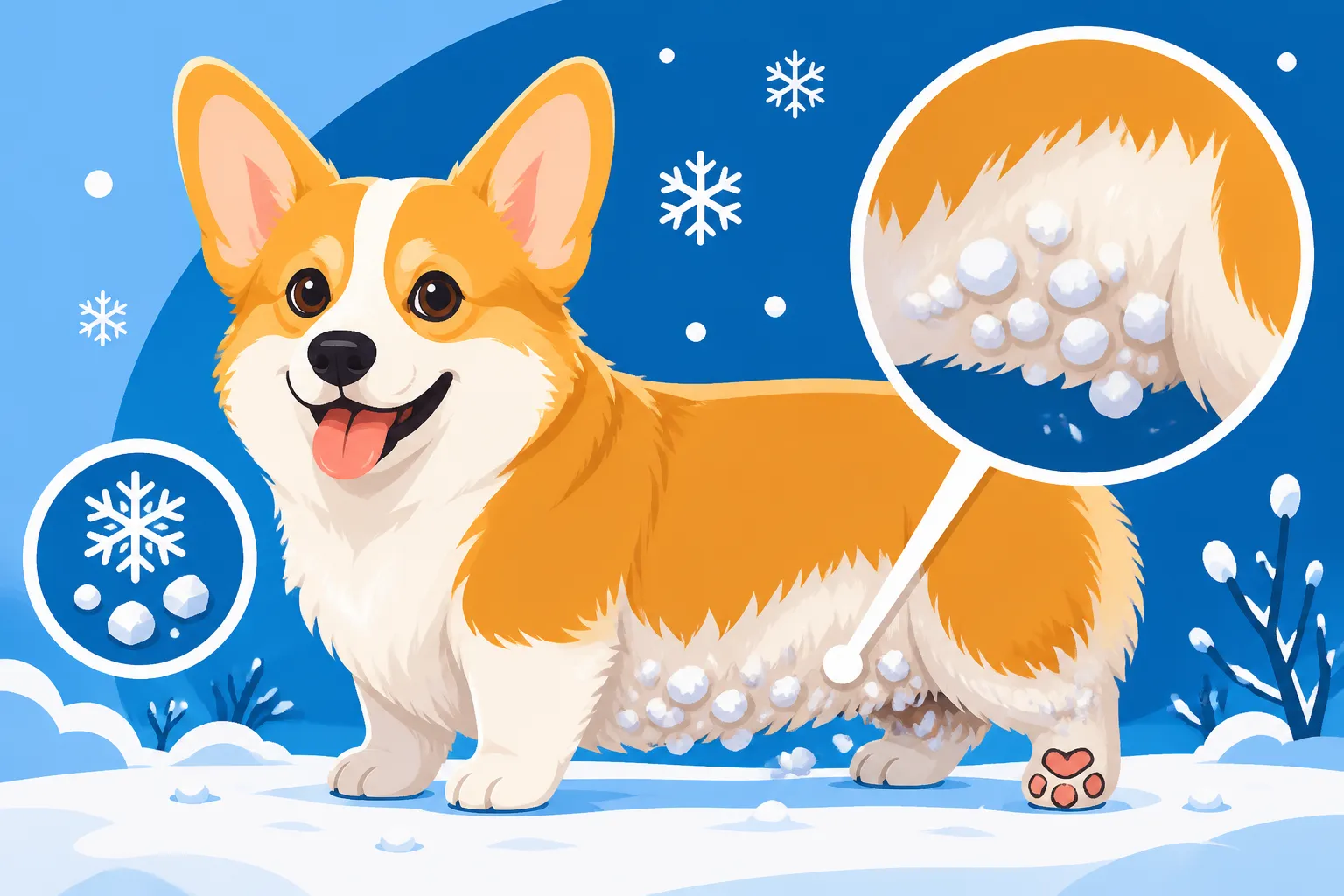
Snow and Salt on a Corgi’s Low Belly
The winter wonderland might look beautiful, but for us Corgi parents, those snowy sidewalks and icy roads bring a specific kind of dread. Our adorable low-riders, with their short legs and long bodies, are practically belly-surfing through every bit of snow, slush, and the notorious road salt. This guide is all about navigating those tricky winter months, helping you protect your Corgi's sensitive skin and paws from the harsh realities of cold weather and abrasive de-icing chemicals.
The Unique Challenges of Winter for a Low-Rider Corgi
If you've ever watched your Corgi frolic through a fresh blanket of snow, you know the sight: their little bodies plowing through, leaving a perfect Corgi-shaped trench behind them. While undeniably cute, this low-to-the-ground design, so essential to their heritage as cattle drovers, also makes them particularly vulnerable to winter's elements. It's a constant balancing act between letting them enjoy the crisp air and protecting their delicate undercarriage.
Why a Corgi's Stature is a Double-Edged Sword in Snow
Let's be honest, those short, stout legs and that long, sturdy back are part of what makes our Corgis so charming. But when the snow falls or the sleet turns to slush, that charm becomes a genuine challenge. Unlike taller breeds that might just get their paws wet, a Corgi's entire belly, chest, and even parts of their legs are in direct, constant contact with whatever is on the ground. Think about it: every step they take, they're dragging their sensitive skin through icy water, compacted snow, and whatever else might be lurking beneath the surface.
This isn't just about getting a little damp; it means prolonged exposure to freezing temperatures against their skin, which can lead to chafing, redness, and even frostbite in extreme conditions. Their dense double coat offers some insulation, yes, but it can also become saturated, making it harder for them to regulate their body temperature. Imagine trying to stay warm when your entire underside is wet and freezing – it’s no fun for our furry friends. It's a stark reminder of Why a Corgi's Back Is Built the Way It Is – for ducking under cattle, not necessarily for navigating deep snowdrifts!
The Harmful Effects of Road Salt and Chemicals on Corgi Skin
Beyond the cold and wet, the real villain of winter walks for Corgis is often invisible until it starts causing problems: road salt and de-icing chemicals. These aren't just a minor annoyance; they can be genuinely damaging. The salts commonly used – sodium chloride, calcium chloride, and magnesium chloride – are designed to melt ice, but they're also highly corrosive and incredibly irritating to skin.
When your Corgi's low belly and paws are constantly dragging through these chemicals, it's not long before you see the tell-tale signs of irritation: redness, dryness, cracking, and even chemical burns. Their paw pads, though tough, aren't immune, becoming raw and painful. The space between their toes can also accumulate these abrasive particles, causing intense discomfort. And then there's the added risk: Corgis are naturally meticulous groomers, so when they come inside, their instinct is to lick their paws and belly clean. This means they can ingest these harmful chemicals, leading to stomach upset, vomiting, diarrhea, or worse. We've all seen our dogs scooting on the carpet after a walk, and sometimes it's not just a quick scratch, but a desperate attempt to relieve the irritation from road salt. You might think about a Corgi that scoots on the carpet and consider if winter walk irritation is the cause.
Proactive Steps to Protect Your Corgi Before Winter Walks
Dealing with the aftermath of a snowy, salty walk is tough on both you and your Corgi. The good news is, there's a lot you can do before even stepping outside to minimize their exposure and protect their sensitive areas. Being prepared is half the battle when it comes to keeping our low-riders safe and comfortable during the colder months.
Essential Gear for Low-Slung Pups
Just like we bundle up for winter, our Corgis often need a little extra help. For a Corgi, a simple sweater might not cut it, precisely because of that low belly.
- Belly-Coverage Coats: Look for dog coats or jackets that extend well down their sides and preferably have a generous belly panel. You want something that acts as a physical barrier between their fur and the snow/slush. Waterproof materials are key here. Many brands offer styles designed for longer-bodied dogs, so do a little searching. The goal is to keep that chest and belly as dry and protected as possible. Think about the overall health and comfort when considering Whether a Corgi Needs Anything in Winter beyond just warmth.
- Paw Protection: This is non-negotiable for salty conditions. Dog booties are excellent, but you need to find ones that fit well and stay on. It can be a trial-and-error process, as Corgis have unique paw shapes. Start introducing them before the snow hits, with positive reinforcement and treats, so it's not a struggle every time you head out. If booties just aren't happening, a good paw balm or wax applied generously before each walk can create a protective barrier. Products like Musher's Secret or similar paw waxes can work wonders. They create a protective layer that helps repel salt and ice, reducing direct contact with the paw pads. You can find a good selection of these on sites like Amazon or Chewy.
Pre-Walk Preparations and Route Planning
Beyond the gear, a few simple habits can make a huge difference in your Corgi's winter comfort.
- Protective Balm Application: Even with a belly-covering coat, some skin will always be exposed. Before you head out, consider applying a thin layer of paw balm to their paw pads and any exposed skin on their lower belly and inner thighs. This adds another layer of defense against moisture and chemicals. It's a quick step that can prevent a lot of discomfort later.
- Strategic Route Selection: This is probably the most impactful thing you can do. Try to plan your walks to avoid heavily salted sidewalks and roads. While it's not always possible, opting for grassy verges, parks, or areas where de-icing isn't as aggressively used can significantly reduce your Corgi's exposure. If you have to walk on pavement, try to steer them towards areas where salt residue is minimal, or consider shorter bursts on pavement interspersed with time in a less treated area.
- Timing and Duration: In extremely harsh conditions, shorten your walks. A few shorter potty breaks might be better than one long excursion that leaves them overly exposed and chilled. Pay attention to the temperature and wind chill, as these can make even a short walk feel much colder for your low-slung friend.
After-Walk Care: Cleaning and Soothing Your Corgi's Undercarriage
The moment you step back inside, the work isn't over. In fact, what you do immediately after a winter walk is just as crucial, if not more so, than your pre-walk preparations. This is where you prevent that salt and slush from causing lasting irritation and potential health issues.
Immediate Cleaning Rituals
You absolutely cannot skip this step after a winter walk. Road salt, chemicals, and icy slush clinging to your Corgi's fur and paws need to come off immediately to prevent further irritation or ingestion.
- Warm Water Rinse Station: Set up a designated "clean-up station" right by your entry door. This can be as simple as a bucket of warm water and a stack of clean towels. As soon as you're inside, gently lift your Corgi and use a warm, damp cloth or sponge to thoroughly wipe down their entire belly, chest, and legs. Pay special attention to their paws, making sure to get between the pads and toes where salt and ice can accumulate. For really dirty or salty paws, a quick dip in the bucket of warm water (if they tolerate it) followed by a gentle scrub with a soft cloth is ideal. This is crucial; you wouldn't believe how quickly irritation can set in. Think of it as a variation on Whether a Corgi Needs Its Feet Washed Daily – in winter, it's definitely a yes!
- Gentle Cleansing if Needed: For those particularly slushy or heavily salted walks, plain water might not be enough. Keep a mild, dog-specific shampoo handy. If you notice persistent residue or if your Corgi's skin feels gritty, a quick, localized wash with a little shampoo on their belly and paws can be beneficial. Just make sure it's a hydrating formula that won't strip their natural oils, especially during the dry winter months. Shampoo That Suits a Thick Corgi Undercoat can be invaluable here, ensuring you get through that dense fur to clean the skin effectively. Remember to rinse thoroughly – this means getting past that thick undercoat to the skin, which can be a challenge. If you struggle, refer to tips for Getting Water Through to a Corgi's Skin.
- Thorough Drying: After cleaning, thorough drying is paramount. A damp Corgi undercoat can lead to skin irritation, hot spots, or even exacerbate the feeling of cold. Use clean, absorbent towels to pat and rub your Corgi's belly, chest, and paws until they are as dry as possible. For their dense double coat, a dog-specific forced-air dryer (on a cool or low-heat setting) can be a lifesaver, helping to dry right down to the skin and prevent problems like Whether a Damp Corgi Undercoat Causes Trouble.
Soothing and Moisturizing Irritated Skin
Even with the best preventative measures and immediate cleaning, winter can be tough on Corgi skin. The dry indoor air combined with outdoor exposure can lead to dryness and irritation.
- Post-Walk Balm Application: After drying, take a moment to inspect your Corgi's paws and belly. If you see any signs of dryness, redness, or cracking, apply a soothing, moisturizing paw balm or skin conditioner specifically designed for dogs. Look for ingredients like shea butter, coconut oil, or calendula. Gently massage it into their paw pads and any dry areas on their belly. This helps to rehydrate the skin barrier and provides comfort.
- Monitoring for Persistent Issues: Keep a close eye on their skin in the days following winter walks. Persistent licking, scratching, or Itchy Skin Under a Corgi's Undercoat could indicate ongoing irritation. Sometimes, the dry air in our homes can also contribute to problems like Why a Corgi Coat Crackles in Dry Weather. If you notice any unusual redness, open sores, or your Corgi seems particularly uncomfortable, it's time to consult your veterinarian. Early intervention can prevent minor irritation from escalating into a more serious skin infection.
Addressing Common Winter Woes and Health Concerns
While immediate care is essential, it's also important to know what to look for when things go wrong and how to address broader health considerations for your Corgi during the colder months. Winter brings its own set of challenges, and being informed can help you keep your Corgi happy and healthy.
Identifying and Treating Salt-Related Injuries
Road salt and de-icing agents can cause more than just mild irritation. Knowing the signs of more serious issues and when to seek veterinary help is crucial.
- Chemical Burns and Skin Irritation: Look for raw, red, inflamed patches of skin on their belly, chest, or between their toes. In severe cases, you might even see blistering. If you suspect a chemical burn, a gentle flush with cool water might help initially, but immediate veterinary attention is advised. These can be incredibly painful and are prone to infection.
- Paw Pad Damage: Beyond redness, salt can cause paw pads to become excessively dry, cracked, and even bleed. This makes walking excruciating for your Corgi. If their paws are cracked, keep them clean, apply a thick paw balm regularly, and consider booties even indoors to give them time to heal. If bleeding occurs, a vet visit is necessary to prevent infection and assess the depth of the injury.
- Symptoms of Salt Ingestion: As mentioned, Corgis often lick their paws and belly clean after walks. Ingesting too much road salt can lead to salt poisoning. Symptoms include excessive thirst, vomiting, diarrhea, lethargy, loss of appetite, and in severe cases, tremors or seizures. If you notice any of these signs after a salty walk, contact your emergency veterinarian immediately. This is a serious condition that requires prompt treatment.
Managing Overall Winter Coat and Skin Health
Your Corgi's incredible double coat is a marvel of nature, designed to keep them warm and dry. However, it also requires specific care in winter to ensure it performs its job optimally and doesn't become a source of problems.
- Grooming for the Season: Regular grooming is always important for Corgis, but in winter, it takes on added significance. The dense undercoat can easily mat if it gets wet and isn't dried properly, or if loose hair isn't removed. Mats can pull at the skin, trap moisture, and lead to skin infections. Using an undercoat rake and a slicker brush regularly helps to remove loose fur, prevent matting, and allows for better air circulation to the skin. Take a look at The Rake and Comb a Corgi Coat Actually Needs for specific tools. This also helps you inspect their skin more closely for any signs of irritation or dryness.
- Hydration from Within: The dry air of winter, both indoors and out, can dehydrate skin and make coats dull. Ensure your Corgi always has access to fresh water. You might also consider supplementing their diet with omega-3 fatty acids, like fish oil, which can support skin health and coat luster from the inside out. Some pet food brands, like Ollie, offer recipes with ingredients known to support skin and coat health. While Whether Fish Oil Thickens a Corgi Coat is a common question, its primary benefit is often improved skin barrier function and shine.
- Maintaining Ideal Weight: A healthy weight is crucial year-round, but especially in winter. Extra weight puts added strain on their joints, which can be exacerbated by slippery conditions. It also makes it harder for them to move efficiently through snow. Conversely, being underweight can make them more susceptible to cold. Aim for a healthy What an Ideal Corgi Weighs to ensure they're robust enough for winter activities.
By being mindful of these considerations, you can ensure your Corgi enjoys the winter season safely and comfortably, minimizing the risks associated with snow, ice, and that ever-present road salt.
Winter Protection Solutions for Corgis
Choosing the right combination of protection for your Corgi depends on your local climate, how much salt is used, and your individual dog's tolerance. Here's a quick comparison of common solutions:
| Protection Method | Pros | Cons | Best For |
|---|---|---|---|
| Dog Coats/Vests | Covers belly/chest, provides warmth, waterproof | Can be bulky, may not cover all exposed areas | Cold weather, moderate snow, light salt |
| Dog Booties | Excellent paw protection from salt/ice, cuts | Can be difficult to fit, some dogs refuse to wear them | Heavy salt, icy conditions, very cold pavement |
| Paw Balms/Waxes | Easy to apply, forms protective barrier | Needs reapplication, less effective than booties for deep snow/ice | Mild salt, dry paw prevention, quick walks |
| Post-Walk Rinse | Removes irritants, prevents ingestion | Requires consistent effort, doesn't prevent exposure | All winter conditions, essential after every walk |
| Grooming | Prevents matting, allows skin inspection | Ongoing effort, doesn't directly protect from elements | General skin/coat health, year-round |
Disclaimer
This article is for general informational purposes only and does not constitute professional advice. Laws, prices and regulations vary by location and change over time. Consult a qualified professional for guidance on your specific situation.