Floors and Rugs That Stop a Corgi Slipping
For Corgi owners, the daily worry about a sudden slip or an awkward landing is a constant, nagging fear. Our adorable, long-bodied, short-legged companions are prone to spinal and joint issues, making every potentially slippery surface in our homes a source of anxiety. This comprehensive guide is here to walk you through exactly why certain floors pose such a risk to your beloved Corgi and, more importantly, how you can transform your living space into a haven of safety and stability, protecting their precious backs and joints for years to come.
Understanding Why Slipping Floors Are a Big Deal for Corgis
Let's be real: Corgis are built a little… uniquely. Those adorable stubby legs and long backs are part of their charm, but they also come with a specific set of vulnerabilities. Ignoring the impact of slippery floors on their bodies is like playing Russian roulette with their long-term health.
The Unique Corgi Anatomy and Spinal Vulnerabilities
The Corgi's signature long back isn't just for show; it's a structural feature that evolved for herding, allowing them to nip at the heels of cattle while avoiding kicks. However, this same structure makes them particularly susceptible to intervertebral disc disease (IVDD) and other spinal problems. Think of their spine as a series of delicate shock absorbers. When a Corgi slips, slides, or has to splay their legs to regain balance, those discs are subjected to sudden, jarring forces. It's not a gentle movement; it's often a violent wrenching motion that can cause discs to bulge, herniate, or even rupture. This isn't just about pain; it can lead to neurological damage, paralysis, and a significant reduction in their quality of life. Understanding Why a Corgi's Back Is Built the Way It Is helps us appreciate this vulnerability.
Imagine your Corgi, a tiny torpedo of joy, charging across a polished hardwood floor to greet you. If they suddenly lose traction, their back legs can shoot out from under them in an instant. This splaying action creates immense shearing forces on their spine. Unlike a taller dog that might just stumble, a Corgi's low center of gravity combined with their long back means their entire spinal column takes the brunt of that uncontrolled movement. It’s like trying to walk on ice with roller skates – the body is just not designed for that kind of sudden, uncontrolled strain.
The Immediate Risks of a Slip or Fall
The most obvious and terrifying immediate risk of a slippery floor is an acute injury. A single bad slip can lead to a ruptured disc, which is a veterinary emergency. We're talking about sudden, excruciating pain, an inability to move, and potentially urgent and expensive surgery. It’s a moment no Corgi owner ever wants to experience. Beyond IVDD, a slip can cause ligament tears, muscle strains, or even fractures, especially in older Corgis whose bones might be more brittle.
Consider a common scenario: your Corgi is playing fetch, chasing a toy across the kitchen tile. They make a sharp turn, their back legs lose purchase, and suddenly they're doing the splits, yelping in pain. In that instant, a disc can pop, or a ligament in their knee can tear. This isn't just about a bruise; it can be a life-altering event. The recovery from a severe back injury can involve weeks of strict Crate Rest for a Corgi With a Bad Back, intense pain management, and potentially major surgical intervention. The emotional and financial toll on an owner during such a crisis is immense.
Long-Term Consequences of Constant Joint Stress
Even if your Corgi never experiences a catastrophic slip, consistently navigating slippery surfaces takes a toll. The constant micro-adjustments, the subtle bracing of muscles, and the repetitive strain on joints can lead to chronic issues over time. We're talking about accelerated joint degeneration, early onset arthritis, and a general stiffening that can make everyday movements painful. It's like constantly walking on a tightrope; eventually, your body gives out from the sustained effort and stress.
Think about how many times a day your Corgi gets up, lies down, turns around, or walks from one room to another. If each of those movements involves a slight struggle for traction, their little bodies are working harder than they should be. Their leg muscles might become disproportionately strong from bracing, leading to imbalances, or they might develop an altered gait to compensate for their insecurity. Over months and years, this cumulative stress can manifest as Early Arthritis in a Corgi, lameness, or a general reluctance to move. It’s a silent, insidious problem that slowly erodes their comfort and mobility.
Identifying Problematic Flooring in Your Home
It's easy to overlook how much our homes, designed for bipedal humans, can be miniature obstacle courses for a low-riding, four-legged friend. Knowing what to look for is the first step in creating a safer environment.
The Dangers of Smooth, Hard Surfaces
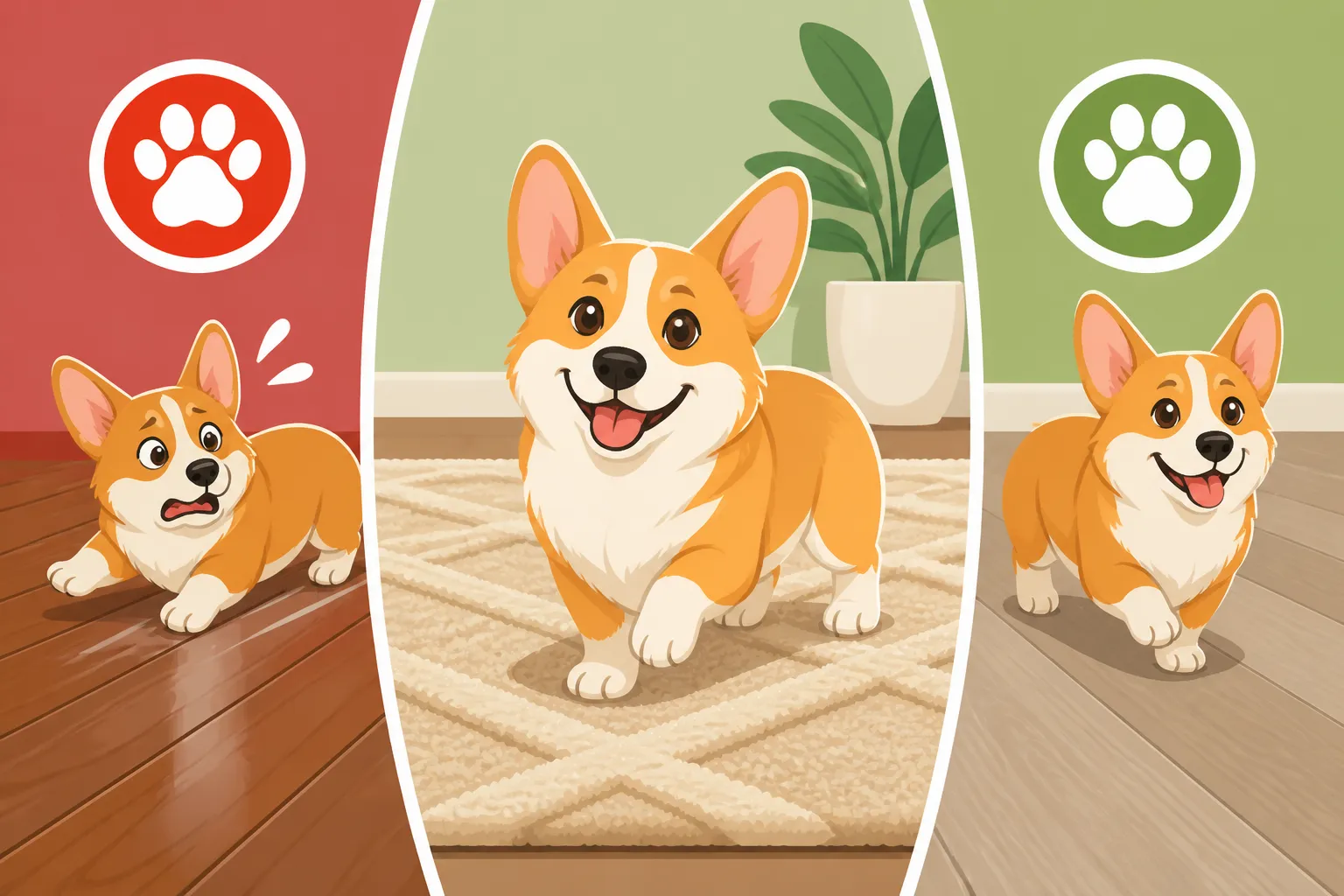
Any floor that doesn't offer good grip is a potential hazard. This includes polished hardwood, laminate, tile, polished concrete, and linoleum. These surfaces, while often beautiful and easy to clean for us, are like ice rinks for a Corgi with their relatively small paw pads and lack of intense traction. The problem isn't just outright slipping; it's the constant effort required to maintain balance, which puts strain on their joints and spine.
Imagine your Corgi trying to get up from a nap on a smooth tile floor. Their back legs might splay out from under them as they try to push themselves up, forcing their muscles to work harder just to achieve a basic movement. Or picture them enthusiastically chasing a rolling toy down a long hallway with glossy wood. They can't stop quickly, can't turn sharply, and are forced to skid to a halt, sending shockwaves through their spine and joints. It's a continuous, low-level assault on their musculoskeletal system that adds up over time, contributing to issues like Disc Disease in a Long-Backed Corgi.
Unexpected Slip Hazards You Might Overlook
Sometimes, the obvious hard floors aren't the only culprits. Unexpected hazards can hide in plain sight. Loose rugs without non-slip backing, worn-out carpets with slick patches, or even outdoor surfaces like wet concrete or icy patios can be dangerous. Think about the transition points between different flooring types – a rug that slides on a hard floor, or a step down that suddenly goes from carpet to slick tile. These transitions are often where unexpected slips occur because the dog hasn't anticipated the change in traction.
Consider a lightweight area rug that's purely decorative. Your Corgi trots across it, and it slides out from under them, sending them sprawling. Or perhaps you have an older carpet where the pile has matted down in high-traffic areas, turning it into a surprisingly slick surface. Even something as simple as a spill on a kitchen floor that you haven't wiped up immediately can create a sudden, invisible trap. We often focus on the main flooring, but we need to think about everything our Corgi walks on, indoors and out.
Assessing Your Corgi's Current Movement and Gait
It’s crucial to observe your Corgi's movement on different surfaces. Are they hesitant on certain floors? Do their nails click loudly, indicating a lack of grip? Do their back legs sometimes splay out, even slightly? Are they reluctant to go into certain rooms? These are all subtle signs that the flooring is problematic for them. Filming them with your phone can sometimes reveal issues you might miss with the naked eye. Pay close attention to their gait, especially their hindquarters. A Corgi That Scuffs Its Back Nails or whose back legs cross over are both potential red flags.
Walk through your home as if you were your Corgi. Get down low and look at the floor from their perspective. Are there long stretches of slick surface? Are there sharp corners where they might build up speed and then have to brake hard? Watch how they get up from a lying position. Do they push off confidently, or do their paws scramble for purchase? Any signs of instability, hesitation, or discomfort should be taken seriously as indicators that changes are needed.
Practical Solutions: Making Your Home Safer, Room by Room
The good news is that there are many practical and aesthetically pleasing ways to make your home Corgi-safe without completely renovating. Small changes can make a huge difference.
Strategic Placement of Area Rugs and Runners
One of the most effective and easiest solutions is to strategically place area rugs and runners over slippery hard floors. The goal is to create a "pathway" of traction for your Corgi wherever they regularly walk, run, or rest. Think about high-traffic areas like hallways, living rooms, and in front of sofas or beds. Ensure these rugs have proper non-slip backing, or use a high-quality non-slip rug pad underneath them. You can find a huge variety of options, from budget-friendly runners to more decorative pieces, on sites like Amazon or Chewy.
When placing rugs, aim for continuity. Avoid creating small, isolated islands of carpet surrounded by slick expanses. Instead, try to link them up, forming a safe highway for your Corgi. For instance, a long runner in a hallway can prevent slips when they dash to the front door. A large area rug in the living room can provide a secure space for play and lounging. Don't forget the spots where they eat and drink; a small, non-slip mat under their bowls can prevent accidental slips during mealtime excitement.
The Benefits of Wall-to-Wall Carpeting or Pet-Friendly Flooring
For those considering a more permanent solution, wall-to-wall carpeting is often the ideal choice for Corgis. The consistent traction it provides eliminates nearly all slipping hazards. If carpeting isn't your style, look into pet-friendly flooring options that offer better grip than traditional hardwoods. Textured vinyl planks, cork flooring, or certain types of engineered wood with a less polished finish can provide a good balance between aesthetics and safety.
While installing new flooring is a bigger investment, it can pay dividends in your Corgi's long-term health and your peace of mind. Carpeting, especially, absorbs impact, which is great for joints, and provides consistent warmth. If you opt for hard flooring, seek out options that have a matte finish or a subtle texture. Many manufacturers now understand the needs of pet owners and offer lines specifically designed to be less slippery and more durable against claws and accidents. This helps reduce the risk of trips to the vet for issues described in Emergency Signs of a Corgi Disc Injury.
Temporary and Non-Permanent Traction Aids
For areas where rugs aren't feasible or desirable, or as an immediate stop-gap, there are other traction aids you can use. Adhesive paw pads that stick to your Corgi's paws, non-slip socks, or even paw wax can provide temporary grip. While these require more regular application or maintenance, they can be lifesavers in specific situations, such as visiting a friend's house with all-tile floors. For stairs, consider stair treads that attach securely to each step.
Paw grips are small, self-adhesive pads that you can apply to your Corgi's paw pads. They're like little sticky shoes that give them extra traction. Paw wax, on the other hand, creates a protective, grippy layer on their pads. Both can be found at pet stores or online retailers like Chewy or Amazon. For stairs, ensure any treads are firmly affixed and extend across the full width of the step. Remember, stairs are inherently tricky for Corgis, so even with treads, it’s worth considering Ramps and Steps That Save a Corgi's Back or carrying them, especially as they get older.
Choosing the Right Materials: A Deep Dive into Rugs and Flooring
Not all rugs and flooring are created equal when it comes to Corgi safety. Making informed choices about materials can significantly improve your home's traction profile.
What to Look for in Area Rugs for Corgis
When selecting area rugs, prioritize several key features:
- Non-Slip Backing: This is non-negotiable. Look for rugs with rubber, latex, or silicone backing that won't budge. If the rug you love doesn't have it, invest in a high-quality, dense rug pad specifically designed for non-slip purposes.
- Low Pile or Flat Weave: Thick, shaggy rugs can sometimes catch paws or make it harder for Corgis to move smoothly. A low pile or flat weave rug provides consistent, stable traction without tripping hazards.
- Durable and Washable Materials: Corgis shed, and they can be messy. Choose rugs made from materials like synthetic fibers (nylon, polypropylene) that are easy to clean, stain-resistant, and durable enough to withstand daily Corgi traffic. Machine washable runners are a huge plus!
Here's a quick comparison:
| Feature | Ideal for Corgis | Less Ideal for Corgis |
|---|---|---|
| Backing | Rubber, latex, silicone non-slip backing | No backing, felt backing |
| Pile Height | Low pile, flat weave, Berber, sisal | High pile, shag, long-loop |
| Material | Synthetic (nylon, polypropylene), wool blends | Delicate natural fibers (silk, viscose), loose weave |
| Maintenance | Easy to vacuum, stain-resistant, washable | Hard to clean, absorbs odors, shows wear quickly |
You can often find great options for non-slip rug pads or rugs with built-in non-slip features on Amazon. Remember to measure your spaces carefully to ensure the rugs cover enough area to make a real difference for your Corgi.
Traction-Boosting Flooring Options Beyond Carpet
If you're replacing hard flooring, think about materials that naturally offer more grip.
- Textured Vinyl Plank (LVP/LVT): Modern vinyl planks come in a huge array of styles, many with textured surfaces that mimic wood grain or stone, providing excellent traction. They are also waterproof and highly durable, making them fantastic for pet owners.
- Cork Flooring: Cork is naturally soft, insulating, and has a good amount of natural grip. It's also antimicrobial and sustainable. Its forgiving nature makes it great for joints.
- Unfinished or Lightly Textured Wood: If you absolutely love wood floors, opt for a matte finish rather than a glossy one. Some engineered wood floors come with a brushed or hand-scraped texture that provides more grip than traditional polished hardwood.
- Matte Finish Tile: If you choose tile, look for options with a matte finish or a slight texture, rather than highly polished varieties. Larger grout lines can also offer a tiny bit more traction.
When making a big decision like flooring, it's worth getting samples and testing them out. Walk on them yourself, and if possible, observe your Corgi on a sample piece in your home. This helps ensure you're making the best choice for their safety and comfort.
Maintenance and Cleaning for Safer Surfaces
Even the best flooring can become slippery if not properly maintained. Regular cleaning is essential. Dirt, dust, and pet hair can reduce the effectiveness of non-slip surfaces. Use appropriate cleaning products for your floor type, avoiding those that leave a slick residue. For rugs, regular vacuuming and spot cleaning will keep them performing their best.
Consider the climate in your area too. In humid environments, floors might feel slicker. In dry seasons, static electricity can make pet hair stick to surfaces, creating tiny, slick patches. Regular cleaning and attention to environmental factors help ensure that the traction you've invested in remains effective. It also helps with general hygiene, especially when your Corgi is constantly low to the ground.
Beyond Floors: Other Ways to Support Your Corgi's Mobility
While floors are a huge part of the equation, a holistic approach to Corgi mobility involves a few other key areas.
Nail Care and Paw Pad Health
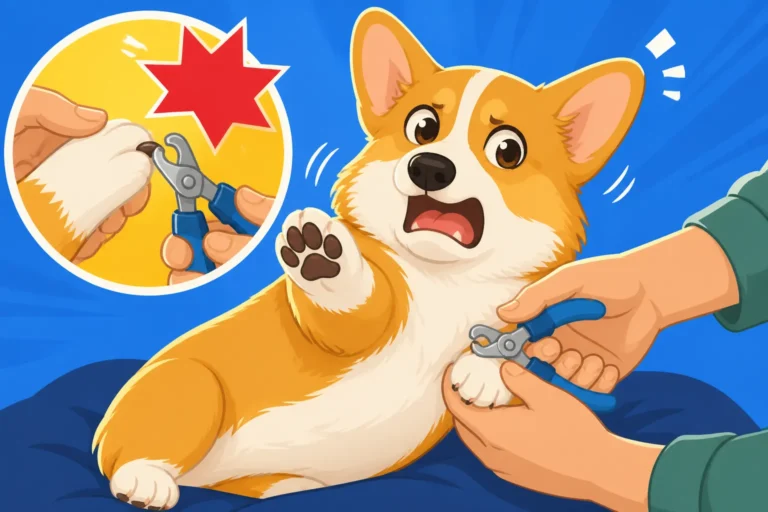
Long nails can significantly reduce your Corgi's ability to get proper traction, especially on hard floors. When nails are too long, they push the paw pads up, preventing them from making full contact with the ground. This is like trying to walk in high heels on ice! Regular nail trims are crucial. You should barely be able to hear their nails click on hard floors. Similarly, check their paw pads for dryness, cracks, or excessive hair between the pads, which can also impede grip. Products like paw balm can keep pads supple, and trimming hair between the pads can improve traction.
Many Corgi owners find that a nail grinder works better than clippers, as it allows for more gradual trimming and a smoother finish. Even if your Corgi resists, consistent, positive reinforcement is key. If you're unsure, ask your vet or groomer to demonstrate the proper technique. Neglecting nail care can be a contributing factor to the issues discussed in Nail Length and What It Does to a Corgi's Gait. Remember, healthy paws are the foundation of good mobility.
Weight Management and Its Impact on Joints
This is a huge one for Corgis! Every extra pound your Corgi carries puts additional strain on their spine and joints, exacerbating the risks associated with slippery floors and increasing the likelihood of conditions like IVDD or arthritis. A lean, healthy Corgi has a much better chance of navigating their environment safely and recovering from any minor mishaps. Knowing What an Ideal Corgi Weighs and aiming for that goal is paramount.
It's tempting to spoil our Corgis with treats, but controlled portions and a balanced diet are critical. Work with your vet to determine an appropriate calorie intake and feeding plan. Brands like Ollie offer fresh, portion-controlled meals that can help maintain a healthy weight. Remember, a Corgi should have a noticeable waist and you should be able to feel their ribs easily without pressing hard, as described in The Body Condition Score a Corgi Owner Aims For. Maintaining a healthy weight is one of the single best things you can do to protect your Corgi's back and joints, regardless of your flooring.
Training for Safe Movement Habits
Even with a perfectly carpeted house, some Corgis develop habits that put them at risk. Teaching your Corgi to use ramps for furniture or the car, or to wait to be lifted, can prevent dangerous jumps and leaps. Discourage them from "launching" off sofas or beds, as these impacts can be incredibly jarring to their spines. Whether a Corgi Should Ever Jump Off a Sofa is a topic that comes up often, and the answer is almost always no. Consistent training, even simple cues like "wait" or "slow," can instill safer movement patterns.
Consider setting up ramps next to your sofa or bed, even if your Corgi can still jump. Start training them to use these ramps from a young age with positive reinforcement and treats. Similarly, if they tend to bolt down stairs, teach them to go slowly, one step at a time, or carry them down if possible. These habits, combined with a secure home environment, create a comprehensive safety net for your beloved Corgi, supporting their joints through The Corgi Years When the Back End Gives Out.
Disclaimer
This article is for general informational purposes only and does not constitute professional advice. Laws, prices and regulations vary by location and change over time. Consult a qualified professional for guidance on your specific situation.