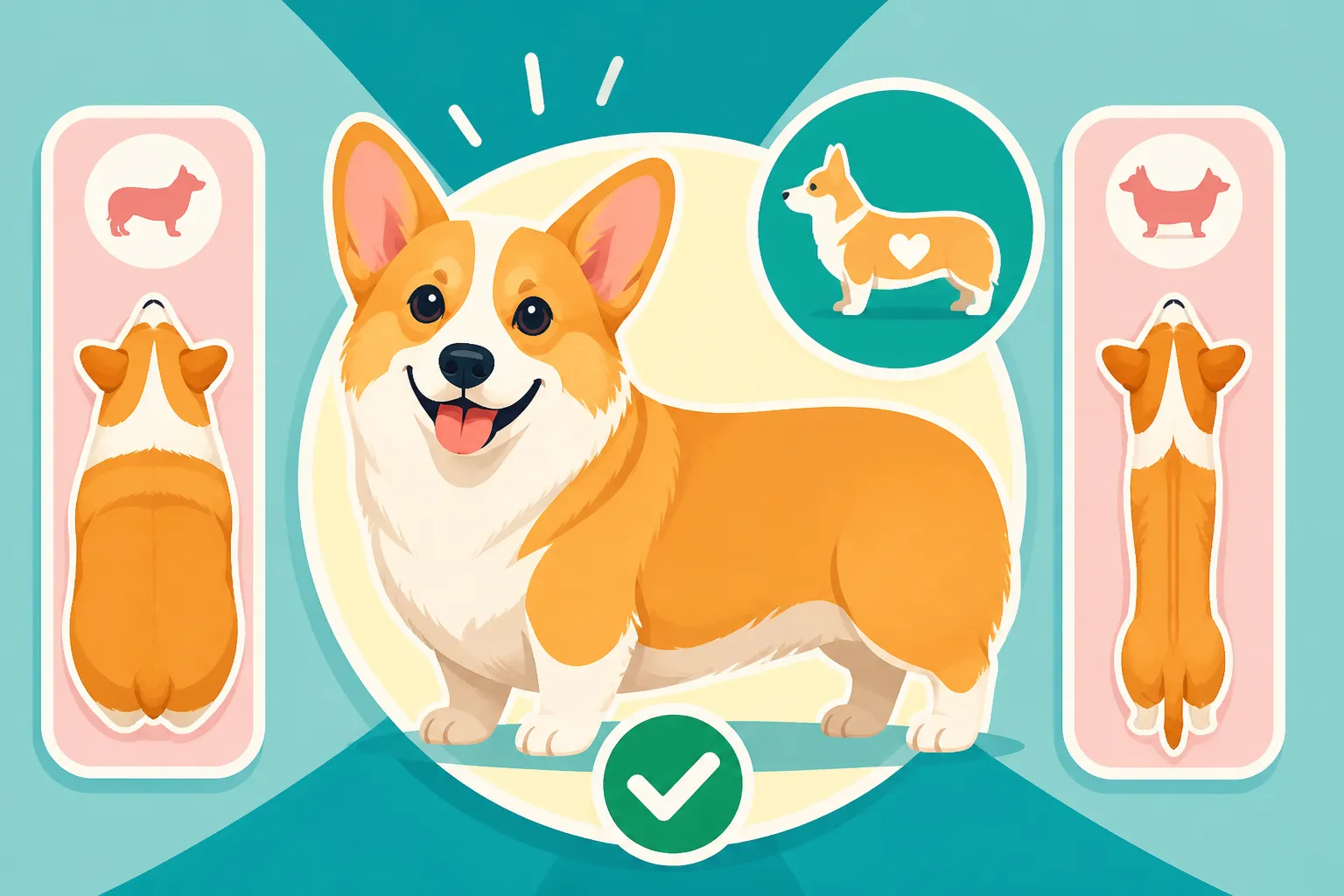
The Body Condition Score a Corgi Owner Aims For
One of the biggest struggles for us Corgi parents is resisting those adorable, pleading eyes, especially when it comes to food! It’s all too easy for our short-legged, long-bodied pals to pack on the pounds, and before you know it, that "cute chonk" can lead to some serious health headaches. This guide is all about helping you understand and achieve the perfect Body Condition Score (BCS) for your Corgi, ensuring they're lean, healthy, and ready for all their herding duties (even if it's just herding you to the treat jar).
What Exactly is Body Condition Score, Anyway?
When you look at your Corgi, you probably have a general idea if they seem "about right" or maybe a little pudgy. But judging a dog's weight isn't as simple as just stepping on a scale. That number only tells part of the story, and for a breed with a unique build like a Corgi, it can be particularly misleading. That’s where the Body Condition Score, or BCS, comes in. It's a standardized tool that veterinary professionals use, and that you can learn to use at home, to get a much clearer picture of your dog’s overall fat reserves.
Beyond the Scale: Why Weight Alone Isn't Enough
Imagine two Corgis both weighing exactly 28 pounds. On paper, they might seem identical, right? But one could be a tall, athletic male with excellent muscle tone, while the other could be a smaller-boned female carrying a significant amount of excess fat. A single weight measurement doesn't account for individual variations in bone density, muscle mass, or even their specific height and length. It’s like trying to assess a human's health purely by their number on a bathroom scale without considering their height or muscle-to-fat ratio.
For Corgis, their naturally stocky build, deep chest, and dense double coat can be master disguises for a few extra pounds. You might look at your furry friend and think they look perfectly fine, even a bit sleek, but underneath that glorious fluff could be a layer of fat that's quietly putting a strain on their system. This is why a hands-on assessment, focusing on how their body feels and looks rather than just what the scale says, is so incredibly important for Corgi owners. It’s about a holistic view of their physique, not just a number.
Understanding the 5-Point and 9-Point Scales
When you talk to your vet about your Corgi's body condition, they'll likely refer to either a 5-point or a 9-point scale. Both scales work by assigning a numerical value to different levels of body fat, from emaciated to morbidly obese. The 5-point scale is a bit more general, with 3/5 being considered ideal, while the 9-point scale offers more nuance, typically with 4/9 or 5/9 as the healthy target.
On either scale, the lower numbers (1 or 2) indicate a dog that is too thin, with bones easily visible and little to no fat covering. The higher numbers (4 or 5 on the 5-point scale, or 7, 8, 9 on the 9-point scale) point to a dog carrying too much weight, with fat deposits obscuring bones and little to no waistline. Most vets tend to favor the 9-point scale because it allows for finer distinctions, making it easier to track subtle changes in your dog's condition over time. Learning to understand these scales helps you and your vet speak the same language when discussing your Corgi's health and nutrition.
Why Corgis Seem to Look Rounder (and Why That's a Trap)
Corgis are utterly charming, with their low-rider stature and fluffy derrieres. It's easy to look at them and think "chunky is cute," but that perception can be a real trap when it comes to their health. Their unique physical characteristics and innate drives can make them particularly susceptible to weight gain, and we, as their devoted humans, sometimes inadvertently contribute to the problem.
Their Natural Build and Metabolism
Let's face it, Corgis are built low to the ground. Their short legs and long backs are iconic, but this distinctive structure means that even a small amount of extra weight can significantly impact their joints and spine. Unlike a lanky sighthound where a few extra pounds might be immediately obvious, a Corgi’s deep chest, substantial rib cage, and dense double coat can cleverly hide gradual weight creep. What looks like "just a bit of fluff" can actually be excess fat cushioning their body.
Historically, Corgis were active herding dogs, constantly on the move, nipping at the heels of cattle. Their metabolism was likely tuned for efficient energy use, meaning they didn't need a huge amount of calories to sustain themselves, especially compared to larger, more athletic breeds. Today's Corgi, often a beloved family pet, might not be clocking in the miles they once did. This mismatch between an efficient, low-calorie requirement and a less active lifestyle is a recipe for weight gain. It's a fundamental truth that The Calorie Target for a Twenty-Eight Pound Corgi is often much lower than owners might assume, making careful portion control absolutely critical.
The Temptation of Treats, Table Scraps, and Begging Power
Oh, those Corgi eyes! They are masters of the soulful, starved gaze that can melt even the most disciplined human heart. A Corgi's powerful begging techniques are legendary, often leading us to believe they are constantly on the brink of starvation, even moments after finishing a meal. This innate ability to manipulate their humans into doling out extra food, combined with their love for all things edible, is a significant factor in their weight challenges.
A single extra biscuit here, a bite of cheese there, a few dropped crumbs from the dinner table – these seemingly small indulgences add up incredibly quickly for a dog of Corgi size. What might be a negligible calorie intake for a Labrador can be a significant percentage of a Corgi's daily allowance. It's not just the extra calories; table scraps often contain ingredients that are unhealthy or even toxic for dogs, like excessive salt, fats, or certain spices. Many owners find themselves in a constant battle with their Corgi's insistent charm, which is why it's so important to have a firm plan and stick to it, using appropriate, low-calorie treats or measuring out their daily kibble allowance for training rewards.
Giving Your Corgi a Hands-On BCS Assessment
You might think assessing your dog's body condition is a job purely for the vet, but you, as their primary caregiver, are in the best position to monitor them regularly. It’s a simple process that involves both visual inspection and a gentle, hands-on feel. Doing this regularly can help you catch subtle changes before they become significant problems, empowering you to adjust their care as needed.
The Rib Test: Feeling for Those Ribs
The rib test is perhaps the most crucial part of a hands-on BCS assessment, and it’s something you can easily do at home. Start by gently running your open palms along your Corgi’s sides, just behind their shoulders. You should be able to feel their ribs quite easily, almost like feeling the knuckles on the back of your hand. You don't want them to protrude sharply, but you definitely shouldn't have to press hard to locate them. There should be a thin layer of fat covering them, providing a smooth but discernible texture.
If you can see your Corgi's ribs without even touching them, or if they feel sharp and distinct with no fat cover at all, they are likely too thin. On the flip side, if you have to press down firmly, almost digging through a spongy layer, to feel the ribs, or if you can't feel them at all, your Corgi is carrying too much weight. Feeling for Ribs Through a Corgi's Undercoat can be tricky, but consistency in checking will help you learn what's normal for your individual dog. The goal is a subtle sensation, like running your hand over a corrugated board covered with a thin blanket.
The Tummy Tuck and Waistline Check
Beyond the ribs, two other key indicators are your Corgi's waistline and their abdominal tuck. When you look at your Corgi from directly above, you should ideally see a gentle inward curve behind their rib cage, creating a subtle "hourglass" shape. This is their waistline. For many Corgis, especially those with thicker coats, this might not be as pronounced as in some other breeds, but it should still be present, indicating a healthy lean physique. If your Corgi looks more like a straight-sided sausage or even bulges outwards behind the ribs, that’s a clear sign of excess fat.
Next, look at your Corgi from the side. Observe their belly from their rib cage back to their hind legs. A healthy Corgi should have an "abdominal tuck," meaning their belly should gently slope upwards. It shouldn't hang low or appear flat and parallel to the ground. A lack of this tuck, or a sagging belly, indicates that they are carrying too much fat. This is especially important for Corgis, as a heavy, sagging abdomen can put even more strain on their already long backs. Regularly observing these areas will help you detect changes early.
Observing from Above and the Side
While touching your Corgi is essential for a thorough BCS assessment, a quick visual check from different angles can also tell you a lot. Make it a habit to glance at your Corgi when they're standing naturally. From above, as we discussed, look for that subtle waistline. Do their sides taper slightly inwards, or do they look uniform from their shoulders to their hips? An ideal Corgi, even with their sturdy build, should not look like a perfect rectangle.
Now, take a look from the side. Is their topline (the line of their back) level and firm? Or does it appear to sag or sway slightly, potentially due to excess weight pulling down their abdominal muscles and spine? Also, re-evaluate that abdominal tuck from this angle. Does their chest meet their belly in a smooth, upward curve? Or does their belly seem to hang low, almost dragging the ground? These visual cues, combined with your hands-on rib and waistline checks, provide a comprehensive picture, allowing you to quickly gauge if your Corgi is staying in their prime body condition.
What a Picture of Health Looks Like: The Ideal Corgi BCS
We all want our Corgis to be happy and healthy, leading long, active lives. A huge part of achieving that goal is ensuring they maintain an ideal Body Condition Score. It's not about being skinny; it's about being lean, agile, and free from the extra burden that excess weight places on their unique physique. Let's delve into what that "sweet spot" looks and feels like for your Corgi.
Nailing the Sweet Spot: A BCS of 4-5/9 or 2-3/5
For most Corgis, the ideal Body Condition Score is generally considered to be a 4 or 5 out of 9, or a 2 or 3 out of 5 on the simpler scale. What does this actually translate to? It means your Corgi should feel lean, not boney, and certainly not squishy. When you gently run your hands over their sides, you should be able to feel their ribs without applying much pressure, almost like touching the back of your hand where your knuckles are. They shouldn't be visibly protruding, but you definitely shouldn't have to search for them.
From a visual standpoint, when you look down at your Corgi from above, you should see a discernible waistline, a subtle indentation behind their rib cage. It won't be as dramatic as in some svelte breeds, but it should be there. From the side, their abdomen should tuck up slightly from their rib cage to their hind legs. This "tummy tuck" is crucial, indicating a lack of excess fat around their midsection. A Corgi at their ideal BCS will move with energy and ease, their short legs propelling them efficiently without extra strain. This isn't about vanity; it's about optimal health and functionality for a breed prone to specific skeletal issues.
Here's a quick reference table to help you interpret the 9-point Body Condition Score for your Corgi:
| BCS Score | Description | Corgi Appearance/Feel |
|---|---|---|
| 1 | Severely Underweight | Ribs, spine, and pelvic bones very prominent, easily visible from a distance. No discernible fat or muscle mass. Severe abdominal tuck. |
| 2 | Underweight | Ribs, spine, and pelvic bones easily visible with minimal fat covering. Abdominal tuck very prominent. Minimal muscle mass. |
| 3 | Lean | Ribs easily palpable with minimal fat covering; bones may be slightly visible. Topline may have a more angular appearance. Good abdominal tuck. |
| 4 | Ideal (Lean) | **Ribs easily palpable without excess fat covering. Waist easily noted when viewed from above. Abdominal tuck evident. This is one of the ideal targets for Corgis. |
| 5 | Ideal (Moderate) | **Ribs palpable with slight fat covering. Waist discernible when viewed from above but not prominent. Abdominal tuck present. This is often the other ideal target for Corgis. |
| 6 | Overweight | Ribs palpable but with a slight excess of fat covering. Waist still present but less distinct. Abdominal tuck minimal. |
| 7 | Moderately Obese | Ribs difficult to feel due to heavy fat covering. Waist absent or barely discernible. Abdominal tuck absent. Noticeable fat deposits over lumbar area and tail base. |
| 8 | Severely Obese | Ribs not palpable without significant pressure. Heavy fat deposits over back, waist, and tail base. Abdomen distended, no tuck. |
| 9 | Morbidly Obese | Massive fat deposits all over the body, including neck and limbs. Abdomen severely distended. Animal is visibly out of proportion and mobility may be impaired. |
The Benefits of a Lean, Healthy Corgi
Keeping your Corgi at their ideal BCS isn't just about looking good; it's about preventing a myriad of health problems and ensuring they have the best possible quality of life. For a breed with a predisposition to back issues, every extra pound is a significant burden. Think of it this way: Why Corgi Weight Is a Spinal Problem is not just a theoretical concern; it's a very real, tangible risk. Excess weight puts immense pressure on their intervertebral discs, increasing the likelihood of painful and debilitating disc ruptures.
A lean Corgi is a Corgi with more energy, better mobility, and less strain on their joints. What Extra Weight Does to a Corgi Spine can accelerate degenerative changes and exacerbate existing conditions like hip or elbow dysplasia, even if those joints aren't as commonly discussed as their backs. Beyond orthopedic issues, obesity in Corgis can lead to a host of other serious health concerns, including Diabetes Risk in an Overweight Corgi, heart disease, breathing difficulties, and a reduced lifespan. Keeping them at their ideal BCS means they can run, play, and live their best life, free from preventable pain and complications. It's a profound act of love and responsible pet ownership that truly makes a difference in their everyday comfort and long-term well-being.
Actionable Steps: Achieving and Maintaining the Ideal BCS
Once you've assessed your Corgi's Body Condition Score and determined they might be carrying a few extra pounds (or even just need to maintain their ideal weight), the next step is taking actionable, consistent steps. This involves a two-pronged approach: careful dietary management and appropriate exercise. It’s a journey, not a sprint, and patience and consistency are your best friends.
Rethinking Portions and Calorie Control
The number one culprit behind Corgi weight gain is often overfeeding, whether intentional or not. It's incredibly easy to underestimate how many calories your Corgi actually needs. The first step is to accurately measure their food. Throw out the generic scoop and invest in a kitchen scale to weigh their kibble. Every brand of food has different calorie densities, so what one scoop measures for Brand A might be completely different for Brand B. Look for specific feeding guidelines on the food packaging based on ideal weight, not current weight, or consult your vet for a precise calorie target, especially if your Corgi needs to lose weight.
Consider the type of food as well. High-quality kibble formulated for small to medium breeds or weight management can be a good starting point. You can explore a wide range of options on sites like Chewy, which makes it easy to compare ingredients and calorie counts. Remember, all treats, chews, and even training rewards count towards their daily caloric intake. If you give treats, reduce their meal portions accordingly. Treats Priced Into a Corgi's Daily Ration should always be factored in, not given in addition to their full meal. This might mean breaking larger treats into smaller pieces or opting for low-calorie alternatives like baby carrots or green beans, which many Corgis adore.
Tailoring Exercise for Your Corgi's Back and Body
Exercise is crucial for burning calories and building muscle, but for Corgis, it needs to be the right kind of exercise to protect their delicate backs. Regular, moderate activity is key. Think daily walks, play sessions in the yard, and mental enrichment. A good goal is usually around The Forty-Five Minutes a Corgi Needs Daily of activity, broken into shorter bursts. This could be two or three brisk walks, interspersed with some indoor playtime or training.
Avoid high-impact activities that involve repetitive jumping, twisting, or sharp turns, as these can put excessive strain on their spine. This means discouraging them from leaping off furniture or jumping out of cars. Instead, teach them to use ramps or steps. Installing Ramps and Steps That Save a Corgi's Back around your home for sofas and beds can significantly reduce the risk of injury while still allowing them to enjoy their favorite spots. Supervise playtime with other dogs to ensure it doesn't get too rough or involve too much high-intensity jumping. Focus on activities like scent work, puzzle toys you can find on Amazon, or controlled leash walks that provide mental and physical stimulation without excessive spinal stress.
Professional Guidance and Regular Check-ups
Navigating a weight management plan for your Corgi doesn't have to be a solo mission. Your veterinarian is your best partner in this journey. They can perform a thorough examination, rule out any underlying medical conditions that might contribute to weight gain (like thyroid issues), and help you calculate a precise, safe calorie target for your individual dog. They can also recommend specific prescription weight-loss diets if needed, which often provide fewer calories while ensuring your Corgi still gets all necessary nutrients. This is important because deciding Whether a Corgi Needs a Vet Diet or Just Less can be a complex choice, and professional input is invaluable.
Regular check-ups and weigh-ins are essential for tracking progress and making necessary adjustments. Make it a point to get your Corgi weighed at every vet visit, not just their annual exam. The Annual Exam Where a Corgi's Back Gets Checked is also an excellent opportunity to discuss their overall condition and get professional feedback on their BCS. Some veterinary clinics even offer dedicated weight management programs or have veterinary nutritionists on staff who can provide tailored advice and support. Don't hesitate to reach out to them; they are there to help you give your Corgi the healthiest life possible.
Long-Term Strategies for a Happy, Healthy Corgi Life
Achieving an ideal Body Condition Score for your Corgi is a fantastic accomplishment, but maintaining it is an ongoing commitment. Corgis, with their love of food and charming persistence, will always test your resolve. Long-term success requires consistent effort, adaptability, and a deep understanding of their changing needs throughout their lives.
Consistent Monitoring and Adapting to Life Stages
Your Corgi's nutritional and exercise needs aren't static; they evolve significantly over their lifespan. A Corgi puppy needs different calories and nutrients than a young adult, whose needs will then differ from a senior dog who might be less active. Hormonal changes after spaying or neutering can also significantly impact metabolism, often leading to easier weight gain. Adjusting Corgi Food After the Spay is a common necessity, requiring a proactive reduction in calories to prevent weight creep.
Make it a routine to perform a BCS check on your Corgi every month or so, not just when they go to the vet. This regular, hands-on assessment will help you detect subtle shifts in their condition. Keep a simple log of their weight and any changes you make to their food or exercise. This data can be incredibly valuable for you and your vet. As your Corgi ages, they might naturally slow down, requiring further caloric adjustments to prevent weight gain while still ensuring they receive adequate nutrition for aging joints and organs.
Environmental Enrichment to Prevent Boredom Eating
For many intelligent breeds like Corgis, boredom can often lead to excessive eating or begging behavior. If your Corgi isn't getting enough mental stimulation, they might turn to food as a form of entertainment or comfort. This is where environmental enrichment plays a huge role. Instead of just putting their food in a bowl, make them work for it! Puzzle feeders, slow feeder bowls, and treat-dispensing toys can transform mealtime into an engaging mental exercise. Many excellent options are available from retailers like Amazon.
You can also incorporate scent games or "find it" games where you hide small portions of their daily kibble around the house for them to sniff out. Regular, short training sessions, even just practicing basic commands, also provide valuable mental stimulation. These activities tap into their natural intelligence and herding instincts, giving them a "job" to do that doesn't involve constant snacking. A mentally stimulated Corgi is often a happier, calmer Corgi, and less prone to boredom-induced overeating.
Choosing the Right Food and Thoughtful Treats
The foundation of a healthy BCS is, of course, the food you put in their bowl. Invest in high-quality dog food that is appropriate for your Corgi's age, activity level, and any specific health needs. Brands like Ollie offer personalized, fresh-prepared meals that can be great for precise calorie control, or you can find a vast selection of reputable kibble brands on Chewy. Pay attention to ingredient lists, favoring whole food ingredients and avoiding excessive fillers or artificial additives.
When it comes to treats, be thoughtful. As mentioned, low-calorie options like carrots, green beans, or small pieces of plain cooked chicken can be excellent rewards. Many Corgis will happily work for these healthy alternatives. If you use commercial treats, choose those specifically designed to be low in calories and break them into tiny pieces. Consistency in feeding times and avoiding free-feeding (leaving food out all day) are also vital. This teaches your Corgi to eat when food is offered and helps you control their intake more effectively. Remember, every snack, every chew, every lick of a spoon counts. By being diligent and consistent with their nutrition, you're investing directly in your Corgi's health and happiness for years to come.
Disclaimer
This article is for general informational purposes only and does not constitute professional advice. Laws, prices and regulations vary by location and change over time. Consult a qualified professional for guidance on your specific situation.