Whether a Corgi Needs a Vet Diet or Just Less
One of the biggest heartaches for Corgi owners is watching their beloved, naturally stocky pups start to resemble furry little sausages, and then facing the daunting task of figuring out how to get those extra pounds off. It’s a common dilemma: do you just feed them less of their regular kibble, or is it time for a special, expensive veterinary diet? This guide is here to walk you through the nuances of Corgi weight management, helping you understand the best approach for your unique companion.
Understanding Your Corgi's Unique Metabolism and Weight Challenges
Corgis are charismatic, intelligent, and, let's be honest, quite food-motivated. Their charming personalities and seemingly endless appetite often lead owners to accidentally overfeed them. But there's more to their weight struggles than just loving treats; their very build and history play a significant role.
Why Corgis Are Prone to Weight Gain
Think about it: Corgis were originally bred to herd cattle, darting around the legs of much larger animals. This required bursts of energy, but not necessarily sustained, high-impact exercise over long periods. Their compact, long-backed bodies are designed for low-to-the-ground agility, not marathon running. In today's world, many Corgis lead far more sedentary lives than their ancestors. They're often indoor companions, perhaps getting a couple of walks a day, which, while important, rarely burns the kind of calories needed to counteract a generous food bowl.
Their short legs also mean that for every step a human takes, a Corgi might take two or three, but they're not covering as much ground, nor are they as tall to begin with. This means their caloric needs are often much lower than owners anticipate, especially if they're not actively working or engaging in high-intensity dog sports. A Corgi's body is naturally inclined to hold onto weight, a trait that might have served them well in harsher conditions but becomes a challenge in our modern homes.
The Impact of Extra Pounds on a Corgi's Health
Beyond just looking a bit fluffy, extra weight in a Corgi is a serious health concern, primarily because of their unique anatomy. Their long backs, a defining characteristic of the breed, are already predisposed to spinal issues like intervertebral disc disease (IVDD). When a Corgi carries too much weight, it puts immense, relentless pressure on those delicate discs. Imagine carrying a backpack filled with bricks all day, every day – that's what extra pounds feel like for your Corgi's spine.
This added stress doesn't just increase the risk of a slipped or ruptured disc; it can also exacerbate existing spinal conditions, making them more painful and progressing faster. Overweight Corgis often show signs of discomfort, reluctance to jump or climb, and a general slowing down, which can sometimes be mistaken for aging rather than a weight-related issue. Beyond the back, excess weight strains their joints, especially hips and elbows, leading to premature arthritis. It also increases the risk of diabetes, heart disease, and can even shorten their overall lifespan. This isn't just about aesthetics; it's about protecting their long-term health and mobility. For more on this, you might find Why Corgi Weight Is a Spinal Problem to be a helpful read.
Assessing Your Corgi's Body Condition
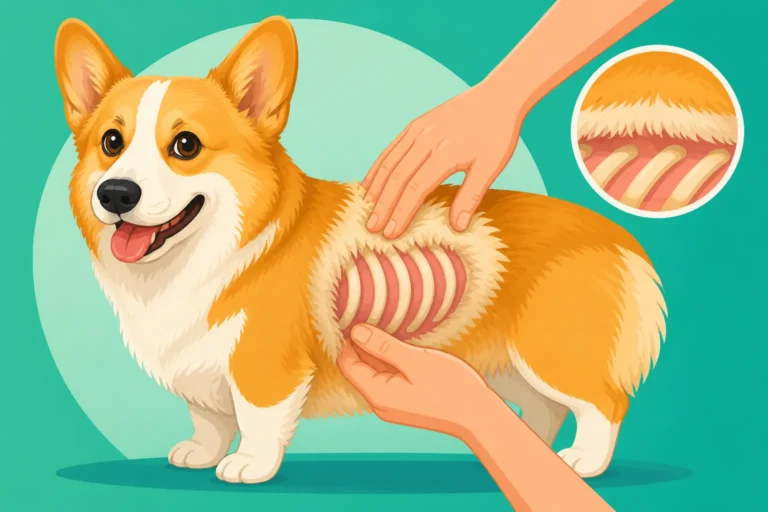
Determining if your Corgi is overweight isn't always as simple as stepping on a scale. That thick double coat can hide a multitude of sins, making a Corgi look rounder than they are, or concealing true obesity. Instead, you need to learn how to do a "hands-on" assessment of their body condition.
First, try to feel their ribs. You should be able to feel their ribs easily, like running your hand over knuckles, with just a thin layer of fat covering them. If you have to press hard to feel them, or can't feel them at all, your Corgi is likely overweight. Second, look at their waist and abdominal tuck. From above, your Corgi should have a visible waistline behind their ribs, even with their long body. From the side, there should be a slight tuck-up in their abdomen, meaning their belly doesn't hang down level with their chest. A Corgi that is truly fit will have a distinct waist and tuck, even if it's subtle under all that fur. Don't be fooled by pictures of round, chunky Corgis on social media – an ideal Corgi is lean and athletic. Your vet will use a Body Condition Score chart to give you a more objective assessment, usually on a scale of 1 to 9, with 4 or 5 being ideal. Knowing The Body Condition Score a Corgi Should Hold is key to proper management.
The "Just Less Food" Approach: Pros, Cons, and Practicalities
Once you've determined your Corgi needs to lose a few pounds, the first, most logical step for many owners is simply to cut back on the amount of food they're currently receiving. This can be a very effective strategy, but it's not without its nuances and potential pitfalls.
When Simply Cutting Calories Works
For Corgis who are only carrying a few extra pounds, or whose weight gain is relatively recent, simply reducing their daily caloric intake can be highly effective. If your Corgi is otherwise healthy, doesn't have specific dietary sensitivities, and is eating a complete and balanced commercial food, a modest reduction in portion size might be all they need. The key here is "modest" and "measured." Often, owners don't realize how much they're actually feeding, especially if they're "eyeballing" portions rather than using a measuring cup or scale.
Let's say your Corgi has crept up from an ideal What an Ideal Corgi Weighs of 28 pounds to 32 pounds. That extra four pounds might be addressed by simply cutting their current food by 10-15% and ensuring no extra treats or table scraps sneak in. This approach is budget-friendly, as you're not buying special food, and it’s straightforward. You're essentially creating a calorie deficit, which is the fundamental principle of weight loss. For a 28-pound Corgi, knowing The Calorie Target for a Twenty-Eight Pound Corgi can help you determine how much to reduce.
The Pitfalls of Randomly Reducing Portions
While cutting back can work, just slashing portions without thought can lead to problems. The most significant risk is nutritional deficiency. If you dramatically reduce the amount of a regular adult dog food, you might be reducing essential vitamins, minerals, and protein below the recommended levels for your Corgi's size and activity. This isn't healthy in the long run and can lead to a dull coat, low energy, and even compromised immune function.
Another common issue is increased begging. A Corgi who suddenly feels perpetually hungry might become more vocal, more prone to counter-surfing, or develop intense begging behaviors at the dinner table. This can be tough on owners and often leads to giving in, undermining the whole weight loss effort. It also doesn't address the fact that some Corgis might have a very slow metabolism, or underlying health conditions (though rare) that make weight loss harder, even on a reduced portion. Finally, if the weight gain is significant, a drastic cut might lead to too rapid weight loss, which can be detrimental to their health, particularly if they're losing muscle mass instead of just fat. Remember, Scraps That Undo a Corgi's Diet can easily sabotage any calorie reduction efforts.
Strategies for Effective Portion Control
If you're opting for the "just less food" approach, precision is paramount. First, ditch the scoop. Invest in a digital kitchen scale and weigh your Corgi's kibble according to the manufacturer's feeding guidelines for their ideal weight, not their current weight. This ensures accuracy that scoops simply can't match, as kibble density varies. Many reputable brands list the caloric content per cup or gram, which is invaluable.
Consider splitting their daily ration into two or three smaller meals. This can help them feel fuller throughout the day and regulate their metabolism. You can also incorporate enrichment feeding, using puzzle toys or slow feeder bowls, which make your Corgi "work" for their food, slowing down consumption and providing mental stimulation. Many excellent slow feeders can be found on platforms like Amazon or Chewy. These strategies not only manage calorie intake but also address the psychological aspect of hunger. For detailed guidance on accurate feeding, review Why a Corgi's Food Is Weighed, Not Scooped.
Exploring Veterinary-Prescribed Diets for Corgis
Sometimes, simply feeding less isn't enough, or it's not the healthiest or most effective path. This is where veterinary-prescribed diets come into play, offering a more targeted approach to weight management.
What Makes a Vet-Prescribed Diet Different?
Veterinary diets, often called "prescription diets" or "therapeutic diets," are formulated with specific health conditions in mind. For weight loss, these diets are usually significantly lower in calories per serving compared to regular adult dog food. However, the crucial difference is that they achieve this lower calorie count without compromising on essential nutrients. They are typically high in fiber, which helps your Corgi feel fuller on fewer calories and aids in digestion. They also contain carefully balanced protein, vitamins, and minerals to ensure that even while losing weight, your Corgi is still receiving all the necessary building blocks for health.
Some prescription diets also include ingredients designed to support joint health, which is incredibly important for Corgis. These might include glucosamine and chondroitin, or omega-3 fatty acids, to help mitigate the impact of previous weight gain on their joints. These diets undergo rigorous testing and are backed by scientific research, developed by veterinary nutritionists to achieve specific outcomes under professional guidance.
When a Veterinary Diet Is the Right Choice
A veterinary diet often becomes the preferred choice in several situations. If your Corgi is significantly overweight (e.g., more than 15-20% above their ideal weight), a prescription diet can offer a safer, more efficient path to weight loss, preventing nutritional deficiencies that a drastic reduction in regular food might cause.
It's also highly recommended if your Corgi has other concurrent health issues that are either caused or exacerbated by their weight. For instance, if your Corgi has early signs of arthritis, a history of back problems, or is at risk for diabetes, a vet diet can offer not only calorie control but also specific nutrients to support those conditions. Joint Damage From Corgi Weight Gain is a significant concern that these diets can help address. These diets provide a structured, nutritionally complete framework for weight loss, making the process less stressful for both you and your Corgi, as they can often eat a more satisfying volume of food for fewer calories.
Working with Your Vet to Choose the Best Option
The absolute best way to determine if a veterinary diet is right for your Corgi, and which one, is to consult with your veterinarian. They can accurately assess your Corgi's current health, ideal weight, and any underlying conditions. They will take into account their age, activity level, and medical history. Your vet will then recommend a specific diet and calculate the precise daily caloric intake your Corgi needs to achieve a healthy, sustainable weight loss of around 1-2% of their body weight per week.
They can guide you through different brands, such as Hill's Prescription Diet, Royal Canin Veterinary Diet, or Purina Pro Plan Veterinary Diets, explaining the subtle differences in their formulations. Once you have a recommendation, you can often purchase these specialized foods directly from your vet's office or through approved online retailers like Chewy or Amazon, sometimes requiring a prescription. The transition to a new food should always be gradual, typically over 7-10 days, mixing increasing amounts of the new food with decreasing amounts of the old to prevent digestive upset.
Blending Approaches and Long-Term Weight Management
No matter which dietary path you choose, successful weight management for your Corgi is a marathon, not a sprint. It requires a holistic approach that goes beyond just what's in the bowl.
The Role of Exercise and Mental Stimulation
Diet alone is rarely enough. Exercise plays a critical role in burning calories, building lean muscle mass, and keeping your Corgi mentally stimulated. For Corgis, it's important to choose appropriate exercises that don't put undue strain on their long backs. Daily walks are fantastic, but remember that multiple shorter walks might be better than one long, strenuous one. Focus on steady, leash-walking rather than intense jumping or rough play. Swimming can be an excellent low-impact option, if your Corgi enjoys it and you have access to a safe pool.
Beyond physical activity, mental stimulation is crucial. Corgis are intelligent working dogs, and a bored Corgi can become a destructive or overly vocal Corgi. Puzzle toys, scent work games (hiding treats for them to find), and short training sessions throughout the day can engage their minds and burn energy, even if they're not physically exerting themselves heavily. Think about fun ways to provide The Forty-Five Minutes a Corgi Needs Daily without risking their back.
Beyond the Bowl: Managing Treats and Table Scraps
This is where many weight loss efforts falter. A handful of treats here, a bite of your dinner there – it all adds up quickly for a small dog like a Corgi. It's tough to resist those pleading Corgi eyes, but consistency is key. If your Corgi is on a weight loss plan, factor all treats into their daily caloric allowance. Better yet, swap high-calorie commercial treats for healthy, low-calorie alternatives.
Small pieces of plain, raw carrot, green beans, or apple (no seeds!) can make fantastic, guilt-free treats. You can also use a portion of their daily kibble ration as training treats. This ensures they're still getting their food, but you're not adding extra calories. For more on this, check out Training Treats That Fit a Corgi's Allowance. Completely eliminating table scraps is a non-negotiable for Corgi weight loss and overall health, as human food is often too rich, salty, or even toxic for dogs.
Maintaining a Healthy Weight for Life
Once your Corgi reaches their ideal weight, the job isn't over. Maintaining that healthy weight requires ongoing vigilance and commitment. Continue to weigh their food precisely, monitor their body condition regularly (weekly or bi-weekly), and schedule regular check-ups with your vet. A Corgi's metabolism can change as they age, meaning their caloric needs might decrease further in their senior years. Your vet can help you adjust their diet as needed. Whether a Corgi Diet Should Change After Nine is a crucial consideration as your dog matures.
Life happens, and sometimes a Corgi might regain a pound or two. Don't despair; just adjust their intake slightly and increase their activity if appropriate. Long-term weight management is about building sustainable habits for both you and your Corgi, ensuring they live the happiest, healthiest, and longest life possible.
Here’s a quick comparison to help you weigh your options:
| Feature | "Just Less Food" Approach | Veterinary Diet Approach |
|---|---|---|
| Ideal For | Mildly overweight Corgis, recent weight gain, no underlying health issues. | Significantly overweight Corgis, existing health conditions (e.g., joint pain, diabetes risk), difficulty losing weight. |
| Cost | Generally lower (using existing food). | Higher upfront cost for specialized food. |
| Nutritional Balance | Potential for nutrient deficiencies if portions are cut too drastically. | Formulated to be nutritionally complete and balanced for weight loss, often with added beneficial ingredients. |
| Satiety | Corgi may feel hungrier due to smaller volume. | High fiber content often helps Corgi feel fuller on fewer calories. |
| Veterinary Guidance | Still beneficial for guidance on portion reduction. | Absolutely essential for diagnosis, diet selection, and monitoring. |
| Availability | Any standard pet food (Chewy, Amazon, pet stores). | Requires veterinary prescription, typically available from vets or approved online retailers. |
Remember, your Corgi's health is in your hands. Whether you choose to feed less of their current food or transition to a veterinary diet, the goal is always the same: a happy, healthy Corgi who can enjoy life to the fullest without the burden of extra weight. Always involve your veterinarian in these decisions to ensure the best outcome for your furry companion.
Disclaimer
This article is for general informational purposes only and does not constitute professional advice. Laws, prices and regulations vary by location and change over time. Consult a qualified professional for guidance on your specific situation.