Lifting a Corgi Into a Car Without Twisting It
Getting your beloved Corgi into the car can often feel like a delicate operation, especially if they’re a bit older, have a history of back issues, or you simply want to protect their precious spine. The last thing any Corgi owner wants is to accidentally twist or jar their dog, potentially leading to pain or even a serious injury. This guide is all about mastering safe lifting techniques and understanding when it’s time to use a little help, ensuring car rides remain a joy, not a risk.
Why a Corgi's Anatomy Demands Careful Lifting
Our Corgis are undeniably adorable with their short legs and long bodies, but this very charming physique also comes with a unique set of vulnerabilities. Understanding their specific anatomy is the first step in ensuring you handle them in a way that protects them from injury, especially when it comes to something as routine as getting into the car.
The Long Back and Short Legs Predicament
You see it every day: those powerful, stubby legs supporting a surprisingly long torso. This distinctive build, while perfect for herding cattle by nipping at their heels and avoiding kicks, also places significant stress on their spine. Unlike dogs with more proportionate bodies, a Corgi's spine is under constant leverage, almost like a bridge supported by short pillars at either end. When you lift them incorrectly, this leverage is amplified, creating twisting forces that can be incredibly damaging.
Imagine trying to lift a heavy, flexible plank from just one end or from the middle without supporting both ends evenly. It would sag, bend, and potentially snap. Your Corgi's spine, especially the disc spaces, experiences a similar strain if not supported properly. Their discs, which act as shock absorbers between the vertebrae, are already predisposed to issues due to their chondrodystrophic (dwarfism) genes. This means their discs can degenerate prematurely, making them more susceptible to injury from sudden movements or twisting. It's why we talk so much about conditions like Disc Disease in a Long-Backed Corgi and why every careful movement matters.
The Impact of Age and Weight on Spinal Health
As our Corgis get older, their spines naturally become less flexible, and those intervertebral discs that we just talked about can become drier and more brittle. This is a cruel reality for many long-backed breeds. What might have been a minor twist in their younger, more resilient years could become a serious problem as they enter their senior years. The muscles supporting their back may also start to weaken, offering less natural protection. It's a sad but true fact that The Corgi Years When the Back End Gives Out often bring with them increased spinal fragility.
Weight also plays a massive role here. An overweight Corgi carries extra pounds that put even more strain on an already vulnerable spine. Every extra pound acts like a tiny anvil pulling down on their back, making proper support during lifting even more crucial. If you’re struggling to feel their ribs or see a waist tuck, then those extra pounds are making every movement, including getting into the car, riskier for their back. We often discuss Why Corgi Weight Is a Spinal Problem because it's such a pervasive issue. Maintaining an ideal weight is one of the kindest things you can do for your Corgi's long-term spinal health.
The Risks of Incorrect Lifting Techniques
It's easy to think a quick scoop into the car isn't a big deal, but for a Corgi, a moment of carelessness can have lasting consequences. Understanding the specific dangers helps reinforce why a thoughtful approach is paramount.
Twisting and Compression Injuries
The most immediate and concerning risk when lifting a Corgi improperly is a twisting or compression injury to their spine. Imagine lifting your Corgi by only grabbing their front legs or under their armpits. Their long, unsupported body would dangle, and gravity would pull on their hindquarters. This creates a severe arch and twisting motion in their lower back. This kind of strain can lead to a slipped, herniated, or even ruptured disc. The symptoms of a disc injury can range from mild pain and reluctance to move to complete paralysis, often manifesting as a Corgi that cries when lifted under the chest.
Even a brief moment of incorrect lifting can set off a cascade of problems. A seemingly minor twist could cause a bulging disc to press against the spinal cord, leading to pain, weakness, or nerve damage. The long-term implications can be devastating, requiring extensive veterinary care, strict Crate Rest for a Corgi With a Bad Back, and potentially even surgery. It's not just about comfort; it's about preventing a life-altering injury that could drastically impact their mobility and quality of life.
Aggravating Existing Conditions
Many Corgis, particularly as they age, live with some degree of underlying spinal degeneration, even if they aren't showing overt symptoms. Maybe they have a slightly bulging disc that hasn't caused trouble yet, or early signs of arthritis in their hips or lower back. Improper lifting can easily exacerbate these existing, quiet conditions. A sudden twist could turn a manageable, low-grade discomfort into an acute, painful flare-up.
For instance, a Corgi with early-stage Degenerative Myelopathy and the Corgi might already have neurological weaknesses in their hind legs. An accidental jarring or twist during lifting could hasten the progression of symptoms or cause a secondary injury. Even common issues like early arthritis in a Corgi can be made significantly worse. The goal isn't just to prevent new injuries, but to protect an already compromised system from further damage. This is why paying close attention to how you Picking a Corgi Up Without Hurting It is so vital for their ongoing well-being.
The Art of the Safe Corgi Lift
When it comes to getting your Corgi into the car, a safe lift isn't just about strength; it's about technique. You want to mimic the natural support their body would get if they were walking on all fours, distributing their weight evenly and preventing any twisting.
The "Body Board" Method
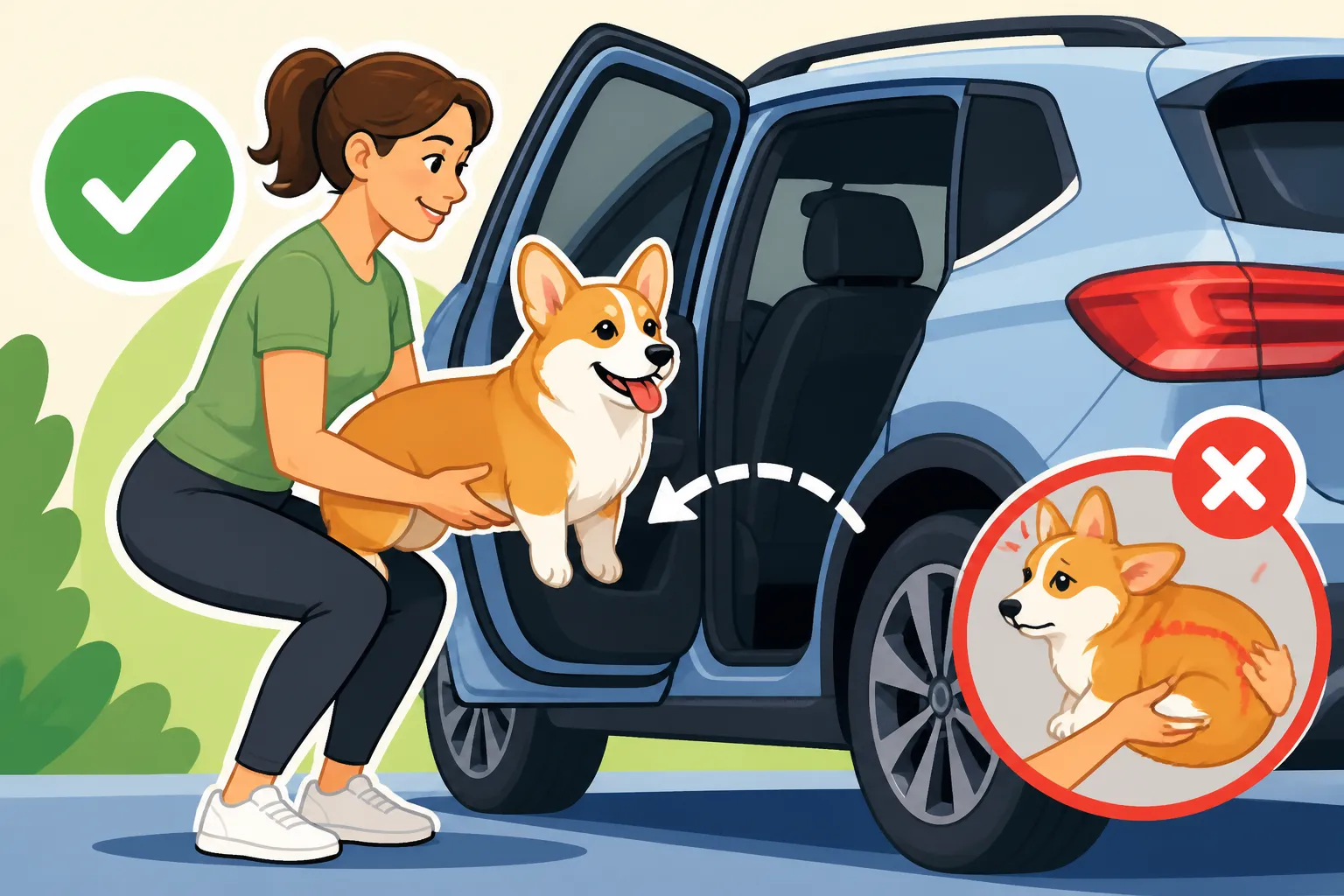
This is my go-to method for lifting Corgis of all ages, and it's particularly vital for those with suspected back issues or as they get older. The idea is to keep their spine as straight and supported as possible, almost as if they're lying on a rigid board.
- Approach from the Side: Kneel or crouch down beside your Corgi. Don't approach from the front, as this can encourage them to stand on their hind legs, which is precisely what you want to avoid.
- Support the Front: Place one arm underneath their chest, just behind their front legs. Your forearm should run along their ribcage, providing a broad, stable base for their front half.
- Support the Rear: Place your other arm underneath their hindquarters, making sure to support their belly and hind legs. Your forearm should extend along their abdomen, reaching towards their tail.
- Lift Evenly: Engage your core and lift with your legs, not your back, slowly and smoothly. The key is to lift both ends of their body simultaneously and at the same rate, keeping their spine horizontal and untwisted. Think about it as lifting a plank of wood – you lift the whole thing, not just one end.
- Place Carefully: Once you're at the car, guide them gently into position, continuing to support their full body until all four paws are securely on the seat or floor of the vehicle. Avoid dropping them even a short distance.
This "body board" technique minimizes spinal flexion, extension, and torsion, which are the motions that put discs at risk. It feels a bit awkward at first, especially if you're not used to it, but with practice, it becomes second nature.
Utilizing Lifting Aids and Car Solutions
Sometimes, a manual lift, no matter how careful, isn't the best option. For heavier Corgis, owners with their own back issues, or those dogs with advanced spinal problems, lifting aids can be a lifesaver.
- Ramps: A ramp is arguably the best solution for car entry, as it allows your Corgi to walk in and out under their own power, completely eliminating any lifting strain on their spine and on yours! You can find a wide variety of portable ramps on sites like Amazon or Chewy. Look for one that's wide enough for them to feel secure, has good traction, and isn't too steep for their short legs. Training them to use it might take a little time and patience, with plenty of treats and encouragement, but it's an investment in their long-term health. Ramps and Steps That Save a Corgi's Back are not just for senior dogs; they are preventative measures for all Corgis.
- Slings or Harnesses: For Corgis with mild hind leg weakness or those recovering from a minor injury, a full-body support harness or a rear-end lifting sling can offer assistance without a full lift. These allow you to take some of the weight off their legs as they hop into the car, or even support them fully if you're only moving them a short distance. There are many designs available, often with handles that let you assist them without bending over too far. Again, these are readily available from pet supply retailers like Chewy.
- Car Booster Seats/Beds: While not directly for lifting, a dedicated car booster seat or a firm, supportive car bed can help reduce the amount of vertical lifting needed. These raise your Corgi to window height, meaning you only need to lift them a few inches to get them in, rather than the full height of the car. They also provide a secure, comfortable, and spine-friendly place for your Corgi to ride, preventing them from trying to jump down themselves, which is something you should absolutely discourage with Whether a Corgi Should Ever Jump Off a Sofa type rules applying to car seats too.
Remember, the goal is always to minimize stress on their spine. Whether that's through careful manual lifting or the strategic use of mobility aids, every effort you make contributes to their comfort and longevity. A little preventative care now can save a lot of heartache and vet bills down the road.
Adapting Your Car for Corgi Comfort and Safety
Beyond the lifting technique itself, there are several ways you can modify your car environment to make it safer and more comfortable for your Corgi, further reducing the risk of twisting or other injuries during travel.
Choosing the Right Entry Point
Not all car doors are created equal when it comes to Corgi entry. The best option is often a rear passenger door, or even the cargo area if you have an SUV or hatchback.
- Rear Passenger Door: This is typically the lowest entry point with the most space to maneuver. It allows you to position yourself close to your Corgi, making the lift easier and more stable. The seat height is usually less of a jump than the front seat. If you're using a ramp, this often provides the best angle.
- Cargo Area (SUV/Hatchback): Many Corgi owners find the cargo area of an SUV or hatchback ideal. It often provides a larger, flatter surface for your Corgi to get into, especially with the use of a ramp. Ensure there's a secure, non-slip surface once they're inside and a barrier if needed to prevent them from climbing into the passenger compartment while you're driving.
Avoid lifting your Corgi directly into the front passenger seat, especially if it's a high seat or involves navigating the center console. This often requires more twisting and awkward angles, increasing the risk.
Creating a Secure and Supportive Space Inside the Car
Once your Corgi is in the car, their journey isn't over. How they ride also impacts their spinal health.
- Non-Slip Surfaces: If your Corgi is riding on a slippery leather seat or a hard cargo floor, they can slide around during braking or turns. This constant shifting and bracing can put strain on their joints and spine. Place a non-slip mat, a thick blanket, or a dedicated dog car seat cover (many excellent options exist on Amazon) to provide stable footing.
- Orthopedic Support: For longer rides, or for Corgis with existing back issues, an orthopedic dog bed designed for car use can be incredibly beneficial. These beds provide firm, even support for their entire body, helping to keep their spine aligned and reduce pressure points. This is especially important for senior Corgis or those with conditions like Disc Disease in a Long-Backed Corgi. You can find various orthopedic beds on Chewy that are designed to fit car spaces.
- Safety Restraints: A properly fitted safety harness that attaches to the car's seatbelt system is not just about preventing injury in an accident; it also keeps your Corgi from moving around excessively, trying to jump out, or falling off the seat during sudden stops. Choose a harness that distributes pressure evenly across their chest and back, rather than putting strain on their neck or spine. Never attach a seatbelt directly to their collar.
By combining careful lifting techniques with a thoughtful car setup, you're creating a comprehensive safety plan for your Corgi. It's about proactive care and making sure that every car trip, whether it's to the vet, the park, or on a grand adventure, is as comfortable and safe as possible for their unique, wonderful bodies.
| Lifting Method / Aid | Pros | Cons | Best For |
|---|---|---|---|
| Manual "Body Board" | Full control, no equipment needed | Requires proper technique, can be strenuous for owner | Younger, lighter Corgis; short distances; owners with good physical health |
| Ramp | Eliminates lifting, safest for spine, low impact | Takes up space, Corgi needs to be trained, can be heavy to set up | All Corgis, especially seniors or those with spinal issues |
| Lifting Sling/Harness | Provides support without full manual lift | Corgi still needs some mobility, can be awkward for very low cars | Corgis with mild hind-end weakness, post-op recovery |
| Car Booster Seat | Reduces vertical lift needed, provides view | Corgi may still need a small hop, not suitable for all car types | Smaller Corgis, preventing jumping down |
Disclaimer
This article is for general informational purposes only and does not constitute professional advice. Laws, prices and regulations vary by location and change over time. Consult a qualified professional for guidance on your specific situation.