Why a Corgi Sheds All Year and Not Just Twice
If you've welcomed a Corgi into your home, you've undoubtedly discovered one undeniable truth: the shedding is relentless. It's not just a seasonal thing, where you brace for a few weeks of extra fluff and then enjoy a reprieve. Oh no, with a Corgi, it feels like an endless snowstorm of fur, coating everything from your clothes to your morning coffee. This guide is here to unravel the mystery of the constant Corgi shed, explain why it happens year-round, and equip you with realistic strategies to keep the "Corgi glitter" under control.
The Corgi Double Coat: A Masterpiece of Herding History
Corgis, both Pembrokes and Cardigans, are equipped with what's known as a double coat. This isn't just a fashion statement; it's a functional, evolutionary marvel designed for their original calling as tough, resilient herding dogs in the varied and often harsh climates of Wales. This coat was their armor against the elements, protecting them whether they were driving cattle through wind, rain, or sun-drenched fields. Understanding this fundamental aspect of their physiology is the first step to accepting and managing their perpetual shedding.
Understanding the Two Layers
A Corgi's double coat consists of two distinct layers, each with its own purpose, and both contributing to the glorious, never-ending snowfall of fur in your home. The inner layer, closest to their skin, is a dense, soft, and woolly undercoat. Think of it as their built-in thermal underwear, providing incredible insulation against both cold and heat. This layer is remarkably effective, keeping them warm in winter and helping to regulate their body temperature in summer by trapping a layer of cooler air next to their skin.
The outer layer is composed of coarser, longer guard hairs. These hairs are tougher and more water-resistant, forming a protective barrier that shields the delicate undercoat and the skin beneath from moisture, dirt, and harsh sunlight. They also give the Corgi its characteristic shape and color. Both of these layers are crucial for a Corgi's well-being and their ability to thrive in outdoor conditions, but they also mean there's simply more hair, and more hair means more shedding. Each type of hair has its own growth cycle, and when you have two types constantly renewing, it creates a constant supply of shedding fur.
Why it's Not Just a "Winter Coat" and "Summer Coat"
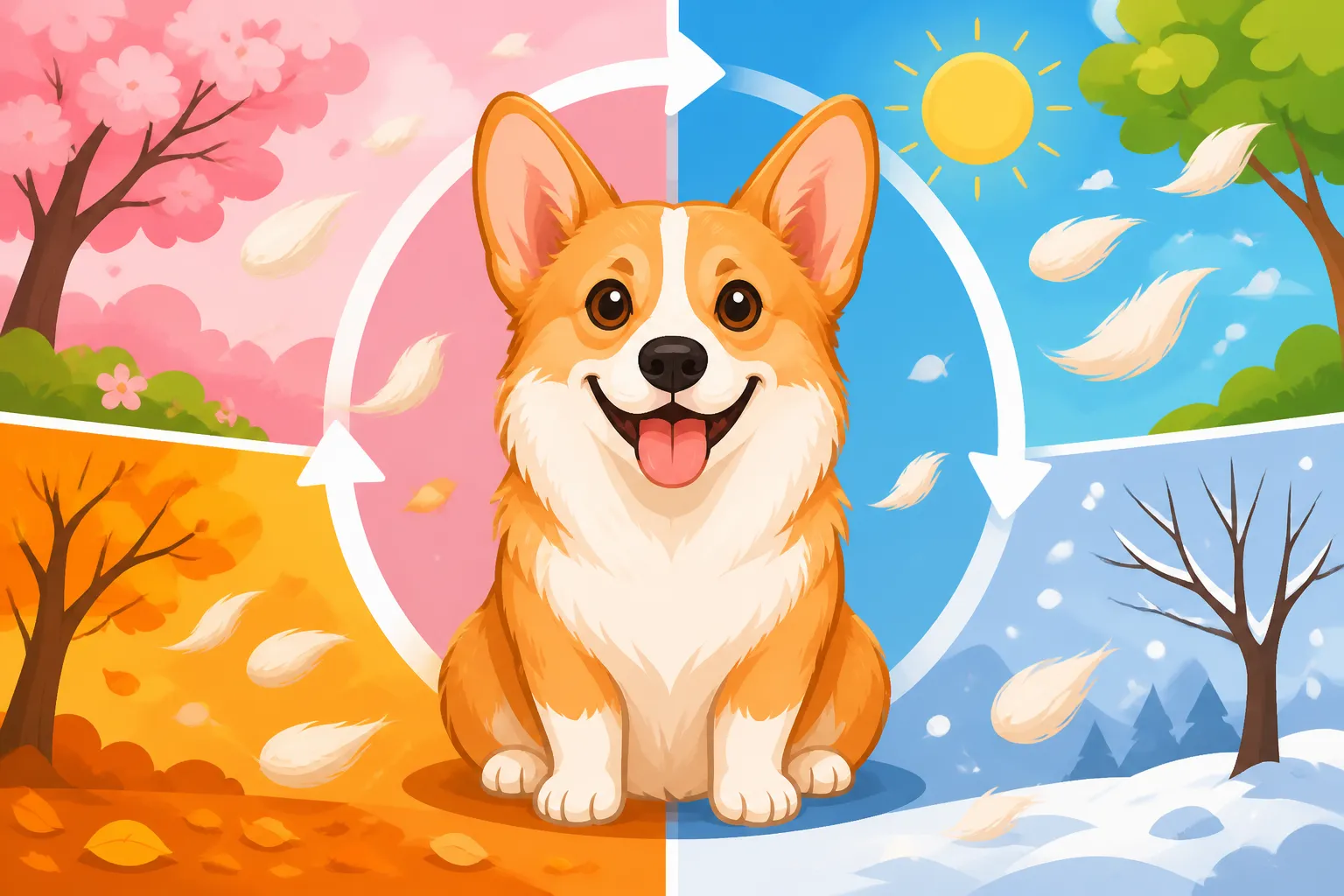
Many breeds will "blow" their coat twice a year, dramatically shedding their winter insulation in spring and their lighter summer coat in the fall. While Corgis certainly have these intensified shedding periods, it's a common misconception that their shedding is limited to these times. For Corgis, the coat density adapts more subtly throughout the year, meaning a degree of shedding is always occurring. They might thicken their undercoat slightly for winter and thin it for summer, but they don't completely abandon one coat for another in the same way some northern breeds do.
Our modern indoor living environments also play a huge role in this year-round shedding. Unlike their ancestors who lived primarily outdoors and were exposed to natural light cycles and temperature fluctuations, our Corgis spend a lot of time indoors, where climate control and artificial lighting disrupt their natural shedding triggers. Your cozy, temperate living room doesn't prompt the same dramatic seasonal changes in their coat that a cold, drafty barn might. This constant, mild environment means their bodies are less inclined to undergo a complete, rapid seasonal coat change, leading instead to a more consistent, albeit lower-level, release of old hair throughout the year.
The Science Behind the Shed: Hair Growth Cycles
To truly understand why your Corgi is a shedding machine, we need to take a quick peek at the biology of hair growth. Just like human hair, dog hair goes through distinct phases, and because Corgis have such a dense double coat, these cycles are constantly overlapping across millions of individual hairs on their body. It’s not a single, synchronized event but rather a continuous process of renewal, ensuring they always have a functional and protective coat.
Anagen, Catagen, Telogen, and Exogen Phases
Every single hair on your Corgi's body moves through four main phases of growth. The first is Anagen, the active growth phase where the hair follicle produces new hair rapidly. This is the period when the hair is actively getting longer. Next comes Catagen, a transitional phase where the hair stops growing, and the follicle shrinks. Think of it as a brief resting period before the grand finale.
Following Catagen is Telogen, the resting phase. During this time, the hair is fully grown but remains attached to the follicle. It’s simply waiting for its turn to be replaced. Finally, we have Exogen, the shedding phase, where the old hair is released from the follicle to make way for new growth. For a Corgi, with its millions of hairs and dual-layered coat, hairs are constantly in all these different phases simultaneously. This means that while some hairs are actively growing, others are resting, and a significant number are always in the process of being shed. This constant rotation of hair through its life cycle is the fundamental reason why Corgi shedding is a perpetual phenomenon rather than a biannual event. It's a testament to the incredible density of their coat that there always seems to be an endless supply of loose hairs ready to make their exit.
Hormonal and Environmental Influences
Beyond the basic hair growth cycles, several other factors can significantly influence a Corgi's shedding patterns. One of the most prominent environmental influences is daylight hours. Historically, dogs living outdoors would respond to the shortening and lengthening of daylight by adjusting their coat, preparing for winter or summer. Even though our Corgis live indoors, their bodies still have some ingrained responses to natural light. Longer daylight hours in spring can trigger the massive release of the dense winter undercoat, and shorter days in fall can signal the need to replace lighter hairs with a thicker insulating layer.
Hormonal changes also play a substantial role. For instance, spaying or neutering a Corgi can sometimes lead to changes in coat texture and an increase in shedding. The altered hormonal balance can cause the undercoat to become softer and denser, and sometimes more prone to shedding, or less inclined to release naturally. Stress can also manifest in increased shedding; a Corgi undergoing a stressful period might "blow" coat more rapidly or shed more consistently. Finally, a Corgi's diet directly impacts the health of their skin and coat. A diet lacking essential nutrients, particularly omega fatty acids, can lead to a dull, dry coat that sheds more excessively or is prone to breakage. Ensuring a high-quality, balanced diet is crucial not just for overall health but also for maintaining a healthy shedding cycle.
Seasonal "Blows" vs. Everyday Hair Loss
While Corgis are pretty much always shedding, there are definitely times when it ramps up to an almost unbelievable level. If you're a Corgi owner, you know these periods well. It's not just a bit of extra fur; it's an absolute explosion of fluff that makes you wonder if your dog is secretly trying to recreate itself out of its own shed hair. Understanding the difference between these intense seasonal "blows" and the regular daily shedding can help you mentally prepare and adjust your grooming routine accordingly.
The Two Weeks a Corgi Coat Comes Out in Handfuls
Ah, the "blow-out" or "blowing coat." This is perhaps the most famous, or infamous, aspect of Corgi shedding, usually occurring in spring and fall. You might think of it as two weeks, but for some Corgis, it can feel like a solid month or more of relentless fur-nado. During these times, the dense undercoat that has either served its purpose for the winter or is now too thick for the warmer months simply decides it's time to vacate the premises en masse. You'll find yourself pulling out handfuls of soft, downy undercoat with every stroke of the brush. It's a shocking amount of hair, enough to knit a small sweater for a smaller dog.
During these periods, it can feel like you're fighting a losing battle. You brush your Corgi, and within minutes, more tufts appear. It clings to everything: your sofa, your rugs, your bed, and inevitably, your clothes. It’s crucial to understand that this isn't just an inconvenience; it's a vital, natural process for your Corgi to regulate their body temperature and maintain a healthy coat. Ignoring it can lead to uncomfortable matting, especially in the denser areas. Preparing for these times means having your grooming tools ready and dedicating extra time to help your Corgi shed this excess fur cleanly. You can read more about what to expect during these periods in The Two Weeks a Corgi Coat Comes Out in Handfuls.
Managing the Daily Shedding
Even outside of those dramatic seasonal coat blows, Corgis are consistent, daily shedders. This isn't the dramatic "handfuls" situation, but more of a persistent, low-level release of individual hairs. Think of it as a constant sprinkle of Corgi glitter that finds its way onto every surface. These are the hairs that have reached the end of their telogen phase and are making way for new growth. Because their double coat is so dense, there's always a steady supply of these ready-to-shed hairs.
For Corgi owners, this means accepting that a completely hair-free home is likely a mythical unicorn. You will always find Corgi hair. It will tumble across your floors like tiny, fluffy tumbleweeds. It will settle on your dark clothing with an almost magnetic attraction. Setting realistic expectations for yourself is key; you won't eliminate shedding, but you can certainly manage it. The challenge often lies in staying on top of it, consistently vacuuming, lint-rolling, and grooming to minimize the visible impact. This daily management is a marathon, not a sprint, and understanding that it's a constant battle helps you prepare. For more insight into the regularity of this shedding, check out Whether a Corgi Really Sheds Every Day.
Practical Strategies for Managing Corgi Shedding
Okay, so we've established that Corgis shed, and they shed a lot, pretty much all the time. Now, what do we do about it? While you can't stop the natural process, you absolutely can make it more manageable for both you and your fluffy companion. It's all about having the right tools, establishing a routine, and understanding how diet plays a part. Think of it as a proactive defense against the relentless tide of fur.
The Right Tools Make All the Difference
You wouldn't try to build a house with a spoon, and you shouldn't try to manage a Corgi's coat with just any old brush. Investing in the proper grooming tools is perhaps the single most important step. For Corgis, an undercoat rake is your best friend. These rakes have long, sturdy teeth designed to penetrate through the guard hairs and gently pull out loose undercoat without damaging the topcoat or irritating the skin. Use it with light, long strokes, following the direction of hair growth. You'll be amazed at the amount of fur it removes.
Another valuable tool is a deshedding tool, like those offered by brands such as Furminator. However, these must be used carefully and sparingly on a Corgi's delicate double coat. Overuse or incorrect technique can cut the guard hairs and damage the undercoat, leading to patchy regrowth or even affecting the coat's natural protective qualities. A good slicker brush can help smooth the topcoat and remove some loose hairs, while a wide-toothed comb is excellent for checking for any tangles or mats after brushing. You can find a wide variety of these tools on platforms like Chewy or Amazon, making it easy to stock up. To learn more about selecting the best tools, take a look at The Rake and Comb a Corgi Coat Actually Needs.
Establishing a Consistent Grooming Routine
Once you have your tools, the key is consistency. Waiting until your Corgi is a walking fur ball is asking for trouble (and a huge mess). During peak shedding seasons, daily brushing with an undercoat rake is highly recommended. Even 10-15 minutes a day can make a massive difference in the amount of loose hair that ends up on your furniture and floors. Outside of these heavy shedding periods, a thorough brushing session 2-3 times a week is usually sufficient.
It's also beneficial to brush your Corgi before bathing. Water can tighten and compact loose undercoat, making it harder to remove and more prone to matting once wet. By brushing out as much loose hair as possible beforehand, you'll make the bathing process more effective and reduce the amount of wet, matted fur you have to deal with afterward. Incorporating grooming into a regular routine helps your Corgi get used to it, making the process less stressful for everyone. This proactive approach is fundamental to managing the Corgi's unique coat. If you're wondering about managing it yourself, check out Whether a Corgi Coat Can Be Managed at Home.
The Role of Diet and Hydration
What goes into your Corgi's bowl can have a direct impact on the health and luster of their coat, and consequently, on their shedding. A high-quality, balanced diet rich in essential nutrients, particularly omega-3 and omega-6 fatty acids, supports healthy skin and a strong, resilient coat. Think of it like nourishing your own hair from the inside out. Brands like Ollie, known for fresh, human-grade dog food, emphasize quality ingredients that can contribute to overall coat health, potentially reducing excessive dryness or breakage that exacerbates shedding.
Adequate hydration is also surprisingly important. A well-hydrated dog will have healthier skin and a healthier coat, which can shed less due to dryness. Make sure your Corgi always has access to fresh, clean water. For an extra boost, many owners find success adding fish oil supplements to their Corgi's diet. These are packed with omega fatty acids that promote a shiny, healthy coat and can help reduce shedding by strengthening the hair follicles. Just be sure to talk to your vet about appropriate dosages. While fish oil won't stop shedding entirely, it can improve the overall condition of the coat, making the hair that does shed healthier and less prone to breakage. For more on this topic, read Whether Fish Oil Thickens a Corgi Coat.
Common Misconceptions and What to Avoid
When you're constantly battling a blizzard of fur, it's easy to look for quick fixes. However, some common approaches to managing a Corgi's coat can actually do more harm than good. It's vital to understand why certain practices are detrimental to their unique double coat, as their fur is much more than just a pretty exterior; it's a crucial part of their natural protection system.
Why Clipping a Corgi Ruins the Coat
One of the most tempting, yet damaging, "solutions" some Corgi owners consider is clipping or shaving their dog, especially during warmer months. The thought is, "Less hair, less shedding, and they'll be cooler!" Unfortunately, this couldn't be further from the truth. A Corgi's double coat is specifically designed to regulate their body temperature. The dense undercoat provides insulation, keeping them warm in winter, but it also traps a layer of cooler air next to their skin in summer, acting like natural air conditioning. The guard hairs protect against sun, insects, and moisture.
When you shave a Corgi, you strip them of this natural protection. You expose their delicate skin to sunburn, insect bites, and the elements. More importantly, it can permanently damage the coat's regrowth. Often, the undercoat grows back faster and coarser than the guard hairs, leading to a patchy, uneven, and sometimes dull coat that can even feel "fluffy" (not in the desirable way) and prone to matting. This altered coat is less effective at insulating and protecting, potentially making your Corgi hotter in summer and colder in winter. It can take years, if ever, for the coat to fully recover its original texture and function. For a deeper dive into this issue, check out Why Clipping a Corgi Ruins the Coat.
Avoiding Over-Bathing and Harsh Products
While a clean Corgi might seem like a less-shedding Corgi, there's a delicate balance to maintain when it comes to bathing. Over-bathing can strip the natural oils from your Corgi's skin and coat, leading to dryness, irritation, and potentially even more shedding as their skin tries to compensate. Generally, a Corgi only needs a full bath every 2-3 months, or when they're truly dirty. If you find yourself wondering how often, How Often a Corgi Actually Needs Washing offers good guidelines.
When you do bathe your Corgi, choose a high-quality shampoo and conditioner specifically formulated for dogs, preferably one that is moisturizing and free of harsh chemicals. Avoid human shampoos, as they are pH-balanced differently and can cause skin issues for dogs. The biggest challenge with Corgi bathing is often getting them thoroughly dry. Their dense undercoat can hold a surprising amount of water, and if not dried completely, it can lead to skin irritation, hot spots, or a mildewy smell. Using a high-velocity pet dryer (or even a regular hairdryer on a cool setting, held at a safe distance) is often necessary to ensure the undercoat is bone-dry, as discussed in Getting a Corgi Dry Through the Undercoat. This final drying step is just as important as the wash itself to maintain a healthy coat and skin.
Living with the Corgi Cloud: Home Management
Accepting that your Corgi will shed year-round is one thing; actually living with the constant influx of fur in your home is another. It can feel like an unending battle against dog hair on every surface. But fear not, seasoned Corgi owners have developed some clever strategies to keep the "Corgi tumbleweeds" from completely taking over your living space. It's about smart choices in cleaning and understanding the larger impact of airborne fur.
Keeping Your Home (Relatively) Hair-Free
Let's be realistic: a Corgi-owner's home will never be entirely hair-free. However, you can significantly reduce the visual evidence and overall volume of fur with consistent effort. Your vacuum cleaner will become your most-used appliance. Investing in a powerful vacuum designed for pet hair is a game-changer. Many Corgi owners swear by robot vacuums that can run daily, picking up surface hair before it accumulates into noticeable clumps. For targeted clean-ups and staircases, a good handheld vacuum is invaluable. For more about the tools to clean up, you might find Vacuum Costs in a Corgi Household a helpful read.
Beyond vacuuming, lint rollers are your second best friend. Keep them strategically placed near exits, by your couch, and even in your car. They're excellent for quickly de-furring clothes, upholstery, and car seats. For furniture, consider using washable slipcovers or throws on your Corgi's favorite spots. Not only do they protect your furniture, but they can be easily removed, shaken out, and tossed in the wash, trapping a significant amount of hair before it has a chance to spread. Regular washing of bedding, both yours and your Corgi's, also helps to remove accumulated fur.
Air Quality and Allergies
Beyond what you see on surfaces, Corgi hair and dander (microscopic skin flakes) become airborne, impacting air quality. For individuals with allergies, this can be a significant concern. While no dog is truly hypoallergenic, and Corgis certainly aren't, managing airborne allergens can make a difference. Investing in a good quality air purifier with a HEPA filter can help trap these tiny particles, reducing the amount of dander and loose hair circulating in your home. Placing one in the rooms where your Corgi spends the most time, especially bedrooms, can be particularly beneficial.
Regularly changing your HVAC system's air filters to high-efficiency pleated filters (MERV 8 or higher) can also help trap pet dander before it circulates throughout your home's ventilation system. For those with severe allergies, accepting a Corgi into the home requires careful consideration, as Whether Anyone With Allergies Can Keep a Corgi points out, the reality is that the fur and dander will be ever-present. These strategies won't eliminate allergens, but they can significantly mitigate their impact, making the living environment more comfortable for sensitive individuals.
When Shedding Signals Something More
While year-round shedding is a normal part of Corgi ownership, it's crucial to distinguish between typical fur loss and shedding that might indicate an underlying health issue. Your Corgi's coat is a window into their overall well-being, and changes in its quality or unusual shedding patterns should always prompt a closer look. Being observant can help you catch potential problems early.
Recognizing Abnormal Hair Loss
Typical Corgi shedding involves a relatively even distribution of loose hair across their body, perhaps with some seasonal variations in density. However, if you start noticing patchy shedding, bald spots, excessive itching, or areas of skin irritation, it's a red flag. These signs could point to a variety of issues that require veterinary attention. For instance, a Corgi constantly scratching, biting, or licking at their coat could be suffering from allergies – environmental, food-related, or even flea allergies. The resulting irritation can lead to excessive hair loss in those affected areas.
Other common culprits include parasites like fleas, mites, or ticks, which can cause intense itching and subsequent fur loss. Fungal or bacterial skin infections can also manifest as localized hair loss, redness, and inflammation. If you notice your Corgi's coat suddenly becoming dull, brittle, or thinning in specific areas without obvious itching, it's definitely time to consult your veterinarian. These changes can be subtle, but they are important indicators that something might be amiss.
Nutritional Deficiencies and Medical Conditions
Beyond external factors, a Corgi's shedding can also be influenced by internal health problems. A poor diet that lacks essential vitamins, minerals, and fatty acids can result in a dull, dry, and unhealthy coat that sheds more easily and excessively. Just as a good diet supports healthy hair, a poor one can lead to brittle hair and compromised skin. If your Corgi is on a lower-quality food or isn't getting adequate nutrition, upgrading their diet might improve coat health and reduce excessive shedding.
Furthermore, certain medical conditions can directly impact hair growth and shedding. Hormonal imbalances, such as thyroid problems, are a notable example. Hypothyroidism, where the thyroid gland doesn't produce enough hormones, can lead to a dry, brittle coat, thinning hair, and increased shedding, often symmetrically across the body. You can learn more about this in Corgi Thyroid Problems. Other systemic illnesses, kidney disease, or even certain cancers can also affect coat quality and lead to abnormal hair loss. Even stress can cause a physiological response that leads to increased shedding. If you've ruled out basic grooming and environmental factors, and your Corgi's shedding seems excessive, unusual, or accompanied by other symptoms like lethargy, changes in appetite, or skin issues, a visit to the vet for a thorough check-up and blood panel is always the best course of action.
| Shedding Characteristic | Normal Corgi Shedding | Abnormal Corgi Shedding (Seek Vet Advice) |
|---|---|---|
| Frequency | Year-round, with 2-3 major "blows" | Sudden, dramatic increase outside of seasonal blows |
| Distribution | Generally even across the body | Patchy, bald spots, localized thinning |
| Coat Texture | Healthy, shiny guard hairs; soft undercoat | Dry, brittle, dull, greasy, or matted texture |
| Skin Appearance | Clear, pink, no irritation | Redness, rashes, bumps, scabs, scales, hot spots |
| Itching/Licking | Minimal, occasional self-grooming | Constant, obsessive scratching, biting, licking |
| Other Symptoms | None | Lethargy, changes in appetite/thirst, weight loss/gain, behavioral changes |
| Amount of Hair | Constant light shedding, heavy during blows | Unusually large amounts, even outside of blows, or hair that pulls out easily |
This table provides a quick reference to help differentiate between normal and potentially problematic shedding patterns. Always trust your gut if something feels "off" with your Corgi's coat or overall health.
Disclaimer
This article is for general informational purposes only and does not constitute professional advice. Laws, prices and regulations vary by location and change over time. Consult a qualified professional for guidance on your specific situation.