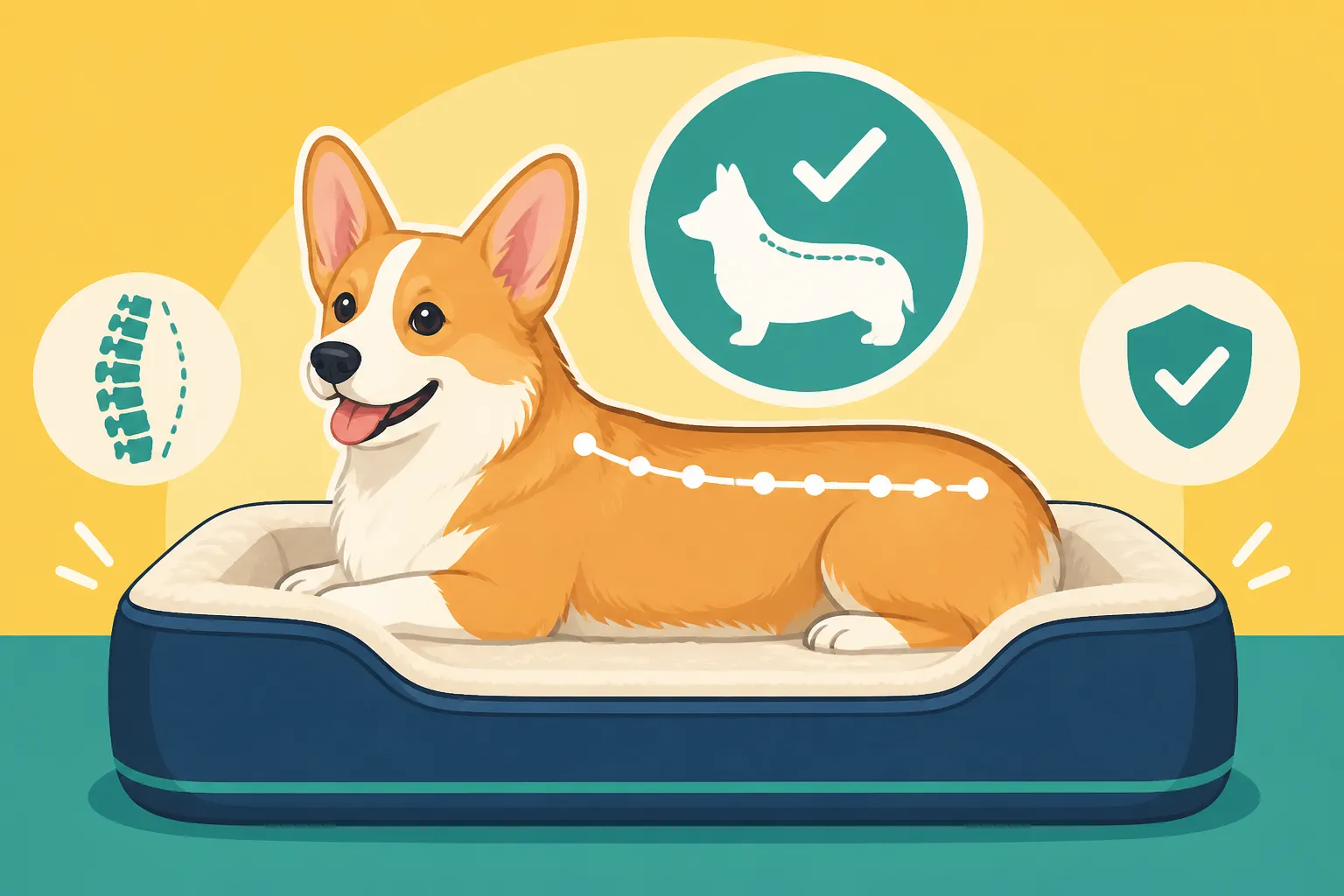
Beds That Hold a Corgi’s Back Straight
One of the most heart-wrenching concerns for any Corgi parent is the health of their beloved dog's back. These long-bodied, short-legged companions are adorable, but their unique physique comes with specific vulnerabilities, and seeing them struggle to get comfortable or waking up stiff is a real worry. This comprehensive guide will walk you through everything you need to know about choosing the perfect bed to provide optimal spinal support for your Corgi, helping them rest easier and live a more comfortable life.
Why Your Corgi's Back Needs Special Consideration
It's not just an old wives' tale; Corgis genuinely have a unique spinal structure that demands attention. Understanding these anatomical quirks is the first step toward providing them with the best possible care, starting with where they spend a significant portion of their day: sleeping.
The Unique Anatomy of a Corgi Spine
Corgis, like Dachshunds and Basset Hounds, are chondrodystrophic breeds. This fancy term simply means they have a genetic predisposition for abnormal cartilage and bone development, which leads to their characteristic short legs and long bodies. While undeniably cute, this body shape places immense stress on their intervertebral discs – the shock absorbers between the vertebrae of their spine. These discs are prone to degeneration and herniation, commonly known as a "slipped disc."
Imagine trying to carry a heavy load on a perfectly straight back versus carrying it on a back that's disproportionately long for your leg height; the stress points are obvious. For a Corgi, every jump, every twist, and every moment spent lying unsupported can contribute to wear and tear on these delicate discs. Disc Disease in a Long-Backed Corgi is a very real concern, and a significant part of managing this risk comes down to how well we support their spine in daily life, especially during rest. A flat, unsupportive surface allows their spine to sag or twist, putting uneven pressure on those vulnerable discs for hours on end.
The Dangers of Inadequate Support
When a Corgi sleeps on a bed that doesn't adequately support their spine, the consequences can range from mild discomfort to exacerbating serious conditions. Think about how you feel after a night on a lumpy, unsupportive mattress; you wake up stiff, sore, and probably a little grumpy. For a Corgi, particularly one prone to back issues, this discomfort is amplified. An old, flattened dog bed or a hard floor simply doesn't cradle their long body, allowing gravity to pull their spine into unnatural positions.
Over time, this lack of support can accelerate the degeneration of their intervertebral discs, making them more susceptible to injury. It can also lead to muscle strain as their body tries to compensate for the lack of external support, leading to chronic pain and stiffness. For Corgis already dealing with conditions like Early Arthritis in a Corgi or those entering The Corgi Years When the Back End Gives Out, an unsupportive bed is not just uncomfortable, it's detrimental to their quality of life. Waking up in pain can make them reluctant to move, affecting their overall activity levels and potentially contributing to weight gain, which is yet another factor in spinal health. Why Corgi Weight Is a Spinal Problem is a critical area, and a good bed is part of a holistic approach to managing it.
Understanding Orthopedic Bed Features for Corgis
Choosing the right orthopedic bed isn't just about picking one that looks nice; it's about understanding the specific features that cater to your Corgi's unique needs. There's a science to good spinal support, and for a Corgi, the materials and design are paramount.
High-Density Memory Foam vs. Other Fillings
When we talk about orthopedic beds, the conversation almost always turns to memory foam, and for good reason. High-density memory foam is designed to conform to your dog's body, distributing weight evenly and supporting the spine in its natural alignment. Unlike traditional polyfill or shredded foam beds, which can clump, flatten, and create pressure points, memory foam maintains its structure and support over time.
Consider the difference: a cheap polyfill bed might feel soft initially, but within weeks, your Corgi's weight will compress it, leaving their body essentially resting on the hard floor with only a thin layer of squashed fluff. This creates a hammock effect where their long back sags in the middle, or leaves pressure points on their hips and shoulders. High-density memory foam, however, cradles their entire body, absorbing impact and providing consistent support from nose to tail. Brands often offer different foam densities, and for a Corgi, you want something substantial that won't bottom out under their weight. While cedar chips can be natural and aromatic, they offer virtually no orthopedic support for a Corgi's back and should be avoided for primary sleeping areas.
Bolsters, Rims, and Overall Design
Beyond the core filling, the design of an orthopedic bed, including features like bolsters or rims, plays a significant role in a Corgi's comfort and support. Bolsters can be a mixed bag: some Corgis love to lean against them or rest their heads on them, which can provide a sense of security and neck support. However, if the bolsters are too high or firm, they can make it difficult for a Corgi, especially an older one or one with limited mobility, to comfortably enter and exit the bed. They might have to "climb" over a high bolster, which can put strain on their delicate back.
A lower, softer bolster or a simple, open mat-style bed might be more appropriate for certain Corgis. The overall design should encourage natural resting positions without forcing them into awkward angles. Some Corgis prefer to stretch out completely, while others like to curl up. A bed that allows for both, with ample space for stretching, is ideal. Ensure the bed is also large enough that your Corgi isn't cramped, which can lead to uncomfortable twisting or hanging off the edge.
What to Look For in a Corgi-Specific Orthopedic Bed
With so many options on the market, narrowing down the choices for your Corgi can feel overwhelming. But by focusing on a few key aspects, you can ensure you're picking a bed that truly benefits their unique spinal needs.
Firmness and Support: Getting the Right Balance
This is perhaps the most crucial factor. A truly supportive bed for a Corgi needs to be firm enough to prevent their body from sinking to the floor, yet comfortable enough to cushion pressure points. Think about how a good mattress supports your own back – it's not rock-hard, but it doesn't let you sink in completely. For Corgis, a bed that cradles their body without allowing their midsection to sag is essential. This usually means a high-quality, high-density orthopedic foam.
A memory foam layer on top of a dense support foam base is a common and effective construction. You want to avoid beds that feel overly plush and squishy, as these might offer initial comfort but lack the structural integrity needed to maintain proper spinal alignment throughout the night. It's often a balance, and sometimes investing in a bed that feels a little firmer to the touch is the smarter move for long-term back health. Remember that Corgis are prone to What Chondrodystrophy Means for a Corgi, and proper support can make a world of difference. As we've discussed in Choosing a Firm Bed for a Corgi, this balance is vital.
Size and Accessibility: Ensuring Ease of Use
It sounds obvious, but the bed must be appropriately sized for your Corgi. A bed that's too small will force them to curl up uncomfortably or hang off the edges, negating any orthopedic benefits. Measure your Corgi from nose to tail while they are fully stretched out, and then add a few inches to ensure ample space. They should be able to lie in any natural position without touching the edges.
Accessibility is also key, especially for older Corgis or those recovering from a back injury. If the bed has high bolsters or is significantly elevated, it might create a hurdle for them to climb over. While some elevated beds can be beneficial for temperature regulation, ensure your Corgi can get in and out of it without jumping or straining. Ramps are fantastic additions for accessing higher surfaces, and the same principle applies to beds. Simple, lower-profile designs are often best for easy access.
Durability and Washability: Practical Considerations for Corgi Owners
Let's be realistic: Corgis are dogs, and dogs get dirty. They shed, they track in mud, and accidents happen. A quality orthopedic bed needs to stand up to the rigors of dog ownership. Look for beds with removable, machine-washable covers. Covers made from durable, pet-friendly fabrics that resist tears and stains will save you headaches in the long run. Many excellent options can be found on large retailers like Chewy or Amazon.
Beyond the cover, consider the longevity of the foam itself. High-density memory foam typically holds its shape and support for years, but cheaper foams can break down quickly, losing their orthopedic benefits. Investing in a bed with a good warranty can be a smart move, indicating the manufacturer's confidence in their product's durability.
Different Types of Orthopedic Beds and Their Benefits
The world of dog beds is vast, but when it comes to orthopedic support for a Corgi, certain types stand out. Each has its own set of pros and cons, and what works best might depend on your Corgi's age, habits, and specific health needs.
Elevated Orthopedic Beds
Elevated beds, often resembling cots with a sturdy frame and a fabric sleeping surface, aren't traditionally "orthopedic" in the memory foam sense, but some models now incorporate orthopedic mattresses on top. Their primary benefit is air circulation, keeping your Corgi cool in summer and off cold floors in winter. This can be particularly helpful for Corgis with their thick double coats, as Heat Sensitivity Under a Corgi's Double Coat is a real concern. The firm, taut fabric of a standard elevated bed can provide decent, even support, preventing sagging, but it lacks the contouring comfort of memory foam.
When considering an elevated bed, look for models specifically designed with orthopedic foam toppers or a tensioned fabric that genuinely supports the spine without creating pressure points. The elevation must also be manageable for your Corgi. A low-profile elevated bed is generally safer than one that requires a significant jump. For older Corgis, this type of bed might not be the easiest to access, even if the support itself is good.
Flat Mat-Style Orthopedic Beds
These are often the simplest in design, essentially a thick slab of orthopedic foam covered in fabric. Their benefit lies in their straightforward, unrestricted sleeping surface. Corgis who love to stretch out completely or change positions frequently will appreciate the ample space. There are no bolsters to navigate, making them highly accessible for Corgis of all ages and mobility levels, including those that might be using Mobility Aids for a Corgi That Cannot Walk.
Flat mats are versatile; they can be placed anywhere – on the floor, inside a crate, or even on a raised platform. When choosing a flat mat, the quality and density of the foam are everything. Don't skimp here; a thin, flimsy foam mat will offer little more support than a blanket. Look for at least 3-4 inches of high-density memory foam or a combination of memory foam and support foam. Many reliable pet supply brands offer excellent flat mat options.
Bolster Beds with Orthopedic Support
This style aims to offer the best of both worlds: the cradling comfort of an orthopedic foam base combined with the security and headrest potential of bolsters. These beds usually feature a main sleeping area made of high-density memory foam, surrounded on two or three sides by firm, yet soft, bolsters. The bolsters provide a sense of enclosure that some dogs find comforting, reminiscent of a den.
For Corgis, bolsters can offer a place to rest their head or lean into, which some find more comfortable than lying completely flat. However, as mentioned before, ensure the bolsters aren't too high or firm, creating an obstacle. A low, soft bolster around the perimeter can be ideal, providing a gentle boundary without impeding access. Brands like Orvis or Big Barker (often available on Amazon or Chewy) are known for their robust bolster beds with serious orthopedic credentials.
| Bed Type | Pros | Cons | Best For |
|---|---|---|---|
| High-Density Memory Foam Mat | Excellent spinal alignment, even weight distribution. | Can be warm. May not offer a "nesting" feel. | Corgis who stretch out, those needing maximum back support. |
| Bolster Orthopedic Bed | Spinal support with added head/neck rest, security. | Bolsters can be obstacles. More difficult to clean than a flat mat. | Corgis who like to curl up or lean, older Corgis needing support. |
| Elevated Orthopedic Bed | Air circulation, temperature regulation, off-floor. | Can be harder to access for some Corgis. Tensioned fabric varies. | Corgis in warm climates, those who benefit from being off the floor. |
| Shredded Memory Foam Bed | More conformable than polyfill, often cheaper than solid. | Can clump over time, less consistent support than solid foam. | Budget-conscious owners, Corgis with minor back needs. |
| Polyester Fiberfill Bed | Inexpensive, lightweight, easy to move. | Flattens quickly, poor spinal support, creates pressure points. | Generally not recommended for Corgis due to poor support. |
Incorporating the Bed into a Back-Safe Home Environment
An orthopedic bed is a fantastic tool, but it's just one piece of the puzzle in creating a truly back-friendly home for your Corgi. How and where you use the bed, and what other measures you take, all contribute to their overall spinal health.
Strategic Placement for Maximum Benefit
Where you place your Corgi's orthopedic bed matters. Ideally, you want multiple safe resting spots around the house, especially in areas where your Corgi likes to spend time with you. This encourages them to use the supportive bed rather than opting for a hard floor or the edge of an unsupportive sofa. If your Corgi tends to follow you from room to room, having a dedicated orthopedic mat in the living room, bedroom, and perhaps even a sunroom, can be incredibly beneficial.
Avoid placing beds in drafty areas or direct sunlight, which could make them too hot or cold. Consider the surfaces around the bed too; if your Corgi has to navigate slippery tile or hardwood to get to their bed, that journey itself can be a risk. Using runners or area rugs around their primary sleeping spots can provide traction and prevent slips and falls that could lead to a sudden back injury. Ramps and Steps That Save a Corgi's Back are also crucial, so consider where their bed is in relation to furniture they might attempt to jump onto or off of.
Complementary Back-Care Strategies
A great orthopedic bed is a cornerstone of spinal care for a Corgi, but it's part of a larger, holistic approach. Think of it as one vital component in a comprehensive wellness plan. Regular, appropriate exercise, for instance, helps build strong core muscles that support the spine, but it needs to be carefully managed to avoid overexertion. Maintaining an ideal body condition score is also incredibly important; every extra pound puts added strain on their already vulnerable back. What an Ideal Corgi Weighs is a great resource to help you gauge this.
Routine veterinary check-ups are essential, especially as your Corgi ages, to Screening an Older Corgi's Spine for any emerging issues. Your vet can provide guidance on supplements, physiotherapy, or other proactive measures. Even simple things like preventing jumping off furniture with ramps or stairs, and ensuring safe lifting techniques, contribute significantly. The bed provides essential rest and recovery, but these complementary strategies actively work to protect their back throughout their daily activities.
Making the Investment: Cost and Longevity
Purchasing an orthopedic bed for your Corgi is more than just buying a soft place for them to sleep; it's an investment in their health, comfort, and longevity. Understanding the value and expected lifespan of such a bed can help you make an informed decision.
Understanding the Value of a Quality Bed
While the upfront cost of a high-quality orthopedic bed might seem higher than a basic polyfill bed, consider it an investment rather than an expense. For a breed like the Corgi, where spinal health is a lifelong concern, preventing or mitigating back issues can save you significantly more in potential veterinary bills down the line. Treatments for a Corgi That Goes Down at Two in the Morning due to a disc injury, including diagnostics like MRIs, surgery, and rehabilitation, can be incredibly expensive. A good bed can contribute to preventing those emergencies.
Furthermore, the comfort and pain relief a proper orthopedic bed provides directly impact your Corgi's quality of life. A dog that sleeps soundly and wakes up without stiffness is generally happier, more active, and better behaved. This value extends beyond just financial savings to the well-being of your beloved companion. Many owners find that investing in quality products from reputable brands, often available on platforms like Chewy or through specialized pet stores on Amazon, pays dividends in their dog's health and happiness.
When to Replace Your Corgi's Bed
Even the best orthopedic beds won't last forever. Over time, even high-density memory foam can begin to break down, lose its resilience, and no longer provide adequate support. Knowing when to replace it is crucial. A good rule of thumb is to check if the bed still springs back fully after your Corgi gets off it. If you can see an indentation where they were lying for more than a minute or two, or if you can feel the floor through the bed when you press down on it, it's likely time for a new one.
Another sign is if your Corgi starts avoiding their bed in favor of other, less ideal surfaces, or if they seem restless and unable to get comfortable. Changes in their gait or increased stiffness in the mornings could also indicate that their bed is no longer doing its job effectively. For most quality orthopedic beds, you might expect several years of good use, but regular inspection is key. Don't wait until your Corgi is visibly uncomfortable; proactive replacement ensures continuous, optimal spinal support throughout their life.
Disclaimer
This article is for general informational purposes only and does not constitute professional advice. Laws, prices and regulations vary by location and change over time. Consult a qualified professional for guidance on your specific situation.