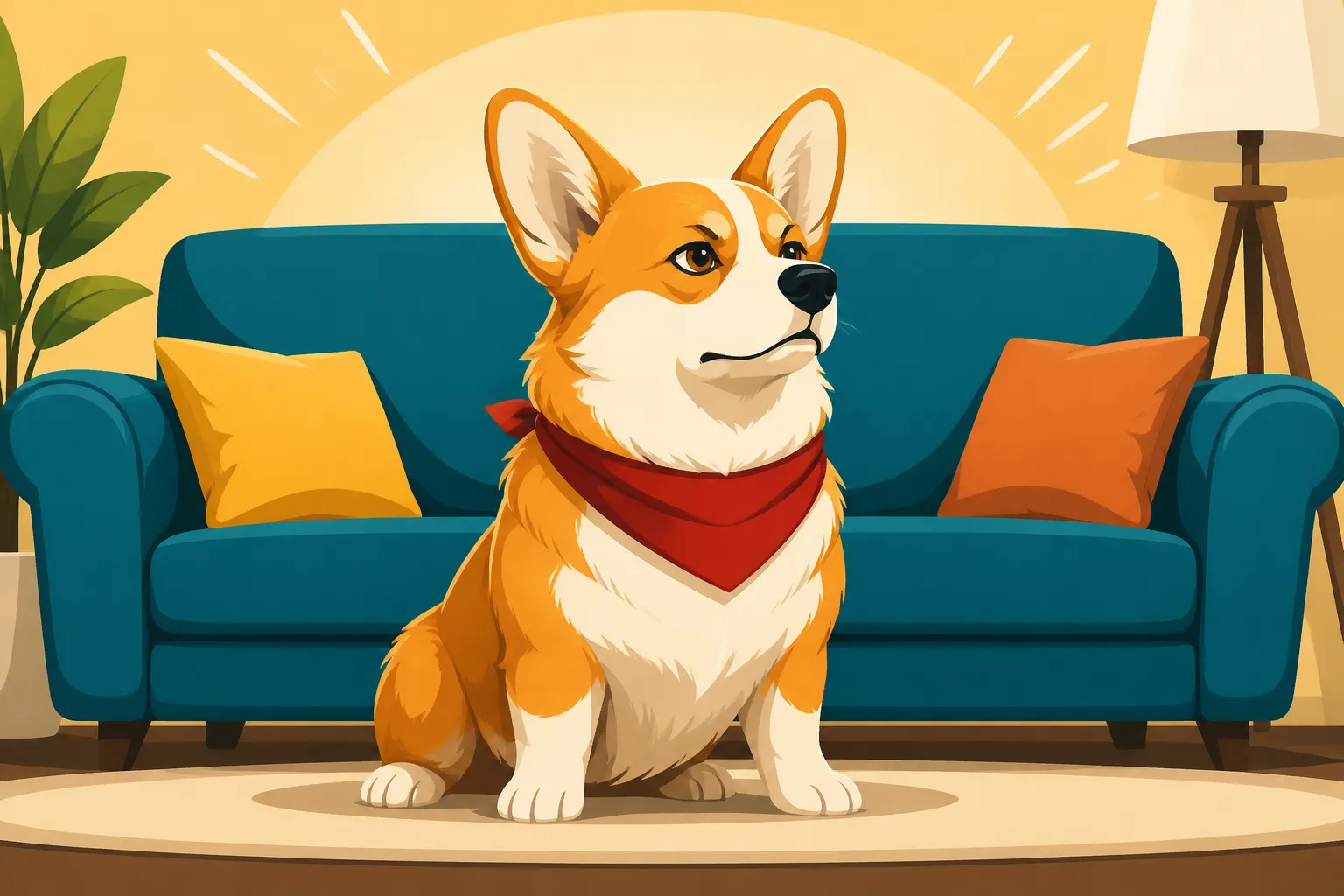
A Corgi That Guards the Sofa
There's nothing quite like the feeling of settling down on your sofa after a long day, only to find your adorable Corgi has decided that plush spot is their throne, and they're not budging. This common, yet frustrating, behavior known as resource guarding can turn your cozy living space into a battleground, leaving you wondering why your sweet, fluffy companion suddenly acts like a tiny, territorial dragon. This comprehensive guide will help you understand why your Corgi guards the sofa, how to recognize the signs, and most importantly, provide actionable strategies to reclaim your furniture peacefully and strengthen your bond.
Understanding Resource Guarding in Corgis
Resource guarding, at its heart, is a perfectly natural canine behavior. In the wild, animals protect valuable resources – food, mates, prime resting spots – to ensure their survival. While your Corgi isn't living in the wild, that instinct remains. For them, a "resource" can be anything they perceive as high-value, from a favorite toy to a coveted chew, or in this case, the prime real estate of your sofa.
Corgis, with their history as independent, decision-making herding dogs, can be particularly prone to resource guarding. They were bred to work cattle, using their wits and sometimes a well-placed nip to control much larger animals. This means they often have a strong sense of self-importance and a clear idea of what belongs to them. When a Corgi decides something is theirs, they can be quite tenacious about defending it. It's not about being "mean" or "dominant" in the human sense; it's about protecting something they value deeply.
Resource guarding can range from mild to severe. On the milder end, it might look like a stiffening of the body or a quick glance when you approach. On the more concerning end, it can involve growling, snarling, snapping, or even biting. It's crucial to understand that even subtle signs are indicators of guarding behavior and should be addressed before they escalate. Many owners inadvertently reinforce guarding by backing off when their Corgi shows these initial signs, which teaches the dog that their warning worked.
Why the Sofa Becomes a High-Value Resource
To us, a sofa is just furniture. To a Corgi, it can represent a whole host of desirable things, quickly becoming a highly prized resource worth defending.
Comfort and Elevated Position
Let's be honest, your sofa is probably pretty comfortable. It's soft, often warm, and provides a prime vantage point. For a low-slung Corgi, getting up onto the sofa gives them a raised perspective of their domain, which can be very appealing. From this elevated perch, they can see everything, keep an eye on family members, and feel like they're "in charge" of the room. This innate desire to observe and control their environment, stemming from their herding instincts, makes a high spot like the sofa incredibly valuable. It’s their personal watchtower.
Think about a time your Corgi has snoozed soundly on the sofa, utterly content. That feeling of security and comfort quickly imprints on them. If they're frequently allowed on the sofa for naps or relaxation, they start to associate it with positive feelings, increasing its perceived value. It becomes their safe, comfy zone, especially when you're not around to occupy it.
Association with Owner Presence and Attention
Many of us invite our Corgis onto the sofa for cuddles, belly rubs, and quality time. While this is wonderful for bonding, it can also inadvertently increase the sofa's value as a shared resource. If the sofa is where they get the most focused attention, praise, and physical affection from you, it logically becomes a place they want to possess. They associate the sofa with positive human interaction.
Imagine your Corgi snuggled next to you while you watch TV, receiving pets and sweet talk. To them, the sofa isn't just a physical object; it's a place where they receive your undivided attention, which is a huge motivator for many dogs. This association can be particularly strong if they don't get a lot of focused, calm interaction in other parts of the house. When you then try to sit down or move them, they might perceive it as you trying to take away "their" source of comfort and attention. This can sometimes lead to resource guarding not just of the sofa itself, but of your presence on the sofa.
Lack of Clear Boundaries from the Start
Often, sofa guarding behaviors develop because boundaries weren't established clearly and consistently from puppyhood. It's easy to spoil a cute Corgi puppy, letting them have free rein of the furniture. But without clear rules, they learn that the sofa is always available to them. When they're older and you suddenly decide they're not allowed or need to move, it can cause confusion and conflict.
Consistency is key in Training a Corgi That Makes Its Own Decisions. If sometimes they're allowed on the sofa, and other times they're not, it creates uncertainty. This inconsistency makes the Corgi feel like they have to defend the resource because the rules are unpredictable. They might think, "Last time, I got to stay, why is it different now?" This lack of clarity can quickly lead to an ingrained habit of claiming the sofa. Establishing rules early, like having them wait for an invitation or providing their own designated, comfortable dog bed right next to the sofa, can prevent many guarding issues from ever starting. For tips on setting up your space, you might find Choosing a Firm Bed for a Corgi helpful.
Recognizing the Signs of Sofa Guarding
Recognizing the early signs of resource guarding is critical. Many Corgi owners miss the subtle cues, only addressing the behavior when it escalates to growling or snapping. By learning to read your Corgi's body language, you can intervene before the situation becomes tense or dangerous.
Subtle Cues: The "Side-Eye" and Body Blocking
When a Corgi first starts guarding, their signals are often very subtle. You might notice a slight stiffening of their body as you approach the sofa. Their ears might flatten slightly, or they might give you a quick, hard stare – often referred to as "whale eye," where you see the whites of their eyes. They might subtly shift their weight, positioning their body to block access to the spot they're occupying. This can look like they're just getting more comfortable, but it's actually a territorial maneuver.
For example, if your Corgi is stretched out on the sofa and you walk towards them, they might pause their chewing or nap, lift their head, and watch you intently. They won't necessarily growl, but their body language will convey a clear "don't come closer" message. If you persist, they might just stare harder, perhaps with a low, almost imperceptible rumble deep in their chest, or even a slight lip curl that you have to look for closely. These are their polite, early warnings. If ignored, they learn these aren't effective, and they'll escalate.
Escalated Behaviors: Growling, Snapping, and Lunging
If the subtle cues are missed or ignored, a Corgi will typically escalate their guarding behaviors. The stiffening might turn into a low growl, which becomes more vocal and insistent the closer you get. They might snap the air in your direction, not intending to bite, but as a clear warning. In more severe cases, they might lunge towards you or even make contact with their teeth, though often a "soft" bite that doesn't break skin.
Consider a scenario where you try to gently nudge your Corgi off the sofa. They might respond with a guttural growl, followed by a swift snap directed at your hand or arm, even if they don't connect. This isn't just "being grumpy"; it's a clear declaration that they perceive you as a threat to their perceived possession. It's vital not to punish these warnings, as that can suppress the growl (the helpful warning sign) and lead directly to a bite without any prior notice. Instead, focus on re-training and management. If you're seeing signs of this level of escalation, it's definitely time to consider professional help.
Observing Your Corgi’s Reactions to Other Family Members or Pets
Resource guarding isn't always directed solely at you. Pay attention to how your Corgi reacts when children, other pets, or even guests approach the sofa while they're on it. A Corgi that guards might give a sharp bark or quick nip to another dog trying to jump up, or stiffen when a child reaches for a toy that has fallen near "their" spot. This can be particularly dangerous with young children who might not understand dog body language.
For example, if your family cat jumps onto the sofa near your Corgi, you might observe a low growl or a quick, territorial snap from your Corgi, driving the cat away. Similarly, if a toddler tries to climb up for a cuddle, the Corgi might block their path with their body, or even snap if the child persists. These interactions highlight that the sofa is a guarded resource against all comers, not just you. Understanding these dynamics is crucial for creating a safe and harmonious household, especially if you have A Corgi in a House Full of Children and Animals.
| Behavior Level | Signs to Watch For | What It Means | Recommended Action |
|---|---|---|---|
| Mild | Stiff body, hard stare, averted gaze (whale eye), slight lip curl, subtle shift to block access. | Corgi is communicating discomfort and a desire to maintain possession, testing boundaries. | Start management immediately. Begin counter-conditioning. |
| Moderate | Low growl, air snap, deeper growl, barking at approach, pawing at you if you attempt to move them, body blocking becomes more pronounced. | Corgi is clearly communicating "stay away," escalating their warning. Risk of light bite or contact. | Intensify management. Seek professional training guidance. Avoid direct confrontation. |
| Severe | Snapping with contact, lunging, biting (breaking skin or hard contact), intense staring, snarling, chasing you away from the sofa. | Corgi is actively defending the resource aggressively. High risk of injury. | Immediately consult a certified professional dog trainer or veterinary behaviorist. Implement strict management. |
Practical Steps to Address Sofa Guarding
Addressing sofa guarding requires a multi-pronged approach involving management, training, and a whole lot of consistency. Remember, patience is key; changing an ingrained behavior takes time and repetition.
Management Strategies: Preventing Access and Offering Alternatives
The first step in addressing sofa guarding is often management. This means preventing the opportunity for your Corgi to practice the unwanted behavior. If they can't guard the sofa, they can't practice guarding it.
- Restrict Access: This might mean placing baby gates (like those you can find on Amazon) across doorways to the living room when you're not actively supervising, or using a crate in another room. Baby Gates That Stop a Corgi Using Stairs can also be repurposed for this. The goal isn't to punish but to remove the trigger and break the habit. When you are home, invite them up only on your terms, and then have a clear "off" cue.
- Provide High-Value Alternatives: Make sure your Corgi has an incredibly comfortable, high-value bed of their own. Place it strategically near the sofa, or in another comfortable spot in the room. Make this bed an amazing place to be, offering special treats or toys only when they're on their bed. You can find excellent orthopedic beds for Corgis, often on Amazon, that will provide superior comfort. A dedicated, comfortable dog bed can become their new favorite place, reducing the appeal of the sofa. For more ideas, check out Orthopedic Beds for a Corgi.
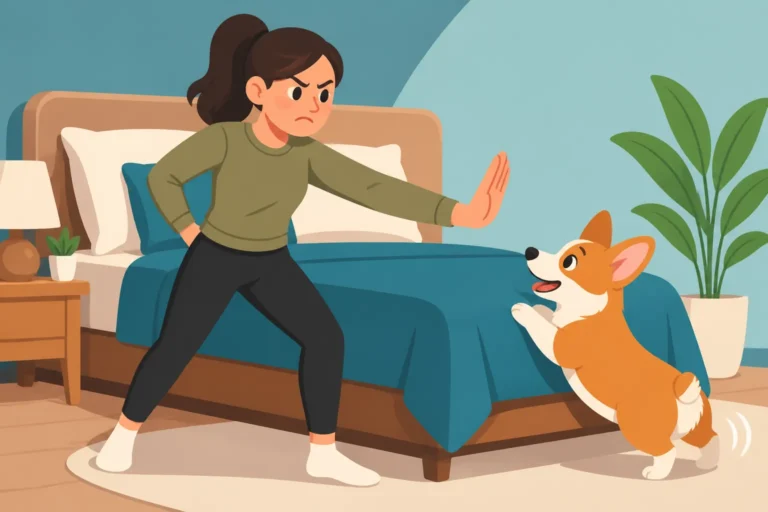
- Establish Clear "On" and "Off" Cues: Teach your Corgi an "up" cue, inviting them onto the sofa only when you say so. More importantly, teach a rock-solid "off" cue. Practice this often when they aren't guarding. Lure them off with a tasty treat, then immediately reward and praise them when all four paws are on the floor. Repeat this many times a day, making "off" a positive experience. This gives them a clear expectation and reduces the need for them to guard.
Training Techniques: Desensitization and Counter-Conditioning
Once you have management in place, you can start the training process to change your Corgi's emotional response to you approaching the sofa. This involves desensitization (gradually exposing them to the trigger at a low intensity) and counter-conditioning (changing their negative association to a positive one).
- Desensitization (Gradual Approach): Start by approaching the sofa when your Corgi is not on it, but is nearby. Toss a high-value treat onto the sofa, then walk away. Repeat this until they happily approach the sofa for the treat. Next, do the same when they are on the sofa, but far away from you. Toss a treat next to them, not at them, and walk away. Slowly, over days or weeks, decrease the distance, always ensuring your Corgi remains relaxed and happy. The goal is to make your approach a predictor of good things happening, not a threat.
- Counter-Conditioning (Positive Association): Every time you approach the sofa and your Corgi is on it, calmly toss a super high-value treat (cooked chicken, cheese, etc.) past them onto the floor, so they have to get off the sofa to get it. As they get off, say "Good off!" This creates a positive association with getting off the sofa. Over time, they'll learn that your approach to the sofa means treats are coming, and getting off means a reward. This can also be applied to their toys. If they are guarding a toy on the sofa, approach, toss a treat, and as they go for the treat, quietly remove the toy. They learn that your presence means an exchange, not a theft.
- The "Trade" Game: If your Corgi guards toys or chews on the sofa, teach them to "trade." Offer an even higher value treat in exchange for the item they're guarding. When they release the item for the treat, praise them and give them the treat, then give their original item back (or a different, equally appealing one). This teaches them that giving something up means getting something better, not losing it. Whether a Corgi Works for Anything but Food is a common question, and for guarding, high-value food rewards are often the key.
Many online dog training platforms, like BAXTER & Bella, offer comprehensive courses on resource guarding and basic obedience, which can be invaluable resources for learning these techniques step-by-step. Their structured programs can guide you through the process, ensuring consistency and proper execution of training protocols.
Consistency and Patience: The Long Game
Changing deeply ingrained behaviors in a Corgi, especially one with strong opinions, requires immense consistency and patience. There will be setbacks. Your Corgi might test you. It’s crucial that every family member is on the same page and follows the rules. Inconsistency will only confuse your Corgi and undermine your training efforts.
- All Family Members Must Participate: If one person allows guarding and another tries to correct it, your Corgi will learn which person they can guard against and which they can't. This creates confusion and makes the problem worse. Hold a family meeting to discuss the new rules and expectations for interacting with your Corgi and the sofa.
- Avoid Punishment: Punishing a Corgi for growling or snapping can be dangerous. It teaches them that their warnings are not allowed, so they might skip the warnings and go straight to biting in the future. Instead, focus on positive reinforcement and changing their emotional response. If you're struggling, remember that professional help is a sign of a responsible pet owner, not a failure.
- Celebrate Small Wins: It might take weeks or even months to see significant improvement. Celebrate every small win: your Corgi moving off the sofa without a growl, choosing their bed over the sofa, or even just looking at you calmly when you approach. These small victories build confidence in both you and your Corgi.
When to Seek Professional Help
If your Corgi's guarding behavior involves frequent growling, snapping that makes contact, or actual bites, it's time to seek professional help. A certified professional dog trainer specializing in behavior modification, or a veterinary behaviorist, can provide a personalized plan and hands-on guidance.
They can assess the severity of the guarding, identify specific triggers, and teach you advanced techniques that might be too complex to learn from an article alone. They can also rule out any underlying medical conditions that might be contributing to the behavior. Remember, your goal is a safe, happy home for everyone, including your Corgi. Don't hesitate to reach out to a professional; it's the best way to ensure the issue is addressed effectively and safely. For more general training approaches, consider Training a Corgi That Makes Its Own Decisions.
Conclusion
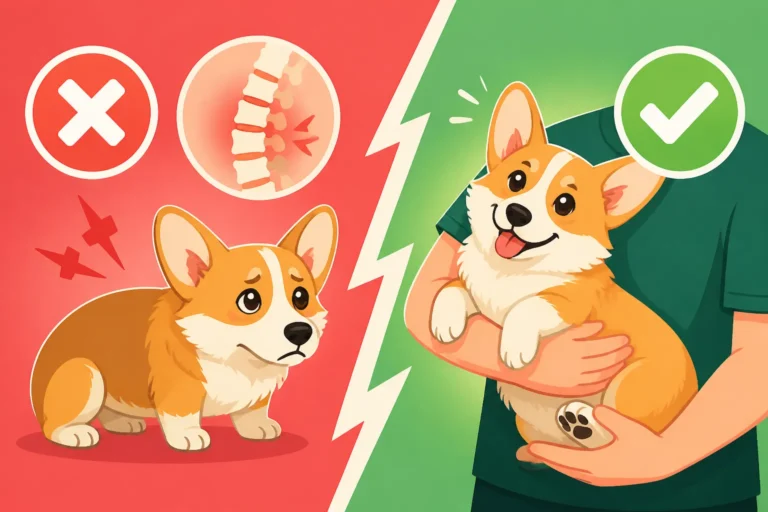
Dealing with a Corgi that guards the sofa can be a challenging experience, transforming a beloved piece of furniture into a source of tension. However, by understanding the roots of this natural canine behavior, recognizing the subtle signs, and implementing consistent management and training strategies, you can peacefully reclaim your space. Remember, your Corgi isn't being malicious; they're simply acting on instinct. With patience, clear communication, and perhaps some high-value treats (read Keeping Treats Inside a Corgi's Ration), you can help your Corgi learn that sharing the sofa, or choosing their own comfy bed, is a much more rewarding experience. And who knows, you might even find Sofa Ramps a Corgi Will Actually Use a helpful tool in your journey to save your Corgi's back from jumping, while also subtly redefining sofa access.
Disclaimer
This article is for general informational purposes only and does not constitute professional advice. Laws, prices and regulations vary by location and change over time. Consult a qualified professional for guidance on your specific situation.