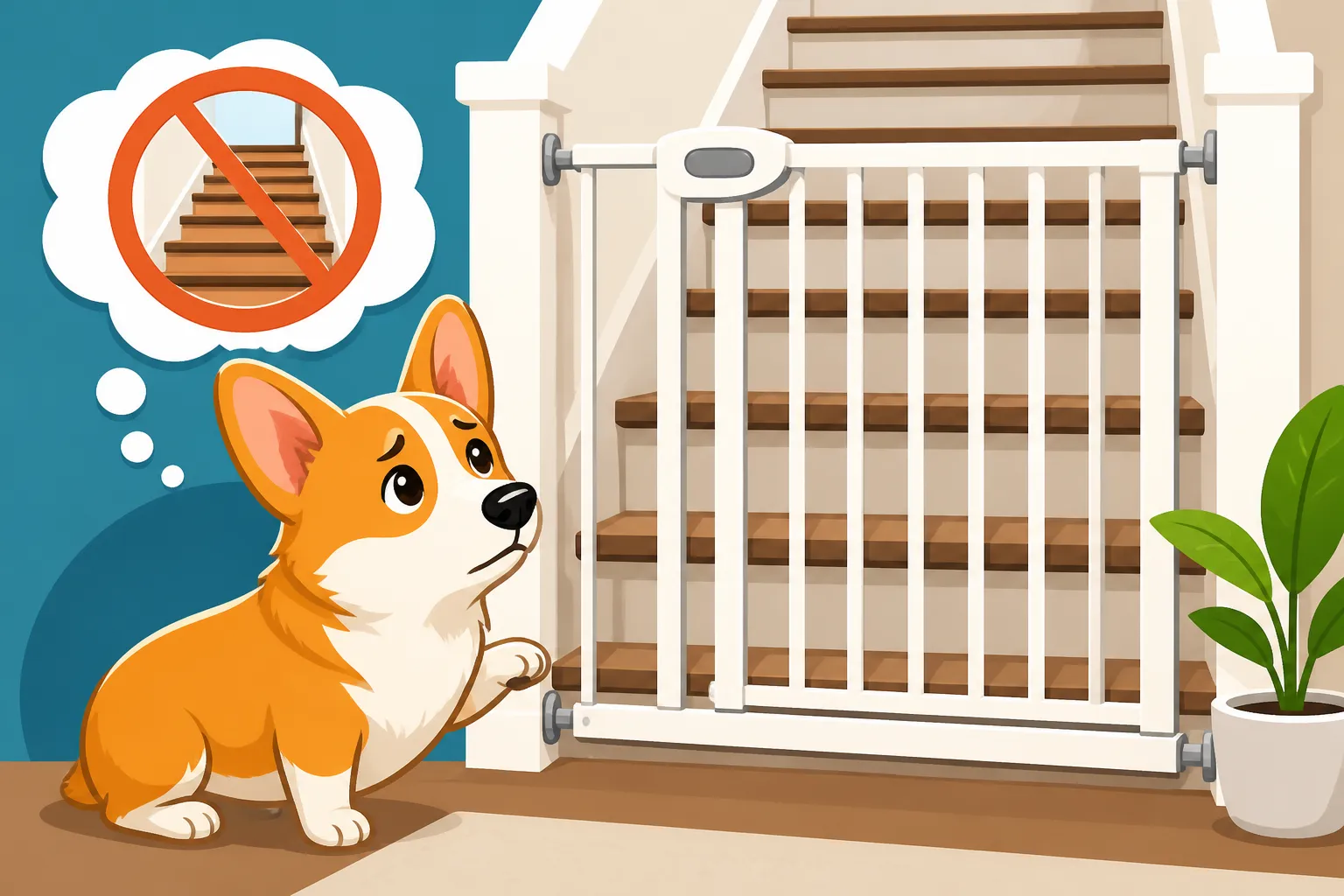
Baby Gates That Stop a Corgi Using Stairs
It's a familiar sight for many Corgi owners: you turn your back for a second, and your furry, low-rider friend is eyeing those stairs like a thrilling mountain expedition. While their enthusiasm is adorable, the truth is, stairs can pose a serious risk to a Corgi's unique back structure. This guide will walk you through the practicalities of choosing and implementing baby gates to protect your Corgi from potential injury, offering peace of mind for you and a safer home for your beloved companion.
Why Stairs Are a Real Concern for Corgi Backs
Let's be honest, those short legs and long bodies are part of what makes Corgis so uniquely charming, but they also come with a vulnerability we, as their guardians, need to address head-on. Their spinal discs are under constant stress, and activities like repeatedly climbing or jumping down stairs can significantly increase the risk of serious injury.
The Anatomy of a Corgi's Vulnerable Spine
Corgis, particularly the Pembroke Welsh Corgi and the Cardigan Welsh Corgi, are what we call chondrodystrophic breeds. This fancy word simply means they have abnormal cartilage development, which is why they have those characteristic short legs and long bodies. Unfortunately, this also predisposes them to conditions like Intervertebral Disc Disease (IVDD). Imagine a stack of cushions (their discs) between the bones of their spine. In Corgis, these cushions can prematurely degenerate, becoming brittle or bulging, much like an old tire. When a Corgi repeatedly strains their back, such as by launching themselves up or down stairs, one of these discs can rupture or herniate, pressing on the spinal cord. This isn't just a minor ache; it can lead to excruciating pain, nerve damage, partial paralysis, or even full paralysis.
It's not just the big jumps, either. The constant jarring motion of going up and down stairs, day in and day out, puts cumulative stress on those already sensitive discs. Think of it like constantly twisting and bending a weak spot in your own back. Over time, it's bound to cause trouble. Understanding Why a Corgi's Back Is Built the Way It Is really helps us appreciate why we need to be so vigilant about preventing undue strain.
The Irresistible Lure of the Climb
Despite the risks, Corgis are intelligent, independent, and often possess an adventurous spirit that makes them believe they're capable of anything. A flight of stairs isn't seen as a hazard; it's an exciting pathway to explore, a route to their favorite human upstairs, or simply another challenge to conquer. Trying to verbally dissuade a determined Corgi from tackling the stairs can feel like talking to a brick wall. They might listen once or twice, but their innate curiosity and desire to be with their family will often win out.
This is especially true if you have a multi-level home and your Corgi perceives that "all the action" is happening upstairs or downstairs without them. They don't understand the long-term health implications of The Jump That Ruptures a Corgi Disc or the subtle strain on their delicate spine. They just want to join in. This drive means that simply asking them not to use the stairs is rarely a sustainable or effective solution. We need physical barriers, like baby gates, to truly keep them safe.
Choosing the Right Baby Gate for Your Corgi Household
Selecting the perfect baby gate isn't as simple as grabbing the first one you see. Corgis, with their unique build and often mischievous personalities, require a bit more thought than just any standard gate. We need to consider their size, their cunning, and how well the gate will integrate into your daily life.
Pressure-Mounted vs. Hardware-Mounted: A Crucial Decision
When it comes to baby gates, you'll generally find two main types: pressure-mounted and hardware-mounted. Each has its pros and cons, especially when dealing with a Corgi.
Pressure-mounted gates are popular for their ease of installation. You simply twist tension rods until the gate is wedged securely between two walls or a doorway. They're great for temporary use, like blocking off a kitchen during meal prep, and don't require drilling holes in your walls. However, for a Corgi, especially at the top of a staircase, they come with significant drawbacks. A determined Corgi might lean, push, or even jump against it, potentially dislodging the gate. If this happens at the top of the stairs, it could lead to a catastrophic fall. A powerful Corgi, especially one that tends to pull on their leash, might have enough strength to compromise its stability.
Hardware-mounted gates, on the other hand, offer superior security. These gates are screwed directly into your wall studs or doorframes, creating a much more stable and permanent barrier. While they require a bit more effort to install and leave small holes if removed, the peace of mind they offer, particularly at the top of stairs, is invaluable. For busy areas or staircases, a hardware-mounted gate that swings open and latches securely is often the safest choice for a Corgi owner. It ensures there's no way your clever Corgi can push it out of the way, even if they're particularly enthusiastic in their attempts to join you.
Height and Bar Spacing: Preventing Escapes
Corgis are low to the ground, but don't let that fool you into thinking any short gate will do. Many Corgis are surprisingly athletic and can jump higher than you might expect, especially when motivated. A standard baby gate might be too short, allowing them to vault over it with ease. Look for gates marketed as "extra tall" or specifically designed for pets, usually around 36 inches or more. This added height deters most Corgis from even attempting a jump.
Equally important is the bar spacing. Some gates, designed for children, might have wider vertical slats that a slender or determined Corgi could potentially squeeze through. Ensure the bar spacing is narrow enough that your Corgi cannot get their head or body stuck, or worse, push their way entirely through. Generally, a spacing of 2-3 inches or less is ideal. When you're browsing options on sites like Chewy, always check these dimensions in the product specifications.
Material and Durability: Corgi-Proofing Your Barrier
Baby gates come in various materials, each with its own advantages.
- Metal gates are often the most durable and resistant to chewing. They tend to be sturdy and can withstand a fair amount of Corgi curiosity and pawing. They also blend well with many modern home aesthetics.
- Wooden gates can be aesthetically pleasing, offering a more traditional or rustic look. However, a persistent Corgi might be able to chew on wooden slats, especially if they are a puppy or prone to destructive chewing. Regular inspection is key if you choose wood.
- Plastic gates are typically lighter and more portable, but they might not offer the same level of durability or chew resistance as metal or some wooden options. They're often best for temporary use or for less determined Corgis.
Consider your Corgi's personality. Do they tend to be chewers? Are they particularly strong or persistent when they want to get somewhere? These factors will guide your material choice.
Here's a quick comparison of gate types suitable for Corgi households:
| Gate Type | Pros for Corgis | Cons for Corgis | Ideal Placement |
|---|---|---|---|
| Hardware-Mounted | Most secure, prevents falls, durable, stable | Requires drilling, less portable, permanent fixture | Top/bottom of stairs |
| Pressure-Mounted | Easy to install, no drilling, portable | Less secure, can be dislodged by strong Corgis, trip hazard | Doorways (low traffic), temporary barriers |
| Extra Tall | Prevents jumping, suitable for athletic Corgis | May be bulkier, can be harder for humans to step over | Anywhere a Corgi might jump |
| Narrow Bar Spacing | Prevents squeezing through/getting stuck | Fewer options, may feel more restrictive | Anywhere a Corgi might squeeze |
Strategic Placement and Training for Gate Success
Putting up a gate is only half the battle; ensuring it's used effectively and accepted by your Corgi requires a strategic approach.
Where to Place Your Gates for Maximum Safety
The most critical locations for baby gates in a Corgi household are, without a doubt, at the top and bottom of all staircases. This creates a clear boundary that prevents accidental falls or unauthorized climbing sessions. It’s not enough to just gate the top if your Corgi can still launch themselves up from the bottom.
Beyond stairs, consider other areas that might pose a risk or that you simply want to limit access to. For instance, if you have a room with delicate furniture, or a designated "quiet zone" for your Corgi's crate, gates can be helpful. Remember, the goal is not to isolate your Corgi, but to protect them and manage their environment safely. Ramps and Steps That Save a Corgi's Back can be an excellent complement to gates, providing safe access to lower furniture in gated areas if you want your Corgi to still be able to snuggle on the sofa.
Teaching Your Corgi to Respect the Barrier
Corgis are smart, and they often challenge rules. Simply installing a gate and hoping for the best won't always cut it. Positive reinforcement and consistency are your best friends here.
Start by making the gate a neutral or even positive experience. Don't just block them off; reward them when they calmly approach the gate without trying to push through or jump. If they whine or bark at the gate, ignore it until they are quiet, then reward. This teaches them that calm behavior gets attention, not demanding behavior. You can toss treats over the gate to show them that good things still happen on the other side, even if they can't cross.
It’s crucial that everyone in the household is consistent. If one person lets the Corgi past the gate without permission, or leaves it open, the training is undermined. Corgis are masters of exploiting loopholes! Think of it like Training a Corgi That Makes Its Own Decisions; they'll quickly learn who to "negotiate" with if rules aren't uniformly enforced.
Sometimes, especially during periods of Six Weeks of Crate Rest With a Corgi after an injury, gates become even more vital. During these sensitive times, absolute adherence to confinement is paramount for healing. Companies like Ollie, which offer customized meal plans, can even help with precise portion control during periods of reduced activity to ensure your Corgi doesn't gain weight while on enforced rest, which could further strain their back.
Beyond the Gates: A Holistic Approach to Corgi Back Health
While baby gates are a fantastic tool, they're part of a larger strategy to protect your Corgi's back and ensure their long-term health. Think of it as a comprehensive approach to managing their unique physical needs.
Ramps and Steps: Safe Alternatives
In addition to gates, strategically placed ramps or dog-specific steps can be incredibly beneficial. For access to sofas, beds, or even a vehicle, a well-placed ramp eliminates the need for jumping, which is a major culprit in Whether a Corgi Should Ever Jump Off a Sofa injuries. Many Corgis can be taught to use ramps with patience and positive reinforcement. Teaching a Corgi to use a ramp involves breaking it down into small steps, rewarding them for each successful interaction.
Consider sturdy, low-incline ramps with good traction. Again, check online retailers like Chewy for a wide selection of pet ramps designed to support dog weight and provide a safe climbing surface. Introducing these early in your Corgi's life, even if they're still agile, can help them develop safe habits and prevent future injuries.
Regular Vet Check-ups and Proactive Care
Regular veterinary check-ups are essential for monitoring your Corgi's overall health, including their spinal condition. Your vet can advise on appropriate exercise levels, weight management strategies, and spot early signs of back trouble. Early intervention is key if any issues arise.
Investing in pet insurance, such as through providers like Healthy Paws, is another proactive step many Corgi owners take. While prevention is the best medicine, accidents and conditions like IVDD can be sudden and incredibly expensive to treat, often involving costly diagnostics like MRIs and potential surgery. Knowing you have support for potential The Corgi Bills That Come With a Long Back can reduce the financial stress during an emergency. Always read the fine print about pre-existing conditions and waiting periods when considering pet insurance.
Weight Management: Less Strain, More Gain
One of the single most impactful things you can do for your Corgi's back is to maintain a healthy weight. Every extra pound puts additional stress on their spine and joints, exacerbating any underlying predispositions to IVDD. It's easy for Corgis to become a bit rotund, as they love their food and can master the art of begging!
Work with your vet to determine your Corgi's ideal body condition score and daily caloric intake. Measure their food carefully – don't just eyeball it. Incorporate plenty of appropriate, low-impact exercise, like walks on a leash rather than high-intensity jumping or twisting activities. Keeping them lean will significantly reduce the risk of back problems and improve their overall quality of life.
Maintaining a healthy weight is not just about aesthetics; it's a critical component of preventative care, directly impacting their mobility and comfort for years to come. Remember, a Corgi that is a little too round is putting unnecessary strain on their precious spine, making all your efforts with baby gates even more vital.
Conclusion
Living with a Corgi is a joy, but it also comes with the responsibility of understanding and accommodating their unique physical needs. Baby gates are not just for toddlers; they are an indispensable tool for Corgi owners to safeguard their beloved companions from the very real dangers of stairs and falls. By choosing the right gates, installing them strategically, and consistently training your Corgi to respect them, you're taking a significant step towards ensuring a long, happy, and pain-free life for your furry family member. Combine this with ramps, diligent weight management, and proactive veterinary care, and you'll be giving your Corgi the very best chance to thrive.
Disclaimer
This article is for general informational purposes only and does not constitute professional advice. Laws, prices and regulations vary by location and change over time. Consult a qualified professional for guidance on your specific situation.