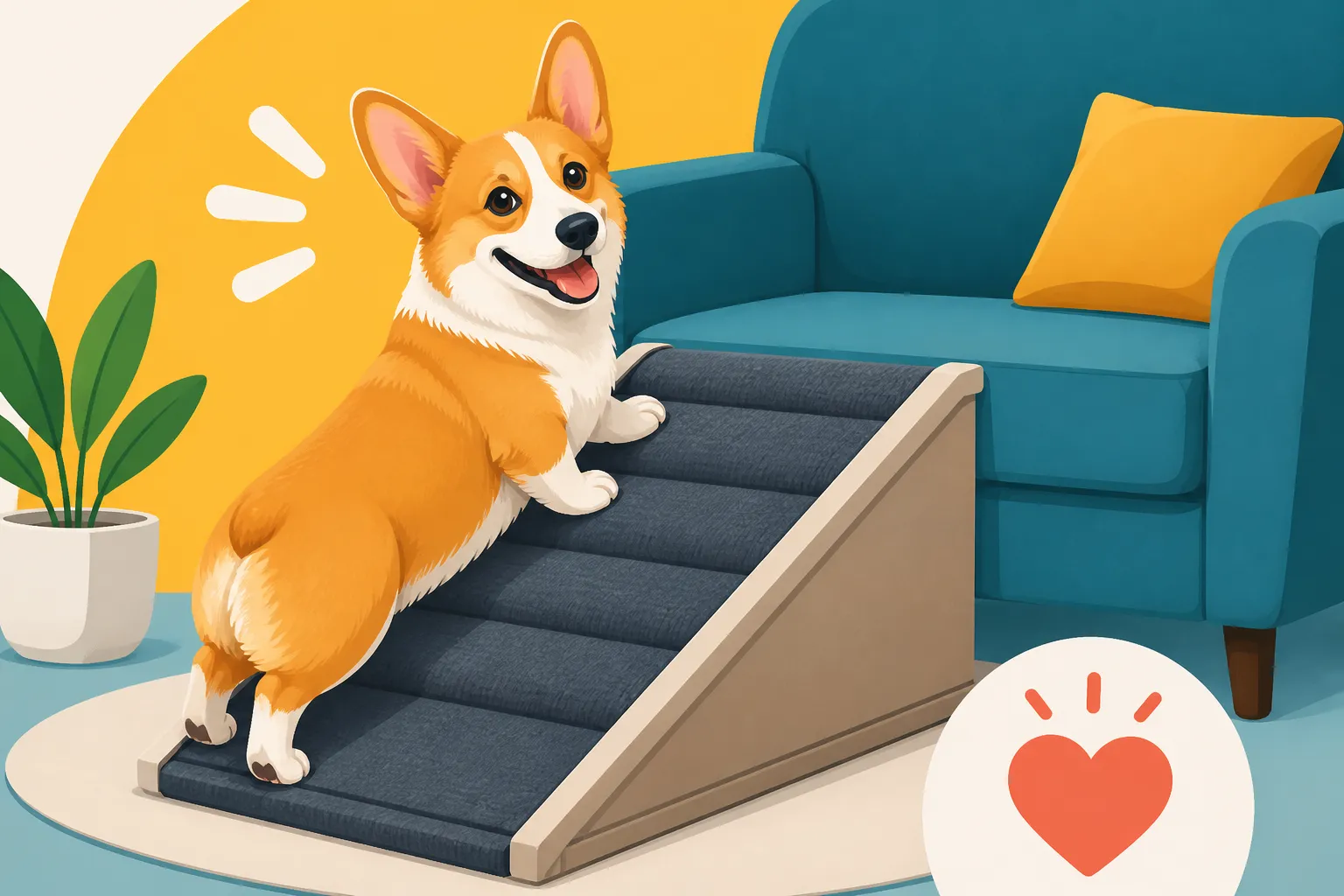
Sofa Ramps a Corgi Will Actually Use
One of the most heart-wrenching realities of Corgi ownership is the constant worry about their delicate backs. That sudden thud as they launch themselves off the sofa, or the hopeful leap that doesn't quite make it onto your bed, can send a jolt of fear through any Corgi parent. You know intuitively that these repeated impacts aren't good, and you're absolutely right. This guide will help you understand why sofa ramps are essential for your low-rider and how to choose and train your Corgi to use one, safeguarding their spine for years to come.
Why Sofa Ramps Are Non-Negotiable for Corgis
It's not just about pampering your furry family member; it's about their fundamental health and well-being. Corgis, with their unique build, are particularly susceptible to spinal injuries, and a simple jump off the couch can have devastating long-term consequences.
The Hidden Dangers of Jumping
Let's get real about those adorable stubby legs and long bodies. They're part of what makes Corgis so charming, but they're also their Achilles' heel, or rather, their Achilles' spine. Corgis are a chondrodystrophic breed, which means they have a genetic predisposition to abnormal cartilage development. This trait gives them their characteristic short legs, but it also means their intervertebral discs (the cushions between the vertebrae in their spine) are structurally different and more prone to degeneration and rupture. This condition is often referred to as Disc Disease in a Long-Backed Corgi.
Every time your Corgi jumps off a piece of furniture, even if it seems like a small drop to you, it creates a jarring impact on their spine. Imagine landing hard on your heels repeatedly throughout the day – that's essentially what your Corgi's back experiences. These repeated micro-traumas can accelerate the degeneration of those already vulnerable discs. It’s not always one dramatic The Jump That Ruptures a Corgi Disc that causes a problem, but rather the cumulative effect of hundreds or thousands of smaller impacts over their lifetime. Even if you think your Corgi is agile and lands gracefully, the physics of their long back means significant stress is placed on specific points, particularly in the mid-back and neck. This can lead to anything from chronic pain and stiffness to a full-blown disc herniation requiring emergency veterinary care.
Preventing Future Spinal Issues
Taking preventative measures now, while your Corgi is still young and seemingly robust, is absolutely critical. Think of sofa ramps as an investment in their future mobility and comfort. They provide a gentle, controlled incline that eliminates the impact of jumping and twisting motions entirely. By using a ramp, your Corgi can safely access their favorite cuddle spots on the sofa or bed without putting undue strain on their spine and joints. This simple change can significantly reduce the risk of intervertebral disc disease (IVDD) and other age-related mobility issues down the line. It's about proactive care, rather than waiting for a crisis.
Many owners only consider ramps after an injury has occurred, often when the Corgi is already in pain or has been prescribed Crate Rest for a Corgi With a Bad Back. At that point, the struggle is not just to heal, but to retrain a dog to use a ramp when they associate movement with discomfort. Starting early avoids this entirely. Consistent use of ramps throughout your Corgi's life can help preserve the integrity of their discs, delaying or even preventing the onset of debilitating conditions. It's truly one of the most impactful things you can do to support your Corgi's long-term spinal health. Remember, the goal is to prevent the "pre-existing condition" label that can complicate things with pet insurance providers like Healthy Paws later on.
What Makes a Corgi-Friendly Sofa Ramp?
Choosing the right ramp isn't just about picking the first one you see. Corgis can be particular, and their unique physiology means certain features are far more important than others. You want a ramp they'll actually want to use, not just tolerate.
Key Features to Look For
When you start browsing, you'll notice a huge variety of ramps, from sleek modern designs to more utilitarian options. Here's what truly matters for your Corgi:
- Gentle Slope/Incline: This is paramount. A steep ramp can be just as intimidating or even as stressful on their back as jumping. Look for ramps that are longer, allowing for a more gradual ascent. The longer the ramp, the less acute the angle, making it easier and more comfortable for your Corgi to walk up and down. A good rule of thumb is to look for ramps where the length is at least three to four times the height it needs to reach.
- Non-Slip Surface: A slick surface is a recipe for disaster. Your Corgi needs excellent traction, especially when going down. Ramps with carpeted surfaces, rubberized treads, or textured non-slip material are ideal. Avoid anything smooth or made of bare, polished wood or plastic. This also applies to the feet of the ramp itself – make sure it has rubber grips to prevent it from sliding on your floors.
- Stability and Width: A wobbly ramp will scare your Corgi and make them hesitant to use it. Look for ramps with a wide base and sturdy construction that doesn't rock or shift when your dog is on it. The ramp should also be wide enough for your Corgi to walk comfortably without feeling like they might fall off. A narrow ramp can be intimidating and lead to accidents.
- Appropriate Height and Length: Measure the height of your sofa or bed precisely. You'll need a ramp that reaches this height without creating an overly steep angle. As mentioned, length is key for a gentle slope. Many pet retailers, including online stores like Chewy, offer detailed specifications and customer reviews that can help you gauge the practicality of different ramp sizes for Corgis.
- Material: Ramps come in various materials. Wood ramps tend to be sturdier and more aesthetically pleasing but can be heavier. Plastic ramps are lighter and often more portable but might feel less stable depending on their construction. Fabric-covered foam steps are another option, though sometimes less durable for long-term use.
- Weight Capacity: While Corgis aren't huge dogs, ensure the ramp can comfortably support your Corgi's weight, especially if you have a larger Cardigan or a Pembroke who, let's be honest, might be a little over their ideal What an Ideal Corgi Weighs. Always check the manufacturer's stated weight limit.
Here's a quick comparison of common ramp features:
| Feature | Ideal for Corgis | Less Ideal for Corgis |
|---|---|---|
| Slope | Long and gentle (low angle) | Short and steep (high angle) |
| Surface | Carpeted, rubberized, non-slip textured | Smooth wood, bare plastic, slick fabric |
| Stability | Wide base, solid construction, non-wobbling | Narrow, flimsy, prone to shifting |
| Width | Ample for comfortable walking | Too narrow, making dog feel insecure |
| Height Match | Matches sofa/bed height precisely | Too short or too tall for furniture |
| Material | Sturdy wood, high-density plastic, reinforced foam | Lightweight, easily damaged plastic |
| Weight Capacity | Exceeds Corgi's maximum weight | Barely meets or is less than Corgi's weight |
Customization and Placement
Once you've found the perfect ramp, where and how you place it matters a lot. Start by identifying the furniture pieces your Corgi frequently attempts to jump onto or off of. This might be a favorite spot on the living room sofa, your bed, or even a particular armchair. You may need more than one ramp if your Corgi has multiple preferred elevated lounging spots. Think about Ramps and Steps That Save a Corgi's Back not just for sofas but for beds and vehicles too.
Consider the layout of your room. The ramp should be easily accessible from where your Corgi typically approaches the furniture. Don't tuck it away in a corner where it's awkward to use. Sometimes, matching the ramp to your home decor can help it blend in, making it less of an "obstacle" and more a natural part of the environment. You might even consider a ramp that stores away easily if space is a concern, though consistency is key for training.
For beds, ensure the ramp can be secured so it doesn't slide away from the bed frame. Many ramps come with straps or anti-slip pads to achieve this. The goal is to make using the ramp the path of least resistance – and certainly the safest path – for your Corgi.
Training Your Corgi to Love Their New Ramp
Let's be honest, Corgis can be stubborn. They're smart, independent thinkers, and sometimes they'll look at your perfectly chosen ramp like it's a giant puzzle they have no interest in solving. But with patience and the right approach, you can definitely teach an old Corgi (or a young one!) new tricks.
Positive Reinforcement Techniques
This is where the magic happens. Your Corgi needs to associate the ramp with incredibly positive experiences. Forget forcing them or scolding them; that will only build resentment.
- High-Value Treats are Your Best Friend: Find something your Corgi absolutely adores. This isn't the time for regular kibble. Think small pieces of cooked chicken, cheese, or specialized training treats. Many Corgis respond incredibly well to the delicious, fresh food options from services like Ollie, which can be cut into tiny, irresistible training rewards.
- Start with the "Neutral Zone": Don't even try to get them on the furniture at first. Place the ramp flat on the floor or against a low object. Scatter treats on and around it. Let them explore it, sniff it, and find yummy surprises without any pressure.
- Lure and Reward: Once they're comfortable walking on the flat ramp, position it against the sofa. With your Corgi on the ground, use a treat to lure them onto the first step, then immediately reward and praise them enthusiastically. Repeat this many times.
- Gradual Progress: Don't expect them to go all the way up on the first try. Lure them one step further each time, rewarding at each milestone. If they only manage one step up before looking unsure, that's okay! Celebrate that one step.
- Reverse the Process: Going down the ramp is often harder for dogs to learn. Once they're comfortable going up, gently lure them down with a treat, rewarding them when all four paws are on the floor. Always reward for successful descents.
- Clicker Training: If you use a clicker, this is a fantastic tool. Click the moment your Corgi puts a paw on the ramp, then immediately give a treat. The click marks the exact desired behavior. This can be especially helpful for Training a Corgi That Makes Its Own Decisions, helping them understand precisely what you want from them.
Remember, keep sessions short (5-10 minutes max) and always end on a positive note. Consistency is key, so everyone in the household needs to be on board with the training plan.
Common Training Hurdles and Solutions
Even with the best intentions, you might hit a few bumps in the road.
- Reluctance or Fear: Some Corgis are naturally wary of new objects. If your Corgi seems scared, slow down even more. Make the ramp a super fun place. Play games near it, feed them dinner next to it. Drape a familiar blanket over part of it to make it less imposing. Never push or force them. If they jump off, just calmly reset and try a smaller step.
- Still Jumping Off the Furniture: This is a common one! Your Corgi has years of habit built up. You need to make jumping impossible or at least much harder.
- Block Access: Use cushions, blankets, or even a baby gate to temporarily block their usual jump-off points, funneling them towards the ramp.
- Leash Work: For supervised training, you can gently guide them on a leash up and down the ramp. This isn't about pulling them, but simply guiding their path.
- Consistency: Every single time they want to get on or off, they must use the ramp. If you let them jump "just this once," you're undoing all your hard work. This applies to everyone in the house, even guests.
- The "Independent Thinker" Corgi: Corgis are intelligent and often have strong opinions. They might try to outsmart you or simply choose the path of least effort. This is where patience, higher-value rewards, and making the ramp truly irresistible come in. Remind yourself that you're doing this for their long-term health, which is far more important than a momentary battle of wills.
- Discouragement: It can be frustrating when progress feels slow. Don't give up! Every Corgi learns at their own pace. Celebrate small victories and remind yourself that you're investing in a future where your Corgi can continue to enjoy their favorite spots safely. Think about the alternative: the painful reality of a Degenerative Myelopathy and the Corgi diagnosis or a slipped disc. Ramps are a critical preventive tool.
Eventually, the ramp should become second nature. If your Corgi is already showing signs of back pain, such as being hesitant to climb stairs, you might find the article A Corgi That Will Not Climb the Stairs helpful in understanding other mobility challenges they might face.
Maintaining and Adapting Your Corgi's Ramp Setup
Having a ramp isn't a one-and-done deal. It's an ongoing part of your Corgi's care routine, requiring regular checks and potential adjustments as they age or your home environment changes. This attention to detail ensures the ramp remains effective and safe throughout their lifespan.
Regular Inspection and Cleaning
Just like any piece of household equipment, your Corgi's ramp needs a little TLC. Make it a habit to check it regularly, maybe once a month, for any signs of wear and tear.
- Structural Integrity: Look for loose screws, wobbly joints, or cracks in the frame. A ramp that wobbles even slightly can make your Corgi feel insecure and less likely to use it. Tighten anything that feels loose.
- Surface Condition: Inspect the non-slip surface. If it's carpeted, are there any frayed edges or bald spots that could reduce traction? If it's a rubberized tread, is it peeling or worn smooth? Over time, these surfaces can lose their grip, especially with heavy use. If the traction is compromised, it might be time for a replacement or a DIY fix using non-slip tape or new carpet remnants.
- Cleanliness: Corgis, being low to the ground, can track in a surprising amount of dirt, fur, and debris onto their ramps. Keep the surface clean to maintain optimal traction. A quick vacuum or spot clean will usually do the trick. A dirty, dusty ramp can become slippery.
- Placement Stability: Ensure the ramp is still securely positioned against the furniture and isn't prone to sliding on your floor. If your sofa moves slightly, the ramp's connection might loosen. Readjust as needed.
These simple checks can prevent accidents and ensure the ramp continues to serve its purpose effectively.
Evolving Needs as Your Corgi Ages
Your Corgi's needs will change over time, and their ramp setup might need to adapt accordingly. As Corgis enter their senior years, typically around The Corgi Years When the Back End Gives Out, their mobility can decrease significantly, even if they haven't had a major spinal incident. Arthritis, muscle weakness, and general stiffness become more prevalent.
- Gentler Slopes Become Even More Critical: An older Corgi with stiff joints might struggle with a ramp that was perfectly fine when they were younger. You might need to replace a shorter, steeper ramp with a longer, more gradual one.
- More Ramps, More Places: As mobility wanes, your Corgi might need ramps for more than just the sofa. Consider adding ramps to access your bed, or even a portable ramp for getting into and out of the car. This prevents you from having to lift them, which can be awkward and potentially reinjure their back (or yours!).
- Orthopedic Support: While not strictly part of the ramp, consider pairing ramp use with orthopedic beds to further support their joints when they're resting.
- Professional Guidance: If your Corgi starts showing significant signs of discomfort or reluctance to use the ramp, consult your veterinarian. They can assess for underlying pain or mobility issues and suggest ways to make ramp usage more comfortable, perhaps with pain management or Physiotherapy for a Corgi Losing Its Legs.
Proactive care throughout your Corgi's life, including proper weight management (understanding How Much Weight an Overweight Corgi Carries is vital), and consistent ramp use can significantly improve their quality of life, especially in their golden years. This dedication to their well-being can also make a difference when dealing with pet insurance, as responsible preventative measures are always a plus. For example, if you have a policy with Healthy Paws, demonstrating consistent preventative care might highlight your commitment to your Corgi's health, though policies vary on pre-existing conditions.
Disclaimer
This article is for general informational purposes only and does not constitute professional advice. Laws, prices and regulations vary by location and change over time. Consult a qualified professional for guidance on your specific situation.