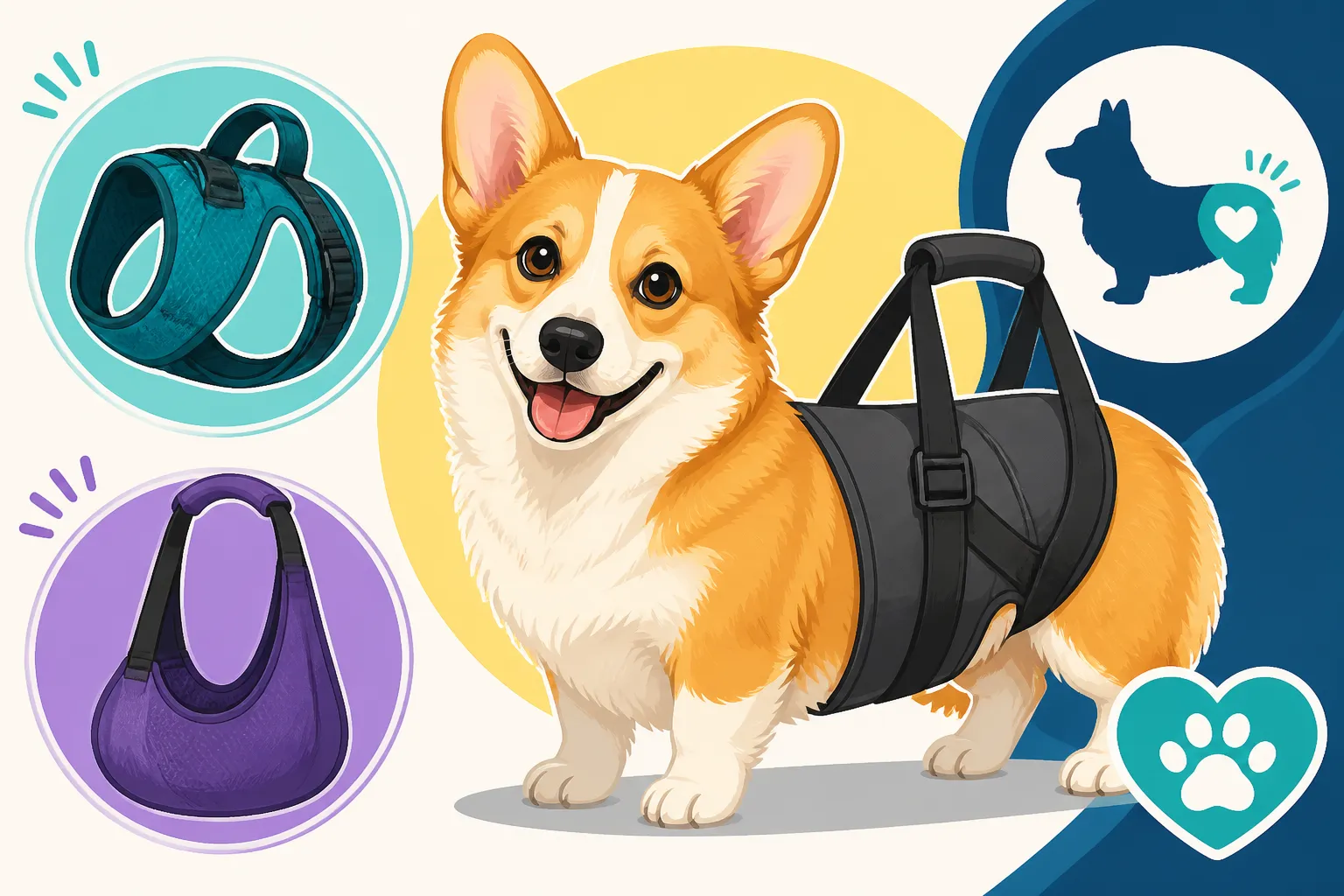
Harnesses and Slings for a Corgi With DM
Watching your beloved Corgi begin to struggle with their mobility due to Degenerative Myelopathy (DM) is truly heartbreaking. It's a progressive condition that often starts with weakness in the hindquarters, making simple tasks like standing, walking, or even getting up after a nap increasingly difficult. This guide is here to help you navigate the world of mobility aids, specifically harnesses and slings, so you can provide the support your Corgi needs to maintain their quality of life for as long as possible, validating the effort and love you pour into their care.
The Heartbreak of Corgi DM: Why Mobility Support Becomes Essential
When a Corgi is diagnosed with Degenerative Myelopathy, it's a gut punch. You know the journey ahead will be challenging, and one of the biggest challenges is maintaining their ability to move around. DM is a neurological disease that slowly attacks the spinal cord, leading to a gradual loss of coordination and strength, particularly in the back legs. It’s not just about getting from point A to point B; it’s about their dignity, their independence, and their ability to engage with the world around them.
Understanding the Progressive Nature of DM in Corgis
DM typically progresses in stages, and what might start as a slight scuffing of the back nails or a mild wobble can advance to significant weakness and even paralysis. During the initial stages, you might notice subtle changes, perhaps your Corgi crossing their back legs while standing or swaying slightly. As it advances, their hind legs might start to drag, and they’ll lose muscle mass, making it incredibly difficult for them to support their own weight. This is when mobility aids become not just helpful, but absolutely essential for daily living. You can learn more about The First Signs of DM in a Corgi to help you identify these changes early.
It’s easy to feel overwhelmed, but remember that many Corgis live comfortably for a significant time with the right support. The goal of using a harness or sling isn't to fix the underlying condition—because sadly, there's no cure for DM—but to empower your Corgi to continue enjoying walks, going outside for potty breaks, and simply being part of the family without unnecessary struggle or pain. These tools bridge the gap between their desire to move and their physical limitations, helping to manage symptoms as discussed in What Slows Corgi Myelopathy Down.
Why Traditional Leashes Aren't Enough Anymore
For years, a simple collar and leash were all you needed for your Corgi's walks, perhaps a standard harness for better comfort and control. But when DM starts to take hold, these traditional tools become inadequate, and can even be detrimental. Pulling on a collar can strain their neck and exacerbate spinal issues, while a standard chest harness offers no support for their increasingly weak hindquarters. Imagine trying to walk with weak legs while someone pulls you only from your chest; it's unstable and uncomfortable.
This is where specialized mobility harnesses and slings shine. They are designed to distribute weight more evenly, provide direct support to the hind legs, and allow you to assist your Corgi without causing further strain or discomfort. They transform a struggle into a supportive partnership, ensuring that trips outside for potty breaks or just a change of scenery are still possible and, importantly, safe. The right aid can make a world of difference for a Corgi losing its back legs, offering practical relief for both pet and owner.
Navigating the World of Mobility Aids for Your Corgi
When you realize your Corgi needs help getting around, the sheer number of options for harnesses and slings can feel daunting. It's not one-size-fits-all, and what works for one Corgi at a particular stage of DM might not be right for another. The key is to understand the different types and their specific benefits, so you can choose the most appropriate support system for your furry friend.
Rear Support Slings: Quick Aid for Wobbly Legs
Rear support slings are often the first type of aid Corgi owners turn to when their dog's hind legs start to weaken. These are typically simple pieces of fabric with handles that go under your Corgi's belly, just in front of their back legs. They allow you to manually lift and support their rear end as they walk, essentially acting as a helping hand (or two!).
They're fantastic for quick potty breaks, helping your Corgi up and down stairs (with extreme caution and proper lifting technique, as discussed in Ramps and Steps That Save a Corgi's Back), or assisting them with getting up from a lying position. The beauty of a sling is its simplicity and ease of use. You can quickly slip it on and off, making it ideal for those frequent, short bursts of support throughout the day. However, they do require you to bend over, which can be tough on your back during longer periods, and they don't offer hands-free support.
Full-Body Harnesses: Comprehensive Support for Advanced Stages
For Corgis whose DM has progressed to a point where both front and back ends need significant assistance, a full-body harness becomes an invaluable tool. These harnesses often feature interconnected sections that support the chest, abdomen, and hindquarters, sometimes even including attachments for a cart. They are designed to distribute weight much more broadly across the dog's body, reducing pressure points and providing maximum stability.
Many full-body harnesses come with multiple attachment points, allowing for various lifting and walking configurations. Some even offer reflective strips for nighttime safety, and durable, washable materials for easy maintenance. While they can be a bit more cumbersome to put on and take off than a simple sling, the comprehensive support they offer can significantly improve a Corgi's ability to navigate their environment, offering a sense of security and stability that a partial sling cannot. Brands like Ruffwear or similar specialized pet mobility aid companies often provide excellent full-body harness options.
Lift-and-Assist Harnesses: A Balance of Front and Rear Support
Somewhere between the simple sling and the full-body harness are the lift-and-assist harnesses, which often come in modular pieces—a front harness and a rear harness that can be used independently or connected. This offers flexibility as your Corgi's condition changes, or if they only need support in one area initially. For instance, a Corgi with early DM might only need the rear component, but as the disease progresses, the front piece can be added for extra stability.
These harnesses are particularly useful if your Corgi still has some front leg strength but needs substantial help with their hindquarters. They allow you to apply gentle, controlled assistance, helping them maintain their balance and lift their rear when needed. They are typically designed for comfort, with padded sections and adjustable straps to ensure a snug, secure fit without chafing, which is crucial for a dog that relies on it for extended periods.
Choosing the Best Harness or Sling for Your Corgi's Needs
Picking the right mobility aid isn't just about finding something that fits; it's about finding the best fit for your Corgi's unique needs, stage of DM, and your own physical capabilities. It's a decision that impacts their comfort, their independence, and your ability to care for them effectively. Don't rush this process; taking the time to consider all factors will make a big difference.
Factors to Consider for the Perfect Fit and Comfort
The first thing you absolutely must consider is comfort and fit. A poorly fitting harness or sling can cause chafing, pressure sores, and further discomfort, defeating its very purpose. Look for models with ample padding, especially around the chest, abdomen, and leg openings. The material should be breathable to prevent overheating, especially given a Corgi's double coat, and durable enough to withstand daily use. It's not uncommon for Corgis with DM to experience Incontinence in a Corgi With DM, so washable materials are a huge plus.
Always measure your Corgi carefully according to the manufacturer's guidelines. Don't guess their size! Pay attention to the length of their back and chest circumference. A harness that's too loose can shift and not provide adequate support, while one that's too tight will restrict movement and cause pain. Some excellent options can be found on sites like Chewy, which often provide detailed sizing charts and customer reviews to help guide your choice.
Ease of Use and Durability for Daily Life
Let's be real, you're going to be putting this harness on and taking it off multiple times a day. If it's a wrestling match every time, it quickly becomes frustrating for both you and your Corgi. Look for features like quick-release buckles, adjustable straps that are easy to manipulate, and designs that minimize the amount of lifting and maneuvering required to get it in place. The easier it is to use, the more consistently you'll use it, which is vital for your Corgi's well-being.
Durability is another non-negotiable factor. Your Corgi will be relying on this equipment heavily, and it needs to stand up to daily wear and tear, outdoor conditions, and frequent washing. Reinforced stitching, strong webbing, and high-quality hardware are indicators of a well-made product. While it might be tempting to opt for a cheaper option, investing in a robust, well-designed harness now can save you money and headaches in the long run. Many pet parents have found that pet insurance, like plans from Healthy Paws, can help with the costs associated with specialized vet visits or equipment prescriptions, making these necessary investments more manageable.
Considering Your Corgi's Stage of DM and Future Needs
The type of support your Corgi needs will evolve as their DM progresses. In the early stages, a simple rear-support sling might be perfectly adequate. However, as the disease advances and their hind legs become weaker, you might need to transition to a more comprehensive full-body harness, or even consider Carts and Wheels for a Corgi With DM. Think ahead when making your purchase. Some modular harnesses allow you to add components later, providing flexibility without needing a completely new system.
It's also important to involve your veterinarian or a veterinary physical therapist in this decision. They can assess your Corgi's gait, muscle strength, and overall condition to recommend the most appropriate type of aid and ensure it's fitted correctly. They can also offer guidance on Physiotherapy for a Corgi Losing Its Legs, which can be integrated with harness use to maximize mobility and comfort. Choosing the right support is a crucial step in maintaining their quality of life, especially as they enter The Corgi Years When the Back End Gives Out.
Practical Tips for Daily Use and Care of Mobility Aids
Once you've chosen the perfect harness or sling, knowing how to use it correctly and keep it in good condition is paramount. Proper technique not only protects your Corgi from injury but also prevents you from straining your own back. It also ensures the longevity of the equipment and maintains hygiene, which is especially important for Corgis with mobility challenges.
Gentle Lifting Techniques for You and Your Corgi
Learning how to properly lift and support your Corgi is perhaps the most important aspect of using a mobility aid. Always lift with your legs, not your back, keeping your Corgi's spine as straight as possible. If using a rear sling, make sure your Corgi’s weight is evenly distributed, and avoid letting them dangle. You want to assist, not carry their entire weight unless absolutely necessary. For front harnesses, ensure your hands are positioned to provide steady, comfortable support without pulling on their neck or shoulders.
Practice makes perfect. Start with short sessions, getting both you and your Corgi accustomed to the feel and motion. Pay close attention to their body language. Any signs of discomfort, pain, or anxiety mean you need to adjust your technique or the fit of the harness. Remember, the goal is to enhance their mobility, not create a new source of stress. For specific guidance, you may want to revisit Picking a Corgi Up Without Hurting It.
Maintaining Hygiene and the Harness Itself
Mobility aids, especially those that come into contact with your Corgi's underside, can get dirty quickly. Regular cleaning is non-negotiable, not just for aesthetics but for your Corgi's health. Urine, feces, dirt, and moisture can accumulate, leading to skin irritation, infections, or odor. Most harnesses and slings are machine washable; check the manufacturer's instructions for the best cleaning method. Using a mild, pet-safe detergent is always a good idea.
Beyond cleaning, routinely inspect the harness for wear and tear. Look for fraying straps, loose stitching, stretched fabric, or damaged buckles. Any compromises in the integrity of the harness could lead to a fall or injury. Just as you’d check your car’s tires, give your Corgi's mobility aid a quick check before each use. This diligence ensures that the harness remains a reliable tool, allowing you to provide consistent care and perhaps even use services like Ollie, which can deliver fresh, nutritious meals right to your door, simplifying another aspect of your Corgi's care routine during this challenging time.
Integrating Mobility Aids into a Supportive Environment
The harness or sling is just one piece of the puzzle. To truly support your Corgi with DM, you need to create an environment that minimizes their struggle and maximizes their comfort. This means strategically placing ramps or steps to help them access furniture they once jumped onto without a second thought, ensuring non-slip flooring in high-traffic areas, and providing an orthopedic bed that supports their body and aching joints.
Consider how the harness integrates with other aids, such as dog booties to prevent dragging-related injuries or even Pain Relief for an Old Corgi's Back. The goal is a holistic approach to care, where every element works together to improve their quality of life. This supportive environment not only aids their physical well-being but also their mental and emotional health, reminding them that despite their challenges, they are still cherished members of the family.
Disclaimer
This article is for general informational purposes only and does not constitute professional advice. Laws, prices and regulations vary by location and change over time. Consult a qualified professional for guidance on your specific situation.