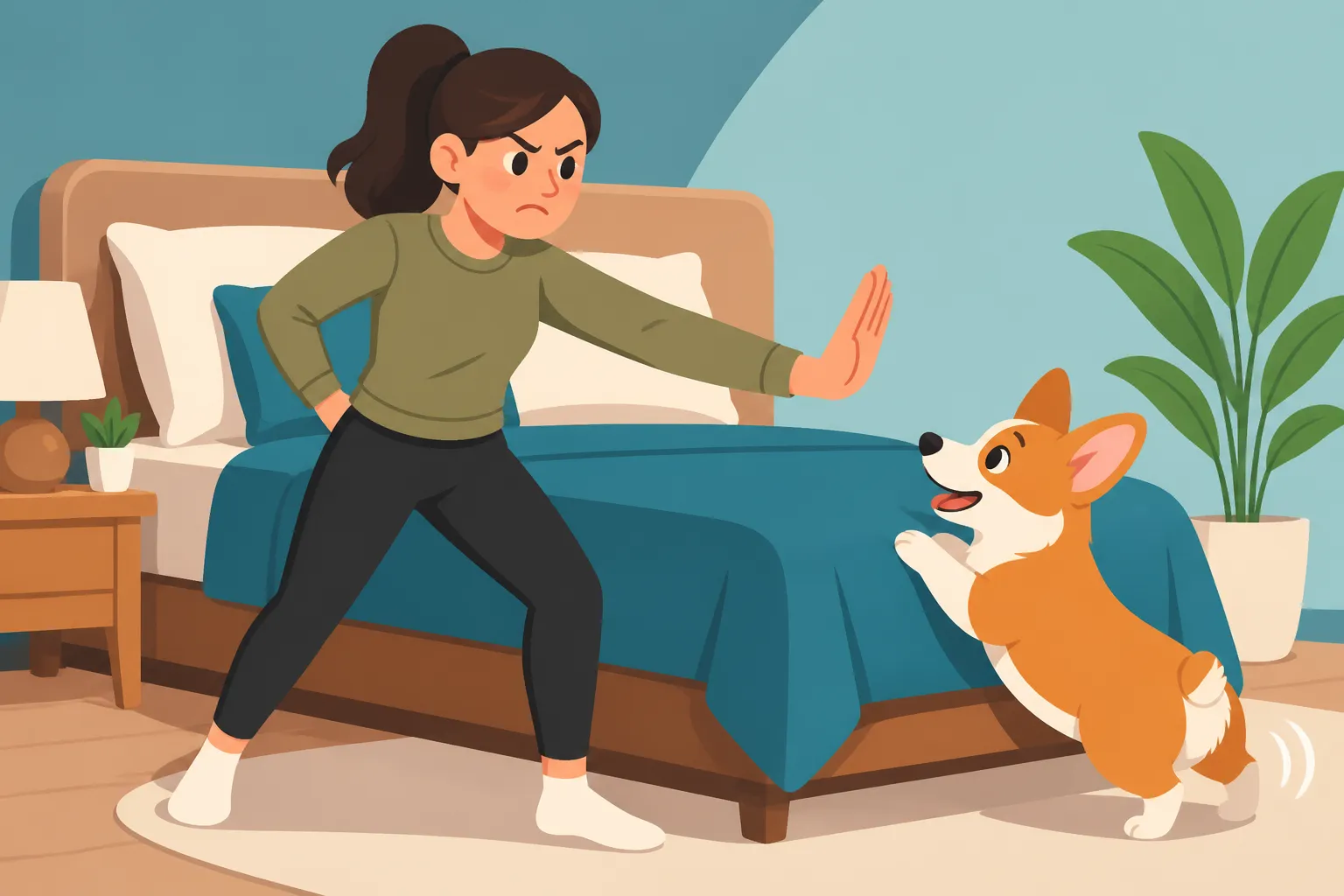
Blocking a Corgi’s Route Onto the Bed
It's a familiar scenario for many Corgi owners: you just want to snuggle up with your furry companion in bed, but you know deep down that every leap on and off that high mattress puts their precious long back at risk. This guide is all about helping you create a safe, jump-free environment around your bed, ensuring your Corgi can still be close without compromising their spinal health, offering practical steps and realistic solutions to protect their back.
The Allure of the Bed for Your Corgi (and the Hidden Dangers)
Let's be honest, Corgis are Velcro dogs. They thrive on being near their people, and for many, the bed represents the ultimate cozy haven right next to their favorite human. It's a prime spot for cuddles, warmth, and feeling like an integral part of the family pack. But that irresistible pull toward the plush mattress and soft blankets can spell trouble for their unique anatomy. We love seeing those little legs try to scale Mount Comforter, but it's a climb fraught with peril.
Why Corgis Love Being Up High
Corgis, despite their diminutive stature, often have big dog personalities. They want to be where the action is, and often, that means being elevated to observe their kingdom – or at least, your living room. The bed offers a fantastic vantage point, allowing them to keep an eye on you, the door, and any suspicious squirrels outside the window. Plus, let's not forget the sheer joy of burrowing under duvets or sprawling out on a freshly made bed; it's peak comfort for them. Their herding instinct also plays a role, as being near you is their way of keeping their "flock" together.
Beyond simply wanting to be near you, the bed is often a place of comfort and security. It smells like you, it's soft, and it's a warm spot to nap. For a dog that craves connection, denying them access feels cruel, and that's a genuine struggle for Corgi owners. You see their pleading eyes, their little hops, and it's so hard to say no. Many owners simply resign themselves to letting their Corgi jump, hoping for the best, because the emotional bond feels stronger than the perceived risk in the moment.
The Serious Threat of Jumping
While a Corgi might appear agile, those short legs and long back are a recipe for spinal trouble when it comes to high-impact activities like jumping. Every time they launch themselves off the bed, they're putting immense strain on their intervertebral discs. Think of those discs like jelly-filled donuts cushioning their spine; a sudden jolt, a bad landing, or repetitive stress can cause them to bulge, rupture, or herniate. This isn't just a hypothetical risk; it's a very real and common problem for the breed, often leading to agonizing pain and paralysis. The Jump That Ruptures a Corgi Disc is a stark reminder of how quickly things can go wrong.
It’s not just the big, dramatic leaps that are dangerous. Even seemingly small, routine jumps can contribute to cumulative trauma over time. Picture your Corgi waking up from a nap, stretching, and then casually hopping off the bed, landing a bit awkwardly. You might not think anything of it, but that single motion could be the straw that breaks the camel's back, so to speak. The long, low body structure, while adorable, is inherently predisposed to back problems, making preventive measures absolutely crucial for their long-term well-being.
Assessing the Risks: Why Bed Access is a No-Go
For a Corgi owner, understanding the specific anatomy and predisposition to certain conditions is paramount. It’s not about being an overprotective "helicopter parent" but about being a responsible guardian for a breed with known vulnerabilities. Letting your Corgi jump on and off furniture, especially beds, is like playing a game of Russian roulette with their spine. The consequences, if that disc goes, are devastating both emotionally and financially.
Understanding Intervertebral Disc Disease (IVDD)
Intervertebral Disc Disease, or IVDD, is the boogeyman for Corgi owners. Because Corgis are a chondrodystrophic breed, their spinal discs degenerate prematurely, often becoming brittle and susceptible to injury from a young age. This means their discs are already weaker than those of many other breeds, making them incredibly vulnerable. When a disc herniates, it presses on the spinal cord, leading to pain, weakness, nerve damage, and potentially paralysis in the back legs. Disc Disease in a Long-Backed Corgi goes into greater detail about this pervasive issue. It's not a question of "if" for many Corgis, but "when" if proper precautions aren't taken.
The sad reality is that IVDD can strike suddenly. One day your Corgi is fine, romping around, and the next, they can barely move their back legs. The sudden onset often happens after a seemingly innocuous movement, like jumping off a sofa or bed. Owners often recount stories of their Corgi yelping in pain, collapsing, or dragging their back paws after a jump. The recovery process can be long and arduous, involving strict Six Weeks of Crate Rest With a Corgi, medication, and potentially expensive surgery. Preventing that initial injury is always the best course of action.
Other Injuries Beyond the Spine
While IVDD is the primary concern, jumping off a high bed can lead to other injuries. A Corgi might misjudge a jump and land awkwardly, twisting a knee or ankle, leading to sprains, strains, or even fractures. Their short legs offer less leverage for cushioning impact, meaning their joints take a direct hit. Imagine falling from your bed onto the floor every day; that's the equivalent stress your Corgi's joints endure.
Beyond direct orthopedic trauma, there's the risk of soft tissue injuries. A muscle strain in the shoulder from pushing off, or a ligament tear in the knee from an unbalanced landing, can also lead to chronic pain and lameness. These issues might not be as dramatic as a ruptured disc, but they can significantly impact your Corgi's quality of life and lead to ongoing veterinary visits and pain management. Pain Relief for an Old Corgi's Back discusses how these chronic issues can manifest later in life.
The Slippery Slope of "Just This Once"
It's so tempting, isn't it? Your Corgi gives you that look, and you think, "Just this once, I'll let them up." Or maybe you lift them up, but then they jump down on their own when you're not looking. This "just this once" mentality is a slippery slope. Dogs are creatures of habit, and if they're allowed on the bed even sporadically, they'll always try to get up there. They don't understand the nuances of "sometimes it's okay, sometimes it's not." For their safety, consistency is key.
Every time you give in, you reinforce the idea that the bed is fair game. This makes it incredibly difficult to enforce boundaries later, especially when they're older and even more susceptible to injury. It’s much easier to establish a "no jumping on furniture" rule from day one than to try and break a long-standing habit. This is why addressing the physical access to the bed is often more effective than simply trying to train them away from it, particularly for stubborn Corgis.
Practical Solutions to Block Bed Access Safely
So, if letting your Corgi jump on the bed is a no-go, what can you do? The good news is there are plenty of practical, effective solutions that allow your Corgi to feel included and comfortable without putting their spine at risk. It's about setting them up for success and prioritizing their long-term health.
Physical Barriers: Gates and Enclosures
One of the most straightforward ways to prevent your Corgi from accessing the bed is to physically block their route. This often means using baby gates or pet gates. These can be placed at the bedroom door, keeping them out of the room entirely, or strategically around the bed itself if you want them in the room but off the furniture.
| Barrier Type | Pros | Cons | Best Use Case |
|---|---|---|---|
| Pet Gate | Easy to install, portable, visible deterrent | Can be jumped over by determined Corgis, requires consistent closing | Blocking bedroom doorways or small areas |
| Freestanding Barrier | No wall attachment needed, flexible configurations | Less stable, can be pushed over, may not block determined jumpers | Temporary barriers, defining "off-limits" zones in open spaces |
| Play Pen/Exercise Pen | Secure, creates contained safe space, good for recovery | Takes up significant space, less visually appealing, can feel isolating | Post-surgery recovery, keeping Corgi off bed during overnight sleep |
| Bed Rail/Skirt | Prevents access under the bed, less visible | Doesn't stop jumping onto the bed, primarily for under-bed access | Preventing hidden naps or getting stuck under the bed |
For gates, look for sturdy, tall options. Corgis are lowriders, but they can be surprisingly adept at squeezing through small gaps or finding leverage to try and scale shorter gates. Pressure-mounted gates are great for temporary use, but hardware-mounted gates offer more security for persistent pups. If you need to keep them out of the bedroom overnight, a simple gate in the doorway can be a lifesaver. You can find a wide variety of options on Amazon, with different heights and widths to suit your specific doorway and Corgi's determination.
If your Corgi has a habit of getting under the bed, a bed skirt or specially designed barrier can prevent them from hiding or getting stuck in tight spaces. Some owners even use large, heavy boxes or storage containers to block off access under the bed frame. The goal is to make it impossible, or at least highly inconvenient, for them to get to the forbidden zone without direct human interaction.
Smart Alternatives: Ramps and Steps
If you absolutely want your Corgi to join you on the bed for cuddles, but without the risky jumps, ramps or steps are the answer. These provide a safe, gradual incline or a series of low steps that eliminate the need for jumping. This is often the preferred solution for owners who want to maintain that close bond without the anxiety. Ramps and Steps That Save a Corgi's Back details the options available.
When choosing a ramp or steps, prioritize stability and gentle incline. Look for options with a non-slip surface to give your Corgi confidence and prevent accidental slips. A ramp is generally better than steps for very small Corgis or those with existing back issues, as it provides a smoother transition without any jarring impact. For steps, ensure they are wide and have a low rise between each step, suitable for a Corgi's short legs. You can find many suitable ramps and steps on Amazon, ranging from carpeted to foldable options. Remember, even with ramps or steps, it's crucial to still supervise your Corgi, especially when they're first learning to use them. For guidance on introducing these, consider our article on Teaching a Corgi to Use a Ramp.
Creating a Cozy, Ground-Level Haven
Sometimes, the best solution isn't about getting them on the bed, but creating such an appealing alternative that they prefer to stay on the floor. Corgis love comfort, and if their own space is irresistible, they'll often choose it happily. This means investing in a truly fantastic dog bed, ideally an orthopedic one.
An Orthopedic Beds for a Corgi isn't just a luxury; it's a supportive haven for their joints and spine, especially as they age. Look for beds with dense, supportive foam that contours to their body, providing excellent pressure relief. Place this bed right next to your own, so your Corgi still feels included and close to you, minimizing any feelings of being left out. Add their favorite blanket, a comfort toy, and make it their exclusive, super-comfy spot. This way, they can snooze soundly, knowing you're just a paw's reach away, without ever having to risk a jump.
Training for a Jump-Free Lifestyle
Physical barriers and comfortable alternatives are fantastic, but training plays a critical role in reinforcing these new habits and helping your Corgi understand the "rules" around the bed. This isn't about harsh corrections, but positive reinforcement that builds trust and good manners.
Positive Reinforcement: Teaching "Off" and "Stay"
Start by teaching your Corgi an "off" command for any furniture, not just the bed. When they jump up, gently guide them down with a lure (like a treat), or say "off" and then immediately reward them when all four paws are on the floor. Make "off" a positive experience, not a punishment. The goal is to teach them that great things happen when they are not on the furniture.
Next, work on "stay" or "place" commands, directing them to their new, comfy dog bed next to yours. Reward heavily for staying on their designated spot. If your Corgi still tries to sneak onto the bed, simply calmly redirect them to their own bed and reward them there. Online training programs, like those offered by BAXTER & Bella, can provide step-by-step guidance and support for teaching these foundational commands, ensuring you're using effective, positive methods. Remember, Corgis are smart and can be a little opinionated; they need clear, consistent communication.
Consistency is Key: Building New Habits
This is perhaps the most challenging part for us humans, but it's absolutely vital for your Corgi's safety. Every single person in the household must be on board with the "no jumping" rule. If one person lets the Corgi on the bed, even just once, it undermines all the training and effort. Your Corgi won't understand why sometimes it's okay and sometimes it's not.
Consistency means always using the ramps or steps if that's your chosen method, always redirecting them to their own bed, and always keeping gates closed. It takes patience and dedication, especially when you're tired, but it pays off in the long run with a healthier, safer Corgi. Think of it as a small daily effort that prevents massive heartache down the line. It's much easier to stick to a routine than to deal with the aftermath of a spinal injury.
Seeking Professional Guidance
If you're really struggling to keep your Corgi off the bed, or if they're displaying persistent behaviors that make it difficult, don't hesitate to seek professional help. A certified professional dog trainer or veterinary behaviorist can offer tailored advice and strategies for your specific Corgi. They can assess your Corgi's individual temperament, your home environment, and help you implement a plan that works for everyone.
Sometimes, what seems like stubbornness can be a sign of underlying anxiety or simply a very strong learned habit. A professional can help you decipher these behaviors and provide effective solutions. They might suggest specific tools, different training techniques, or even advice on managing separation anxiety if your Corgi's desire to be on the bed stems from not wanting to be apart from you. Remember, investing in professional guidance is an investment in your Corgi's long-term health and your peace of mind.
Ultimately, blocking your Corgi's route onto the bed isn't about denying them closeness; it's about safeguarding their long, precious spine. By combining physical barriers like gates or carefully chosen ramps, alongside consistent positive reinforcement training and providing them with their own luxurious ground-level bed, you can ensure your Corgi remains a happy, healthy, and integral part of your family for years to come, without the constant worry of a devastating back injury.
Disclaimer
This article is for general informational purposes only and does not constitute professional advice. Laws, prices and regulations vary by location and change over time. Consult a qualified professional for guidance on your specific situation.