Six Weeks in a Crate After a Corgi Disc Injury
When your beloved Corgi suffers a disc injury, the veterinarian's directive for six weeks of strict crate rest can feel like a life sentence for both you and your normally energetic companion. It's a hugely challenging time, filled with worry about their pain, frustration over their confinement, and the daunting task of keeping a lively herding dog still. This guide will walk you through what to expect, how to prepare, and strategies to make those six weeks as effective and manageable as possible for your Corgi's recovery and your peace of mind.
Understanding the "Why" Behind Crate Rest
Let's be honest, asking a Corgi to be still for six weeks feels like asking a fish to climb a tree. It goes against every fiber of their being, their herding instincts, and their natural exuberance. But there's a critical reason behind this seemingly cruel prescription, and understanding it can help you maintain your resolve during this tough period.
The Severity of a Disc Injury in a Corgi
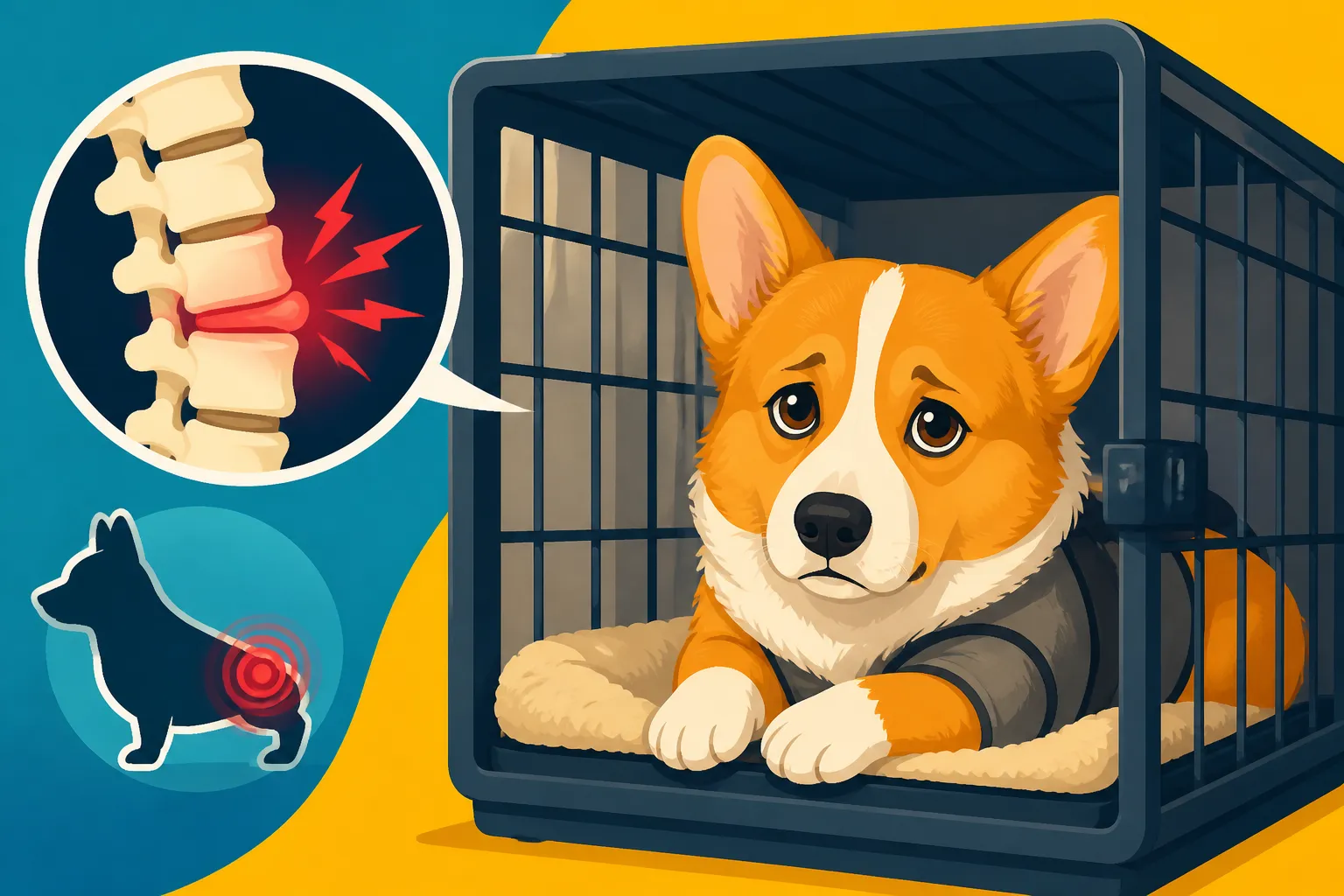
Corgis, with their wonderfully long backs and short legs, are predisposed to Intervertebral Disc Disease (IVDD). It's not just a "sore back" – it’s a serious condition where the cushioning discs between the vertebrae either bulge or rupture, pressing on the spinal cord. This pressure can range from causing intense pain and wobbly walking to complete paralysis, even loss of bladder and bowel control. A disc injury isn't something that just "gets better" with a day or two of quiet; it requires dedicated, intentional healing time. You can learn more about this specific challenge in Disc Disease in a Long-Backed Corgi.
When a disc ruptures or bulges, the injured area becomes inflamed and fragile. Any movement, especially twisting, jumping, or running, can exacerbate the injury, cause further compression, and delay healing. Imagine trying to heal a broken bone without a cast – it just wouldn't work. For a Corgi's spine, strict rest acts as that essential "cast," preventing further damage and giving the body a chance to repair itself. Your vet might have even discussed Emergency Signs of a Corgi Disc Injury if the situation was acute, highlighting the critical nature of the issue.
It's a scary time, watching your usually robust Corgi struggle. You might spend hours agonizing over whether you missed early signs or what could have prevented it. The truth is, sometimes these things just happen due to their genetic predisposition and body structure. Focus now on the healing process, and know that adhering to the crate rest is the single most important thing you can do to help them recover, even if it feels heartbreaking to enforce.
How Crate Rest Promotes Healing
The goal of six weeks of strict crate rest is to allow the inflamed spinal cord to decompress and the torn or bulging disc material to stabilize. When your Corgi is confined, they can't jump, run, or twist, which are movements that put immense strain on the spine. This reduction in movement minimizes pressure on the affected discs and nerves, allowing inflammation to subside and the body's natural healing mechanisms to kick in. It's a period of crucial passive recovery.
During this time, the body works to reabsorb some of the extruded disc material or allows the annulus (the outer ring of the disc) to fibrosis, essentially forming a scar that helps stabilize the disc. Without this strict confinement, every jump or quick turn risks re-injuring the delicate structures, potentially leading to a worse outcome or the need for more invasive treatments like surgery. This is why the vet is so firm about the duration – six weeks is usually the minimum time frame needed for significant stabilization. You might be weighing options like Whether a Corgi Needs Surgery or Rest, and if rest is chosen, its strictness is paramount.
It's not just about stopping them from running wild; it's about restricting all unnecessary movement. This means no sofa jumps, no excited greetings at the door, and no playful wrestling with other pets. Every small movement counts, and careful management during potty breaks is just as vital as keeping them settled in their crate. This discipline is hard, but it's directly correlated to the success of their recovery.
The Emotional Toll on Your Corgi (and You!)
Let's not sugarcoat it: six weeks of crate rest is profoundly difficult emotionally, for both your Corgi and you. Your Corgi, a creature bred for action and independent thought, suddenly finds their world shrunk to a few square feet. They'll be bored, frustrated, and might even vocalize their displeasure with whining, barking, or incessant staring. It’s natural for them to test boundaries, to try to stand or move more than they should, and to look at you with those big, sad Corgi eyes, as if begging for freedom.
As their human, you'll feel guilty, exhausted, and probably pretty stressed. Watching your vibrant dog confined can be heart-wrenching. You might question if you're doing enough, or if you're being too harsh. The constant vigilance, the interrupted sleep for potty breaks, and the emotional burden of their discomfort can take a real toll. It's important to acknowledge these feelings and remember that you are doing the absolute best thing for your Corgi's long-term health. Many Corgi owners who have gone through this describe it as one of the hardest periods of their dog ownership journey.
This shared experience of confinement can actually strengthen your bond, albeit through a challenging time. Your Corgi will come to rely on you completely for every interaction and comfort. Patience, a gentle touch, and consistent reassurance are your most powerful tools. Remember, this isn't forever, and with your diligent care, your Corgi has a much better chance of returning to their happy, waddling self.
Setting Up for Six Weeks of Success
Before the crate rest even begins, or as soon as you get the diagnosis, it's crucial to set up an environment that supports healing and minimizes stress for both you and your Corgi. Thinking ahead can save you a lot of last-minute scrambling and potential setbacks.
Creating the Ultimate Corgi Recovery Zone
The crate isn't just a box; it's your Corgi's temporary home, a safe haven where healing can truly begin. The location of the crate is paramount. It should be in a quiet, low-traffic area of your home, but not completely isolated. Your Corgi still needs to feel like part of the family, so placing it in a living room where they can observe daily life, or next to your bed at night, can make a huge difference to their morale. Isolation can lead to increased anxiety and barking.
Ensure the crate is appropriately sized – just big enough for your Corgi to stand up, turn around, and lie down comfortably. Too large, and they might be tempted to move around too much, which defeats the purpose. Too small, and they’ll be uncomfortable. A sturdy metal crate is often best, as it provides good ventilation and allows them to see out. You might want to cover part of the crate with a blanket to create a den-like feel, offering a sense of security and reducing visual stimulation that could lead to agitation. For Corgis prone to trying to escape, reinforcing the latch or choosing a heavy-duty model from a trusted brand on Amazon might be a wise investment.
Consider the flooring around the crate as well. If your home has slippery hardwood or tile, lay down some non-slip runners or rugs immediately. Even brief slips outside the crate can cause a disastrous re-injury. You can find many options on Amazon that provide good grip. This attention to detail in creating a safe, comfortable, and appropriately stimulating recovery zone is key to managing the six weeks effectively.
Essential Supplies for Comfort and Containment
Beyond the crate itself, you'll need a few other items to ensure your Corgi's comfort and to make your life easier. First up, bedding. A firm, orthopedic bed is ideal as it supports the spine and joints without allowing them to sink or twist awkwardly. Look for beds that are easy to clean, as accidents can happen, especially if your Corgi has limited mobility or is on certain medications. Choosing a Firm Bed for a Corgi can offer more guidance on this.
Next, think about feeding and watering. Elevated bowls can sometimes be helpful for dogs with back pain, as it prevents them from having to bend down too far. However, you'll need to assess your Corgi's comfort level. Non-spill bowls are a lifesaver, especially if you're trying to minimize mess within the confined space. For potty breaks, a sturdy, supportive sling or towel is absolutely essential. You'll use this to support their hindquarters (or even their whole body) to ensure they walk as little as possible and don't put undue strain on their back while eliminating. This also prevents them from slipping or falling.
Finally, don't forget entertainment. While movement is restricted, mental stimulation is vital. Puzzle toys, KONGs stuffed with frozen treats, or lick mats can keep them occupied for short periods. Chews are another good option, as long as they don't encourage awkward body positions. A high-quality online training program like BAXTER & Bella can also provide excellent resources for mental enrichment activities that don't involve physical exertion, helping to keep their minds sharp and their spirits up.
Adapting Your Home Environment
The six weeks of crate rest extend beyond the crate itself; your entire home environment needs to be assessed and potentially adapted. The goal is to eliminate any temptations for jumping, running, or sudden movements that could sabotage recovery. This means no more leaping off the sofa, no dashing to greet visitors, and certainly no climbing stairs.
Consider investing in ramps or steps for any areas where your Corgi usually jumps, such as onto the sofa or into the car. Even if they won't be using them during strict crate rest, these are invaluable tools for preventing future injuries once they're cleared for more activity. Ramps and Steps That Save a Corgi's Back has some great ideas. Baby gates are also your best friend. Use them to block off stairs, restrict access to certain rooms, or create a safe, contained "recovery zone" that's larger than the crate but still limits free-roaming. This can be especially helpful during supervised periods outside the crate for gentle interaction or stretches prescribed by your vet.
It’s also important to make sure everyone in the household, including children and guests, understands the strict rules of engagement. Explain clearly why your Corgi needs to be left alone in their crate and how to safely interact with them during supervised outings. The fewer unexpected excitements or opportunities for rule-breaking, the smoother the recovery will be. This proactive approach minimizes risks and helps maintain a consistent healing environment.
Navigating the Daily Routine During Crate Rest
The day-to-day management of a Corgi on strict crate rest requires consistency, patience, and a well-thought-out routine. It’s a marathon, not a sprint, and sticking to the plan is crucial.
Potty Breaks and Controlled Movement
Potty breaks are perhaps the trickiest part of crate rest. Your Corgi needs to go outside regularly, but this must be done with extreme care to prevent any re-injury. The golden rule: always use a sling or a towel to support their hind end when going in and out of the house and during the actual potty process. This takes the pressure off their spine and helps them maintain balance without twisting. You are essentially their mobile support system.
Aim for frequent, short potty breaks – typically every 3-4 hours during the day, and at least once overnight, especially in the initial stages of recovery or if they're on medication that increases urination. The goal is a quick trip out, do their business, and immediately back into the crate. No sniffing around, no playful bounces, and absolutely no running or sudden movements. Keep them on a short leash even with the sling to maintain control. If your yard has stairs or uneven ground, you'll need to carry your Corgi, making sure to support their entire body, keeping their spine straight. For rainy days or if mobility is severely limited, consider indoor options like puppy pads in a small, gated area, always under supervision.
These controlled movements are the only exception to the "strict rest" rule, and they need to be executed flawlessly every single time. It's exhausting, but vital. Over time, as your Corgi heals, your vet may advise a gradual increase in controlled leash walks, but for the initial six weeks, potty breaks are the extent of their "out-of-crate" time.
Keeping Your Corgi Engaged and Mentally Stimulated
A bored Corgi is a mischievous Corgi, and mischief is the enemy of spinal healing. While physical activity is off-limits, mental stimulation is your secret weapon to keep them content and prevent them from becoming destructive or excessively vocal. This is where puzzle toys, chews, and gentle interaction truly shine.
Offer a variety of puzzle toys throughout the day, rotating them to keep things interesting. KONGs stuffed with peanut butter, yogurt, or even their regular kibble (frozen for extra longevity) can provide long-lasting distraction. Lick mats are also excellent for calming and engaging them without requiring movement. For chews, choose options that are soft enough not to require intense chewing that could strain their neck or back, and always supervise. Many safe and durable options are available on Amazon.
Beyond toys, consider mental games. Gentle, low-key training sessions can be a lifesaver. Work on "look at me," "stay," or simple nose work games where you hide a treat under a cup and let them sniff it out. Positive reinforcement using small, low-calorie treats (remember Cutting Calories While a Corgi Is Confined is important!) can keep them engaged. BAXTER & Bella offers fantastic online resources and ideas for mental enrichment that don't involve physical activity, which can be a game-changer for keeping your Corgi's brain busy during this period. Remember, even just sitting calmly by their crate and talking to them, reading aloud, or gently petting them can be incredibly soothing and comforting.
Managing Food, Water, and Medications
Careful management of your Corgi’s diet and medication is critical during crate rest. With reduced activity, their caloric needs will significantly decrease. It's incredibly easy for a Corgi to gain weight, and extra pounds put unnecessary strain on an already compromised spine, making recovery harder and increasing the risk of future issues. Work with your vet to determine the appropriate portion size for their current activity level and adjust their food accordingly. Weighing their food rather than scooping is highly recommended for accuracy.
Medication adherence is non-negotiable. Your vet will likely prescribe anti-inflammatory drugs, pain relievers, and possibly muscle relaxants to manage pain and reduce inflammation. Administer these exactly as directed, even if your Corgi seems to be feeling better. Abruptly stopping medication can lead to a rebound in pain and inflammation. If you're struggling to administer pills, ask your vet for tips or discuss alternative formulations. Sometimes, hiding pills in a small amount of cheese or a pill pocket works wonders.
Ensure constant access to fresh water, placing the bowl inside the crate or immediately outside where they can easily reach it without moving. Monitor their appetite and water intake closely. Any significant changes, or signs of discomfort during eating or drinking, should be reported to your vet. A good routine for feeding and medication helps bring structure to their day, providing comfort and predictability during an otherwise unusual period.
Emotional Support and Troubleshooting
The journey of crate rest is rarely smooth. There will be good days and bad days, moments of despair and small victories. Knowing how to manage common behavioral challenges and care for yourself is just as important as the physical care of your Corgi.
Dealing with Whining, Barking, and Frustration
It's inevitable: your Corgi will protest. Whining, barking, and attempts to chew their way out of the crate are common expressions of boredom, frustration, and a desire for attention. It's hard to ignore, but consistency is key. Respond calmly and only when they are quiet. If you rush to comfort them every time they whine, you're inadvertently teaching them that whining gets attention. Instead, wait for a brief moment of silence, then approach calmly and offer praise or a quiet toy.
Ensure all their basic needs are met first: have they been to the potty? Do they have water? Are they hungry? Once those are checked, try redirecting their energy with a puzzle toy or a gentle petting session. If barking or whining is persistent and you suspect it’s due to pain, contact your vet immediately. If it's purely behavioral, try to provide as much mental stimulation as possible, as discussed in Keeping a Confined Corgi Occupied. Some Corgis might also benefit from calming music or white noise near their crate to help them settle.
Remember, this isn't a reflection of your Corgi being "bad"; it's a natural response to a difficult situation. Your patience and consistent gentle reinforcement will help them adjust. Avoid yelling or punishment, as this will only increase their stress and potentially make the situation worse.
Your Role as Caregiver: Self-Care is Key
Caring for a Corgi on strict crate rest is incredibly demanding. The broken sleep, the constant vigilance, the emotional stress – it can quickly lead to caregiver burnout. It’s crucial to prioritize your own well-being during this time. You can't pour from an empty cup, and your Corgi needs you to be at your best.
Don't be afraid to ask for help. If you have family, friends, or trusted pet sitters, ask if they can cover a potty break or simply sit with your Corgi for an hour so you can get a nap, run an errand, or just have a quiet moment. If you're struggling to manage all the responsibilities, consider services like a reputable dog walker who understands strict medical needs, or even a pet care professional who can provide supervised crate rest visits.
Make time for small moments of joy or relaxation for yourself. Read a book, listen to music, take a short walk (without your Corgi, sadly), or connect with other Corgi owners online who have navigated similar challenges. There are many forums and groups where people share their experiences and offer support. Remember that this period is temporary, and your dedication now will lead to a better quality of life for your Corgi in the long run.
When to Consult Your Vet Again
Even with the most diligent care, complications can arise during crate rest, or you might just have questions. Don't hesitate to reach out to your veterinarian. They are your most valuable resource during this time. Pay close attention to your Corgi for any signs that their condition might be worsening or not improving as expected.
Symptoms that warrant an immediate call to your vet include:
- Increased pain: Whining, trembling, reluctance to move even for potty breaks, yelping when touched.
- New or worsening neurological signs: Increased weakness in the legs, scuffing of paws, difficulty placing their feet, wobbling, or inability to stand.
- Loss of bladder or bowel control: This can indicate severe spinal compression and requires urgent attention.
- Changes in appetite or water intake: Refusal to eat or drink, excessive drinking.
- Lethargy or changes in demeanor: Being unusually quiet, withdrawn, or unresponsive.
It's better to over-communicate with your vet than to wait. They might recommend follow-up appointments, adjustments to medication, or even further diagnostics like an MRI to check on the healing progress. They can also offer advice on Pain Relief for an Old Corgi's Back if pain management becomes a long-term concern. Always remember that your vet is your partner in your Corgi's recovery journey, and they want to help you both through it.
Disclaimer
This article is for general informational purposes only and does not constitute professional advice. Laws, prices and regulations vary by location and change over time. Consult a qualified professional for guidance on your specific situation.