Redirecting a Corgi Off Ankles
It's incredibly frustrating, isn't it? You love your Corgi's spunky personality, but when those little land sharks decide your ankles are fair game, it can quickly turn affection into annoyance, or even pain. This guide is here to walk you through exactly why your Corgi might be nipping at your heels and, more importantly, how to gently but firmly redirect that innate herding instinct into more appropriate behaviors, bringing peace back to your shins.
Understanding the Corgi Nip: More Than Just Play
That quick nip at your ankles or the grab at your trouser leg isn't just your Corgi being naughty; it's deeply rooted in their history and instincts. Understanding why they do it is the first step toward effective redirection. These aren't malicious attacks, but rather a Corgi's way of communicating or trying to control movement, just as they would with livestock.
The Herding Instinct in Modern Corgis
Think about the Corgi's ancestors: tenacious, low-slung dogs bred to nip at the heels of cattle to move them along. They weren't just cute companions; they were working dogs with a very specific job. That strong herding drive didn't magically disappear just because they're now living in our homes rather than on a farm in Wales. It's hardwired into their DNA.
When your Corgi nips at your ankles, they're not trying to hurt you; they're trying to herd you. They see you, or your children, or even other pets, as something to be moved or directed. It’s a powerful, ingrained behavior, and it can be quite a surprise to new Corgi owners who might not expect such a strong drive from a small dog. Many Corgis carry this instinct, even if they've never seen a cow in their life. You can read more about this fascinating historical behavior in Where the Corgi Heel Nip Comes From.
Why the Nip Targets Ankles and Heels
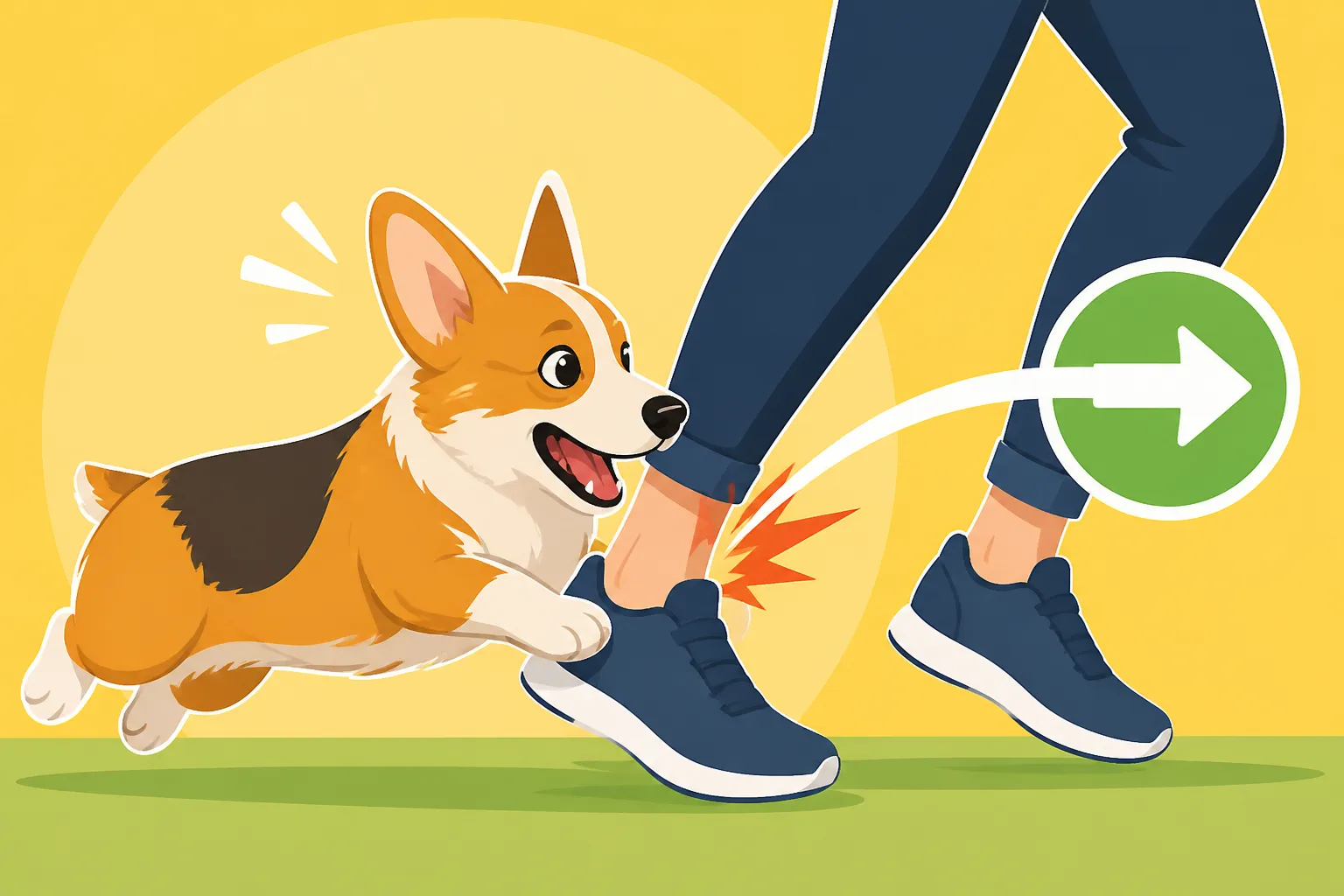
The choice of ankles and heels isn't random. This is precisely where a Corgi would target a cow's legs to get it to change direction. Their low stature puts them at the perfect height for this kind of action. When you're moving, especially quickly, those feet and lower legs become a tantalizing target for a Corgi whose instincts are telling them to engage.
It’s an efficient way for them to exert control. If your Corgi feels overstimulated, under-exercised, or simply wants your attention, a quick nip at a moving target is their ancestral go-to move. They learn quickly that this action gets a reaction from you, whether it's a startled shout, a sudden stop, or a turn in their direction, all of which can inadvertently reinforce the behavior.
Identifying the Triggers for Ankle Nipping
Before you can effectively redirect your Corgi, you need to become a detective and figure out what sets them off. Nipping rarely happens in a vacuum; there's almost always a trigger, even if it seems subtle to us. Pinpointing these moments will help you anticipate and intervene before the nipping even starts.
Movement and Excitement
This is perhaps the most common trigger. Anything that involves fast movement can ignite that herding spark. Children running through the house, someone jogging past them on a walk, or even just you quickly moving from one room to another can be enough. The faster the movement, the more intense the trigger for many Corgis. They see a moving target, and their instinct kicks in to guide or stop it.
Imagine your kids playing tag in the living room – to a Corgi, this isn't just a game; it's a chaotic herd in need of management! They might not even be trying to be aggressive; they're just doing what their ancestors did for centuries. For specific challenges with children, consider reading A Corgi That Nips Running Children for more in-depth advice.
Overstimulation and Frustration
Sometimes, nipping isn't purely about herding; it can be a symptom of being overwhelmed or frustrated. A Corgi who is overtired, hasn't had enough mental or physical exercise, or is simply overstimulated by too much noise or activity might resort to nipping. It's their way of saying, "I can't cope!" or "Pay attention to me!"
They might also nip when they're excited but don't know how to channel that energy appropriately. A new visitor, a fun game that gets too intense, or even just the anticipation of going for a walk can lead to a burst of nipping as they struggle to contain their enthusiasm. This is why providing appropriate outlets and clear communication is so vital for these intelligent dogs.
Immediate Strategies for Stopping the Nip
When your Corgi's nipping starts, you need quick, effective ways to interrupt the behavior without making it a game. The goal is to make the nipping unproductive for them, while immediately redirecting their energy to something acceptable.
The "Statue" or Freeze Method
This is a powerful technique because it directly counteracts the Corgi's instinct. If your Corgi nips at your ankles, immediately stop moving. Become a "tree" or a "statue." Stand perfectly still, cross your arms, and look away from your dog. This communicates that the fun stops the moment they nip. Without a moving target, their herding instinct loses its focus, and often, the nipping will cease.
The key here is absolute consistency. Every single time your Corgi nips, you must freeze. Do not yell, do not push them away, and do not make eye contact, as these reactions can actually be rewarding attention for some Corgis. Once they disengage, even for a second, you can then resume movement or pivot to redirection. This method teaches them that nipping leads to the complete absence of the exciting movement they were trying to control.
Redirection with Toys and Chews
Once you've stopped the undesirable behavior with the "statue" method, or even if you see the nip coming, immediately offer an appropriate alternative. Always have suitable toys or chews readily available, especially in areas where nipping commonly occurs. A sturdy rope toy, a puzzle toy filled with kibble, or a durable chew toy can be excellent choices.
The moment your Corgi disengages from your ankles, present the toy with an enthusiastic, "Yes! Play with this!" When they latch onto the toy, praise them calmly and positively. This teaches them that biting toys is far more rewarding and fun than biting your feet. This is also where you can teach them to channel that herding energy into something like a flirt pole or rolling a ball. Many Corgis actually enjoy herding a ball, which can be a fantastic outlet. For more ideas on this, check out Teaching a Corgi to Herd a Ball Instead.
Long-Term Training to Prevent Nipping
While immediate strategies are crucial for interrupting the behavior, true success in redirecting a Corgi's ankle nipping comes from consistent, long-term training and thoughtful environmental management. This involves teaching them what to do, rather than just what not to do.
Management and Environmental Adjustments
One of the most effective long-term strategies is to prevent the nipping from happening in the first place through smart environmental management. If you know certain situations trigger your Corgi, you need to manage those environments to set your dog up for success.
This might mean using baby gates to create safe zones where your Corgi can't access moving feet, especially when children are playing. You could also tether your Corgi to a secure object (under supervision, of course) during high-traffic times in your home, allowing them to observe calmly without being able to dart in and nip. Consider installing ramps and steps around your home to discourage jumping off furniture, which can not only trigger excited nipping but also be detrimental to their long backs. Ramps and Steps That Save a Corgi's Back offers excellent advice on this topic. By controlling the environment, you reduce opportunities for the unwanted behavior and make it easier for your Corgi to learn acceptable ways to interact.
Structured Play and Mental Stimulation
Corgis are intelligent and active dogs who need more than just a short walk around the block. They thrive on having a "job." When they don't have appropriate outlets for their energy and mental capabilities, those instincts can turn inward and manifest as undesirable behaviors like nipping. Incorporate structured play that satisfies their herding drive in an appropriate way.
Think about puzzle toys, scent work games, or even trick training. These activities engage their minds and burn off mental energy. Flirt poles are fantastic for Corgis, allowing them to chase and "catch" a lure on a stick, mimicking the chase of herding prey without actually making contact with people. Short, frequent training sessions with positive reinforcement can also be a wonderful way to challenge them. Consider exploring online dog training programs, like those offered by BAXTER & Bella, which often provide structured approaches to channeling a Corgi's energy into positive behaviors. A well-exercised and mentally stimulated Corgi is a happy Corgi, and a less nippy one! This can be a great way to give your Corgi The Job a Corgi Needs Instead of Herding You.
Consistency and Positive Reinforcement
This is the bedrock of all successful dog training, and it's especially vital for Corgis, who can be quite opinionated and clever. Every member of the household needs to be on the same page regarding how to respond to nipping and how to redirect. Inconsistency will only confuse your Corgi and prolong the unwanted behavior.
Focus heavily on positive reinforcement. When your Corgi makes the right choice – choosing a toy instead of an ankle, or settling calmly when people are moving – mark that behavior with enthusiastic praise, a small high-value treat, or a favorite toy. Avoid harsh corrections or punishment; these can damage your relationship with your Corgi and make them fearful, potentially even exacerbating nipping behavior. Corgis respond much better to being shown what to do rather than being punished for what they shouldn't. If you're looking for quality training aids like clickers, treat pouches, or durable chew toys, platforms like Amazon can be a great resource to equip your training journey. Understanding Whether Harsh Handling Works on a Corgi is crucial for effective training.
When to Seek Professional Help
While many Corgi owners can successfully manage and redirect nipping with consistent effort and the strategies above, there are times when professional guidance becomes invaluable. Recognizing these moments is not a sign of failure, but a responsible step toward ensuring both your peace of mind and your Corgi's well-being.
Persistent Nipping Despite Efforts
If you’ve been diligently applying redirection and management techniques for several weeks or months, and the nipping behavior isn't improving, or worse, seems to be escalating, it's time to call in the cavalry. Persistent nipping, especially if it seems overly aggressive, is breaking skin, or is accompanied by other concerning behaviors like growling or guarding, warrants expert assessment. It could indicate underlying anxiety, frustration, or a training gap that a professional eye can spot.
Sometimes, Corgis can be particularly strong-willed, and their ingrained herding instincts can be deeply ingrained. A professional can help you uncover nuances in your Corgi's behavior that you might miss, and tailor a specific training plan that addresses your dog's individual needs and temperament. They can also help you understand if the nipping is crossing the line from instinctual herding to something more problematic. It's also worth investigating whether a Corgi nips rather than bites to properly assess the severity of the behavior.
Finding a Qualified Trainer or Behaviorist
When seeking professional help, it's crucial to find someone experienced with herding breeds and positive reinforcement methods. Not all dog trainers are created equal, and one with a deep understanding of Corgi temperament and working drive will be far more effective. Look for certified professional dog trainers (CPDT-KA) or certified applied animal behaviorists (CAAB or ACAAB). Ask about their methods, their experience with Corgis or similar herding breeds, and their philosophy on behavior modification.
A good professional will observe your Corgi in your home environment, help you identify subtle triggers, and teach you how to implement advanced redirection and management techniques. They can provide hands-on guidance, refine your timing, and offer support through the process. Don't hesitate to ask for references or testimonials. Understanding Whether a Trainer Understands a Herding Corgi can help you choose the right expert to support you and your companion. Be prepared to discuss Trainer Rates for a Corgi That Nips so you know what to expect.
Comparing Nipping Strategies
Here's a quick overview of immediate versus long-term strategies for redirecting your Corgi's ankle nipping:
| Strategy Type | Focus | Key Actions | Benefits | Considerations |
|---|---|---|---|---|
| Immediate | Interruption & Redirection | Freeze/become a "statue," immediately offer a suitable toy/chew. | Stops behavior in the moment, prevents reinforcement of nipping. | Requires quick reaction, must be consistent every time. |
| Long-Term | Prevention & Training | Environmental management (gates, ramps), structured play, mental stimulation, positive reinforcement, professional guidance. | Addresses root causes, builds good habits, strengthens bond. | Requires patience and consistency over time, proactive planning. |
Dealing with a Corgi who constantly nips at your ankles can certainly test your patience, but it's a manageable behavior rooted in their remarkable heritage. By understanding their powerful herding instinct, identifying specific triggers, and consistently applying both immediate and long-term strategies, you can guide your clever Corgi toward more appropriate ways of interacting. Remember, patience, consistency, and a good sense of humor (and maybe some sturdy boots at first!) will go a long way in turning those ankle-biting days into distant memories.
Disclaimer
This article is for general informational purposes only and does not constitute professional advice. Laws, prices and regulations vary by location and change over time. Consult a qualified professional for guidance on your specific situation.