Whether Neighbors Complain About Corgi Barking
There's nothing quite like the joyful, boisterous personality of a Corgi, but let's be honest, their enthusiasm often comes with a soundtrack. Many Corgi owners find themselves in a bit of a pickle when their furry friend's vocal expressions start to grate on the nerves of their neighbors. This guide is here to help you understand why Corgis bark, how to identify when it's becoming a nuisance, and most importantly, practical, empathetic strategies to manage their barking so you can maintain peace in your neighborhood.
Understanding the Corgi's Vocal Nature
It's easy to feel like your Corgi is just being "naughty" when they let loose with a barrage of barks, but for these clever little herders, barking is often a deeply ingrained instinct. Understanding where that vocal drive comes from is the first step toward managing it effectively. They aren't trying to annoy you; they're just being Corgis!
Why Corgis Bark More Than Most
Let's face it: Corgis are talkers. They were originally bred to herd cattle in the fields of Wales, a job that required a lot of communication and warning. Imagine a low-slung dog nipping at the heels of a stubborn cow; it certainly couldn't rely on brute force alone! Instead, they used their voices to direct, warn, and move livestock. This historical job is still hardwired into their DNA. They're natural alarm-barkers, quick to let you know if a leaf blows past the window or if a squirrel dares to cross their perceived territory. They also love to express themselves, whether it's a happy "hello," an impatient "feed me," or a dramatic "I'm bored!" They have a range of sounds, from yips and yaps to full-throated barks and even a distinct "woo-woo" that is uniquely Corgi. It's truly fascinating how much they have to say, but this expressive nature means we, as owners, need to be prepared for the volume. For more on this, you might find our article Why Corgis Bark More Than Most insightful.
Common Triggers for Corgi Barking
Corgis are highly observant dogs, and their short stature means they often have a worm's-eye view of the world, making many everyday occurrences seem like big deals. One of the most frequent triggers for barking is anything that approaches their perceived territory: the mail carrier, a delivery driver, another dog being walked down the street, or even a leaf blowing past the window. These are classic "alert barks."
Beyond external stimuli, Corgis also bark out of boredom. A Corgi with an abundance of energy and a lack of mental stimulation can quickly turn to barking as an outlet. They might bark at you for attention, demanding playtime, food, or simply a cuddle. Separation anxiety can also manifest as barking when left alone, as they voice their distress. Lastly, excitement is a huge trigger. The moment you grab their leash, open the treat jar, or a familiar face walks through the door, get ready for a symphony! Understanding these triggers is crucial because it helps us anticipate and address the problem before the barking even begins.
The Different Kinds of Corgi Barks
It might sound like just "barking" to an outsider, but if you live with a Corgi, you know there's a whole nuanced vocabulary involved. There's the sharp, insistent alarm bark when someone is at the door, signaling an intruder (even if it's just the neighbor asking for a cup of sugar). Then there's the more drawn-out, often mournful boredom bark or distress bark that can arise when they feel neglected or are left alone for too long. This sound often carries a repetitive, almost whining undertone.
The excitement bark is usually higher-pitched, faster, and accompanied by a happy wiggle, reserved for joyful events like mealtime or a favorite human coming home. And let's not forget the demand bark – typically a sharp, short series of barks directed right at you, clearly stating, "I want that toy now!" or "Let's go for a walk!" Paying attention to the context and characteristics of these barks can help you decipher what your Corgi is trying to communicate, which is key to finding the right solution. You'll often hear them "talking back" too, especially if they disagree with your instructions; our article Why a Corgi Talks Back delves into that phenomenon.
When Corgi Barking Becomes a Neighborhood Issue
While we adore our Corgis' lively personalities, their natural inclination to be vocal can quickly transform from a charming quirk into a source of real tension with those living nearby. It's a delicate balance, and understanding when the line is crossed is vital for harmonious community living.
Defining "Excessive" Barking
What constitutes "excessive" barking is often subjective. For you, it might be a momentary annoyance, easily tuned out. For your neighbor trying to work from home, put a baby to sleep, or simply enjoy a quiet afternoon, it can feel like a relentless assault on their peace and quiet. Generally, barking becomes "excessive" when it's prolonged, frequent, and doesn't appear to have an immediate, obvious cause (like a doorbell ringing). We're talking about Corgis that bark at nothing, bark for hours while alone, or bark incessantly at every passerby.
Many municipalities have specific noise ordinances that define acceptable levels and durations of barking, especially during certain hours. These often consider barking excessive if it continues for more than a few minutes without interruption, particularly early in the morning, late at night, or if it happens persistently throughout the day. Your definition and your neighbor's definition might be worlds apart, and unfortunately, it's often the neighbor's perspective that triggers formal complaints. Our article How Loud a Corgi Actually Is might give you some perspective on the decibel level we're dealing with.
The Impact of Constant Barking on Neighbors
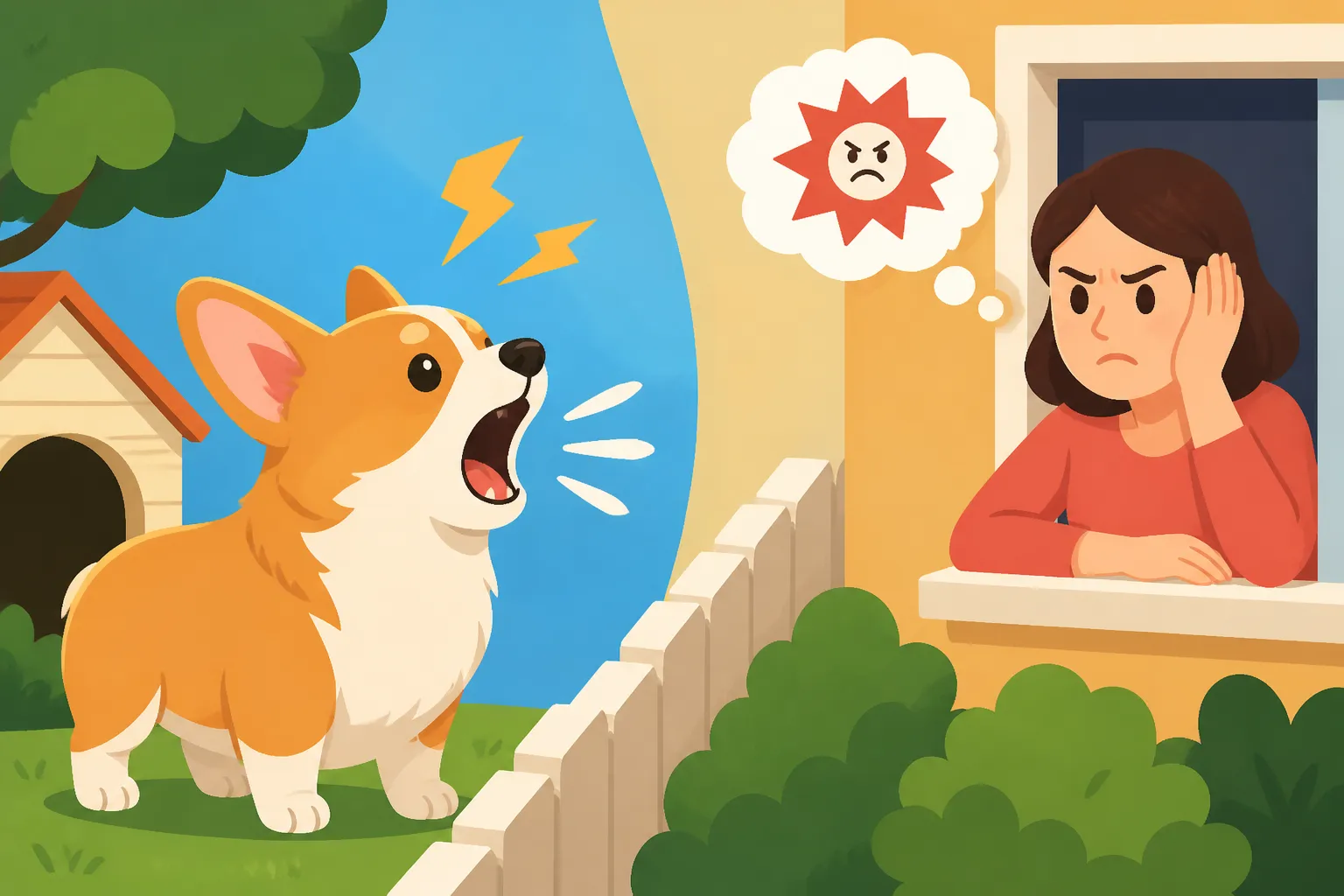
The reality is that constant, uncontrolled barking isn't just irritating; it can genuinely impact your neighbors' quality of life. Imagine trying to relax in your yard, concentrate on an important work call, or get a baby to nap, only to be interrupted repeatedly by a high-pitched, persistent bark. Over time, this kind of noise pollution leads to stress, frustration, and a significant reduction in their enjoyment of their own home. It can also strain neighborly relationships to the breaking point. What might start as a polite request to "keep the dog quiet" can quickly escalate into passive-aggressive comments, avoidance, or even hostility.
These situations are tough because your Corgi is part of your family, and you don't want them to be seen as a nuisance. But from a neighbor's perspective, they just want peace. If left unaddressed, the impact can be severe, leading to formal complaints that involve landlords, homeowner associations (HOAs), or even animal control. The emotional toll on both sides can be significant.
Legal and Community Considerations
When informal complaints don't resolve the issue, neighbors might resort to official channels. Most residential areas, whether a bustling city block or a quiet suburban cul-de-sac, have some form of noise ordinance in place. These ordinances typically stipulate acceptable noise levels and times, and continuous dog barking is often explicitly covered. Violation of these rules can lead to official warnings, and repeated offenses might result in fines.
Beyond local laws, if you live in a planned community, your homeowner's association (HOA) likely has its own set of bylaws regarding pet behavior and noise. HOAs can be particularly strict, and enforcement can range from warnings and fines to, in extreme cases, demands that the pet be removed. Animal control services also handle barking complaints, often starting with mediation or warnings but having the power to issue citations or investigate further if the problem persists. It's a heavy thought, but understanding these potential repercussions underscores the importance of addressing barking proactively. Our article Whether a Corgi Suits Shared Walls touches on the considerations for Corgis in closer living arrangements.
Proactive Steps to Prevent Neighbor Complaints
The best offense is a good defense, especially when it comes to Corgi barking. Taking proactive steps can often prevent barking issues from escalating into neighborhood disputes in the first place. It’s about setting your Corgi up for success and managing their environment effectively.
Early Training and Socialization
The foundation for a well-behaved, less-barky Corgi starts in puppyhood. Early and consistent training can make a huge difference. Focus on teaching your Corgi a strong "quiet" cue, alongside other basic obedience commands. Socialization is equally critical. Exposing your Corgi puppy to a variety of sights, sounds, people, and other friendly dogs in a positive way can help them develop into a confident adult who is less likely to react fearfully or over-excitedly to everyday stimuli. A well-socialized Corgi is less likely to feel the need to alarm bark at every novelty.
For example, if your Corgi barks at people walking by, start by practicing "watch me" exercises with treats from a distance. Gradually decrease the distance as they remain calm, always rewarding quiet attention on you. This helps them associate passing people with positive experiences, not something to bark at. For puppy training basics, our article The Corgi Puppy Mouth and Where It Lands offers valuable insights for early development. Programs like BAXTER & Bella offer online resources that can be fantastic for guidance through puppyhood and beyond, helping you instill good habits from the start and manage those early vocal tendencies.
Environmental Management and Enrichment
Much of Corgi barking stems from boredom, pent-up energy, or overstimulation. Managing their environment can significantly reduce these triggers. If your Corgi barks excessively at things outside the window, try using privacy film on lower panes, or simply blocking their view with curtains or blinds when you're not there to supervise. When you are home, perhaps allow window access only during calm periods, rewarding quiet observation.
Physical and mental exercise is paramount for these intelligent herders. A tired Corgi is a good Corgi! Ensure they get adequate daily exercise – two to three structured walks, plus playtime in the yard. But don't forget mental stimulation. Puzzle toys, snuffle mats, and training sessions keep their sharp minds engaged, reducing the likelihood of boredom barking. Rotate toys to keep things interesting. Our article The Forty-Five Minutes a Corgi Needs Daily provides a good benchmark for their exercise needs. Investing in good quality, durable puzzle toys and chews can be a game-changer; you can find a wide variety on Amazon that can keep your Corgi engaged for extended periods.
Addressing Underlying Anxiety or Boredom
Sometimes, barking is a symptom of a deeper issue, like separation anxiety or chronic boredom. If your Corgi barks incessantly when left alone, even after ample exercise and mental stimulation, it's time to consider separation anxiety. This often manifests as destructive chewing, house soiling, and relentless barking or howling when their human isn't around.
For boredom, evaluate your Corgi's daily routine. Is it stimulating enough? Are they left alone for very long stretches without any enrichment? A structured routine with consistent exercise, playtime, and training can help immensely. For Corgis with separation anxiety, solutions can range from gradual desensitization exercises (short absences building up over time), to leaving them with comfort items, background noise (like a TV or radio), or even exploring options like doggy daycare or a trusted pet sitter. In more severe cases, a vet might suggest calming supplements or medication in conjunction with behavior modification. Our piece A Corgi That Cannot Settle Without You offers more guidance on managing clingy Corgis.
Strategies for Managing Existing Barking Problems
So, you've got a Corgi with an established barking habit, and maybe you've already received a gentle (or not-so-gentle) nudge from a neighbor. Don't despair! There are definite strategies you can employ to get that vocalization under control. It takes patience and consistency, but it's absolutely achievable.
Teaching a "Quiet" Cue
One of the most effective tools in your barking management arsenal is teaching your Corgi a "quiet" cue. This isn't about punishing barking, but rather rewarding the absence of it. Start when your Corgi barks at a trigger, like the doorbell. Let them bark a few times (acknowledge their alert, it's their job!). Then, say "Quiet" in a calm, firm voice, and immediately present a high-value treat in front of their nose. The moment they stop barking to sniff the treat, praise them ("Good quiet!") and give them the treat. Repeat, repeat, repeat.
The key is timing. You want to reward the instant silence. Gradually, you can extend the duration of silence before the treat. Once they understand "Quiet" in response to a specific trigger, you can start applying it to other situations. The goal is for them to associate the word "Quiet" with stopping barking and getting a reward. Consistency is everything here; every family member needs to use the same cue and follow the same steps. Our guide Teaching a Corgi to Stop on Cue gives a detailed breakdown of this training method.
Using Management Tools and Aids
While training is fundamental, certain tools can assist in managing barking, especially when you're not actively present or need immediate intervention. Anti-bark collars, for instance, come in various forms, such as vibration, ultrasonic, or citronella spray. Vibration collars provide a mild, attention-grabbing buzz; citronella collars emit a harmless puff of scent. It's crucial to use these responsibly and humanely, always supervising their use and ensuring they're not causing undue stress. They are not a substitute for training but can be a useful aid to interrupt undesirable barking patterns.
Another helpful tool is a pet camera with two-way audio. These allow you to monitor your Corgi's barking when you're away and even deliver a verbal "Quiet" cue through the speaker. For Corgis who bark at external noises, white noise machines or quiet music can help mask sounds from outside. You can find a wide range of these products, from smart pet cameras to various types of humane bark collars, readily available on Amazon, allowing you to choose what best fits your Corgi's needs and your comfort level. Remember, the goal is always to teach them what to do, rather than just stopping what they shouldn't.
Seeking Professional Help
If you've tried various strategies and your Corgi's barking persists, or if it seems rooted in deep anxiety, it's absolutely okay – and often highly recommended – to seek professional help. A certified professional dog trainer (CPDT) can assess your Corgi's behavior, identify underlying causes, and provide a tailored training plan. They can also teach you advanced techniques and ensure you're applying them correctly. Look for trainers who use positive reinforcement methods; these are generally the most effective and humane for Corgis.
For severe cases, particularly those involving intense separation anxiety or reactivity, a veterinary behaviorist might be necessary. These are veterinarians with advanced training in animal behavior, who can rule out medical causes for barking and, if appropriate, prescribe medication in conjunction with behavior modification therapy. Resources like BAXTER & Bella can be great for foundational training, but for complex issues, an in-person, qualified professional offers invaluable, personalized guidance. Don't feel like a failure for reaching out; it's a sign of a responsible pet owner committed to their dog's well-being and their community's peace.
Communicating with Your Neighbors
One of the most crucial, yet often overlooked, aspects of managing Corgi barking complaints is effective communication with your neighbors. A little goodwill and transparency can go a long way in de-escalating tension and finding common ground.
Opening Lines of Communication
If you suspect your Corgi's barking is an issue, or if a neighbor has already approached you, the best first step is to open a polite, proactive dialogue. Don't wait for a formal complaint. Approach your neighbor calmly and empathetically. Start by acknowledging their concern and genuinely apologizing for any disturbance. Phrases like, "I'm so sorry if [Corgi's name]'s barking has been bothering you, I'm genuinely trying to address it," can disarm tension.
Then, explain the steps you are taking. For example, "We've started working with a trainer on a 'quiet' command, and we're looking into some new enrichment toys." Ask them for specific times the barking is worst. This shows you're taking the problem seriously and are actively working on a solution. Offering a solution, even if small, can make a big difference. They might just be looking for reassurance that you care.
Documenting Your Efforts
In situations where barking has become a persistent issue or a formal complaint has been made, keeping a detailed log of your efforts can be incredibly beneficial. This isn't about accusing anyone; it's about having clear evidence of your commitment and progress. Document:
- Training sessions: Dates, what you worked on, and any progress.
- Exercise routine: Daily walks, playtime, mental stimulation.
- Environmental changes: Window coverings, white noise machines.
- Professional consultations: Trainer names, vet visits, advice received.
- Communication with neighbors: Dates of conversations, what was discussed.
This documentation can be invaluable if you ever need to demonstrate to an HOA, animal control, or landlord that you are being a responsible pet owner and actively addressing the issue. It shifts the narrative from "problem owner" to "owner trying their best." It also helps you track what's working and what isn't, guiding your future efforts.
Setting Realistic Expectations
It’s important to remember that Corgis are, by nature, vocal dogs. The goal isn't to silence them completely – that would be unrealistic and potentially unfair to their breed characteristics. The aim is to manage their barking so it becomes reasonable and doesn't unduly disturb your neighbors. Your Corgi will likely still bark when the doorbell rings, when they're excited to see you, or to alert you to something genuinely unusual. That's part of being a Corgi!
Communicate this realistic expectation to your neighbors if appropriate. Explain that while you're working hard to reduce nuisance barking, occasional vocalization is part of having a dog. Most understanding neighbors will appreciate your honesty and effort. This allows for a more sustainable truce, where you're both working towards a common goal of respectful coexistence rather than an impossible standard of absolute silence.
Living Harmoniously with a Vocal Corgi
Ultimately, living with a Corgi means embracing their spirited nature, which definitely includes their vocalizations. The journey isn't about eradicating their barks entirely but about fostering a balanced relationship where their needs are met, your peace is maintained, and your neighbors remain friendly.
Balancing Instinct and Training
Your Corgi's herding instinct and alert nature are core parts of who they are. Trying to completely suppress these traits can be frustrating for both you and your dog. Instead, the key is to channel these instincts into appropriate outlets and provide clear guidance through training. For example, if your Corgi loves to "herd" you or the kids, introduce supervised games like herding a large yoga ball in a safe area. This allows them to express their natural drive in a constructive way.
Training provides the framework for them to understand when and where barking is appropriate. A Corgi that knows a solid "quiet" cue still feels like they've done their job by alerting you, but then they can defer to your command. This balance acknowledges their heritage while integrating them smoothly into modern family life.
Long-Term Management and Consistency
Managing Corgi barking is rarely a quick fix; it's an ongoing commitment. What works today might need adjustment tomorrow, and consistency across all household members is vital. Everyone in the family needs to use the same commands, follow the same rules, and react to barking in a consistent manner. Inconsistency sends mixed signals to your clever Corgi, making it harder for them to learn.
Regular reinforcement of good behavior, continued mental and physical exercise, and proactive environmental management will be part of your routine for years to come. Think of it as investing in a peaceful future with your furry companion. It's a marathon, not a sprint, and there will be good days and challenging days.
Embracing the Corgi "Talk"
While nuisance barking is definitely something to address, let's not forget that Corgis have truly delightful, unique vocalizations. There's the happy "woo-woo" when they greet you, the adorable growly grumbles during playtime, or the little conversational yips they sometimes make. These aren't the barks that annoy the neighbors; these are the endearing sounds that make your Corgi, your Corgi.
Once you've managed the excessive barking, you can learn to appreciate and even enjoy their distinct way of communicating. It's part of their charm and how they express their big personalities in those little bodies. Finding peace with your neighbors doesn't mean silencing your Corgi's joy; it means teaching them appropriate manners so their joyful expressions can shine through without causing a ruckus.
Disclaimer
This article is for general informational purposes only and does not constitute professional advice. Laws, prices and regulations vary by location and change over time. Consult a qualified professional for guidance on your specific situation.