Whether a Clicker Holds a Corgi’s Attention
One of the biggest frustrations Corgi owners face is trying to capture and hold the attention of their bright, often opinionated, little dogs. It can feel like your Corgi has a million better things to do than listen to you, especially when it comes to training. This comprehensive guide will dive into whether clicker training can effectively cut through the Corgi "sass" and help you connect with your pup on a deeper, more consistent level.
Understanding the Corgi Mindset and Attention Span
Let's be honest: Corgis are smart. Like, really smart. But that intelligence often comes wrapped in a delightful, stubborn package. They were bred for a specific job, and that job required them to make independent decisions, sometimes far from their human handler. This innate independence is a huge part of their charm, but it can also make training a unique challenge.
The Independent Herding Instinct
Imagine being a Corgi. Your ancestors were nipping at the heels of cattle, steering them where they needed to go. They weren't waiting for a polite "please" or "thank you" from the farmer. They were acting on instinct, often thinking several steps ahead. This strong, ingrained herding drive means your Corgi is often evaluating a situation, deciding on the best course of action for them, and then executing it with supreme confidence. They don't always naturally default to looking at you for direction, which can be baffling when you're trying to teach a simple "sit." It’s a bit like living with a tiny, furry CEO who thinks they know best. Understanding this heritage, and the instinct behind behaviors like The Cattle-Driving Nip a Corgi Still Has, is the first step in approaching any training method.
Short Bursts of Focus
While Corgis are intelligent, their attention span for repetitive, seemingly pointless (to them) tasks can be surprisingly short. They are problem-solvers by nature, and if they don't see the immediate benefit or novelty in what you're asking, their minds can wander faster than you can say "treat." You might get five perfect reps of a "down," and then suddenly your Corgi is sniffing a dust bunny in the corner or deciding it's time to bark at a leaf blowing past the window. This isn't necessarily disobedience; it's often a testament to their busy minds and their heritage of needing to be alert and aware of their surroundings. This is why trainers often talk about Short Bursts of Training a Corgi Will Take, emphasizing quality over quantity.
How Clicker Training Works and Why It Could Be Effective for Corgis
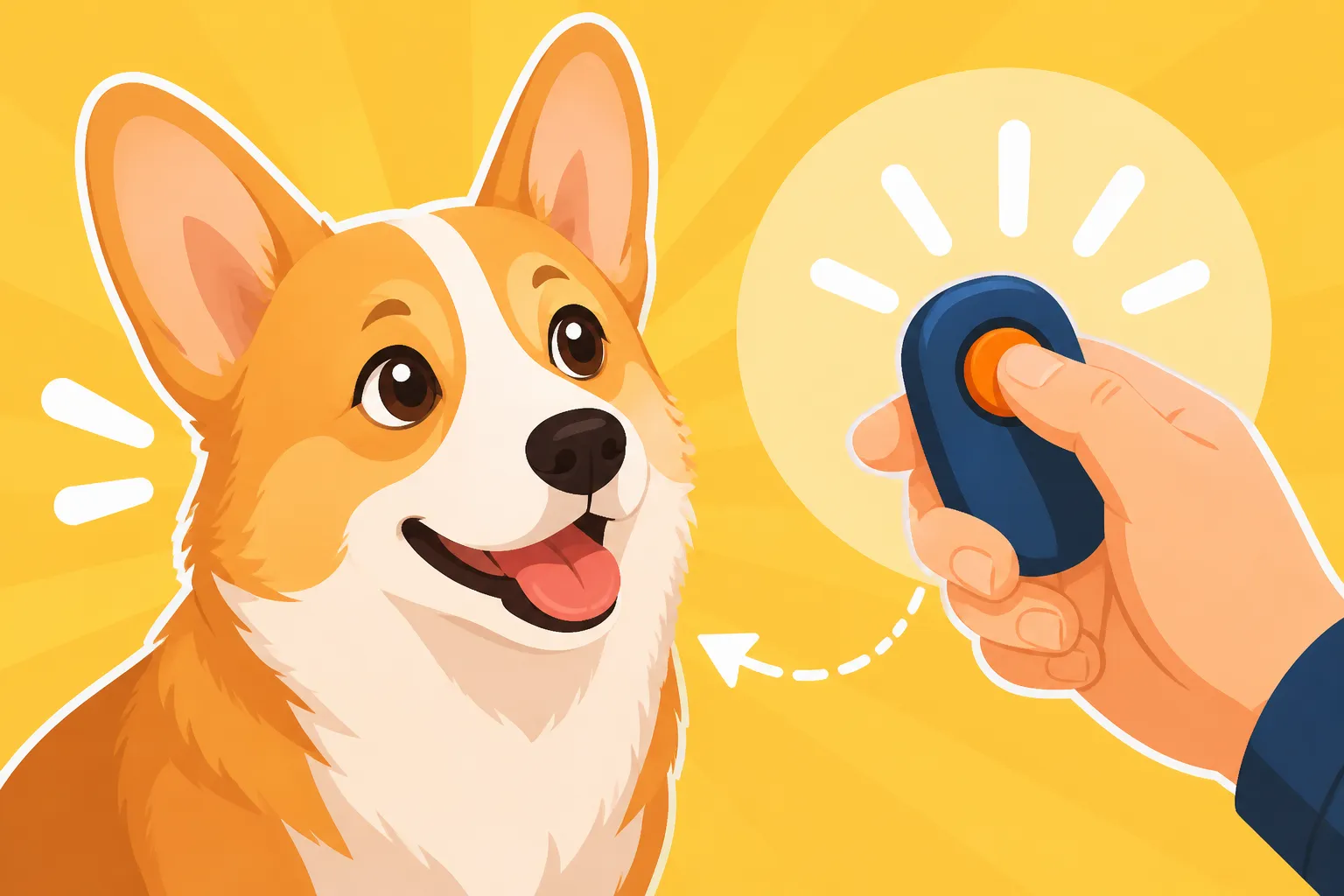
Clicker training isn't magic, but it can feel pretty close when you finally break through to that independent Corgi brain. It's a method built on positive reinforcement, where you use a distinct sound (the click) to mark the exact moment your dog performs the desired behavior, followed immediately by a reward.
The Science Behind the Click
Think of the clicker as a super-precise camera shutter. When your Corgi does something you like – even just a tiny movement towards it – you "click" that exact behavior. This click is a "marker signal," telling your dog, "YES! That's it! Good job!" Because the click is always followed by something wonderful (a treat, a favorite toy, praise), your Corgi quickly learns that the click means good things are coming. It eliminates ambiguity. Unlike saying "good dog," which might be delayed by a second or two, the click is instantaneous and always sounds the same. It tells your Corgi, with crystal clarity, exactly what they did right. This clarity is particularly valuable for a breed like the Corgi, who can sometimes be Why an Independent Corgi Ignores You when the communication isn't perfectly clear.
Bridging the Communication Gap
Corgis are smart, but they're not mind readers. Sometimes, we struggle to communicate exactly what we want from them. A hand signal or a verbal cue might be slightly off, or our praise might come a moment too late. The clicker bridges this communication gap beautifully. When your Corgi lifts a paw, and you click just as it's in the air, they immediately associate that action with the click and the ensuing reward. This precision allows you to shape complex behaviors by rewarding tiny steps towards the ultimate goal. For a dog that tends to make its own decisions, having such clear feedback can be incredibly empowering and motivating, leading to faster learning and less frustration on both sides.
Pairing the Click with High-Value Rewards
The clicker itself is just a signal. Its power comes from what it predicts: a reward. For a Corgi, who is often driven by motivation and a "what's in it for me?" attitude, those rewards need to be high-value. This means tiny, delicious treats (think cooked chicken, cheese, or specialized training treats) that they don't get all the time. Sometimes, a favorite squeaky toy or a quick game of tug can also serve as an excellent reward, but edibles are usually the easiest to deliver quickly in a training session. The key is that whatever you use, it must be something your Corgi genuinely craves. Without a strong motivator immediately following the click, the click loses its meaning. Remember, for a Corgi, it's often about Whether a Corgi Works Better for Food or a Toy, and usually, food wins for precision work.
Practical Tips for Maximizing Clicker Success with Your Corgi
You've got your clicker, you've got your delicious treats, now what? The actual application of clicker training, especially with a Corgi, requires a bit of finesse and consistency to truly capture their attention and leverage their intelligence.
Timing is Everything
This is arguably the most critical aspect of clicker training. The click needs to happen at the exact moment your Corgi performs the desired behavior. If you're even a second too late, your dog might associate the click with something else – scratching an itch, looking away, or even sniffing the floor – and get confused. Practice with simple behaviors like your Corgi looking at you. As soon as their eyes meet yours, click! Then immediately give the treat. This rapid sequence helps cement the association in their mind. Many trainers advise new clicker users to practice their timing by clicking when a ball hits the floor, to get a feel for that instant mark.
Keeping Sessions Short and Sweet
Given a Corgi's propensity for Short Bursts of Training a Corgi Will Take, brevity is your friend. Aim for 3-5 minute training sessions, several times a day, rather than one long 30-minute session. This keeps their interest piqued and prevents them from getting bored or frustrated. Stop while your Corgi is still eager and successful. This leaves them wanting more, making the next session something they look forward to. Think of it as a series of engaging puzzles rather than a monotonous drill.
Varying Rewards and Keeping it Fun
While food is often the primary reward, don't let your Corgi get bored of it. Rotate through different high-value treats to keep things exciting. Sometimes, the reward can be a quick toss of a favorite soft toy, a belly rub, or even just opening the door for a walk if they've earned it. The goal is to make training a positive, engaging interaction. If your Corgi starts showing signs of boredom or disinterest – maybe they start sniffing around more, yawning, or turning their head away – it's time to end the session on a positive note, even if it's just one last easy command they know. You want to avoid them becoming Why a Corgi Does It Once and Then Refuses out of boredom.
Gradual Progression and Proofing
Clicker training allows for beautiful, incremental progress. Start in a quiet, distraction-free environment, like your living room. Once your Corgi reliably performs a behavior there, gradually introduce minor distractions. Maybe a family member walks through the room, or you move to a different room with a window. Over time, you can progress to outdoor environments with more sights and sounds. This process, known as "proofing," ensures that your Corgi can maintain focus and perform the behavior regardless of the environment. Websites like BAXTER & Bella often incorporate this progressive approach in their online courses, using clickers to help dogs generalize behaviors across different settings.
Troubleshooting Common Corgi Clicker Challenges
Even with the best intentions, Corgis can throw curveballs. If your Corgi ignores the clicker, it might be that your rewards aren't high-value enough, or they haven't made the association yet. Go back to basics: click, then treat, click, then treat, 20-30 times in a row, with no specific behavior asked for, just to build that positive association. If your Corgi gets overly excited by the clicker or the treats, try delivering the treat slightly away from your hand or using a slower-release treat to calm them. Sometimes, their excitement can lead to "mugging" for the treat rather than focusing on the task.
Remember, Corgis are intelligent, and if a method isn't working for them, it might not be that they're being stubborn, but that the communication isn't landing. This is often where Whether a Corgi Is Stubborn or Just Thinking comes into play. Adjust your approach, simplify the task, or increase the value of the reward.
Integrating Clicker Training into Daily Life and Broader Training Goals
Clicker training isn't just for teaching basic commands; it's a powerful tool that can be integrated into almost every aspect of your Corgi's life, from polite manners to complex tricks.
Beyond Basic Cues
Once your Corgi understands that the click means "yes" and a reward is coming, the possibilities are endless. You can use it to teach polite leash walking by clicking every time they walk nicely by your side without pulling. You can teach them to settle on their bed by clicking for calm duration. You can even use it for fun tricks like spinning, bowing, or retrieving specific toys. The precision of the click allows you to pinpoint and reinforce subtle movements that you might otherwise miss.
Enhancing Other Training Methods
Clicker training complements other positive reinforcement techniques beautifully. It's not meant to be the only tool in your toolbox, but rather a highly effective one. For instance, if you're working on Teaching a Corgi to Stop on Cue from barking, you can click the instant they pause their vocalization, even for a split second, and then reward. This helps them understand precisely when they hit the mark. Many online training platforms, such as those offered by BAXTER & Bella, advocate for integrating clicker training to enhance the speed and clarity of learning. You can easily find clickers and treat pouches on Amazon to get started.
Using Clicker Training for Specific Corgi Quirks
Corgis, with their strong personalities, often come with a few quirks. Maybe your Corgi has a habit of "herding" visitors or jumping up for attention. Clicker training can be instrumental in reshaping these behaviors. For example, if your Corgi tends to nip at heels (a throwback to their herding days), you can click and reward them for not nipping, or for offering an alternative behavior like sitting when someone approaches. It’s all about reinforcing what you want them to do, rather than punishing what you don't. For Corgis that need mental stimulation during periods of limited physical activity, such as during crate rest after a back injury, clicker training can be a fantastic way of Keeping a Confined Corgi Occupied and engaged without putting strain on their body.
Consider this table comparing key aspects of clicker training for Corgis:
| Aspect | Benefits for Corgis | Potential Challenges with Corgis |
|---|---|---|
| Clarity | Pinpoints exact desired behavior, cutting through Corgi's independent thinking. | If timing is off, Corgi can become confused or disinterested quickly. |
| Motivation | Highly effective with high-value rewards, appealing to their food-driven nature. | Requires consistent, desirable rewards; Corgis won't work for nothing. |
| Engagement | Keeps smart Corgi minds active and reduces boredom with short, focused sessions. | Can lead to "mugging" for treats if not managed; Corgis tire of repetition. |
| Behavior Shaping | Allows for incremental training of complex tasks, builds confidence. | Owners must be patient and break down tasks into very small steps. |
| Bonding | Builds trust and a positive association with training, strengthening your relationship. | Can be perceived as "too slow" by owners used to force-based methods. |
Clicker training can absolutely hold a Corgi's attention, and often, it's one of the most effective ways to communicate with these intelligent and spirited dogs. The key is to be consistent, clear, use high-value rewards, and keep sessions engaging and brief. It might just be The Cue Corgi Owners Wish They Had Started to unlock your Corgi's full training potential. If you're looking to take your training further, consider options like Whether a Corgi Suits Group Classes where clicker training can be a valuable asset for maintaining focus in a busy environment.
Disclaimer
This article is for general informational purposes only and does not constitute professional advice. Laws, prices and regulations vary by location and change over time. Consult a qualified professional for guidance on your specific situation.