Scentwork as a Sport That Spares a Corgi’s Back
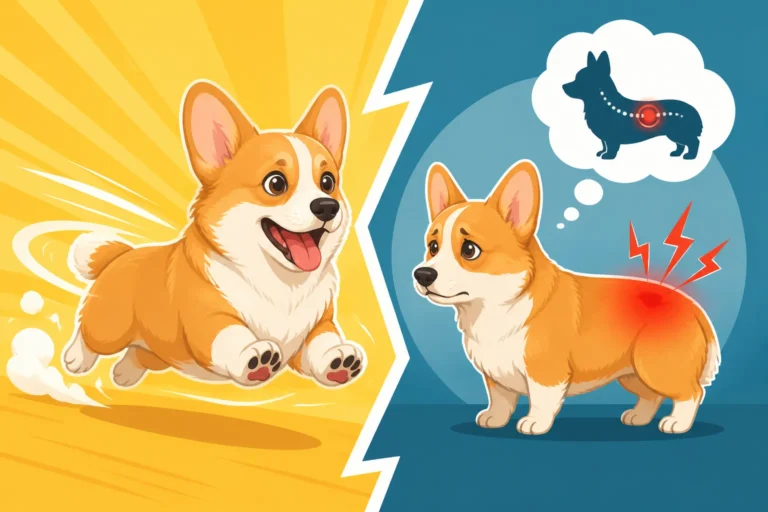
It's a common dilemma for us Corgi parents, isn't it? We want to keep our smart, energetic little fluffballs engaged and happy, but the thought of high-impact activities sending them soaring and twisting just fills us with dread over their delicate backs. Finding an outlet for their boundless energy and brilliant brains that doesn't risk a painful disc injury can feel like a constant search. This guide is all about one incredible solution: scentwork, a sport that taps into your Corgi's natural brilliance while keeping their precious spine safe and sound.
Understanding the Corgi's Back and Why It Needs Protection
Let's be real, a Corgi's body is absolutely adorable, but it's also a marvel of engineering… and a bit of a vulnerability. Their signature long back and short legs are what make them so unique, but they also mean we need to be extra vigilant about the activities they participate in.
The Unique Challenges of the Corgi Spine
Corgis, like many other long-backed breeds such as Dachshunds and Basset Hounds, are chondrodystrophic. Now, that's a mouthful, but what it essentially means is that their cartilage development is a little different, leading to prematurely aging and calcifying discs in their spine. This makes them highly susceptible to Intervertebral Disc Disease (IVDD). Imagine the discs in your Corgi's spine as little jelly donuts cushioning each vertebra. With IVDD, these "donuts" can harden and rupture, pressing on the spinal cord. This can lead to excruciating pain, nerve damage, and even paralysis. Sudden twists, jumps from furniture, or repetitive high-impact movements are often the triggers. Understanding What Chondrodystrophy Means for a Corgi helps clarify why their structure is so sensitive.
Because of this inherent risk, every movement our Corgis make can feel like a calculated decision. We constantly worry about that sudden leap off the sofa, the excited dash down the stairs, or the playful pounce that could turn into a medical emergency. It's not just about managing an existing condition; it's about prevention from day one. That's why considering Why a Corgi's Back Is Built the Way It Is is so crucial for every owner. We have to be their advocates and protect them from themselves, especially when their enthusiasm overrides their physical limitations.
When High-Impact Sports Aren't an Option
When you look at the world of dog sports, many of them involve quick turns, high jumps, and intense bursts of speed. Agility, flyball, even some aspects of competitive obedience can put immense strain on a Corgi's spine. It's heartbreaking to see other breeds soaring over jumps and weaving through poles, knowing that such activities could lead to a devastating injury for our Corgis. We want to give them an outlet, a "job" that satisfies their intelligent, driven nature, but we also can't compromise their long-term health. The risk simply isn't worth it.
This often leaves Corgi owners feeling limited, or even guilty, that they can't offer their dogs the same thrill and challenge that other breeds enjoy. You might wonder if there's any way to provide that mental and physical stimulation without the inherent dangers. The truth is, there are fantastic alternatives. While something like Agility With a Corgi's Back in Mind might be tempting, it often requires significant modification and careful consideration to be truly safe, and even then, the risk remains. We're looking for something that's inherently low-impact, yet still provides a profound mental workout.
What Exactly is Scentwork, Anyway?
Scentwork, often referred to as "Nose Work" or "Detection Work," is a fantastic dog sport that leverages a dog's most powerful sense: their nose! It's not just about finding hidden treats, though that's often where we start. It's about teaching your dog to identify and locate a specific target odor, much like detection dogs (think bomb sniffers or drug dogs) do in real-world scenarios.
Tapping into Their Natural Instincts
Corgis, despite being bred to drive cattle by nipping at their heels, actually possess a very keen sense of smell. While they might not be traditional "scent hounds," their intelligence and determination mean they are incredibly adept at using their nose. Imagine their ancestors, out in the Welsh countryside, not just pushing livestock but potentially tracking a stray lamb or discerning the scent of a predator. That innate desire to investigate and understand their world through scent is still very much alive in our modern Corgis.
Scentwork allows them to fulfill this natural foraging and detection instinct in a structured, safe, and immensely rewarding way. Instead of just sniffing around the yard aimlessly, they're given a specific problem to solve using their nose, and that engages their brain in a way few other activities can. It's a primal satisfaction that speaks directly to their inner dog, regardless of their specific breed history. This engagement is vital for a Corgi, providing The Job a Corgi Needs Instead of Herding You and focusing their natural drive.
The Different Faces of Scentwork
When people talk about "scentwork," it can actually encompass a few different disciplines, all centered around a dog's nose:
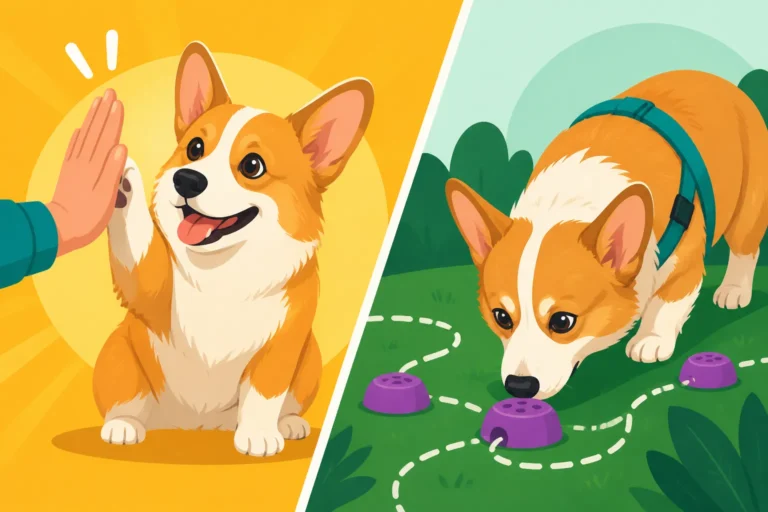
- K9 Nose Work/Scent Work: This is probably the most popular and accessible form for pet owners. Dogs learn to search for specific essential oil odors (like birch, anise, clove, cypress) hidden in various environments and types of containers. It's entirely dog-driven, meaning the dog leads the search, and the handler learns to read their dog's subtle signals. This is what we'll mostly focus on in this guide.
- Tracking: This involves following a specific human scent trail over varying terrain, often through fields or woods. It's more physically demanding than K9 Nose Work and requires specific training to teach the dog to keep their nose to the ground on a particular track.
- Discrimination Scent Work: Similar to K9 Nose Work but often involves identifying one specific odor among several distractors, or matching a scent to a reference.
- Barn Hunt: While it involves scent, this sport is about dogs finding rats (safely enclosed in aerated tubes) hidden in straw bales. It does involve some climbing, so while it uses scent, it might not be as completely spine-sparing as pure detection scent work.
For a Corgi owner looking for a truly safe and engaging mental activity, K9 Nose Work or similar detection-style scent work is usually the best starting point. It's adaptable, can be done almost anywhere, and truly minimizes any physical strain.
Why Scentwork is Perfect for Your Corgi's Spine
This is where scentwork truly shines for our long-backed friends. It's a game-changer for Corgi owners who want to give their dogs an incredible quality of life without constant worry.
Low Impact, High Engagement
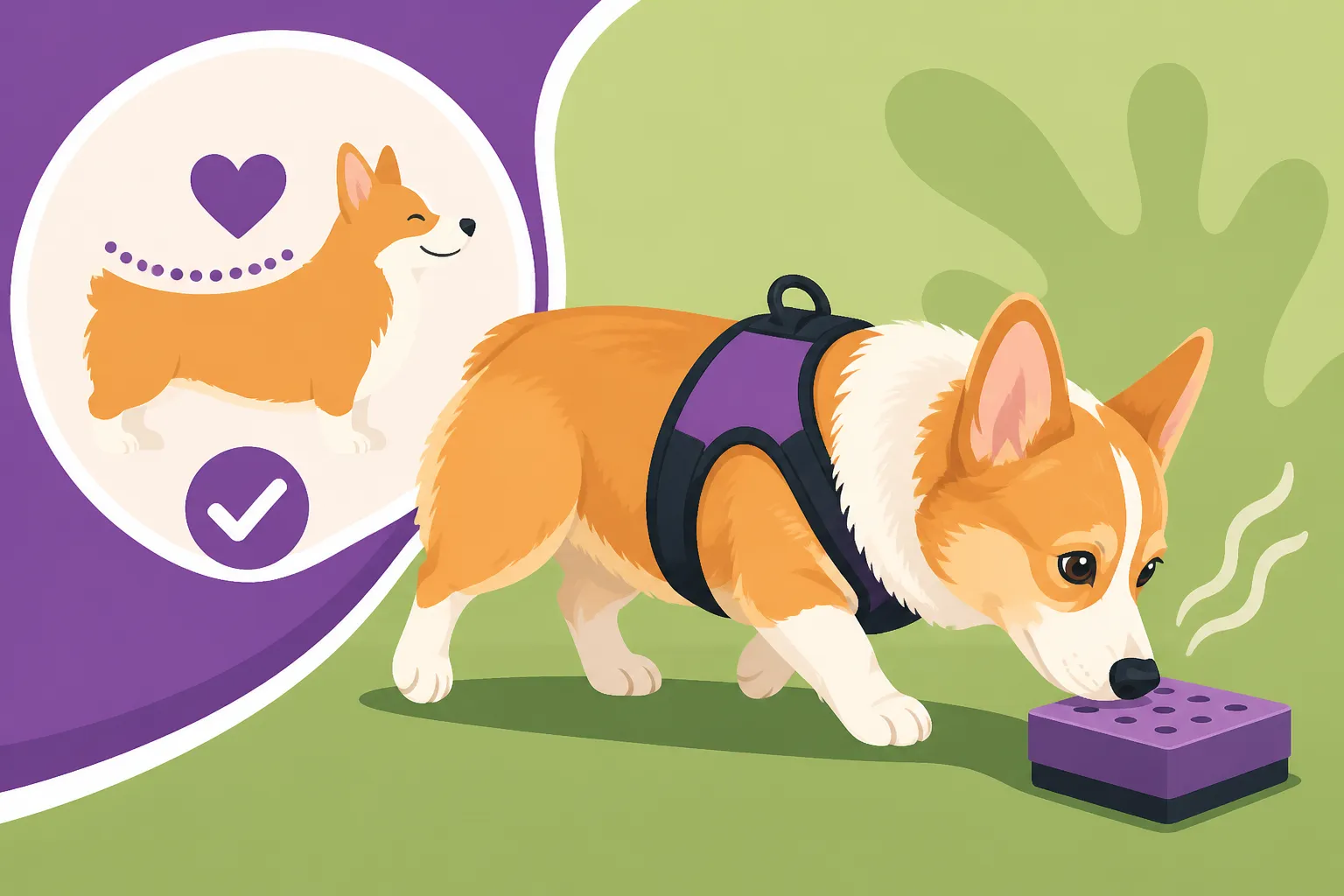
The beauty of scentwork is its inherently low-impact nature. Your Corgi doesn't need to jump, twist, or run at breakneck speeds. The activity is primarily driven by their nose and brain, with their body following in a calm, deliberate manner. Imagine your Corgi methodically sniffing around a room, carefully investigating each box or piece of furniture. Their movements are controlled, thoughtful, and far less likely to cause sudden strain on their delicate discs.
Because the focus is on the nose, you can adapt scentwork to almost any environment. A rainy day? Set up a search indoors in your living room. Limited space? Use a few cardboard boxes in a hallway. Recovering from a minor injury or just getting older? Scentwork can be done at a snail's pace, or even from a seated position if your Corgi is in a cart or on restricted movement. It provides incredible mental engagement without the physical wear and tear. This is why it’s so beneficial for Whether Exercise Slows Corgi Myelopathy, as it provides stimulation without harmful impact.
Building Confidence and Mental Stimulation
Corgis are highly intelligent dogs, and like all smart breeds, they thrive on having a purpose. A bored Corgi is often a mischievous Corgi, finding their own "jobs" that might involve excessive barking, herding the kids, or destructive chewing. Scentwork gives them a legitimate and immensely satisfying mental workout. The process of identifying a scent, following it to its source, and indicating its location requires intense focus, problem-solving skills, and sustained concentration.
After a solid scentwork session, you'll often find your Corgi pleasantly tired – not physically exhausted, but mentally satisfied, much like we feel after solving a complex puzzle. This mental fatigue is incredibly valuable for their overall well-being. Furthermore, every time your Corgi successfully finds a target odor, they experience a huge boost in confidence. They learn to trust their own abilities and instincts, becoming more self-assured. This can be particularly beneficial for dogs who might be a bit shy, anxious, or those who struggle to settle, providing a wonderful outlet for A Corgi That Will Not Settle Indoors.
Bond Strengthening and Teamwork
Unlike some dog sports where the handler gives precise commands for every movement, scentwork is truly a partnership. The dog leads the search, relying on their superior nose, and the handler learns to observe and interpret their dog's body language. You'll discover subtle cues – a change in breathing, a tail wag, a paw scratch – that tell you your dog is "in odor." This process of learning to "read" your dog deepens your understanding of them and strengthens your bond in a unique way.
It becomes a collaborative effort where you're not just giving orders, but truly working with your Corgi as a team. You celebrate their successes together, and you learn from their efforts. This shared activity fosters trust, respect, and a profound connection between you and your Corgi, turning playtime into a meaningful, enriching experience for both of you.
Getting Started with Scentwork for Your Corgi
The best part about scentwork is how accessible it is. You don't need a huge budget or specialized equipment to begin. You just need a willing Corgi and a few basic supplies!
The Bare Essentials: What You'll Need
To get started with foundational scentwork, the list of items is surprisingly short and affordable. You likely have most of these lying around your house already:
- High-Value Treats: Small, soft, smelly treats are best. Think cheese, cut-up hot dogs, cooked chicken, or specialty soft training treats. This is their primary motivator in the beginning.
- Small Containers/Boxes: Cardboard boxes of various sizes, plastic food containers (like Tupperware), or even old empty shoeboxes work perfectly. These will be your "hides."
- A "Target Odor": For competitive scentwork, this would be essential oils like birch, anise, clove, or cypress. You'll need a tiny amount on a cotton swab or felt, stored in an airtight container (like a small glass jar or tin). For absolute beginners, you can even start by just hiding particularly smelly food in a container to build their search drive, before introducing the specific essential oils. These items are readily available online, with platforms like Amazon being a great source for everything from essential oils to small tins for hides.
That's really it for the initial stages! You don't need fancy harnesses, special leashes, or expensive training aids right away. The focus is on the dog's nose, not the gear. You can progress quite far with just these simple items, making it an incredibly budget-friendly way to engage your Corgi.
Step-by-Step: From Treats to Target Odors
Starting scentwork is a gradual process that builds on your Corgi's natural curiosity and love for treats. Here’s a simplified progression:
Phase 1: The Foundation – Pairing Scent with Reward (The "Box Game")
The very first step is to create a strong, positive association between the target scent and a high-value reward. If you're starting with an actual essential oil (like birch), you'll place a tiny amount of the scented material (e.g., a cotton swab with a drop of birch oil, tucked into a small tin with holes) right with a super yummy treat inside an open box. Let your Corgi find it, eat the treat, and get excited. Repeat this several times, always ensuring the scent is present with the treat. The goal is for your Corgi to think: "Smell that cool smell, get a treat!"
Phase 2: Introducing the Search – Finding the Hidden Scent
Once your Corgi reliably goes to the open box with the scent and treat, you can start making it a little harder. Place the scent/treat combo in one of several identical boxes, with the other boxes empty (these are "blanks"). Let your Corgi sniff and choose. When they indicate the correct box (by sniffing intently, pawing, staring, etc.), open it and reward them lavishly with more treats. Gradually, you'll hide the scent without the treat directly next to it, rewarding them from your hand after they find and indicate the scent, teaching them that the scent itself is the important thing. Remember, short, positive sessions are key; Short Bursts of Training a Corgi Will Take will keep them engaged and wanting more.
Phase 3: Upping the Challenge – New Environments and Hides
As your Corgi gets the hang of finding the scent in boxes, you can slowly increase the difficulty. Move the game to different rooms, hide the scent at varying heights (still safe for their back, of course!), or use different types of containers. Introduce more distractions, like toys or other household items. Always keep it fun and rewarding. The goal is to build their confidence and their drive to find the odor, no matter what. You'll find that for The Forty-Five Minutes a Corgi Needs Daily, scentwork can be a significant and enriching part of that time.
Here's a simple table illustrating the progression:
| Phase | Goal | Setup Example | Reward Strategy | Corgi Focus |
|---|---|---|---|---|
| 1: Association | Pair target odor directly with high-value treat | Open box with scented article + treat | Treat immediately at discovery | Odor = Treat |
| 2: Search | Find hidden odor among blank containers | Multiple boxes, one with scented article (no treat next to it) | Treat from hand after indicating hide | Odor location |
| 3: Generalization | Find odor in varied environments/hides | Odor hidden on furniture, under items, outdoors | Treat from hand, praise | Sustained search |
Finding Instruction and Community
While you can certainly start at home with the basics, good instruction makes a huge difference. A skilled scentwork instructor can help you read your Corgi's subtle signals, troubleshoot challenges, and progress safely. Look for local dog training clubs or private trainers who offer K9 Nose Work or scent detection classes. Many now offer introductory online courses, which can be fantastic for Corgi owners who might not have local options or prefer to learn at their own pace. Online platforms like BAXTER & Bella often have comprehensive puppy and dog training programs that include elements of enrichment and can provide a strong foundation for moving into specific sports like scentwork.
Beyond formal instruction, there's a thriving scentwork community. Joining a local club or online group not only provides support and guidance but also allows you to share your Corgi's triumphs and learn from others' experiences. You'll find that Whether a Corgi Suits Group Classes is often a resounding yes for scentwork, as the focus is on the individual dog's search rather than close interactions that might cause stress.
Common Questions and Troubleshooting in Scentwork
As with any new activity, you're bound to run into a few questions or bumps in the road. Don't worry, these are common, and there are always solutions!
My Corgi Just Eats the Treats – How Do I Teach the Scent?
This is probably the most common beginner's question, and it's totally normal! In the very beginning, your Corgi is meant to associate the scent with the treat. However, to move beyond that, you need to subtly shift their focus. The key is to separate the location of the odor from the reward delivery.
Here's how: In Phase 2, when you hide the scented article (e.g., the tin with birch oil) in one box and no treat inside that box, but have several empty "blank" boxes, your Corgi will sniff around. When they stick their nose on or near the correct box, that's when you mark the behavior (with a verbal "yes!" or a click) and immediately deliver a treat from your hand, away from the hide. This teaches them that the scent is the target, and you are the provider of the reward for finding it. Over time, they'll learn that the scent means a treat is coming, even if it's not physically with the scent. It also helps to start with Whether a Corgi Works for Anything but Food, and if the answer is "not really," then find higher-value food rewards!
What if My Corgi Isn't Motivated by Scent?
It's rare for a dog to be completely unmotivated by scent, as it's such a fundamental part of their world. More often, it's about finding the right scent and the right reward, and making the game enticing enough.
First, reassess your treats. Are they truly high-value? For some Corgis, their regular kibble just isn't exciting enough. Try something incredibly delicious and smelly that they rarely get, like tiny pieces of cooked steak, chicken, or liver sausage. Second, keep initial sessions very, very short – think 1-2 minutes, just a few successful finds. End on a high note, leaving them wanting more. Third, make it a fun game, not a chore. Your enthusiasm is contagious! If you're stressed, they'll pick up on it. Finally, if you're using essential oils, make sure the scent is strong enough for them to easily find in the beginning. Gradually fading the strength of the odor as they become more proficient is part of the training, but don't start too faint.
How Often Should We Practice?
When you're starting out, or even when you're more experienced, short, frequent sessions are far more effective than long, infrequent ones. Aim for 2-3 sessions a day, each lasting only 2-5 minutes. Seriously, that's enough!
This keeps your Corgi engaged, prevents boredom or frustration, and ensures they're always excited when you bring out the scentwork gear. Ending a session while they're still eager to play is crucial. It reinforces the idea that scentwork is a fun, rewarding activity. Plus, these brief bursts of mental exertion are perfect for their back; they get the mental stimulation without prolonged physical strain. Remember, you're building a habit and a love for the game, not drilling for hours. This kind of focused, brief activity can be an excellent addition to Hiding Food Around the House for a Corgi as a way of providing enrichment.
Advancing Your Corgi's Scentwork Journey
Once your Corgi has mastered the basics of finding a target odor in simple setups, the world of scentwork truly opens up. The possibilities for increasing complexity and engagement are endless.
Expanding Search Environments
One of the most exciting aspects of scentwork is its versatility. You can take your Corgi's skills almost anywhere. Start by moving from simple box searches to more complex "container searches" using luggage, buckets, or even car tires. Then, graduate to "interior searches" where the odor is hidden in a room on furniture, under chairs, or behind curtains. The Corgi's low stature can actually be an advantage here, allowing them to thoroughly investigate low-lying areas that might be overlooked by taller dogs.
After interiors, you can move to "exterior searches" in your yard or local park, where environmental factors like wind, temperature, and varied terrain add new layers of challenge. Finally, "vehicle searches" involve hiding the odor on the exterior of cars or trucks. Each new environment presents unique problems for your Corgi to solve with their nose, keeping them stimulated and preventing boredom. Always be mindful of their back, ensuring that hides are placed in easily accessible, low-impact locations.
Competitive Scentwork Options
If you and your Corgi really catch the scentwork bug, there are many organizations that offer competitive trials. These trials provide a structured way to test your Corgi's skills against a set standard, earn titles, and connect with a passionate community. Organizations like the National Association of Canine Scent Work (NACSW), AKC Scent Work, and others offer various levels of competition, starting with Novice and progressing to advanced titles. Each level introduces more complex search scenarios, multiple hides, and larger search areas.
Competing isn't for everyone, and it's perfectly fine to enjoy scentwork purely as an enrichment activity at home. However, for those who enjoy the challenge and camaraderie, it's a fantastic way to celebrate your Corgi's natural abilities. The best part is, even at a competitive level, the core principles of low-impact, dog-driven searching remain, ensuring your Corgi's back stays safe while their mental prowess shines.
Keeping It Fresh and Fun
The key to long-term engagement in scentwork is to keep it interesting for both you and your Corgi. Don't fall into a predictable routine. Vary your hide locations, introduce new types of containers, or explore different search areas. You can also experiment with different target odors as your Corgi progresses. Consider taking advanced workshops or online seminars to learn new techniques and expand your knowledge as a handler.
Think about how you can integrate scentwork into your daily life. A quick "find it" game before breakfast, a short search in the evening, or taking a few hides with you on a walk to use in a safe outdoor space. By continually presenting new challenges and keeping the experience positive and rewarding, you'll ensure that scentwork remains a cherished activity for your Corgi, providing years of safe, engaging, and mentally stimulating fun.
Disclaimer
This article is for general informational purposes only and does not constitute professional advice. Laws, prices and regulations vary by location and change over time. Consult a qualified professional for guidance on your specific situation.