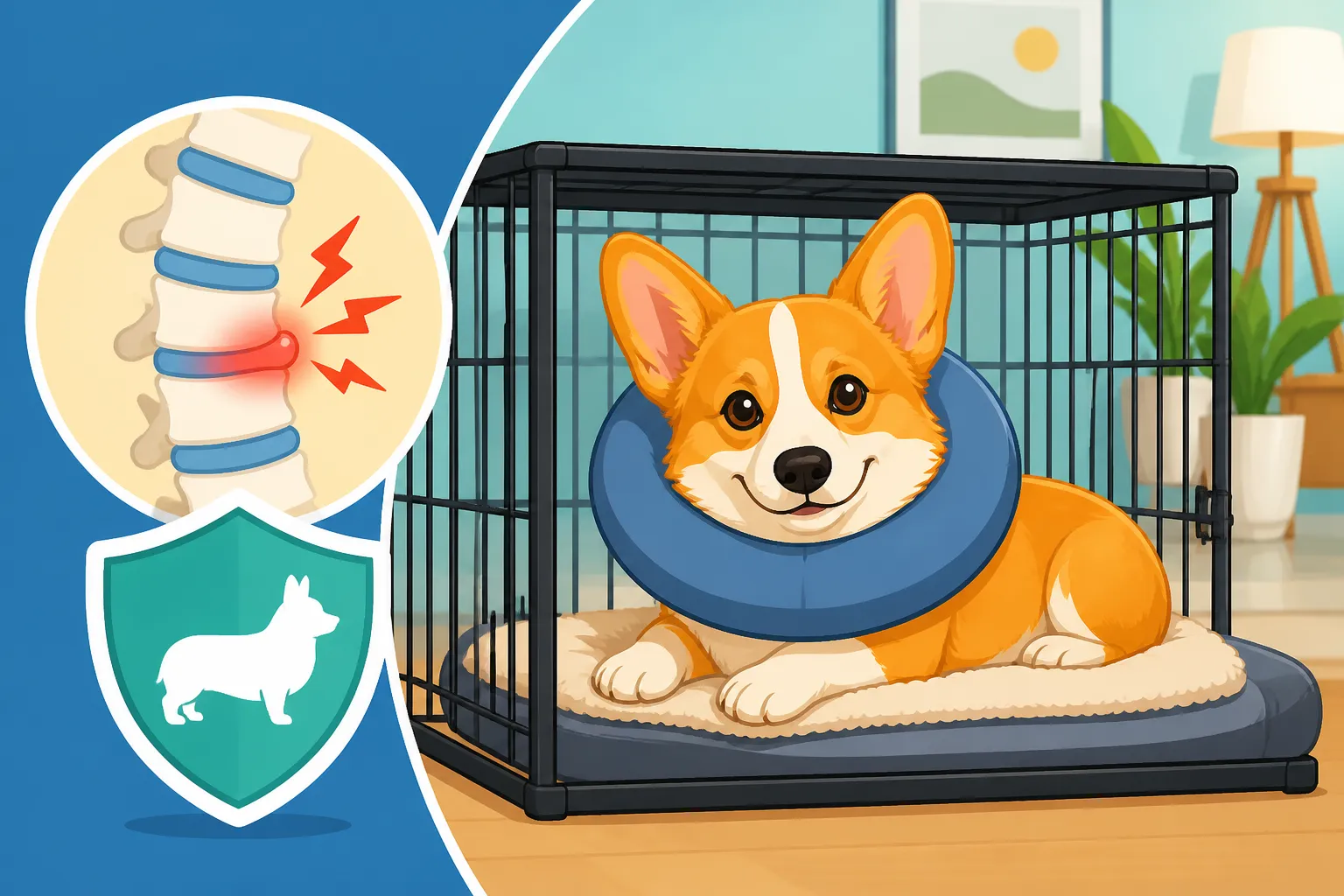
Confining a Corgi After a Disc Injury
One of the hardest moments for any Corgi owner is hearing that their beloved, energetic companion needs strict rest due to a disc injury. It's a diagnosis that immediately conjures images of endless energy confined to a small space, and the sheer frustration of trying to keep a smart, busy Corgi still for weeks on end. This guide aims to ease that burden by outlining practical strategies and empathetic approaches to successfully confining your Corgi for crucial healing.
Understanding the "Why" Behind Corgi Confinement
When your vet prescribes "strict crate rest" or "confinement," it's not just a suggestion; it's the absolute cornerstone of recovery for a Corgi with a disc injury. It feels brutal to limit their movement so severely, especially for a dog bred to be constantly on the go, but understanding the underlying reasons can help you maintain your resolve. This isn't about punishment; it's about prevention and profound healing.
The Fragile Corgi Spine and IVDD
Corgis, particularly Pembroke Welsh Corgis, are predisposed to Intervertebral Disc Disease (IVDD) due to their chondrodystrophic (dwarf) genetics. This means their spinal discs prematurely calcify and can rupture or bulge, pressing on the spinal cord. Imagine a jelly donut: the outer fibrous ring is the disc, and the jelly is the soft inner material. With IVDD, that jelly can squeeze out or the whole donut can bulge, putting immense pressure on the delicate nerves in the spinal cord. This pressure causes pain, weakness, and in severe cases, paralysis. For more depth on this, you can read Disc Disease in a Long-Backed Corgi. Their long backs and short legs, while adorable, are unfortunately a recipe for spinal vulnerability.
The disc material pressing on the spinal cord causes inflammation and swelling, and any movement, even a small twitch or a stretch, can exacerbate this pressure. Think of it like a freshly sprained ankle – you wouldn't run a marathon on it, would you? The spine is even more critical. Each twist, jump, or sudden movement can grind an already compromised disc against the spinal cord, leading to further damage, more pain, and a much longer, more complicated recovery. This is why the instruction for minimal movement isn't just a suggestion; it's a non-negotiable part of their therapy, whether they've had surgery or are being managed conservatively.
Why Movement is the Enemy of Healing
It's natural to feel guilty when your Corgi gives you those sad, pleading eyes from their confinement area. You might think, "Surely just a quick trot outside, or a gentle cuddle on the sofa won't hurt?" But even these seemingly minor movements can be detrimental. When a disc is injured, the body tries to heal itself by forming scar tissue and reducing inflammation. Any jostling or impact disrupts this delicate process. A single jump off a low ottoman, a sudden lunge after a squirrel out the window, or even a vigorous shake could undo weeks of careful healing, causing a flare-up or worsening the injury. Many owners recount how a moment of relaxed vigilance led to a setback. The Jump That Ruptures a Corgi Disc highlights just how quickly an accident can happen.
The goal of confinement is to allow the inflamed disc and surrounding tissues to settle down, for swelling to decrease, and for the body to begin repairing itself without interference. Complete rest allows the pressure on the spinal cord to reduce, which in turn alleviates pain and gives nerve pathways a chance to recover. It’s a marathon, not a sprint, and every single moment of adherence to confinement rules brings your Corgi closer to a pain-free, mobile life. It's tough, yes, but it's the kindest thing you can do for them in the long run.
Setting Up the Sanctuary: Creating a Safe Confinement Space
Preparing the right environment for your Corgi's recovery is paramount. This isn't just about throwing them in a cage; it's about creating a safe, comfortable, and reassuring space that promotes healing and minimizes their stress. The right setup can make all the difference in their mental and physical well-being during a challenging time.
Choosing the Right Crate or Pen Size
The primary goal of the confinement area is to prevent movement that could re-injure the spine. This means a space where your Corgi can stand up, turn around, and lie down comfortably, but not one large enough for them to run, jump, or play. For most Corgis, this translates to a wire crate or a small exercise pen. A standard medium-sized wire crate (around 30-36 inches long) is often ideal. It’s small enough to restrict excessive movement but large enough to not feel like a punishment chamber. For a detailed guide on initial confinement, see Crate Rest for a Corgi With a Bad Back.
If you opt for an exercise pen, make sure it’s sturdy and tall enough that your Corgi can’t jump over it (Corgis can be surprisingly athletic when motivated!). The pen should also be placed in a central, quiet area of your home where your Corgi can still feel like part of the family without being overwhelmed by household activity. Avoid placing it in a high-traffic area where people might constantly bump into it, or in a completely isolated room where they might feel lonely and anxious. Remember, feeling connected to you can reduce stress, which also aids recovery.
Essential Bedding and Support for Spinal Health
Once you have the enclosure, the bedding is crucial. A soft, supportive, orthopedic bed is a must. These beds distribute weight evenly, relieve pressure points, and provide gentle cushioning for their delicate spine. Look for beds with memory foam or a dense, supportive fill that won't flatten out under their weight. Elevated dog beds, while great for air circulation, are typically not suitable during confinement as they can make it harder for your Corgi to get in and out smoothly.
You might also consider adding a few soft, cozy blankets that can be easily washed. These provide comfort and can be arranged to create little nests. Ensure the bedding is always clean and dry, especially if your Corgi experiences any incontinence, which can sometimes accompany severe disc injuries. Many excellent orthopedic dog beds are available on platforms like Amazon, and reading reviews from other dog owners, especially those with long-backed breeds, can help you find the perfect fit.
Eliminating Hazards and Temptations
A confined Corgi is a bored Corgi, and a bored Corgi will look for ways to entertain themselves, often by trying to chew on things or escape. Before you even bring your Corgi home from the vet, thoroughly Corgi-proof the area around their confinement space. Remove any electrical cords, small objects they might swallow, or furniture they could potentially try to leverage for an escape. This is a time when every potential hazard needs to be identified and eliminated.
Consider placing the crate or pen away from windows if your Corgi is prone to barking or lunging at passersby, as these sudden movements could cause a setback. If you have other pets or small children, ensure they understand that the Corgi's space is a quiet zone and not for play. A baby gate can be a great tool to keep curious family members at a respectful distance without isolating your Corgi completely. Ramps and Steps That Save a Corgi's Back can give you ideas for a post-confinement setup, but for now, the focus is on no jumping or climbing.
| Confinement Essential | Purpose | Key Considerations |
|---|---|---|
| Crate/Pen | Restricts movement for spinal healing | Size (can stand, turn, lie down, no running/jumping); Sturdy; Secure latch |
| Orthopedic Bed | Supports spine, relieves pressure, comfort | Memory foam or dense fill; washable cover; non-slip bottom |
| Water Bowl | Constant access to fresh water | Non-tip; easily accessible without excessive movement |
| Food Bowl | For measured meals | Easy to reach; non-slip |
| Soft Blankets | Comfort, nesting, warmth | Easily washable; familiar scent for reassurance |
| Calming Pheromone Diffuser | Reduces anxiety, promotes relaxation | Plugged in nearby, provides constant calming scent |
| Chew Toys/Lick Mat | Mental stimulation, boredom relief (non-exerting) | Safe, appropriate for limited movement; check with vet if unsure |
| Baby Gates | Secures area, keeps other pets/children out | Tall enough; sturdy; easy for humans to open |
| Sling/Support Harness | Aids with potty breaks, controlled movement | Well-fitting, comfortable; used only for assisted movement |
| Camera Monitor | Allows discreet checking on your Corgi without disturbing them | Peace of mind, especially if you need to leave them alone for short periods |
The Mental Game: Keeping a Corgi Content During Confinement
One of the biggest challenges of confining a Corgi after a disc injury isn't just the physical restriction, but the mental and emotional toll it takes on a highly intelligent and active breed. Corgis are thinkers, doers, and often quite vocal about their displeasure. Keeping their spirits up and preventing boredom from turning into destructive behaviors or increased anxiety is just as crucial as the physical rest itself. This is where your creativity and patience truly shine.
Enrichment Activities for Limited Movement
Since physical exercise is off-limits, mental stimulation becomes your best friend. This doesn't mean teaching them complex new tricks that involve body movement, but rather engaging their minds in ways that keep them calm and focused. Puzzle toys, especially those that dispense treats, can be fantastic. Look for options on Amazon that require problem-solving rather than vigorous play. A snuffle mat, where you hide kibble or small treats, can keep their noses busy for a surprisingly long time. Lick mats, smeared with peanut butter (ensure it's xylitol-free!), yogurt, or pureed pumpkin, are excellent for soothing and occupying a dog for extended periods. The repetitive licking is naturally calming. Keeping a Confined Corgi Occupied offers more specific ideas.
Another simple but effective method is rotating toys. Don't leave all their approved chew toys in the crate at once. Introduce one or two, and then swap them out every day or so to keep things novel and interesting. Gentle brain games, like "find the treat" where you hide a treat under a cup and let them nose it out, can also be done within their confined space. Remember, even though their body needs rest, their mind still needs a job.
Structured Routines to Maintain Sanity (for both dog and owner)
A predictable routine provides a sense of security and helps manage expectations, both for your Corgi and for you. Establishing clear times for feeding, potty breaks, short periods of mental enrichment, and quiet rest will make the confinement period feel less chaotic. Corgis thrive on routine, and knowing what to expect can significantly reduce their anxiety. For instance, always doing potty breaks on a leash, in the same spot, at the same times, reinforces the rules.
Schedule short, gentle interaction times throughout the day. This could be a calm petting session, quiet conversation, or a very low-key grooming session (gentle brushing can feel good and helps maintain their coat). These moments of calm connection are vital. It's also important for you to have a routine. Caring for a confined Corgi is demanding, and burnout is real. Schedule time for yourself, even if it's just 15 minutes of quiet reading while your Corgi naps. A calm owner projects calm energy, which can be incredibly reassuring to a stressed dog.
Managing Anxiety and Frustration
Despite your best efforts, your Corgi might still become anxious or frustrated. Barking, whining, destructive chewing, or trying to escape are common signs. It's heartbreaking to see, and your first instinct might be to soothe them by letting them out, but this can reinforce the behavior. Instead, try to address the underlying anxiety. Sometimes, just having you in the same room, quietly reading or working, is enough to ease their mind. For dogs with higher anxiety, talk to your vet about options. They might suggest calming supplements or a DAP (Dog Appeasing Pheromone) diffuser, which releases synthetic pheromones that mimic those a mother dog produces to calm her puppies. These are widely available on sites like Amazon and can make a noticeable difference for some dogs.
For those moments when frustration boils over, it's essential to respond calmly. Avoid yelling or showing your own frustration, as this can heighten their stress. Instead, try redirecting their energy. Offer a new chew toy, or engage them with a lick mat. If they are barking for attention, wait for a brief moment of quiet before approaching or engaging. This teaches them that calm behavior gets a reward, not agitated noise. In more severe cases of anxiety, where your Corgi is truly distressed and restless, your vet might even prescribe a mild sedative to help them relax and get the necessary rest. Whether Sedatives Help a Corgi on Rest is a great resource to discuss with your vet.
Daily Care During Confinement: Feeding, Potty Breaks, and Handling
The day-to-day logistics of caring for a confined Corgi might seem overwhelming at first, but with careful planning and consistency, it becomes manageable. Every aspect of their care needs to be approached with spinal health in mind, from how they eat to how you get them outside for potty breaks. This diligent attention to detail is what will truly support their recovery.
Potty Protocol: Short Leashed Walks and Carries
Potty breaks are perhaps the most critical time for maintaining strict confinement. Your Corgi must not be allowed to walk freely, run, jump, or engage in any sudden movements outdoors. For many Corgis, this means being carried outside to a designated potty spot. Use a towel sling or a supportive harness specifically designed to aid in lifting and supporting their rear end. These products are often available on Amazon or through pet supply stores and can make a huge difference in managing controlled movement. Gently carry them to the chosen spot, set them down with support, and keep them on a short leash. Do not let them wander, sniff extensively, or try to bolt. Their job is strictly to relieve themselves, then back inside for careful carrying to their confinement area.
If carrying isn't feasible or appropriate for your Corgi's size or injury, a very slow, highly controlled leashed walk is the only other option. Ensure they walk directly to the potty spot and directly back. Avoid any stairs, uneven terrain, or slippery surfaces. It sounds incredibly restrictive, and it is, but it’s absolutely vital. A Corgi That Will Not Climb the Stairs is a crucial read for ensuring household safety even after confinement, but during confinement, stairs are a complete no-go. For male Corgis, you might need to find a small patch of grass where they can urinate without having to lift a leg excessively, or assist them with a sling if lifting is unavoidable.
Adjusting Food and Water for Reduced Activity
With significantly reduced activity, your Corgi's caloric needs will drop. Continuing to feed them their usual amount of food can lead to unwanted weight gain, which is detrimental to an already compromised spine. Excess weight puts additional strain on the discs and can impede recovery. Discuss appropriate food portions with your vet. They can help you calculate a reduced calorie intake based on your Corgi's ideal weight and current condition. For more on this, check out What Extra Weight Does to a Corgi Spine.
Consider using their daily kibble ration as part of their mental enrichment by putting it in puzzle feeders or snuffle mats instead of just a bowl. This makes mealtime an activity and slows down their eating. While food intake needs adjustment, fresh water should always be readily available. Use a non-tip bowl that's easy for them to access without having to stretch or move awkwardly. If your Corgi is on any medication that might cause increased thirst, be particularly vigilant about water availability.
Safe Handling and Lifting Techniques
Proper handling and lifting are perhaps the most overlooked yet critical aspects of care during confinement. Any incorrect lift can twist their spine or put undue pressure on an injured disc. When you need to move your Corgi, whether it’s for a potty break or a vet visit, always use a two-handed technique, supporting both their chest and their rear end. This keeps their spine straight and minimizes any bending or twisting.
One hand should be placed under their chest, just behind their front legs, and the other hand under their hindquarters, supporting their belly and hind legs. Lift smoothly and evenly, keeping their body as flat as possible. Avoid scooping them up under their belly from the middle, as this can cause their back to arch and twist. Teach everyone in your household these techniques, as consistency is key. If your Corgi is particularly heavy or you have mobility issues yourself, invest in a supportive dog harness or a sling, as mentioned, to assist with these movements. Picking a Corgi Up Without Hurting It provides excellent visual guidance for these techniques. The team at BAXTER & Bella also offers insights into teaching calm handling and cooperative care, which can be invaluable during these necessary interactions.
Navigating Setbacks and Seeking Support
The journey of confining a Corgi after a disc injury is rarely a straight line. There will be good days and challenging days, moments of hope and moments of despair. It's a testament to your love and commitment, but it's also a process that can take a significant emotional toll. Being prepared for potential setbacks and knowing when and how to seek support is crucial for both your Corgi's recovery and your own well-being.
Recognizing Signs of Worsening Condition
Despite your meticulous care, a disc injury can sometimes worsen. It’s absolutely vital to be vigilant and recognize the signs that your Corgi might be experiencing a setback or that their condition is deteriorating. These signs can include:
- Increased Pain: Whining, yelping when touched, reluctance to move even within their confined space, trembling, or panting excessively.
- Worsening Weakness: Increased wobbliness in their hind legs, dragging their feet more severely, or struggling to stand even for short periods.
- Loss of Bladder/Bowel Control: While some incontinence can occur with severe disc issues, a sudden or complete loss of control might indicate further spinal cord compression.
- Loss of Proprioception: This is the awareness of where their body is in space. If you gently flip one of their back paws so the top is touching the ground, they should immediately correct it. If they don't, or if the delay in correction increases, it's a red flag. Emergency Signs of a Corgi Disc Injury details these critical indicators.
If you observe any of these symptoms, contact your veterinary neurologist or regular vet immediately. Don't wait. Early intervention can make a significant difference in the outcome. This might mean another trip for diagnostics, adjustments to medication, or even considering Spinal Surgery on a Corgi if conservative management is no longer sufficient.
The Emotional Toll on Corgi Owners
Let's be honest: keeping a smart, energetic Corgi confined for weeks on end is exhausting. You're constantly monitoring, lifting, redirecting, and trying to keep their spirits up while probably feeling guilty yourself. It's completely normal to feel stressed, frustrated, sad, and even resentful at times. You might miss your old routine, or feel isolated from friends and family who don't understand the intensity of the situation. Many Corgi owners describe this period as one of the most challenging times of their pet ownership journey.
Acknowledge these feelings. Don't bottle them up. Talk to trusted friends or family members, connect with online support groups for owners of dogs with IVDD, or even reach out to your vet for emotional support resources. They see this struggle often and can offer empathy and practical advice. Remember, you are doing an incredible job under difficult circumstances. Giving yourself grace and taking short breaks when you can, even if it’s just stepping outside for five minutes, is crucial for your own mental health. The bond you share with your Corgi will only strengthen through this trial.
When to Consult Your Vet or a Specialist
Your general practitioner vet is your first line of defense, but for disc injuries, particularly if they are severe or not responding to conservative treatment, a consultation with a veterinary neurologist is often recommended. Neurologists specialize in conditions of the brain and spinal cord and have advanced diagnostic tools and treatment options, including surgical expertise. Don't hesitate to ask your vet for a referral if you feel your Corgi's condition warrants it.
The journey through disc injury and recovery can be long. Some Corgis recover completely with strict rest, while others may require surgery or ongoing management. Whether a Corgi Recovers From a Disc Rupture dives into what recovery might look like. Open and honest communication with your veterinary team is paramount. Ask questions, voice your concerns, and ensure you fully understand the treatment plan, medication protocols, and rehabilitation steps. They are your partners in getting your Corgi back on their paws.
Disclaimer
This article is for general informational purposes only and does not constitute professional advice. Laws, prices and regulations vary by location and change over time. Consult a qualified professional for guidance on your specific situation.