The Corgi Tail Question
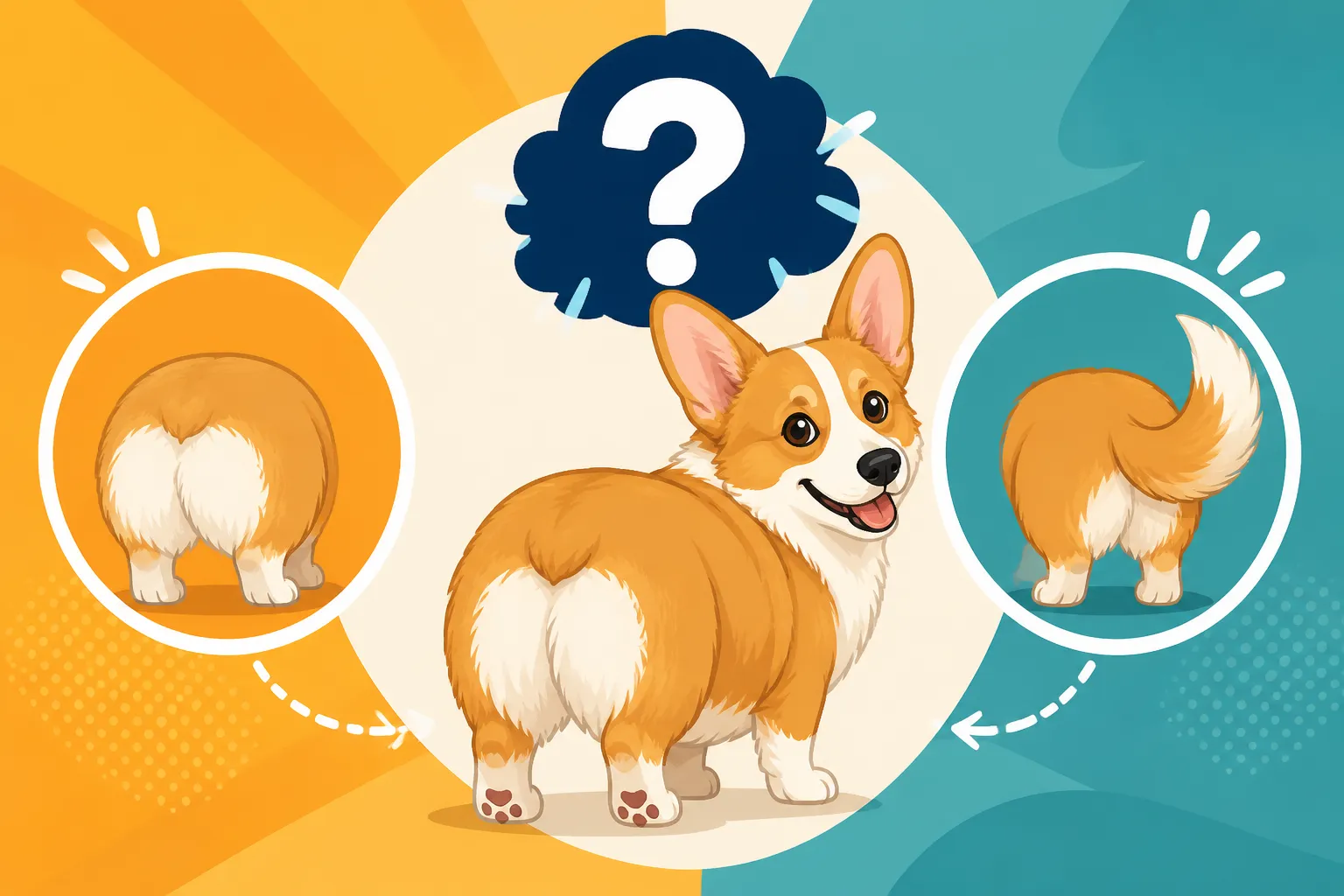
If you're embarking on the wonderful journey of Corgi ownership, or perhaps you've been a proud Corgi parent for years, one question inevitably pops up: what's the deal with their tails? It's a common point of confusion, debate, and sometimes, even a little bit of heartbreak, as people grapple with the historical traditions, modern ethics, and genetic quirks that define the Corgi tail. This comprehensive guide will untangle the mysteries, explain the differences between Pembroke and Cardigan Corgi tails, delve into the reasons behind docking, and explore the fascinating world of natural bobtails, helping you understand this distinctive feature of our beloved low-riders.
The Historical Roots of the Docked Corgi Tail
It's hard to look at a Pembroke Welsh Corgi today and not notice their short, often wiggling stub of a tail. For many, it's just 'how Corgis are.' But this iconic silhouette isn't always natural; it's a result of centuries of tradition and, in many places, historical necessity. Understanding this history helps us appreciate why the "Corgi tail question" is such a big deal for enthusiasts and new owners alike.
Why Working Corgis Had Their Tails Docked
Back in the day, Corgis weren't just cute companions; they were vital working dogs on farms across Wales. Their job was to herd cattle, nipping at their heels to move them along, and then quickly ducking out of the way to avoid a retaliatory kick. Imagine a small dog, only inches off the ground, navigating the powerful hooves of a cow – a long, flowing tail would have been a significant liability. It could easily get stepped on, crushed, or caught in machinery, leading to painful injuries and incapacitating the dog.
Farmers, in an effort to protect their valuable working partners, began a practice known as tail docking. This involved removing part of the tail, usually when the puppies were just a few days old. The idea was to eliminate a potential hazard, ensuring the dogs could perform their duties with greater safety and efficiency. This wasn't about aesthetics; it was a practical decision rooted in the harsh realities of farm life. The working purpose was paramount, and every measure was taken to keep the dogs healthy and able to do their job. This tradition explains Why Pembroke Tails Were Docked Historically and how it became deeply ingrained in the breed's identity.
The Tradition's Persistence Beyond the Farm
As Corgis transitioned from working farm dogs to beloved family pets, the practice of tail docking didn't simply disappear. It had become a deeply established part of the breed standard, particularly for the Pembroke Welsh Corgi. When breed clubs began to formalize standards for conformation shows, the docked tail was often specified or preferred. This meant that dogs with full tails, even if naturally born that way, might be penalized in the show ring, further entrenching the practice.
For generations, many breeders and owners simply assumed that Pembrokes should have docked tails. It was part of their identity, a hallmark of the breed. Even without the danger of cattle hooves, the tradition continued, passed down through breeders and kennel clubs. For many, a Pembroke without a docked tail just didn't look "right." It's a powerful testament to how deeply cultural practices can become tied to a breed's appearance, even when the original reason for the practice has faded into history. This cultural expectation is a big part of why the tail question can feel so loaded for new owners.
The Natural Bobtail: A Genetic Twist
While many Pembroke Welsh Corgis have short tails because they were docked, a fascinating genetic trait exists within the breed: the natural bobtail (NBT). These Corgis are born with tails that are naturally short, ranging from a mere stub to a half-length tail, without any human intervention. It’s a completely different phenomenon than docking and adds another layer to the Corgi tail conversation.
Understanding the Corgi Bobtail Gene
The natural bobtail in Corgis is caused by a dominant gene, specifically a mutation in the T-box transcription factor T gene (C189G). This means that a Corgi only needs to inherit one copy of this gene from either parent to have a natural bobtail. If a Corgi inherits two copies of the gene, it can unfortunately be lethal, often resulting in embryonic death. This is why ethical breeders are very careful when breeding NBT Corgis, ensuring that at least one parent carries a full tail gene, or that if both parents are NBT, they have been genetically tested to understand their specific genotype.
This genetic distinction is crucial. It means that some Corgis are born with short tails, looking exactly like a docked Corgi, but they were never subjected to the procedure. They simply inherited the trait. Genetic testing can confirm whether a Corgi is a natural bobtail (NBT), a carrier of the NBT gene (meaning they have a full tail but can pass the NBT gene on), or clear (full tail, no NBT gene). Understanding this is essential for breeders trying to manage health and conformation, and for owners who might wonder about their Corgi's tail origin. You can read more about The Natural Bobtail Gene in Corgis for a deeper dive.
How a Natural Bobtail Differs from Docking
On the surface, a naturally bobtailed Corgi might look identical to one whose tail has been traditionally docked. Both will have a short, stubby appearance. However, the key difference lies in the process – or lack thereof. Docking is a surgical procedure, typically performed by a veterinarian or experienced breeder when puppies are very young, usually between 3 and 5 days old. It involves physically removing part of the tail.
A natural bobtail, conversely, is entirely genetic. The puppy is simply born that way, with the tail bone naturally shortened. There’s no cutting, no stitches, no healing period involved. For owners, this distinction can be important, especially in regions where tail docking is now illegal or heavily restricted. A naturally bobtailed Corgi is exempt from these regulations, as no procedure was performed. It’s a testament to the diverse genetic makeup within the breed and showcases that the short-tailed appearance isn't always the result of human intervention. Knowing How Long a Natural Bobtail Corgi's Tail Is can also help distinguish.
Health Considerations for NBT Corgis
While the natural bobtail gene gives us those adorable Corgi wiggles without surgery, it does come with a genetic caveat that breeders must be aware of. As mentioned, the gene for natural bobtails is dominant, and inheriting two copies (homozygous dominant) is generally considered embryonic lethal. This means that two NBT Corgis should not be bred together without careful genetic testing and consideration, as there’s a risk of producing puppies that don't survive. Responsible breeders will test their NBT Corgis to ensure they are heterozygous (carrying one NBT gene and one full tail gene) before breeding them to another NBT Corgi.
Beyond the breeding implications, there are generally no significant health concerns associated with being a natural bobtail. An NBT Corgi lives a perfectly normal, healthy life with its naturally abbreviated tail. It’s not prone to back problems or other issues just because its tail is short from birth. However, understanding the genetics is paramount for ethical breeding practices. Anyone considering breeding NBT Corgis should consult with a veterinary geneticist and perform the appropriate DNA tests to avoid potential complications. Concerns about Whether the Corgi Bobtail Gene Causes Problems are valid and addressed through responsible breeding.
Pembroke vs. Cardigan: A Tale of Two Tails (and Breeds!)
One of the biggest sources of confusion for people new to the Corgi world is often the tail. It’s easy to assume all Corgis are the same, but the Pembroke Welsh Corgi and the Cardigan Welsh Corgi are actually two distinct breeds, and their tails are one of their most striking differences. This is where the "Corgi tail question" gets even more interesting!
The Pembroke's Standard, Docked or Otherwise
Historically, and for many years, the Pembroke Welsh Corgi breed standard typically called for a docked tail, or a natural bobtail, giving them that characteristic stub. This tradition, as we discussed, stemmed from their working past where a long tail was seen as a hazard. Even today, in many parts of the world, a short tail is the preferred look for a Pembroke, particularly in conformation shows where certain breed standards are upheld. The Kennel Club (UK) still describes the Pembroke as "tail extremely short, preferably natural bobtail," though undocked Pembrokes are now permitted to be shown.
However, things are changing. With growing ethical concerns about elective cosmetic surgeries on animals and increasing bans on tail docking in various countries and even some US states, more Pembrokes are being seen with their full, natural tails. These tails are typically foxy, medium in length, and carried level with the back or slightly above when alert, often curving gently. They aren't the long, plume-like tails of a Cardigan, but they are certainly more substantial than a docked stub. It’s a beautiful sight to see them wagging freely! Understanding The AKC Pembroke Welsh Corgi Standard provides context for this.
The Cardigan's Proud, Sweeping Tail
Now, let's talk about the Cardigan Welsh Corgi. If you want to know how to spot a Cardigan, just look at the tail – it's their crowning glory! Unlike their Pembroke cousins, Cardigans have always, and I mean always, been characterized by their long, flowing, brush-like tails. The Cardigan breed standard explicitly calls for a long tail, set rather low and carried down normally, but sometimes carried above the topline when moving or excited. It's a key identifier of the breed, a feature that distinguishes them from Pembrokes. There's no docking in the Cardigan world, nor is the natural bobtail gene commonly found in the breed.
This long tail is not just for show; it's thought to have played a role in their balance and agility as they worked cattle in the steeper, more rugged terrain of Cardiganshire. When a Cardigan runs, their tail acts as a counterbalance, helping them make quick turns. It’s a beautiful, expressive tail, often carried proudly, and it contributes significantly to the Cardigan's overall appearance and breed type. This is why you will always see a Cardigan with a full tail, reflecting their ancient origins dating back to The Cardigan's Twelve Hundred BC Origins.
Visual Distinctions and Breed Recognition
The tail is arguably the most obvious visual difference between a Pembroke and a Cardigan Welsh Corgi, especially for the casual observer. While there are other differences – Cardigans are generally a bit larger, heavier boned, and have larger, more rounded ears – the tail is the immediate giveaway. A Corgi with a short or stubby tail is almost certainly a Pembroke (either docked or NBT), while a Corgi with a long, brush-like tail is definitely a Cardigan.
This distinction is recognized by all major kennel clubs worldwide. The breed standards for Pembroke and Cardigan Are Two Different Breeds clearly outline these differences, particularly concerning the tail. For anyone trying to identify which type of Corgi they're looking at, a quick glance at the rear end can usually solve the mystery. It’s a fun fact to share with fellow dog lovers, and a clear example of how different histories and breed development led to two distinct, yet equally charming, Corgi breeds.
The Evolving Legal Landscape of Tail Docking
The conversation around Corgi tails, particularly the practice of docking, has shifted dramatically over the past few decades. What was once a common and accepted practice, deeply woven into the fabric of certain breeds, is now often viewed through a lens of animal welfare and ethical considerations. As a Corgi owner, or prospective owner, it's important to understand this evolving legal and ethical landscape.
Global Variations in Docking Laws
The legality of tail docking varies significantly from country to country, and sometimes even within regions of the same country. In many parts of Europe, including the UK, most Scandinavian countries, Germany, and others, non-therapeutic tail docking (meaning docking for purely cosmetic or traditional reasons) has been completely banned for years. These bans are a direct result of increased animal welfare advocacy, which views docking as an unnecessary surgical procedure that causes pain and removes a vital form of communication and balance for dogs.
In contrast, in countries like the United States, tail docking is still permitted in most areas, though there are ongoing debates and increasing calls for bans. It's generally performed by veterinarians, but sometimes by breeders, within the first few days of a puppy's life. Canada also has provinces where docking is banned. This patchwork of laws means that what is perfectly legal and common in one country might be a criminal offense in another. If you're importing a Corgi or moving internationally, understanding Whether Corgi Tail Docking Is Still Legal Here or wherever you are is absolutely critical to avoid legal trouble and ensure compliance with local animal welfare standards.
The Ethical Debate Around Elective Procedures
Beyond the legalities, there's a significant ethical debate surrounding elective cosmetic surgeries for pets, and tail docking is at the forefront of this discussion. Proponents of docking often cite tradition, breed standards, or the (now largely debunked for pet Corgis) idea of preventing injury. They might argue that when done on very young puppies, the pain is minimal. However, opponents argue that puppies, even newborns, can feel pain, and that docking deprives a dog of a crucial part of its anatomy.
A dog's tail is not just for wagging. It's an important tool for balance, especially for active dogs. More significantly, it's a primary means of communication. Dogs use their tails to signal their mood, intentions, and social status to other dogs and humans. A docked Corgi might struggle to convey subtle cues, potentially leading to misunderstandings with other dogs or making it harder for owners to read their pet's emotional state. The ethical argument centers on the idea that unless there is a clear medical necessity, animals should not undergo surgical procedures for human aesthetic preferences or outdated traditions.
Implications for Breeders and Owners
For Corgi breeders, the changing legal and ethical landscape has significant implications. In countries where docking is banned, breeders must either embrace the natural, full tail for their Pembrokes or rely solely on breeding natural bobtail (NBT) Corgis to achieve the short-tailed look. This requires careful genetic testing and breeding practices. Breeders who continue to dock in areas where it's legal also face increasing scrutiny and judgment from a public more aware of animal welfare issues.
For owners, this means you might increasingly encounter Pembroke Welsh Corgis with full tails, and these dogs are just as much Corgis as their short-tailed counterparts. If you live in an area where docking is prohibited, or if you simply prefer a full-tailed Corgi, you'll have more options than ever before. It also places a responsibility on prospective owners to research local laws and choose a breeder who operates ethically and transparently, respecting both animal welfare and legal requirements. Ultimately, it’s about making informed choices that prioritize the dog's well-being.
Impact on Show Rings and Breeding Practices
The world of dog shows and responsible breeding is often deeply tied to breed standards. For Corgis, especially Pembrokes, the tail has long been a point of contention and tradition. As views on tail docking evolve, so too do the rules and practices within these communities, creating new challenges and opportunities for breeders and exhibitors.
Showing an Undocked Pembroke Welsh Corgi
Historically, if you wanted to show a Pembroke Welsh Corgi, a docked tail was almost a prerequisite. The breed standard, as interpreted and enforced by many kennel clubs, favored the short or non-existent tail. This meant that a perfectly healthy, well-conformed Pembroke with a natural, full tail might be penalized or even disqualified in the show ring. This created a dilemma for breeders and owners who either lived in regions where docking was illegal or simply preferred not to dock.
However, recognizing the global shift in animal welfare ethics and the varying legal landscapes, many major kennel clubs have started to adapt their standards. For example, in the UK, while the breed standard still mentions "tail extremely short, preferably natural bobtail," undocked Pembrokes are now fully permitted to be shown and can compete on equal footing, provided their tail is carried in an acceptable manner (i.e., not over the back in a ring-like fashion, which would be considered a fault). Similar changes are being considered or implemented in other countries. This means that an undocked Pembroke now has a much better chance of success in the show ring, reflecting a more inclusive and ethically conscious approach to conformation. For specific guidelines, it's always best to check with the specific kennel club in your region about Whether an Undocked Pembroke Can Be Shown.
Breeding Decisions and Tail Genetics
For Corgi breeders, the tail question is more complex than just appearance; it's about genetics, health, and ethical responsibility. When aiming for short tails without docking, breeders have two options: rely on natural bobtails (NBT) or breed full-tailed dogs in areas where docking is legal. If working with NBTs, genetic testing is absolutely paramount. As discussed, breeding two NBT dogs that both carry the single NBT gene (heterozygous) can result in the unfortunate outcome of lethal homozygous offspring. Therefore, breeders must test to identify NBT carriers and plan pairings carefully, often breeding an NBT dog to a full-tailed dog to ensure healthy litters.
For breeders in regions where docking is prohibited, the decision is simpler: all puppies will have full tails unless they happen to be naturally bobtailed. This shifts the focus from achieving a short tail to ensuring the natural tail is well-set and carried correctly according to the breed standard, which usually means a foxy tail carried level with the back, not curled tightly over it. This requires a deeper understanding of tail conformation and how it impacts the dog's overall appearance and movement. Responsible breeders consider all these factors, always prioritizing the health and welfare of their dogs over mere aesthetics. The aim is to produce healthy, well-adjusted Corgis, regardless of their tail length. A crucial part of this responsibility involves What a Corgi Breeder Should Be Testing For beyond just tail genes.
The Role of Breed Clubs and Standards
Breed clubs play a pivotal role in guiding and preserving the integrity of dog breeds. For Corgis, these clubs, such as the Pembroke Welsh Corgi Club of America or the Cardigan Welsh Corgi Club of America, maintain and interpret the official breed standards. These standards are the blueprints for what an ideal Corgi should look and act like, including details about their tail. As societal views on animal welfare change, breed clubs are often at the forefront of revising these standards to reflect modern ethical considerations while still honoring the breed's heritage.
These revisions can be contentious, as tradition is often deeply cherished. However, the clubs also recognize the importance of ensuring the breed remains healthy, popular, and compliant with changing laws. They provide educational resources for breeders and owners, host conformation shows, and advocate for the breed's best interests. Their role is to balance historical breed type with contemporary animal welfare science, ensuring that Corgis continue to thrive for generations to come, whether they have a docked, NBT, or a full, natural tail.
Living with a Tail: Practicalities and Preferences
Whether you have a Pembroke with a lovely full tail or a Cardigan whose tail is their pride and joy, living with a long-tailed Corgi brings its own set of practical considerations. While the lack of a tail might simplify some aspects, a full tail is a beautiful, expressive feature that owners learn to appreciate and manage.
The Benefits of a Full Corgi Tail
Beyond the ethical considerations of not docking, there are genuine benefits to a Corgi having its full, natural tail. Firstly, communication. A Corgi's tail is a vital expressive tool. The way it wags, tucks, or carries can tell you so much about their mood – happiness, nervousness, fear, excitement, or even curiosity. This nuanced communication helps in understanding your dog and can prevent misunderstandings with other dogs who rely on tail signals for social interaction. A docked Corgi often relies more on whole-body wiggles, which can be endearing, but a full tail offers more precise signaling.
Secondly, balance and agility. While Pembrokes were docked to prevent injury from cattle, for a pet Corgi, a tail provides important counterbalance, especially during quick turns, jumps (which we try to discourage, of course, to protect their backs!), and navigating uneven terrain. This can contribute to their overall coordination and potentially reduce strain on their short legs and long back. Thirdly, it's simply natural. Many owners find the sight of a Corgi's flowing tail beautiful and enjoy the natural form of the breed as it was intended. It adds to their charm and character, making them truly unique.
Grooming and Care for a Tailed Corgi
A full Corgi tail, particularly the brush-like tail of a Cardigan or the foxy tail of an undocked Pembroke, requires a bit more grooming attention than a stub. Corgis have double coats, and their tails are often quite feathered, especially on a Cardigan. This means the tail can easily pick up burrs, twigs, mud, and other debris during walks. It can also get matted if not brushed regularly.
To keep a full Corgi tail looking its best and free from tangles, regular brushing is key. A good slicker brush or a metal comb (like those found at retailers such as Chewy) will help get through the thick hair and prevent mats. Pay special attention to the underside and the base of the tail, where tangles are most likely to form. During shedding season, the tail will also drop a fair amount of hair, so more frequent brushing will be necessary to manage the fluff. Occasionally, the feathering on the tail might need a light trim for hygiene, especially if it's dragging in the dirt or getting soiled, but generally, minimal trimming is required for a natural, healthy look. Always check after outdoor adventures to remove any trapped debris before it turns into a painful mat.
Adapting Your Home for a Long-Tailed Friend
While a stubby tail doesn't really pose a hazard around the house, a long, wagging Corgi tail certainly can! Imagine that excited, full-body wiggle hitting coffee table legs, precious ornaments, or even a glass of water on a low table. Corgi tails, especially Cardigan tails, are surprisingly strong. This might mean a bit of "Corgi-proofing" your home. Consider moving fragile items from low shelves or tables where a joyful tail-wag could send them flying.
It’s also important to be mindful of doorways and furniture. A Corgi’s low stature means their tail can sometimes get caught if they dash through a closing door or try to squeeze under tight furniture. This isn't usually a major issue, but it's something to be aware of to prevent accidental bumps or scrapes. Overall, adapting your home for a long-tailed Corgi is more about awareness and minor adjustments to prevent mishaps than any major structural changes. Just remember, a happy Corgi means a wagging tail, and that tail is going to connect with things!
Dispelling Myths and Embracing Individuality
The "Corgi tail question" often brings with it a host of assumptions and myths. It's important for Corgi lovers to approach the topic with accurate information, understand that appearance doesn't define a Corgi's spirit, and celebrate the individuality of each beloved dog.
Addressing Common Misconceptions About Corgi Tails
One of the most persistent myths is that all Pembroke Welsh Corgis are naturally born with short tails, or that a full tail is a sign of a mixed breed. As we've learned, this isn't true. While some Pembrokes are natural bobtails (NBTs), many are born with full, foxy tails that were traditionally docked. A full-tailed Pembroke is just as purebred as a docked one. Another misconception is that a full tail is somehow "dirtier" or more prone to issues than a docked one. While a full tail does require more regular brushing to prevent mats and collect debris, it's not inherently unhygienic. With proper grooming, a full tail is perfectly clean and healthy.
Some also believe that a full tail means a Corgi can't be as good at herding or activities, or that it somehow diminishes their Corgi "essence." This is simply not the case. A Corgi's drive, intelligence, and athleticism are inherent to the breed, not dependent on tail length. While the historical reason for docking was to prevent injury during herding, modern pet Corgis rarely face such dangers. Many undocked Pembrokes and Cardigans excel in various dog sports and activities. Finally, the idea that a docked tail is more aesthetically pleasing is purely subjective and often rooted in tradition rather than any objective standard of beauty. In fact, many people now find the natural, expressive tail incredibly charming.
The Corgi's Personality Remains Constant
Regardless of whether a Corgi has a docked stub, a natural bobtail, or a magnificent flowing tail, one thing remains constant: their incredible personality. Corgis are known for their big-dog-in-a-small-package attitude, their intelligence, their "sass," and their endless capacity for love and mischief. These traits are deeply ingrained in the breed's temperament, developed over centuries as loyal, alert, and hard-working companions. A Corgi's confidence, their joyful "zoomies," their vocalizations, and their determined spirit are not influenced by the length of their tail.
Whether they're herding you around the kitchen, barking at the mailman, or snuggling up for a nap on the sofa, a Corgi's core identity shines through. Their tail might be part of their visual presentation, but it doesn't dictate their heart or their spirit. As owners, we fall in love with their entire being, not just a single physical characteristic. This understanding helps us move past superficial debates and appreciate the unique, vibrant personality that defines every single Corgi. You can learn more about The Cattle-Driving Nip a Corgi Still Has and other personality traits that make them so special.
Celebrating Each Corgi for Who They Are
Ultimately, the "Corgi tail question" is an opportunity to celebrate the diversity and individuality within the breed. Whether you encounter a Pembroke with a perfectly docked stub, a natural bobtail, or a long, foxy tail, or a Cardigan with its impressive brush tail, each Corgi is a testament to their rich history and their enduring appeal. The most important thing is the health, happiness, and well-being of the dog. A Corgi with a well-cared-for natural tail is just as valid, beautiful, and loved as one with a docked tail.
As ethical considerations continue to shape our relationship with our pets, embracing the natural form of our dogs becomes increasingly important. For those considering a Corgi, focusing on a reputable breeder who prioritizes health testing, sound temperament, and responsible practices – irrespective of their stance on tail docking (within legal limits) – is paramount. After all, a Corgi’s charm lies in its spirited character, its clever mind, and that endearing low-rider physique, not just the length of its tail. We love them for their whole selves, and that's the greatest truth of all. If you're looking for quality supplies for your Corgi, whether they have a short or long tail, a store like Chewy offers everything from food to grooming tools designed to keep them happy and healthy.
Disclaimer
This article is for general informational purposes only and does not constitute professional advice. Laws, prices and regulations vary by location and change over time. Consult a qualified professional for guidance on your specific situation.