Whether Corgi Tail Docking Is Still Legal Here
It’s a common sight when you meet a Corgi: that iconic little wiggle, often accompanied by a short, stubby tail, or sometimes no visible tail at all. For many of us, this distinct look is just part of what makes a Corgi a Corgi, but it also sparks a big question: are those tails naturally short, or is there more to the story? More importantly, is the practice of tail docking still legal, and what does it mean for Corgi owners today? This comprehensive guide will unravel the history, legality, and practicalities surrounding Corgi tail docking, helping you understand this often-debated aspect of the breed.
The Historical Context of Corgi Tail Docking
When you look back at the history of the Pembroke Welsh Corgi, their short tails weren't just a matter of aesthetics; they were deeply rooted in their working heritage. These stout little dogs were bred to herd cattle, often nipping at the heels of much larger animals to direct them.
Why the Tradition Started
Imagine a Corgi, low to the ground, darting around the hooves of a cow or sheep. A long, flowing tail in such an environment could easily become a liability. It could be stepped on, caught in farm machinery, or even grabbed by an angry bull, leading to severe injury for the dog. Historically, docking the tail was seen as a preventative measure, protecting the dog from painful accidents and ensuring they could perform their duties without hindrance. It was a practical decision for working dogs, aimed at safeguarding their welfare in a very specific, demanding role.
Beyond the farm, there was also a taxation angle. In many historical contexts, working dogs were exempt from certain taxes that applied to "luxury" dogs. A docked tail served as a visible mark of a working dog, signaling its purpose and allowing owners to avoid these levies. This further cemented the practice within the breed, turning it from a simple necessity into a recognizable characteristic.
The Rise of Ethical Concerns
Over time, as fewer Corgis worked on farms and more became beloved family companions, the reasons for tail docking began to diminish for many. Yet, the tradition persisted, often simply because "that's how Corgis look." However, as veterinary science advanced and societal views on animal welfare evolved, the practice came under increasing scrutiny.
Concerns grew about the pain inflicted on puppies during the docking procedure, which is typically performed without anesthesia on very young dogs. While proponents argued that puppies had an underdeveloped nervous system and felt less pain, animal welfare advocates countered that any unnecessary surgical alteration was unethical. The debate intensified, leading to a broader conversation about the rights of animals and the ethics of altering their natural state for non-medical reasons. This ethical shift laid the groundwork for the legal changes we see today, pushing many jurisdictions to reconsider or outright ban the practice of routine tail docking. It highlighted the difference between what was historically acceptable and what is now considered humane in modern pet ownership. Many people started to ask, if the dog isn't herding cattle, why put them through this procedure?
The Legal Landscape: Is Corgi Tail Docking Still Permitted?
The question of whether Corgi tail docking is still legal isn't as simple as a yes or no answer. It's a complex issue with varying regulations depending on where you live. What's accepted in one country or even one state might be strictly prohibited just a border away.
Global Perspectives on a Controversial Practice
Globally, the legal status of tail docking has undergone significant changes over the past few decades. Many countries, particularly across Europe, have completely banned the practice for non-medical reasons. Nations like the United Kingdom, Sweden, Norway, and Australia have stringent laws in place, viewing routine tail docking as an unnecessary mutilation. In these regions, a Corgi with a docked tail would likely only be seen if it was imported from a country where the practice is still permitted, or if it had a natural bobtail, which is an entirely different genetic trait we'll discuss later. These bans reflect a strong emphasis on animal welfare, prioritizing the dog's natural state and avoiding procedures deemed purely cosmetic or traditional.
Conversely, in some other parts of the world, tail docking for certain breeds, including Corgis, is still common and legal, often justified by tradition or perceived health benefits in working roles that are now largely obsolete. This creates a patchwork of regulations that can be incredibly confusing for breeders and owners alike, especially if they are looking to import or export dogs.
Understanding Local Regulations
Within larger countries, like the United States and Canada, the legal situation is even more nuanced. There isn't a blanket federal law covering tail docking; instead, individual states, provinces, or even specific veterinary boards set their own rules. This means that while some states might have specific legislation against docking, others might have none, leaving it up to veterinary discretion or breed club standards.
For example, some veterinary medical associations strongly oppose elective tail docking and may even have policies discouraging their members from performing it. In areas where it's not explicitly banned, it might still be regulated, perhaps requiring that it only be performed by a licensed veterinarian within a specific window of a puppy's life (usually within the first few days), and sometimes with anesthesia, although this is less common for such young puppies.
It's absolutely crucial for anyone considering a Corgi puppy, or for a breeder, to thoroughly research the specific laws and veterinary guidelines in their local area. Simply assuming what's "normal" can lead to legal issues or, more importantly, contribute to a practice that is considered unethical in your community. A reputable breeder will always be transparent about their practices and the legality of docking in their region. They understand that transparency builds trust, and they wouldn't want to mislead potential owners.
The Role of Veterinary Professionals
The role of veterinarians in tail docking has also become a focal point. Many veterinarians, guided by their professional ethics and increasing scientific evidence of pain in puppies, choose not to perform elective tail docking. They might view it as an unnecessary surgical procedure that goes against their oath to protect animal welfare.
However, in areas where it is still legal, some veterinarians might perform the procedure, often citing client demand or adherence to breed standards set by kennel clubs. This creates an ethical dilemma for practitioners, balancing client expectations with evolving welfare standards. It’s important to note that if a tail docking is deemed medically necessary (e.g., severe injury, tumor), it would be performed regardless of general anti-docking laws, as the dog's health takes precedence. This distinction between elective cosmetic procedures and therapeutic medical interventions is vital in understanding the veterinary perspective.
Breed clubs and associations also play a significant role. While many kennel clubs recognize both docked and undocked Corgis, some traditional standards still favor the docked look for the Pembroke Welsh Corgi. This can influence breeders' decisions, particularly those involved in conformation showing. However, the tide is turning, with many shows now accommodating naturally tailed Corgis, aligning with broader ethical shifts.
| Aspect | Traditionally Docked Corgi | Naturally Tailed Corgi |
|---|---|---|
| Historical Purpose | Protection from injury during herding, tax exemption. | Not applicable; modern shift from working roles. |
| Current Legality | Restricted or banned in many countries; varies by region. | Legal everywhere; natural state. |
| Appearance | Short stub or no tail; traditional "Corgi wiggle." | Full, fox-like tail carried low; expressive. |
| Grooming Needs | Minimal tail grooming. | Requires regular brushing to prevent mats; can get dirty. |
| Health Risks | Potential for phantom pain, infection if not done properly. | No direct tail-related health risks from its presence. |
| Identification | Can be harder to read subtle communication cues from the tail. | Full range of tail-wagging communication. |
| Breed Standard | Still accepted in some standards, but undocked gaining acceptance. | Increasingly accepted, often preferred in welfare-conscious regions. |
Living with a Naturally Tailed Corgi
With the increasing restrictions on tail docking, more Corgis are sporting their natural tails. For owners, this often means embracing a slightly different look and understanding some practical considerations that come with a full, fluffy Corgi tail.
Appearance and Breed Standards
The natural tail of a Pembroke Welsh Corgi is often described as fox-like. It’s typically long, well-furnished with fur, and carried low unless the dog is excited or alert, at which point it might be carried up over the back. This gives the dog a slightly different silhouette than the commonly recognized docked Corgi.
For those interested in showing their Corgi, the question of whether an undocked tail is accepted is a common one. Historically, the American Kennel Club (AKC) standard for the Pembroke Welsh Corgi has often favored the docked tail or natural bobtail. However, as global attitudes shift and docking becomes illegal in more places, major kennel clubs are adapting. The AKC, for instance, recognizes both naturally tailed and docked Pembrokes in the show ring, emphasizing that judging should not discriminate based on tail length. This means that a Corgi with a beautiful, natural tail can absolutely compete. Cardigan Welsh Corgis, it’s worth noting, have always had long tails as part of their breed standard, a key differentiator from their Pembroke cousins, as detailed in Cardigan Tails Against Pembroke Tails. This acceptance is a testament to the changing understanding of breed characteristics and the growing importance of welfare over tradition.
Practical Considerations for Owners
Living with a naturally tailed Corgi doesn't usually pose major challenges, but there are a few things to keep in mind. First and foremost is grooming. A Corgi's natural tail is covered in that wonderfully thick double coat. This means it can collect burrs, dirt, and debris, especially if your Corgi loves to explore tall grass or muddy puddles. Regular brushing, perhaps with a good quality undercoat rake, is essential to prevent mats and keep the tail clean and healthy. You might find some excellent grooming tools on Chewy that are specifically designed for thick-coated breeds. Neglecting the tail can lead to uncomfortable tangles and skin issues.
Another aspect is hygiene. A full tail can sometimes get a bit messy, particularly if your Corgi has soft stools or isn't meticulous about self-cleaning. A quick wipe-down might be necessary after potty breaks, especially for males or longer-coated individuals. This is similar to managing the 'trousers' or 'skirt' of fur around their hindquarters, which also require attention.
While the historical concern about tail injury from herding is largely irrelevant for most pet Corgis today, it's still worth being mindful. A dog's tail can still get caught in doors, run over by chairs, or accidentally stepped on by humans if not watched. However, these are minor risks compared to the old working environment and are generally manageable with careful household habits. Many owners find that their naturally tailed Corgis are simply more expressive, using their beautiful tails to communicate everything from joy to mild annoyance.
Health and Behavioral Aspects
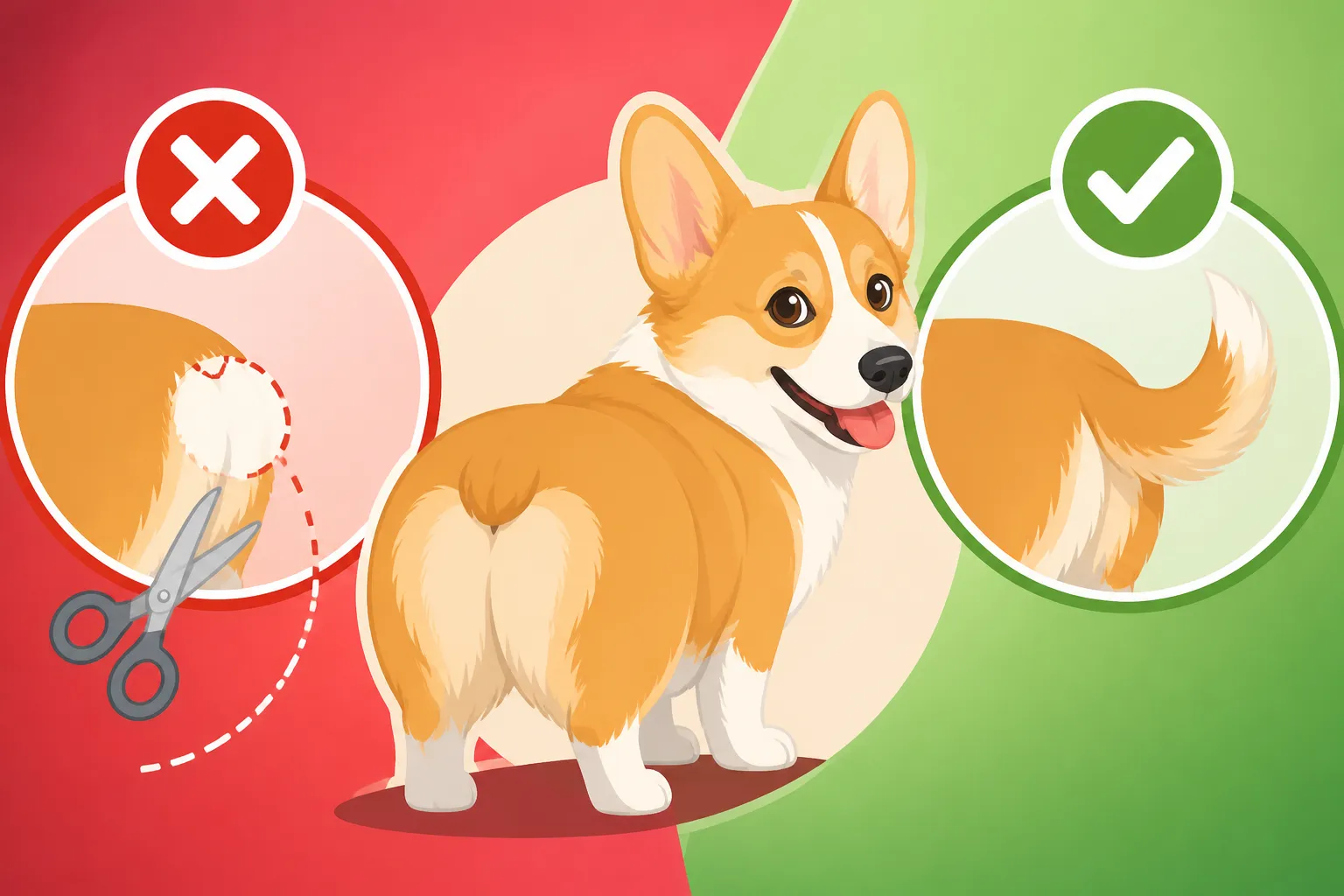
From a health perspective, a naturally tailed Corgi is simply a Corgi as nature intended. There are no inherent health disadvantages to having a full tail. In fact, docking itself carries potential risks, such as infection, hemorrhage, and even phantom limb pain in some dogs. By leaving the tail intact, these risks are completely avoided.
Behaviorally, the tail is a crucial tool for canine communication. Dogs use their tails to signal their mood, intentions, and social status to other dogs and to us. A wagging tail isn't always a sign of happiness; the height, speed, and direction of the wag can convey a wealth of information. With a docked tail, some of these subtle nuances can be lost, making it harder for other dogs to "read" a Corgi's signals, and sometimes harder for owners too. An undocked Corgi has a full spectrum of tail movements, from a slight twitch to a full-body helicopter wag, allowing for clearer communication with the world around them. This improved ability to communicate can contribute to better social interactions with other canines, potentially reducing misunderstandings in dog parks or social settings.
It’s important to distinguish between a naturally long tail and a natural bobtail, as discussed in The Natural Bobtail Gene in Corgis. Some Corgis are born with genetically short tails due to a specific gene mutation. This is not docking, but a natural variation. For those with a true natural bobtail, the practical considerations of a long, flowing tail don't apply, but the ethical debate around artificial docking is still relevant for the breed as a whole. Knowing Whether Pembroke Puppies Are Born With Tails can help distinguish between these two scenarios.
Making Responsible Decisions for Your Corgi
The decision around Corgi tail docking, whether as a breeder or a prospective owner, boils down to a commitment to ethical practice and informed choices. It’s about more than just aesthetics; it's about the well-being of the dog.
Finding Reputable Breeders
If you're looking for a Corgi puppy, finding a reputable breeder is paramount, especially concerning tail docking. A responsible breeder will be transparent about their practices and the local laws regarding tail docking. They won't just dock tails out of habit or tradition if it's illegal or strongly advised against in their region. Instead, they will adhere to the highest welfare standards.
When you speak with breeders, ask direct questions about their tail docking policy.
- Do they dock tails?
- If so, why?
- Is it legally permitted in their area?
- Do they offer puppies with natural tails?
A good breeder will be open to discussing these points and should prioritize the health and welfare of their puppies above all else. They will also be knowledgeable about The DNA Tests a Corgi Breeder Should Run and other health screenings, ensuring they're producing the healthiest puppies possible, regardless of tail length. Don't be shy about asking to see the parent dogs' tails, or previous litter photos to get a sense of what to expect. This diligence helps you avoid supporting practices that might be illegal or unethical, and ensures you're bringing home a healthy, well-socialized puppy. Many reputable breeders will also be a great resource for essential supplies, recommending things you can find at pet stores or online at Chewy.
Navigating Breeding Ethics and Regulations
For Corgi breeders, navigating the evolving ethical landscape around tail docking requires careful consideration. It’s no longer sufficient to simply follow tradition without questioning its purpose. Breed clubs and veterinary organizations are increasingly advocating for naturally tailed Corgis, aligning with broader animal welfare movements. Even if docking is technically legal in a specific area, breeders are encouraged to weigh the ethical implications and consider whether the procedure is truly necessary for the pet Corgi.
The shift towards accepting and even celebrating the natural Corgi tail also opens up opportunities for breeders to educate the public. By offering naturally tailed puppies, breeders can help reshape public perception of what a Corgi "should" look like, moving away from a purely cosmetic standard towards one that prioritizes natural form and function. This also applies to showing, where Whether an Undocked Pembroke Can Be Shown is now a relevant question with positive answers in many jurisdictions.
Ultimately, the choice to dock a Corgi's tail is becoming less about personal preference and more about legal compliance and ethical responsibility. As more regions ban the practice, the naturally tailed Corgi is becoming the norm, reflecting a positive step forward for canine welfare. Embrace that beautiful, expressive tail!
Disclaimer
This article is for general informational purposes only and does not constitute professional advice. Laws, prices and regulations vary by location and change over time. Consult a qualified professional for guidance on your specific situation.