What Happened to the Corgi Dookie
The bond between a Corgi and its human is truly something special, and for many of us, the image of a spirited little dog with a Queen comes to mind. But before the famous Susan, there was Dookie, the original Corgi who first trotted into the British Royal household and captured hearts. Many folks wonder about the specific story of this foundational royal Corgi – what was he like, and what eventually happened to him? This guide will dive deep into Dookie's unique place in history, his significance in establishing the Corgi's royal legacy, and how his presence paved the way for decades of Corgi companionship for the British monarchy, helping us understand the true origins of this beloved royal phenomenon.
The Royal Family's First Foray into Corgi Ownership
It’s easy to think of Queen Elizabeth II and her long line of Corgis, stretching back for generations, as an almost ancient tradition. But every tradition has a beginning, a moment when something new and wonderful enters a family's life. For the British Royal Family, that moment came in the mid-1930s, not with a carefully planned breeding program, but with a simple, adorable gift. This little dog, Dookie, didn't just become a pet; he became the spark that ignited a lifelong passion for Corgis within the monarchy, forever changing the breed's public image.
A Gift for the Young Princesses
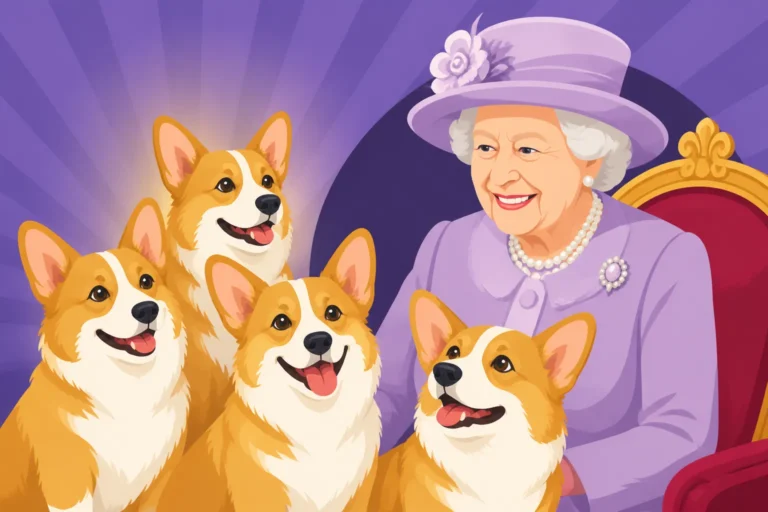
Imagine a time when Corgis weren't widely recognized beyond their working roots in Wales. They certainly weren't common fixtures in grand palaces. That changed when King George VI (then Duke of York) decided to bring a little joy into his daughters' lives. In 1933, he acquired a Pembroke Welsh Corgi puppy, whom they named Dookie. This wasn't just any dog; Dookie was one of the very first Corgis to be officially registered with the Kennel Club in Britain, making him a pioneer in his own right. For Princess Elizabeth and her younger sister Princess Margaret, Dookie was an immediate source of delight and companionship. He was a playful, energetic pup, full of the cheeky charm Corgi owners know and love. This decision, seemingly small at the time, was truly monumental. It established the Corgi as a viable, lovable companion animal within the most prominent family in the world, setting the stage for future generations of devoted Corgi fans. This initial foray into Corgi ownership would forever link the breed with royalty, a connection that endures to this day. It’s a lovely thought to consider that the very first royal Corgi was simply a cherished family pet, loved for his own personality rather than any future legacy. You can read more about this initial connection in Who Gave the Royal Family Its First Corgi.
Dookie's Early Royal Life and Personality
Dookie wasn't just a quiet background presence; he quickly became a lively and beloved member of the royal household. Anecdotes from that era paint a picture of a clever, sometimes mischievous, dog who brought immense joy to the young princesses. He reportedly loved to chase balls across the palace lawns and was always ready for an adventure. He was known to enjoy having his picture taken, often posing with a regal air that seemed almost innate. His vibrant personality was a delightful contrast to the formal surroundings, bringing a touch of playful chaos and warmth to royal life. The young princesses adored him, and he was often featured in official photographs, quickly becoming a public favorite.
The novelty of a Corgi in the royal household quickly garnered attention from the press and the public. People were captivated by this endearing, low-slung dog with his intelligent eyes and expressive face. Dookie's visibility helped introduce the breed to a much wider audience, sparking curiosity and admiration that would only grow over the coming decades. He wasn't just a pet; he was an ambassador, showcasing the Corgi's charming disposition and making many people consider bringing one of these delightful dogs into their own homes. His impact on the royal family's daily routine, and indeed on the public's perception of the breed, was significant, solidifying the Corgi's place in the hearts of many.
The Arrival of Jane and the Expanding Royal Pack
While Dookie was the groundbreaking first Corgi, his story wasn't isolated. The royal family's affection for the breed quickly blossomed, leading to the introduction of more Corgis and the beginning of what would become a legendary lineage. Dookie's role was crucial as the initial catalyst, but the stage was set for an even deeper and more extensive connection with the breed through subsequent additions to the royal pack.
Dookie's Companion and the First Royal Corgi Breeding
It wasn't long before Dookie gained a companion in the form of another Pembroke Welsh Corgi named Jane. Jane's arrival meant that Dookie was no longer the sole Corgi in the palace, and her presence marked an important step towards establishing a more permanent Corgi presence. With both Dookie and Jane in residence, the possibility of breeding arose, and indeed, Jane eventually had puppies. These early litters were a source of great excitement and further endeared the breed to the royal family. While Dookie himself wasn't the direct ancestor of Queen Elizabeth II's most famous Corgi, Susan, these early breedings with Jane were instrumental in normalizing Corgi ownership within the royal household and showcasing the joy that a whole family of Corgis could bring.
These first royal Corgi puppies, descendants of Jane, further cemented the family's love for the breed, creating a lively, bustling atmosphere. The joy and companionship they brought were immeasurable, laying the groundwork for the generations of Corgis that would follow. The family's experience with Dookie and Jane, and their offspring, directly influenced the decision to continue bringing Corgis into their lives. It was an organic progression from one beloved pet to a small, thriving pack. This expansion made it clear that Corgis weren't just a passing fancy but a true passion, setting the stage for the even deeper connection that would develop with Queen Elizabeth II's own dogs.
The Transition to Susan and the End of Dookie's Direct Line
So, what exactly happened to Dookie? He simply lived out his life as a cherished and much-loved pet within the royal household. Unlike many working Corgis whose stories might be tied to specific tasks or events, Dookie's role was purely that of a companion, and a highly effective one at that. He wasn't involved in the extensive breeding program that Queen Elizabeth II would later establish through her Corgi, Susan. Instead, Dookie's significance lies in his role as the first Corgi to capture the attention and affection of the future monarch. He introduced the breed, its charming temperament, and its delightful quirks to a young Princess Elizabeth, setting the stage for her lifelong devotion.
Dookie's direct genetic line, as far as the famous royal Corgis are concerned, eventually faded into the background as new Corgis were introduced. The most celebrated royal Corgi lineage began with Susan, a gift to Princess Elizabeth for her eighteenth birthday in 1944. Susan became the foundation dam for virtually all of Queen Elizabeth II's subsequent Corgis, spanning fourteen generations. While Dookie didn't pass on his genes to this famous line, his impact was immeasurable: he introduced the breed to the family and helped cultivate a royal love affair that would endure for decades. He lived a good, long Corgi life filled with royal affection, enjoying the comforts of palace life and being an adored pet. His "end" was simply that of any beloved family dog, living out his natural years surrounded by those who loved him. You can learn more about the Corgi who truly started the extensive royal breeding program in Susan and the Corgi Line That Followed.
Dookie's Enduring Legacy and the Royal Corgi Phenomenon
Dookie's initial entry into the royal household wasn't just a momentary event; it was the genesis of a cultural phenomenon. His presence, followed by Jane's, and then the pivotal Susan, indelibly linked the Corgi breed with the British monarchy in the public imagination. This connection went far beyond simple pet ownership, transforming the Corgi into an iconic symbol and boosting its popularity worldwide.
The Public's Fascination with Royal Corgis
From the moment Dookie appeared in photographs with the young princesses, the public was captivated. There was something undeniably charming about these small, sturdy dogs navigating the grandeur of royal life. This fascination only grew stronger with each successive Corgi, especially as Queen Elizabeth II took the throne and her love for the breed became legendary. The media eagerly reported on the royal Corgis, sharing anecdotes, photographs, and even news of new litters. This constant visibility transformed the Corgi from a relatively niche herding dog into a household name globally. People saw the genuine affection the Queen had for her dogs, and it made Corgis seem more accessible, more desirable.
The "royal Corgi" became a brand in itself, influencing countless individuals to seek out the breed for their own families. This phenomenon led to an increase in Corgi ownership and demand, cementing their place as one of the most beloved dog breeds. The Corgi's public profile soared, riding on the coattails of royal approval. Even today, the image of a Corgi is instantly associated with the British monarchy, a testament to the powerful impact Dookie, and then Susan, had on the breed's global recognition. The widespread appeal of the royal Corgis is explored further in How Corgi Popularity Changed After The Crown and The Corgi in the Royal Household.
Distinguishing Dookie's Role from Susan's Legacy
It's important to understand the distinct, yet intertwined, roles of Dookie and Susan in the royal Corgi narrative. Dookie was the trailblazer, the one who first introduced the breed to the royal family and, by extension, to a captivated public. He was the initial spark that ignited the long-standing affection. Without Dookie, it’s possible the Corgi might never have found its way into the royal hearts in the same way. He opened the door, so to speak, to the breed's unique charm.
However, Susan's legacy is where the direct, multi-generational royal breeding program truly began. She was gifted to Princess Elizabeth on her eighteenth birthday, and from her, a continuous line of royal Corgis descended. Queen Elizabeth II personally oversaw many generations of Corgis from Susan's offspring, choosing pairings and caring for the puppies. So, while Dookie was the first beloved Corgi in the family, Susan became the matriarch of the Queen's personal Corgi dynasty. Dookie’s story is about discovery and initial enchantment, while Susan’s is about the enduring passion and dedicated stewardship that followed. This distinction is crucial for understanding the full history of the royal Corgis, highlighting that Dookie's ultimate fate was simply to be a wonderfully loved, trend-setting pet. The story of Susan’s arrival is recounted in Which Corgi the Queen Got for Her Eighteenth Birthday.
The Lifespan of a Royal Companion
Understanding what happened to Dookie also means appreciating the kind of life he led. As a royal pet, Dookie was undoubtedly cared for with the utmost attention and affection. His journey, from a relatively unknown farm dog breed to a palace resident, speaks volumes about the quality of life he would have experienced.
A Corgi's Life in the Palace
For Dookie, life in the palace would have been quite different from his working ancestors who spent their days What a Welsh Corgi Did on a Farm All Day. He wouldn't have been herding cattle or guarding property. Instead, Dookie enjoyed a pampered existence, surrounded by doting handlers and the affection of the royal family, particularly the young princesses. He would have received the best nutrition, likely a carefully selected diet that could be found at a well-stocked pet supply store like Chewy, ensuring he stayed in peak condition. His days would have been filled with play, walks in expansive gardens, and the constant companionship of his human family.
The typical lifespan for a Corgi, much like other breeds, generally ranges from The Twelve to Fifteen Year Corgi Lifespan. Given the exceptional care, veterinary attention, and nutrient-rich diet Dookie would have received, it's highly probable he lived a full and healthy life, enjoying his golden years within the comfortable confines of the royal household. This level of care is a stark contrast to the historical working lives of Corgis, who were once crucial to drovers, as discussed in Whether a Corgi Was Ever a Drover's Dog. Dookie was not just a pet; he was a symbol of comfort and joy in a world that, even for royals, often had its formalities and pressures.
Remembering Dookie's Place in History
Dookie's story isn't one of a dramatic exit or a tragic end. Instead, it’s the quiet tale of a beloved dog who lived a full life and, in doing so, changed the course of Corgi history. He was the very first Corgi to step into the royal spotlight, capturing the hearts of a future queen and millions around the world. His presence introduced the breed's distinct personality and charm to an audience that might never have encountered a Corgi otherwise. The popularization of the Corgi breed, both in Britain and globally, especially after The First Corgis Imported to America, owes a significant debt to Dookie.
His enduring legacy is not just about starting a royal trend, but about reminding us that sometimes, the most profound impacts come from simple, pure connections between humans and animals. Dookie was the catalyst for decades of royal Corgi companionship, a testament to the breed's undeniable appeal and the deep bond they can form with their families. His story helps us appreciate the deeper history of the Corgi and its journey from a Welsh farm dog – whose name literally means "dwarf dog" in Welsh, as explored in What Corgi Means in Welsh – to a beloved fixture in palaces and homes worldwide. Dookie’s "what happened" is simply that he was loved, he lived, and he left an unforgettable paw print on history.
| Royal Corgi | Role in Royal Family | Significance | Key Period |
|---|---|---|---|
| Dookie | First Corgi for the royal family | Introduced the Corgi breed to the future Queen and the public. | Mid-1930s |
| Jane | Dookie's companion | Contributed to the first Corgi litters within the royal household. | Late 1930s-early 1940s |
| Susan | Gift to Princess Elizabeth at 18 | Matriarch of Queen Elizabeth II's extensive Corgi breeding program. | 1944 onwards |
Disclaimer
This article is for general informational purposes only and does not constitute professional advice. Laws, prices and regulations vary by location and change over time. Consult a qualified professional for guidance on your specific situation.