Pembroke and Cardigan Are Two Different Breeds
It's incredibly common for people to refer to any Corgi as just "a Corgi," or assume that the differences they see, like a tail or a certain color, are just variations within a single breed. But here's the thing: those adorable, low-slung, big-eared dogs actually come in two distinct packages, the Pembroke Welsh Corgi and the Cardigan Welsh Corgi, and they are, in fact, two entirely separate breeds with unique histories, temperaments, and even some physical nuances beyond just their tails. This guide will help you unravel the fascinating distinctions between these two wonderful breeds.
More Than Just a Tail: The Core Distinction
Many people meet a Corgi with a long tail and immediately assume it's a Cardigan, or a Corgi with a short tail and think it must be a Pembroke. While the tail is indeed a major differentiator, it's really just the tip of the iceberg when it comes to understanding what makes these two breeds unique. Their differences run far deeper, reaching back into the mists of time and the very purpose for which they were originally bred.
Tracing Their Ancient Roots Separately
The Cardigan Welsh Corgi is actually the older of the two breeds, with a lineage that stretches back over a thousand years to the Celtic people. These dogs were likely brought to Wales by the Celts and have been a part of the landscape of Cardiganshire for centuries, working as all-around farm dogs. They were instrumental in driving cattle, guarding the homestead, and generally being invaluable companions to their farming families. Their history is deeply entwined with the rugged terrain and ancient traditions of West Wales, suggesting a long, independent development away from other breeds.
In contrast, the Pembroke Welsh Corgi's origins are a bit more "recent," dating back to around the 10th or 11th century. Their ancestors are thought to have been Spitz-type dogs, brought to Wales by Flemish weavers who settled in Pembrokeshire. These immigrant dogs interbred with local herding dogs, eventually evolving into the Pembroke we know today. So, while both breeds hail from Wales and share a similar "dwarf dog" body type, their ancestral lines are entirely separate, like distant cousins who happen to live in the same neighborhood but come from different sides of the globe. They weren't just variations of each other; they were distinct populations from the outset.
The Great Divide of 1934
For a long time, particularly in the early days of dog shows and breed recognition, the Pembroke and Cardigan Corgis were often lumped together or even interbred. Imagine the confusion! People saw a low-slung, foxy-faced dog from Wales and didn't always differentiate between the two developing types. This led to a period where both varieties were shown as "Welsh Corgis," regardless of their specific ancestry or physical traits, making a clear distinction difficult for breeders and judges alike.
However, as enthusiasts and breeders began to recognize the distinct differences in their physical characteristics and temperaments, a movement grew to officially separate them. This eventually culminated in a landmark decision by The Kennel Club in the UK in 1934, when the Pembroke Welsh Corgi and the Cardigan Welsh Corgi were officially recognized as two entirely separate breeds. This separation was a huge step, as it allowed breeders to focus on developing and preserving the unique traits of each, preventing further cross-breeding and solidifying their individual identities. It meant that a "purebred" Pembroke couldn't have Cardigan lineage mixed in, and vice-versa, creating clearer lines for future generations.
A Tale of Two Silhouettes: Physical Differences
While both Corgis share that iconic long-bodied, short-legged silhouette, a closer look reveals a host of subtle yet significant physical distinctions. These aren't just aesthetic preferences; they reflect their differing histories and the specific purposes for which they were developed. Understanding these nuances helps you truly appreciate the distinct breed standards.
The Tell-Tale Tail
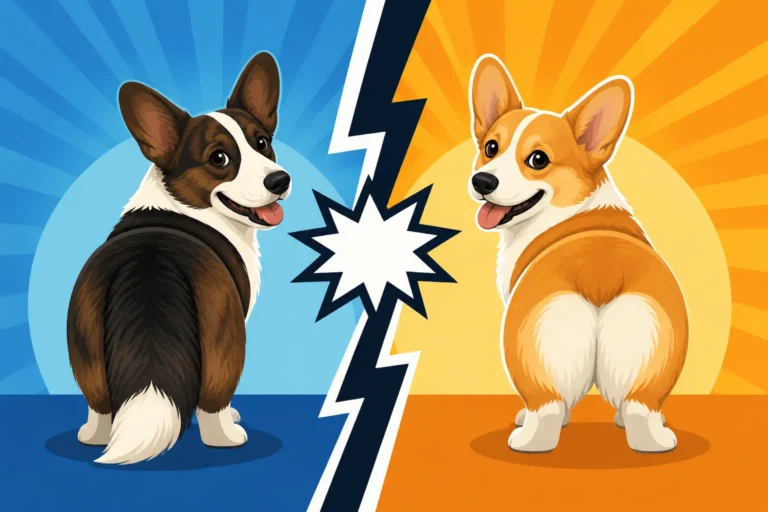
This is perhaps the most glaring difference and often the first thing people notice. The Cardigan Welsh Corgi is known for its long, bushy tail, which is often described as resembling a fox's brush. This tail is carried low, almost like a rudder, and is an integral part of their balance and overall appearance according to the breed standard. It's a natural, undocked tail that flows beautifully from their topline.
On the other hand, the Pembroke Welsh Corgi is traditionally known for having a very short or absent tail. Historically, Pembroke tails were docked, a practice rooted in their working history to prevent injury while herding cattle. While tail docking has become controversial and is restricted or banned in many places today, many Pembrokes also possess a natural bobtail gene, meaning they can be born with naturally short tails of varying lengths. So, while you might see a Pembroke with a full tail in areas where docking is no longer practiced, a long, flowing tail is inherently a Cardigan characteristic. This is an important distinction, as a long-tailed Pembroke is not a Cardigan; it's simply an undocked Pembroke.
Body Proportions and Build
Beyond the tail, there are subtle differences in their overall body structure. The Cardigan Welsh Corgi tends to be a bit larger and heavier boned, often described as more rugged or sturdily built. They might appear a bit more substantial, with a deeper chest and a more powerful, robust physique. Their frame feels a little more grounded and solid, which makes sense given their ancient, all-purpose farm dog role. It’s like comparing a sturdy farm truck to a nimble sedan; both are useful, but built for slightly different tasks.
The Pembroke Welsh Corgi, while still sturdy, generally has a slightly more refined and lighter-boned build. They can appear a touch longer in body relative to their height, giving them a slightly different proportion. Their rib cage tends to be more oval, and their overall impression is often one of elegance combined with robustness. When you look at How Big a Corgi Is Meant to Be, you'll find there are slight variations in the ideal weight and height ranges for each, reflecting these underlying structural differences. These subtle variations in build contribute to each breed's unique gait and presence.
Head Shape, Ears, and Expressions
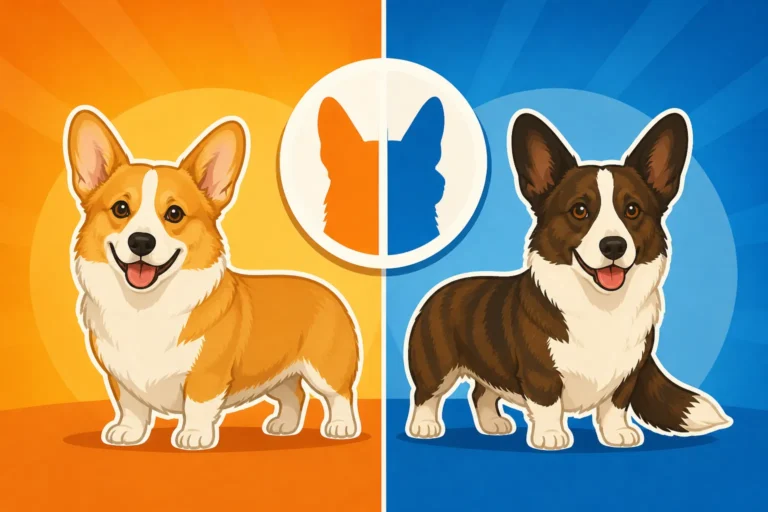
Even their faces tell different stories! The Cardigan Welsh Corgi often has a broader skull, giving their head a slightly more rounded appearance. Their ears are typically larger and more rounded at the tips, often set a little wider apart. This can give them a somewhat more serious or thoughtful expression, almost as if they're constantly pondering the deeper mysteries of life.
The Pembroke Welsh Corgi, however, is often described as having a more "foxy" appearance. Their head is usually a bit more refined, and their ears are more pointed, often set higher on the head. This ear set contributes to that perpetually alert, sometimes mischievous, and often "smiling" expression that Pembrokes are famous for. When you compare The Corgi Head and Ear Set for each breed, you'll see how these subtle differences in skull shape, ear placement, and muzzle length contribute to their distinct facial characteristics and overall breed type. It’s these finer details that truly differentiate the two at a glance for those who know what to look for.
Beyond the Coat: Color and Markings
One of the most visually striking ways to tell these two breeds apart, besides the tail, is through their acceptable coat colors and markings. While both breeds boast beautiful double coats designed for weather protection, the palette they come in is surprisingly different, with one breed having a much wider array of options.
The Cardigan's Kaleidoscope of Colors
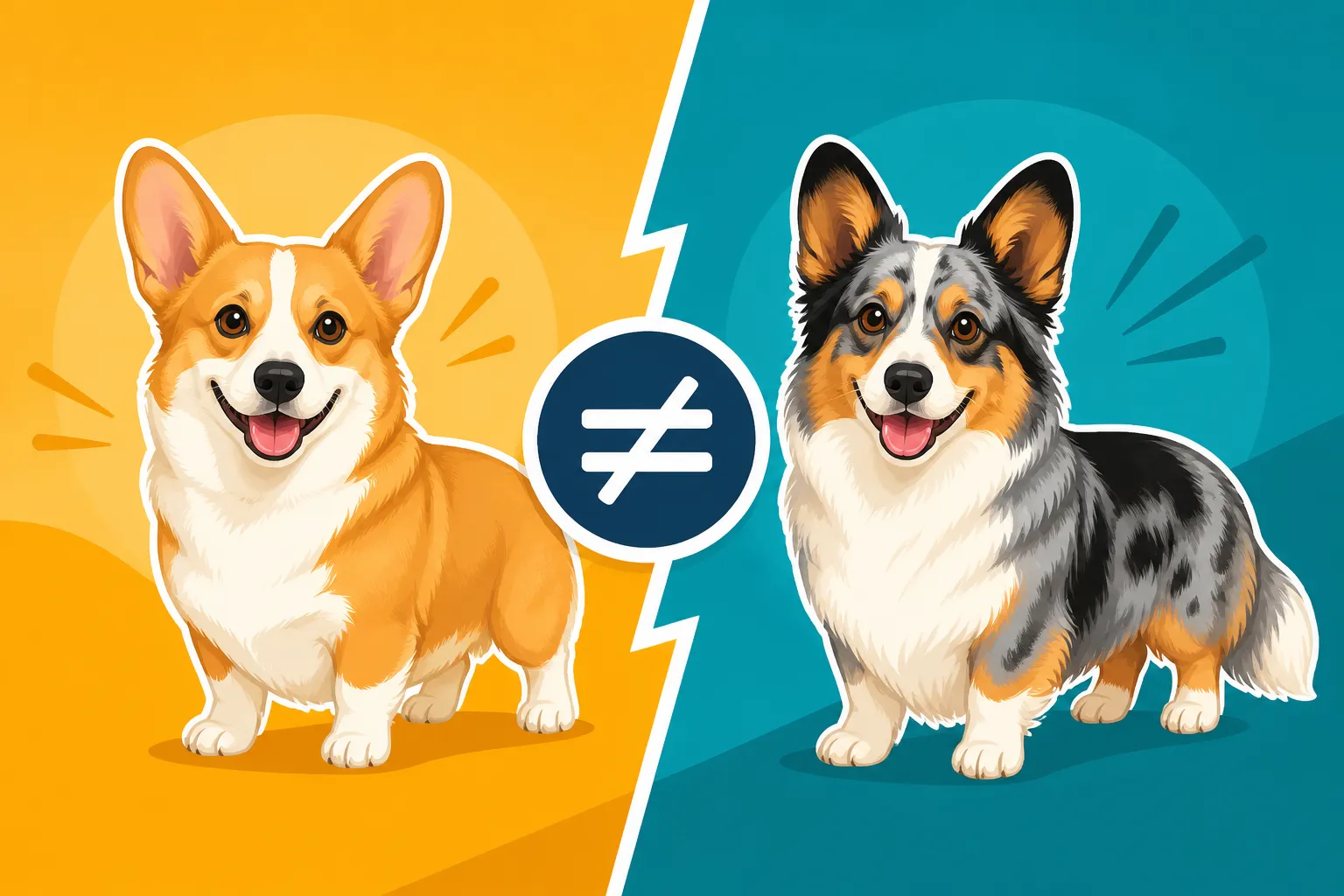
If you're looking for variety in color, the Cardigan Welsh Corgi is your go-to. Cardigans come in an impressive range of colors, giving them a truly kaleidoscopic appearance. You'll find them in red, sable, brindle, black, and tri-color (black, white, and tan or brindle points). What truly sets them apart, however, is the presence of blue merle. This stunning, mottled coat pattern is a signature trait of the Cardigan and is never found in purebred Pembrokes. If you see a blue merle Corgi, you can be 99.9% certain it's a Cardigan. We talk about Whether Blue Merle Is Allowed in a Pembroke in another post, and the short answer is a definitive no.
White markings are also very common and widely accepted in Cardigans. These can appear on the chest, neck, legs, and even as a blaze on the face. The patterns and extent of white are quite diverse, and generally not faulted in the same way they might be in a Pembroke. This wide array of colors and patterns gives each Cardigan a truly unique look, making them incredibly distinctive. Their coats are dense and weather-resistant, perfect for the varying climates of Wales.
Pembroke's More Restricted Palette
The Pembroke Welsh Corgi, while equally beautiful, has a more restricted color palette. They primarily come in shades of red, sable (red with black tipping), fawn, and black and tan (often referred to as tri-color, but visually different from a Cardigan tri-color due to the absence of brindle points). All these colors are often accompanied by white markings, which are desirable but typically limited to the legs, chest, and neck. A small blaze on the face is also common and adds to their foxy charm.
However, Pembrokes have very specific rules about the extent of white markings. Excessive white, often referred to as "whitelies," particularly on the back or too high on the sides, is generally considered a fault in the show ring. While these dogs make perfectly healthy and wonderful pets, breeders aiming for the show ring will avoid these markings. White Markings on a Corgi delves deeper into what is considered acceptable. The contrast in color options really highlights the distinct breeding trajectories of these two Corgi types, with each preserving a specific aesthetic heritage.
Hearts of the Herding Dogs: Temperament and Personality
It's easy to assume that because they're both Corgis, their personalities must be nearly identical. While both breeds certainly share the intelligent, resilient, and vocal traits of their herding ancestors, there are noticeable distinctions in their typical temperaments. These differences can play a big role in determining which Corgi might be a better fit for your household and lifestyle.
The Cardigan's Steady Nature
The Cardigan Welsh Corgi is often described as having a slightly calmer, more reserved, and perhaps even more serious disposition than its Pembroke cousin. They still possess that wonderful Corgi intelligence and a playful streak, but they might not be as overtly boisterous or "in-your-face" with their affection. They tend to form strong, devoted bonds with their families, often described as having a very deep connection with their chosen people.
With strangers, a Cardigan might be a bit more reserved initially, taking their time to assess new situations and individuals before offering their friendship. This doesn't mean they're shy or aloof; rather, it speaks to a more thoughtful and discerning nature. While they certainly enjoy activity and mental stimulation, their energy can sometimes be expressed in a more contained, purposeful way. If you're wondering Whether Cardigans Are Calmer Than Pembrokes, many owners will tell you there's a definite difference, with Cardigans often bringing a more settled presence to the home, though individual personalities always vary!
The Pembroke's Playful Zest
In stark contrast, the Pembroke Welsh Corgi is often characterized by its outgoing, effervescent, and sometimes famously sassy personality. They are known for their boundless enthusiasm, their love of being the center of attention, and their incredible vocalizations. Pembrokes are often described as "talkers," using a wide range of barks, "woos," and grumbles to express themselves. If you've ever heard the classic "Corgi howl," it's likely come from a Pembroke! This can, of course, lead to concerns about Corgi Barking and How Much Is Normal, especially in apartment settings.
Their playful zest makes them fantastic companions for active families, but it also means they require consistent training and mental engagement. They are highly intelligent, quick learners, but can also be notoriously stubborn and possess a strong will, often deciding they know best. If you've ever wondered why a Corgi is stubborn or just thinking, a Pembroke owner can give you endless anecdotes about their dog's independent thought process! They truly embody the spirit of a "big dog in a small package," full of personality, humor, and a surprising amount of drive for their size.
Health Considerations: Similarities and Differences
Both Pembroke and Cardigan Corgis are generally robust and healthy breeds, capable of living long, fulfilling lives. However, like all purebred dogs, they are predisposed to certain genetic health conditions. Understanding these shared and distinct health concerns is crucial for any potential owner, helping you choose a reputable breeder and provide the best possible care for your furry friend.
Shared Concerns for Long Backs
The most well-known health concern that both Corgi breeds share is due to their unique body structure. Both Pembrokes and Cardigans are what's known as chondrodystrophic breeds. This fancy term simply means they have a genetic condition that results in disproportionately short legs and a long back. While this gives them their adorable, low-rider appearance, it also makes them particularly susceptible to intervertebral disc disease (IVDD). This is a condition where the cushioning discs between the vertebrae in their spine can rupture or bulge, pressing on the spinal cord and causing pain, weakness, or even paralysis. Disc Disease in a Long-Backed Corgi is a serious concern for both breeds.
Because of this shared predisposition, it's absolutely vital for owners of either Corgi breed to take preventative measures. This means discouraging jumping on and off furniture, providing ramps or steps for access to sofas and beds, and maintaining a healthy weight to reduce strain on their spines. You'll find many useful tips for Ramps and Steps That Save a Corgi's Back that apply universally to both types of Corgi. Regular veterinary check-ups are also crucial to monitor their spinal health as they age.
Breed-Specific Genetic Conditions
Beyond the shared back issues, each Corgi breed has some genetic predispositions that are more prevalent in one than the other, highlighting their distinct genetic pools. For Cardigan Welsh Corgis, one of the primary genetic concerns is Progressive Retinal Atrophy (PRA) type A. This is an inherited eye disease that causes the gradual degeneration of the retina, eventually leading to blindness. Responsible Cardigan breeders will conduct genetic testing to ensure their breeding stock is clear of this condition.
Pembroke Welsh Corgis, on the other hand, are more commonly associated with Degenerative Myelopathy (DM) and Von Willebrand Disease (vWD). DM is a progressive neurological disease that affects the spinal cord, leading to weakness and eventual paralysis in the hind limbs. While Cardigans can also carry the DM gene, it's statistically more prevalent and a larger concern in Pembrokes. How Many Corgis Carry the DM Mutation is a question many prospective owners ask. VWD is an inherited bleeding disorder. Thankfully, genetic tests are available for all these conditions, allowing responsible breeders to screen their dogs and make informed breeding decisions. The DNA Tests a Corgi Breeder Should Run are essential for both breeds to help ensure healthier puppies for future generations.
Living with a Corgi: Lifestyle and Care
Bringing either a Pembroke or a Cardigan Corgi into your home is a commitment to a life filled with joy, laughter, and a surprising amount of hair! While their individual personalities may differ, both breeds share fundamental needs when it comes to exercise, grooming, and training. Understanding these requirements will help you provide a happy and healthy environment for your low-rider companion.
Exercise Needs and Mental Stimulation
Despite their short legs, both Corgi breeds are intelligent, active herding dogs, and they absolutely need more than just a quick potter around the garden. They thrive on regular physical activity that goes beyond casual strolls. Think of it this way: their bodies are built to be agile and quick in short bursts, dodging the kicks of cattle, not to be couch potatoes. Daily walks are a must, but they also benefit greatly from playtime, fetching, and engaging their brains with puzzle toys or structured training sessions. While Cardigans might tolerate slightly longer, more endurance-based hikes due to their sturdier build, Pembrokes often prefer shorter, more intense bursts of activity, like a game of fetch in the yard.
Mental stimulation is just as crucial as physical exercise for these smart cookies. A bored Corgi is a mischievous Corgi, and their clever minds can easily get into trouble if not properly challenged. Consider introducing them to dog sports like scent work or even a modified agility course that protects their backs. The Forty-Five Minutes a Corgi Needs Daily is a good baseline, but remember that quality of exercise and mental engagement often trumps sheer quantity, especially for these smart, driven breeds.
Grooming the Double Coat
If there's one thing almost every Corgi owner will tell you, it's that these dogs shed. A lot. Both Pembrokes and Cardigans possess a dense, weather-resistant double coat designed to protect them from the elements while working outdoors. This coat consists of a softer, insulating undercoat and a coarser, water-repellent outer coat. They "blow" their coat, meaning they shed heavily, at least twice a year during seasonal changes, but a consistent amount of shedding is to be expected year-round.
Regular grooming is essential to manage this shedding, keep their skin healthy, and prevent matting in the undercoat. A good quality undercoat rake and a slicker brush are your best friends. Tools like those you can find on Chewy, designed specifically for double-coated breeds, will make a huge difference. Regular brushing, at least a few times a week and daily during heavy shedding seasons, will help remove loose fur and distribute natural oils. You'll find a detailed discussion on Undercoat Rakes Made for a Corgi that applies to both breeds. Resist the urge to shave your Corgi in summer; their double coat actually provides insulation against both heat and cold and shaving can permanently damage its protective qualities.
Training for a Sassy Brain
Both Corgi breeds are highly intelligent, which sounds great for training, right? And it is! But their intelligence comes with a strong will and an independent streak, a leftover from their days making their own decisions while herding cattle. This means consistent, positive reinforcement-based training is absolutely key from a young age. They respond best to methods that are fun, rewarding, and make them feel like they're part of the decision-making process, rather than harsh corrections.
Common Corgi traits like the famous "heel nip" (a remnant of their herding instinct to "nip" at cattle heels) or their vocalizations need to be addressed early with redirection and consistent boundaries. Teaching a reliable "leave it" or "drop it" is invaluable, as is working on impulse control. Early socialization, exposing them to a variety of sights, sounds, people, and other well-behaved dogs, is also crucial for developing a well-adjusted Corgi. It's not always easy, but as we explore in Training a Corgi That Makes Its Own Decisions, consistency and a good sense of humor are your most powerful tools when living with these clever, spirited dogs.
The Journey to Finding Your Corgi
Deciding to welcome a Corgi into your family, whether a Pembroke or a Cardigan, is an exciting step! But it's also a significant decision that requires careful thought and research. Finding a healthy, well-socialized puppy or a rehomed adult dog involves navigating the world of breeders and rescue organizations. Making an informed choice ensures you bring home a companion who will thrive in your care.
Reputable Breeders: The First Step
If you're looking for a Corgi puppy, working with a reputable breeder is paramount. A good breeder prioritizes the health and temperament of their dogs above all else. This means they will conduct extensive health testing on their breeding stock for the breed-specific conditions we've discussed, such as Degenerative Myelopathy (DM), Progressive Retinal Atrophy (PRA), and Von Willebrand Disease (vWD), as well as screening for hip and elbow dysplasia. They should be transparent about these test results and willing to share the health clearances of the puppy's parents. Asking about The DNA Tests a Corgi Breeder Should Run is a sign that you're a responsible buyer.
A reputable breeder will also be knowledgeable about their breed, ask you many questions about your lifestyle to ensure a good fit, and welcome you to visit their facility to meet the mother (and sometimes the father) of the puppies. They'll raise their puppies in a clean, stimulating environment, providing early socialization experiences. Be wary of breeders who offer multiple breeds, can't provide health clearances, or push for a quick sale without proper vetting. Remember, a healthy start means a happier, longer life for your Corgi.
Rescue Organizations: A Second Chance
For those who prefer to open their homes to an adult dog, or who are perhaps looking for a Corgi whose personality is already established, breed-specific rescue organizations are a fantastic option. There are dedicated Pembroke Welsh Corgi rescues and Cardigan Welsh Corgi rescues across the country, often run by passionate volunteers. These organizations work tirelessly to rehome Corgis who, for various reasons, find themselves in need of a new family.
Rescue dogs often come with the added benefit of having been fostered in a home environment, meaning their temperament and quirks are usually well-known. Rescues will typically provide extensive veterinary care, including spaying/neutering, vaccinations, and sometimes even addressing existing health issues before adoption. They're often excellent resources for understanding a dog's specific needs and can provide invaluable support during the transition. The adoption fees are usually much lower than puppy prices and contribute directly to the care of other dogs in need, as discussed in What a Breed Rescue Charges for a Corgi. Giving a Corgi a second chance at a loving home is an incredibly rewarding experience.
Pembroke vs. Cardigan: Key Differences At a Glance
| Feature | Pembroke Welsh Corgi | Cardigan Welsh Corgi |
|---|---|---|
| Origins | Pembrokeshire, Wales; ancestors believed to be Spitz-type dogs brought by Flemish weavers. | Cardiganshire, Wales; ancient Celtic lineage. |
| Official Split | Recognized as a distinct breed in 1934 by The Kennel Club. | Recognized as a distinct breed in 1934 by The Kennel Club. |
| Tail | Traditionally docked or naturally bobtailed; full tails now seen where docking is banned. | Long, bushy, fox-like tail; naturally carried low. |
| Size & Build | Slightly smaller, lighter boned, often appearing a bit more refined; typically 25-30 lbs. | Slightly larger, heavier boned, sturdier, more robust build; typically 25-38 lbs. |
| Head & Ears | More "foxy" appearance; pointed ears set higher; often a mischievous or "smiling" expression. | Broader skull; larger, more rounded ears set wider apart; often a more serious expression. |
| Common Colors | Red, sable, fawn, black & tan (tri-color); with white markings. | Red, sable, brindle, black & tan (tri-color), blue merle; with white markings. |
| Unique Color | No blue merle. | Blue merle is a signature color. |
| Temperament | Often more outgoing, boisterous, vocal, and famously sassy; strong personality. | Often calmer, a bit more reserved, steady, and thoughtful; deep family bond. |
| Key Health Risks | IVDD, Degenerative Myelopathy (DM), Von Willebrand Disease (vWD). | IVDD, Progressive Retinal Atrophy (PRA) type A. |
Disclaimer
This article is for general informational purposes only and does not constitute professional advice. Laws, prices and regulations vary by location and change over time. Consult a qualified professional for guidance on your specific situation.