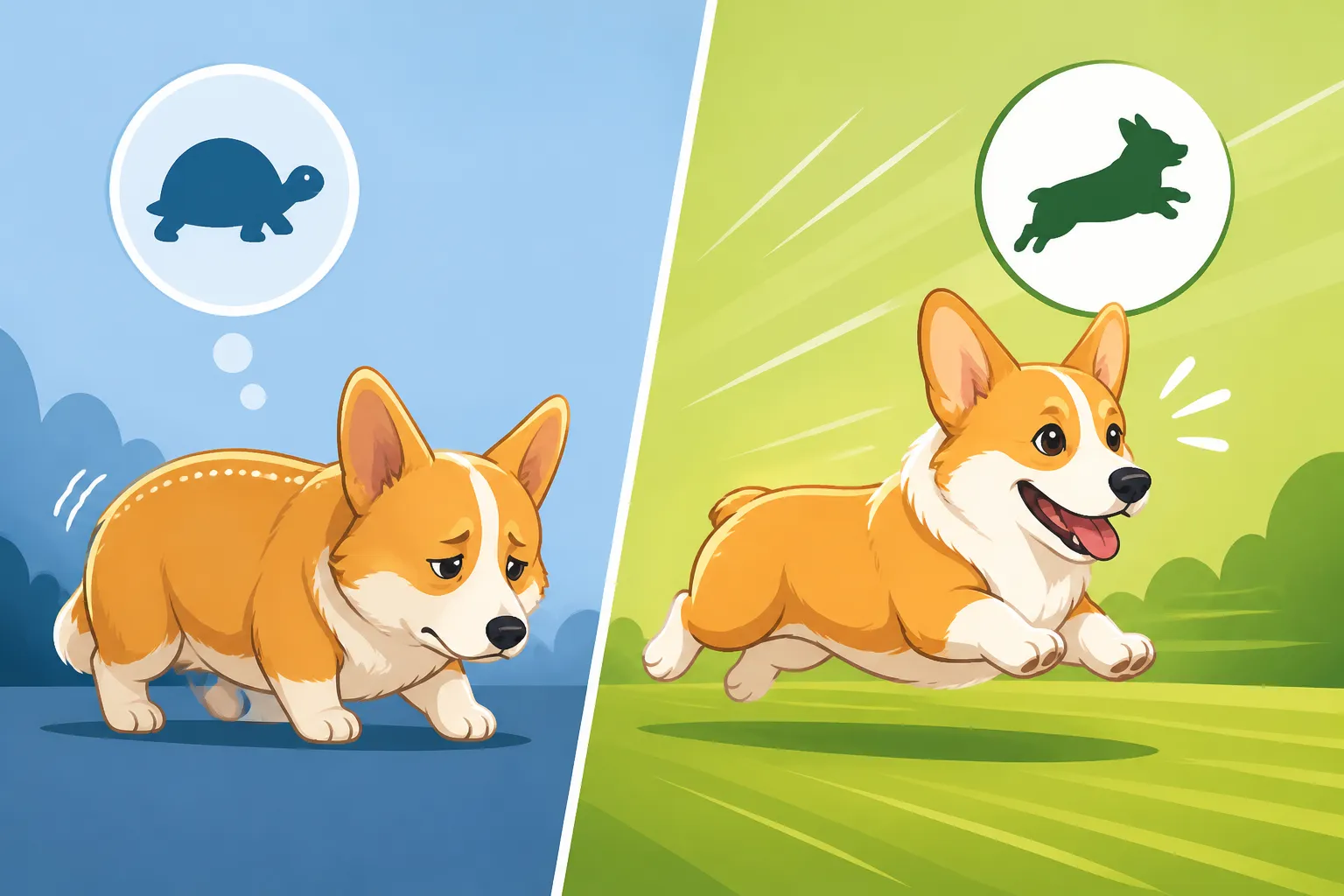
Whether Short Legs Should Slow a Corgi’s Gait
It's easy to look at a Corgi, with those adorably stubby legs and long body, and wonder if their unique build puts them at a disadvantage when it comes to getting around. Many new Corgi parents, and even seasoned ones, express concern that their dog's short stature might mean they're inherently slow, clumsy, or destined for mobility issues. This guide is here to reassure you about the natural Corgi gait and, more importantly, help you recognize when a 'slowed' gait signals a deeper health concern that needs your attention.
The Corgi's Ingenious Design and Natural Movement
Corgis aren't just cute; they're masterpieces of canine engineering, specifically bred for a demanding job: herding cattle. Their short legs and long bodies, a characteristic known as chondrodystrophy, weren't an accident. This physical trait allowed them to duck and weave under the hooves of cattle, nipping at their heels without getting trampled. It's a design that allowed for incredible agility and speed in short bursts, not a disability. Understanding What Chondrodystrophy Means for a Corgi helps us appreciate this.
Why Their Stature Isn't a Hindrance
Imagine a tiny, four-wheeled sports car, low to the ground, built for quick turns and acceleration rather than top-end speed over long distances. That's your Corgi. Their short legs provide a low center of gravity, which contributes to their surprising stability and quick reflexes. They aren't meant to be lanky, high-stepping dogs. Their unique proportions allow them to navigate uneven terrain with surprising ease and to change direction rapidly, which was crucial for their original working role. When a Corgi moves, it’s typically with an efficient, ground-covering trot, sometimes described as a "rolling gait" or a "shuffling gait." This isn't a sign of slowness, but a characteristic of their breed.
The Power of the Corgi's Back End
Despite their seemingly delicate appearance, a healthy Corgi possesses a strong, well-muscled hindquarters. This is where a lot of their propulsion comes from. When they move, you should see a powerful push-off from their back legs, driving their compact bodies forward. Why a Corgi's Back Is Built the Way It Is directly contributes to this power and efficiency. Their low-slung body allows them to maintain incredible balance even while performing quick, sharp turns, something a taller dog might struggle with. They're not built for endurance running, but for bursts of speed and nimble maneuvers that defy their small appearance.
Recognizing a Healthy Corgi Gait
A healthy Corgi should move with confidence and purpose. While they might not glide with the elegance of a sighthound, their movement should be fluid, balanced, and appear effortless on level ground. Observing their natural rhythm during walks and play can tell you a lot about their well-being.
Characteristics of Normal Corgi Movement
When you watch a healthy Corgi walk or trot, look for these signs:
- Fluidity: Their steps should be even and coordinated. There shouldn't be any noticeable stiffness, limping, or hesitation.
- Engagement of All Four Paws: All paws should be used equally, with good weight distribution. You shouldn't see them dragging a paw or favoring one side.
- Tail Carriage: A Corgi's tail, whether naturally bobbed or full, often acts as a balance aid and can give clues about their comfort. A healthy dog typically holds it in a natural, relaxed position, or slightly curled over the back, depending on excitement levels, but not clamped between the legs due to pain.
- Head and Neck Position: Their head should be held level, in line with their body, not excessively lowered or raised as if compensating for discomfort elsewhere.
- Energy and Enthusiasm: A healthy Corgi should enjoy walks and playtime. If they're normally eager to go out but suddenly become reluctant, it's a sign something might be off. The Corgi Body the Standard Describes perfectly illustrates what to look for in their overall conformation.
A Corgi's speed will depend on the situation. They can be surprisingly fast when chasing a squirrel or zooming around the yard, displaying quick bursts of speed. During a leisurely walk, their gait might appear more relaxed and deliberate. The key is that the movement is unforced and doesn't appear painful or difficult for them.
When "Slow" is Not Just "Corgi"
While their short legs might mean they can't keep up with a Border Collie on a long hike, a Corgi shouldn't be slow due to discomfort or inability. If your Corgi is moving noticeably slower than usual, lagging behind on walks they once enjoyed, or shows any signs of struggling, it's time to pay close attention. This isn't their natural, efficient gait; it's a potential red flag. It’s a good practice to regularly check your dog's paws and nails. Overgrown nails, for instance, can significantly alter a Corgi's gait and cause discomfort, making them hesitant to move. Long Nails and How a Corgi Places Its Feet are crucial for maintaining proper biomechanics.
Identifying Concerning Changes in Gait
Sometimes, a change in your Corgi's movement isn't just a sign of aging; it can be an indicator of underlying health issues, especially given their predisposition to certain conditions related to their long backs. It's crucial to be observant and know what to look for beyond just a general slowdown.
Common Signs of Mobility Issues
Keep an eye out for these specific changes in your Corgi's gait or behavior:
- Limping or Favoring a Leg: This is usually the most obvious sign of pain in a joint or paw. It could be due to a minor sprain, a foreign object in the paw, or something more serious like arthritis.
- Stiffness or Reluctance to Move: If your Corgi struggles to get up after resting, seems stiff, or is hesitant to jump on a favorite sofa (even with a ramp!), it's a concern. You might notice this especially after periods of inactivity.
- "Bunny Hopping" with Back Legs: This is when a dog moves both hind legs together, like a rabbit, rather than independently. It often suggests pain or weakness in the hips or lower back, a classic sign of issues like Disc Disease in a Long-Backed Corgi.
- Scuffing or Dragging Paws: If you hear their nails scraping on the ground, or see wear on the tops of their paw pads, they might be dragging their feet. This is a common early sign of neurological issues, such as A Corgi That Scuffs Its Back Nails or even early Degenerative Myelopathy and the Corgi.
- Crossing Hind Legs or Wobbling: When walking, if their back legs seem to cross over each other, or they appear wobbly and uncoordinated, it's a significant warning sign that something is impacting their balance and nerve function. A Corgi Whose Back Legs Cross Over is a clear indicator of neurological impairment.
- Decreased Activity or Playfulness: While a general slowdown can happen with age, a sharp decline in interest in walks, playtime, or even just moving around the house could indicate pain.
- Changes in Posture: Observe if your Corgi is holding their back in an unusual arched or hunched position, or if their head is unnaturally low.
These symptoms are not just "part of being a Corgi." They warrant a prompt visit to your veterinarian to determine the cause. Early diagnosis and intervention can make a huge difference in managing many of these conditions. Telling Disc Pain From DM in a Corgi can be challenging, even for vets, so detailed observation on your part is invaluable.
Underlying Health Conditions That Affect Gait
Corgis are prone to certain health conditions that directly impact their mobility and can cause noticeable changes in their gait. These include:
- Intervertebral Disc Disease (IVDD): This is perhaps the most well-known spinal issue in Corgis, owing to their long backs. A ruptured or herniated disc can cause sudden pain, weakness, or even paralysis, drastically affecting their ability to walk. The severity can range from mild discomfort to complete loss of hind leg function.
- Degenerative Myelopathy (DM): This is a progressive neurological disease affecting the spinal cord, leading to weakness, incoordination, and eventual paralysis of the hind limbs. It usually appears in older Corgis, often around The Corgi Years When the Back End Gives Out. The progression is typically slow, starting with subtle signs like scuffing nails.
- Arthritis: Like many breeds, Corgis can develop arthritis, particularly in their hips, knees, and even their spine, as they age. This leads to chronic pain and stiffness, especially in colder weather or after exercise. Early Arthritis in a Corgi can start impacting their mobility sooner than you might expect.
- Hip or Elbow Dysplasia: While often associated with larger breeds, Corgis can also suffer from hip or elbow dysplasia, which are abnormal formations of these joints. These conditions can cause pain, limping, and an altered gait as the dog tries to compensate for the discomfort.
If you observe any concerning changes, don't wait. A veterinary professional can perform a thorough examination, which may include neurological tests, X-rays, or even an MRI, to pinpoint the problem.
Supporting Your Corgi's Healthy Mobility
While some conditions are genetic, there's a lot you can do as a Corgi owner to support their spinal health and ensure their short legs carry them comfortably through life. Proactive care is key to preventing problems and managing existing ones effectively.
Weight Management is Paramount
This cannot be stressed enough: maintaining a healthy weight is one of the single most important things you can do for your Corgi's back and joints. Even a few extra pounds put immense strain on their long spine and short legs, increasing the risk of IVDD and accelerating arthritis. It's like asking a small car to carry a much heavier load than it was designed for, day in and day out.
Regularly assess your Corgi's body condition score. You should be able to feel their ribs easily without pressing hard, and they should have a discernible waist when viewed from above. If you're unsure, ask your vet for an honest assessment. Many veterinarians and pet supply stores like Chewy offer a variety of weight management foods and treats designed to keep your Corgi trim. Controlling portion sizes and limiting high-calorie treats are essential. The Body Condition Score a Corgi Should Hold is a great resource to learn more about what an ideal Corgi physique looks like.
Environmental Adjustments and Aids
Making your home Corgi-friendly can significantly reduce the strain on their back and joints.
- Ramps and Steps: Invest in ramps or pet steps to help your Corgi access furniture like sofas and beds, or to get in and out of the car safely. This prevents them from repeatedly jumping, which can put sudden, high-impact stress on their spine. We discussed Ramps and Steps That Save a Corgi's Back extensively in another post. You can find a wide selection of suitable ramps and steps on Chewy.
- Non-Slip Flooring: If you have hardwood, tile, or laminate floors, consider laying down rugs or runners, especially in high-traffic areas. Slippery surfaces make it harder for Corgis to get traction, leading to slips and falls that can injure their back.
- Orthopedic Beds: Provide a supportive, orthopedic bed that cushions their joints and spine. Look for beds with dense foam that maintains its shape, rather than ones that flatten out quickly.
Appropriate Exercise and Activity
While Corgis are robust, they aren't built for high-impact activities or long-distance running.
- Moderate, Regular Exercise: Aim for consistent, moderate exercise. Two or three shorter walks a day (20-30 minutes each) are often better than one long, strenuous one. Keep them on a leash to prevent sudden sprints or twists.
- Avoid High-Impact Jumps: Discourage jumping off high places. If your Corgi loves to zoom, ensure it's in a safe, enclosed space with good traction, and try to incorporate games that involve sniffing and problem-solving rather than just explosive running.
- Physiotherapy and Hydrotherapy: For Corgis recovering from injury or managing chronic conditions, therapies like Physiotherapy for a Corgi Losing Its Legs or hydrotherapy can be incredibly beneficial. These professional interventions help build strength, improve flexibility, and manage pain in a controlled environment.
Regular Veterinary Check-ups
Don't wait until you notice a problem. Regular veterinary check-ups are crucial for monitoring your Corgi's overall health, including their mobility. Your vet can catch subtle changes early, provide guidance on weight management, and recommend preventative measures or supplements if appropriate. They might suggest joint supplements (like glucosamine and chondroitin, which you can often find on Chewy) as a proactive measure, especially as your Corgi gets older. Catching issues early is always best for their long-term comfort and mobility.
Disclaimer
This article is for general informational purposes only and does not constitute professional advice. Laws, prices and regulations vary by location and change over time. Consult a qualified professional for guidance on your specific situation.