The Corgi Body the Standard Describes
It's easy to fall in love with a Corgi at first sight – that distinctive low-slung, long-bodied shape with those expressive ears and a smile that melts hearts. But sometimes, especially for new Corgi parents or those looking to understand the breed better, there's confusion about what truly defines the "ideal" Corgi physique. It's not just about cuteness; it's about a functional design honed over centuries. This guide will walk you through the specifics of the Corgi body as described by breed standards, helping you appreciate the thoughtful design behind these wonderful dogs.
Understanding the Breed Standard: Why It Matters for Your Corgi
When you delve into the world of purebred dogs, you quickly encounter the term "breed standard." This isn't just some arbitrary set of rules conjured up by dog show enthusiasts. No, a breed standard is a detailed word picture, a written blueprint that describes the ideal characteristics, temperament, and appearance of a breed. For Corgis, these standards were developed to ensure the dogs could perform the tasks they were bred for, herding cattle, while also maintaining their health and unique appeal.
More Than Just "Cute": The Functional Origins
Think about it: the Corgi wasn't bred to sit on laps or win beauty contests, at least not initially. They were hardy, agile working dogs, specifically tasked with moving cattle by nipping at their heels and ducking under their kicks. This demanding job required a very specific physical build. Their low stature allowed them to avoid hooves, while their strong, substantial bone and powerful body gave them the stamina and strength to outmaneuver much larger animals. Every part of the standard, from their deep chest to their strong hindquarters, speaks to this working heritage. Understanding these origins helps us appreciate why certain traits are valued and how they contribute to the dog's overall functionality and health. It's truly fascinating to connect a Corgi's adorable stubby legs to the fields of Wales!
The Difference Between a Pet and a Show Dog Standard
Now, let's be realistic. Most of our beloved Corgis are cherished family pets, not show ring contenders. So, why should a pet owner care about a breed standard? Well, while a show dog needs to adhere to the standard with meticulous precision, the standard still serves as a guide for what a healthy, well-structured Corgi should look like, even if it has a slightly longer ear or a bit more white on its chest than deemed "perfect." For pet owners, the standard offers insight into the breed's fundamental characteristics and potential health predispositions related to its conformation. For example, understanding Why a Corgi's Back Is Built the Way It Is helps owners appreciate why they need to protect it. It informs responsible breeding practices aimed at producing healthy, sound dogs, whether they end up on a sofa or in a show ring. A breeder striving for the standard is often also striving for good health and temperament.
The Pembroke Welsh Corgi: A Blueprint of Breed Type
The Pembroke Welsh Corgi is probably the image that first comes to mind for many when they hear "Corgi," largely thanks to their royal connections. But beyond the immediate recognition, there's a specific blueprint that defines this delightful breed. The standard for the Pembroke emphasizes a compact, powerful, and active dog, low-set and sturdy, with a distinctly foxy expression.
Head and Expression: The Fox-Like Charm
The Pembroke's head is one of its most defining features. The standard describes it as fox-like in appearance, with a rather broad, flat skull between the ears, tapering towards the eyes. The muzzle should be proportionate to the head, not too long or too short, and the nose should be black. Those iconic erect ears are medium-sized, firm, and tapering slightly to a rounded point. They are set fairly wide apart, in balance with the overall head, and definitely not low-set like some other breeds. The eyes are oval, set rather wide, and should be dark in color, conveying a keen, intelligent, and friendly expression. This combination gives them that unmistakable "Corgi look" – alert and full of personality. You can often tell a lot about a Corgi's mood just by looking at its foxy face!
Body and Topline: Low-Set and Level
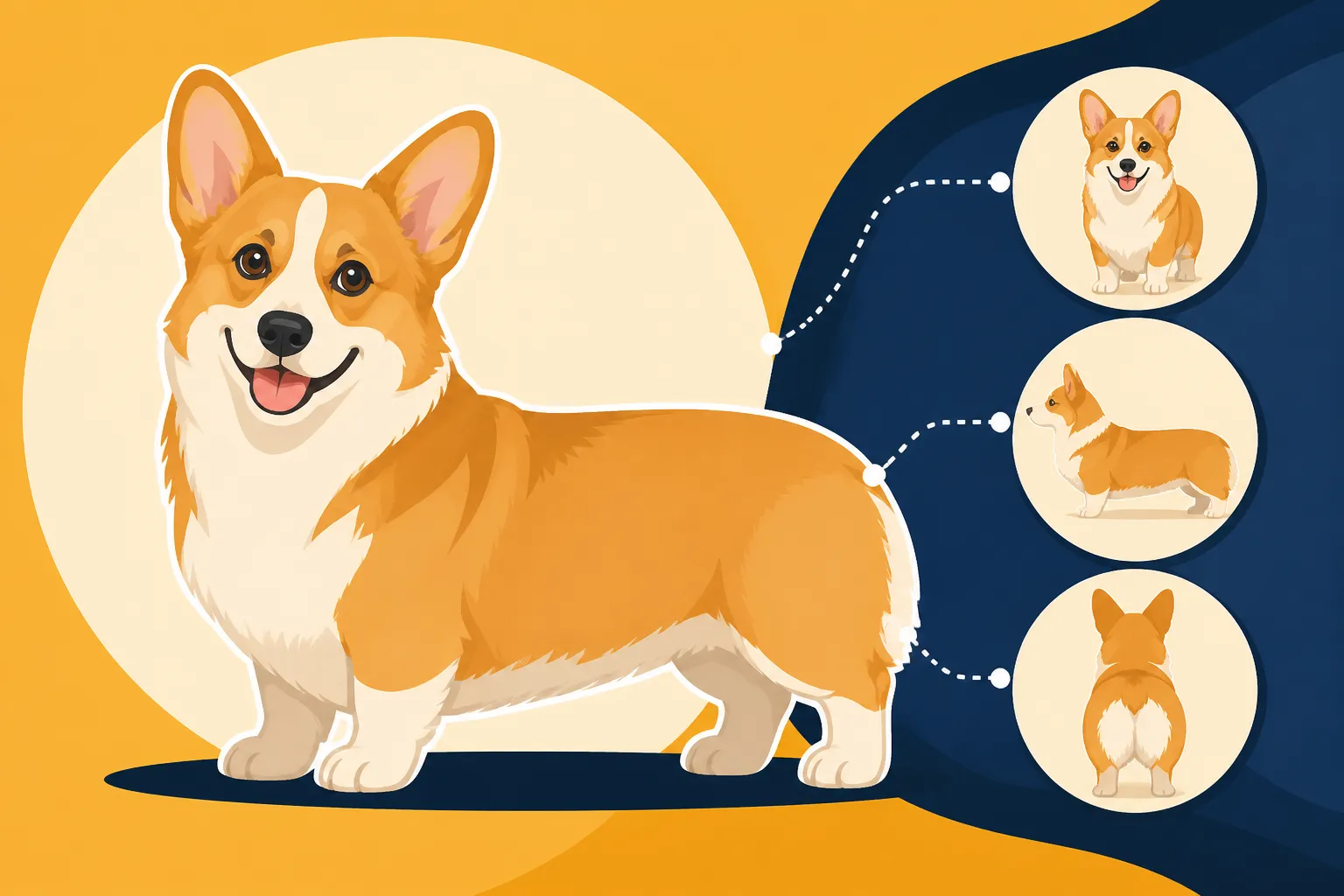
The Pembroke body is where its working heritage really shines. The standard calls for a body that is moderately long, not extreme, with a level topline. This means that from the shoulder blades to the tail set, the back should be straight, without a dip or a rise. A slight arch over the loin is acceptable, but a significant roach or sway back is not. The chest should be broad and deep, extending well down between the forelegs, allowing for good lung capacity, essential for sustained activity. Ribs are well-sprung, giving the body a rounded appearance without being barrel-chested. The overall impression is one of sturdy substance, a dog built for endurance and hard work. This powerful yet balanced frame is crucial for their long-term spinal health, something that deeply concerns Corgi owners. The Corgi Topline and Length of Back is a critical area for structural integrity.
Legs and Movement: Strong but Agile
While their short legs are a hallmark, the Pembroke's legs are far from delicate. The standard requires strong bone, straight forelegs, and well-angulated hindquarters. The front legs should be relatively short, but substantial, with the forearms curving slightly around the deep chest, not straight down like pillars. This slight curve allows for the deep chest to fit between them. The feet are oval, compact, with strong pads, turning neither in nor out. From the side, you should see well-defined angulation at the stifles (knees) and hocks (ankles), giving them powerful propulsion from the rear. When a Pembroke moves, it should be free and active, giving the impression of strength and agility, not clumsiness. They should have a smooth, ground-covering gait, maintaining that level topline. It's often described as a distinctive "Corgi roll" or "wiggle," which is endearing but also a sign of their specific construction.
The Cardigan Welsh Corgi: Distinctive Features and Sturdy Build
While Pembrokes often get all the media attention, the Cardigan Welsh Corgi is an equally magnificent, though subtly different, breed. As Pembroke and Cardigan Are Two Different Breeds, their standards reflect distinct characteristics while still sharing that undeniable Corgi essence. The Cardigan standard emphasizes a long, low, and substantial dog, well-boned, with a distinct, usually long, tail. They are often described as having a slightly heavier or more rugged build than their Pembroke cousins.
Head and Ears: Broader and Rounder
The Cardigan's head, while still foxy in appearance, tends to be a bit broader and more powerful than the Pembroke's. The skull is wide and flat between the ears, and the stop (the indentation between the eyes) is moderately defined. Their ears are another key distinguishing feature. While also erect and proportionate to the head, Cardigan ears are typically larger and more rounded at the tips than a Pembroke's, and they are set wider apart. This gives them a slightly softer, almost hound-like expression, while still retaining that intelligent and alert look. The eyes are dark, preferably matching the coat color, adding to their keen expression. This broader head shape contributes to their overall sturdy appearance.
Torso and Angulation: Long and Powerful
The Cardigan is often described as the "longer" Corgi, and the standard reflects this. Its body is significantly longer in proportion to its height than the Pembroke, giving it an even more elongated, low-slung profile. The topline is firm and level, with a very slight rise over the loin being acceptable but not a roach or sway. Like the Pembroke, the chest should be deep and well-sprung, providing ample room for vital organs. The ribs are well-rounded, giving substance to the body, and the loin is short, strong, and flexible. This robust torso is vital for its endurance and agility as a working dog. Their overall musculature should be well-developed, hinting at the strength required to herd cattle. Understanding their structural differences helps in appreciating What a Pembroke Weighs Against a Cardigan.
The Cardigan Tail: A Natural Trailing Flag
Perhaps the most obvious difference between the two Corgi breeds, apart from overall body type, is the tail. The Cardigan standard explicitly calls for a long, bushy, fox-like tail that is set on a line with the topline and carried low, never curled over the back. It serves as a natural extension of their spine, giving balance and agility during movement. When they're excited or moving at speed, it might be carried gaily, but it should still ideally remain below the topline. This "brush" tail is a distinctive hallmark and one of the easiest ways to identify a Cardigan. It’s a wonderful contrast to the Pembroke, where the tail question is often debated, whether it's naturally bobbed or docked. The Corgi Tail Question delves deeper into these differences.
Commonalities and Key Differences in Corgi Body Types
Despite their distinct breed standards, both Pembroke and Cardigan Welsh Corgis share certain fundamental Corgi characteristics that tie them together. However, appreciating their nuances is key to truly understanding these wonderful dogs. It’s not just about a few minor details; these differences often speak to their historical development and even their overall health predispositions.
Overall Proportion: Length-to-Height Ratio
The most striking commonality is their low-set, long body. Both breeds are chondrodysplastic, meaning they have disproportionately short limbs. This is the genetic trait that gives them their signature low rider look. However, the degree of length differs. The Cardigan is notably longer in body length compared to its height at the shoulder than the Pembroke. While Pembrokes are described as "moderately long," Cardigans are more emphatically "long and low." This difference in proportion affects their movement and even how they carry weight. Imagine two perfectly formed Corgis: the Cardigan would stretch a little further from nose to tail than the Pembroke, even if their heights at the shoulder were similar. This inherent trait, What Chondrodystrophy Means for a Corgi, is central to their definition.
Bone Structure and Substance
Both Corgi breeds are described as having good bone and substance, meaning they are sturdy and well-muscled, not delicate or fine-boned. However, the Cardigan typically carries a bit more overall weight and has heavier bone structure than the Pembroke. You can often feel this difference when you pick them up – the Cardigan feels a touch more robust, a bit more substantial. This "substance" is crucial for a herding dog; it’s what gives them the power and resilience to work livestock. While neither should be coarse or cloddy, the Cardigan often presents a slightly more rugged appearance. This solid construction is something responsible breeders strive for, as it directly impacts the dog's ability to live an active life. When looking at a Corgi, even a pet Corgi, you want to see that underlying strength, not a fragile frame.
Gait and Carriage: The "Corgi Roll"
Both breeds share that characteristic Corgi gait: free, active, and ground-covering, with good reach in front and strong drive from the rear. Their short legs mean they don't cover ground with huge strides, but they move efficiently and purposefully. The level topline should be maintained, without significant bobbing or rolling. You often see what's affectionately called the "Corgi roll" or "wiggle" in their movement, which is a natural consequence of their long body and short legs. It's not a fault, but rather a charming and efficient way for them to move across terrain. However, excessive rolling or a clumsy gait could indicate a structural issue that warrants attention, especially concerning their back. A healthy Corgi's movement should be fluid and powerful, reflecting its working prowess. This functional movement is what enables them to perform tasks and stay active for years.
| Feature | Pembroke Welsh Corgi | Cardigan Welsh Corgi |
|---|---|---|
| Overall Build | Moderately long, compact, foxy expression | Long, low, more substantial, slightly rugged, fox-like |
| Head Shape | Fox-like, skull rather broad and flat | Broader, flatter skull than Pembroke, strong muzzle |
| Ear Shape | Medium, firm, slightly rounded point, set fairly wide | Larger, more rounded tips, set wider apart |
| Body Length | Moderately long, level topline | Significantly longer in proportion to height, level topline |
| Tail | Naturally bobbed or docked (historically); some natural full tails | Long, bushy, fox-like, carried low, never over the back |
| Bone/Substance | Good bone, sturdy, active | Heavier bone, more substantial, powerful |
| Weight (Ideal) | Typically lighter | Typically heavier |
Beyond the Standard: Health Implications of the Corgi Build
While breed standards focus on the ideal appearance and function, it's crucial for any Corgi owner to understand how this unique body shape can impact their dog's health. The very traits that make Corgis so distinctive also require careful management to ensure they live long, happy, and comfortable lives. It's a trade-off, and one that responsible owners and breeders take seriously.
The Long Back and Spinal Health Concerns
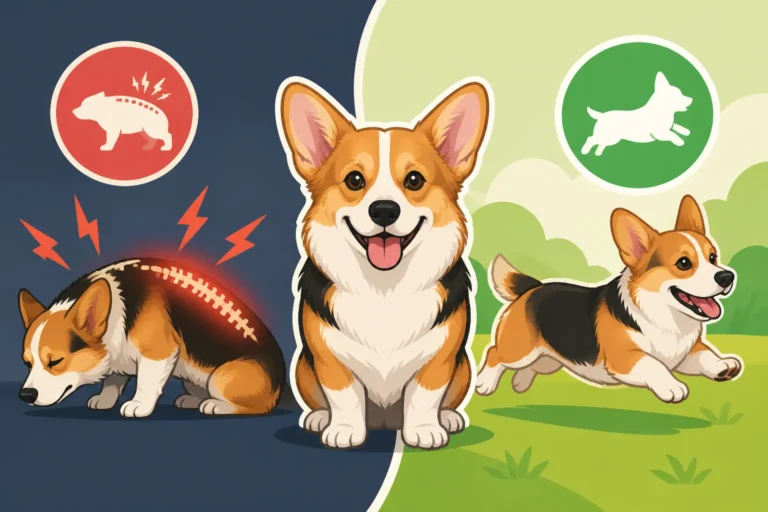
The defining characteristic of both Corgi breeds – their long back coupled with short legs – is directly linked to a predisposition for certain spinal issues. Intervertebral Disc Disease (IVDD) is a significant concern for Corgis. Because their discs degenerate prematurely due to their chondrodysplastic dwarfism, they are more prone to disc herniation, where a disc can rupture or bulge, pressing on the spinal cord. This can lead to excruciating pain, nerve damage, and even paralysis. It's a serious condition that can impact a Corgi at various ages, though The Age Corgi Disc Problems Usually Appear often falls in their middle years. This is why it's paramount to protect their back: avoiding high-impact activities like jumping off furniture, using ramps or steps, and maintaining a healthy weight are not just recommendations but vital preventive measures. Even picking up a Corgi incorrectly can cause strain.
Weight Management: Crucial for Their Frame
Given their long backs and short legs, carrying extra weight is particularly detrimental to a Corgi's spinal health and overall well-being. An overweight Corgi places immense additional stress on its already vulnerable spine and joints, accelerating disc degeneration and increasing the risk of IVDD. It can also exacerbate conditions like arthritis, particularly in the hips and elbows. Why Corgi Weight Is a Spinal Problem cannot be overstated. Corgis are notoriously food-motivated and can be very convincing beggars, so it's up to us, their human companions, to manage their caloric intake carefully. Regular monitoring of their body condition score is essential, ensuring they remain lean with a visible waist and palpable ribs. A healthy diet, portion control, and appropriate exercise are cornerstones of Corgi care. My personal routine often involves pre-measuring daily kibble and using a portion of it for training treats to avoid overfeeding.
Structural Integrity and Longevity
Beyond the spine, the overall structural integrity of a Corgi's body, as outlined in the breed standard, plays a massive role in their longevity and quality of life. Strong, well-angulated legs and solid bone reduce the risk of joint problems like hip and elbow dysplasia, which can be an issue in many breeds, including Corgis. A Corgi with proper angulation will distribute its weight more evenly and move with less stress on its joints. Responsible breeders screen their dogs for these conditions, using tools like Corgi Hip Scores and What They Mean, to ensure they are producing structurally sound puppies. While accidents can always happen, a Corgi bred with good structural integrity and maintained at a healthy weight, with measures taken to protect its back (like having ramps from Chewy for beds and sofas), is far more likely to enjoy a long, active life free from debilitating structural issues. It’s about building a robust foundation from the start and maintaining it throughout their years.
Disclaimer
This article is for general informational purposes only and does not constitute professional advice. Laws, prices and regulations vary by location and change over time. Consult a qualified professional for guidance on your specific situation.