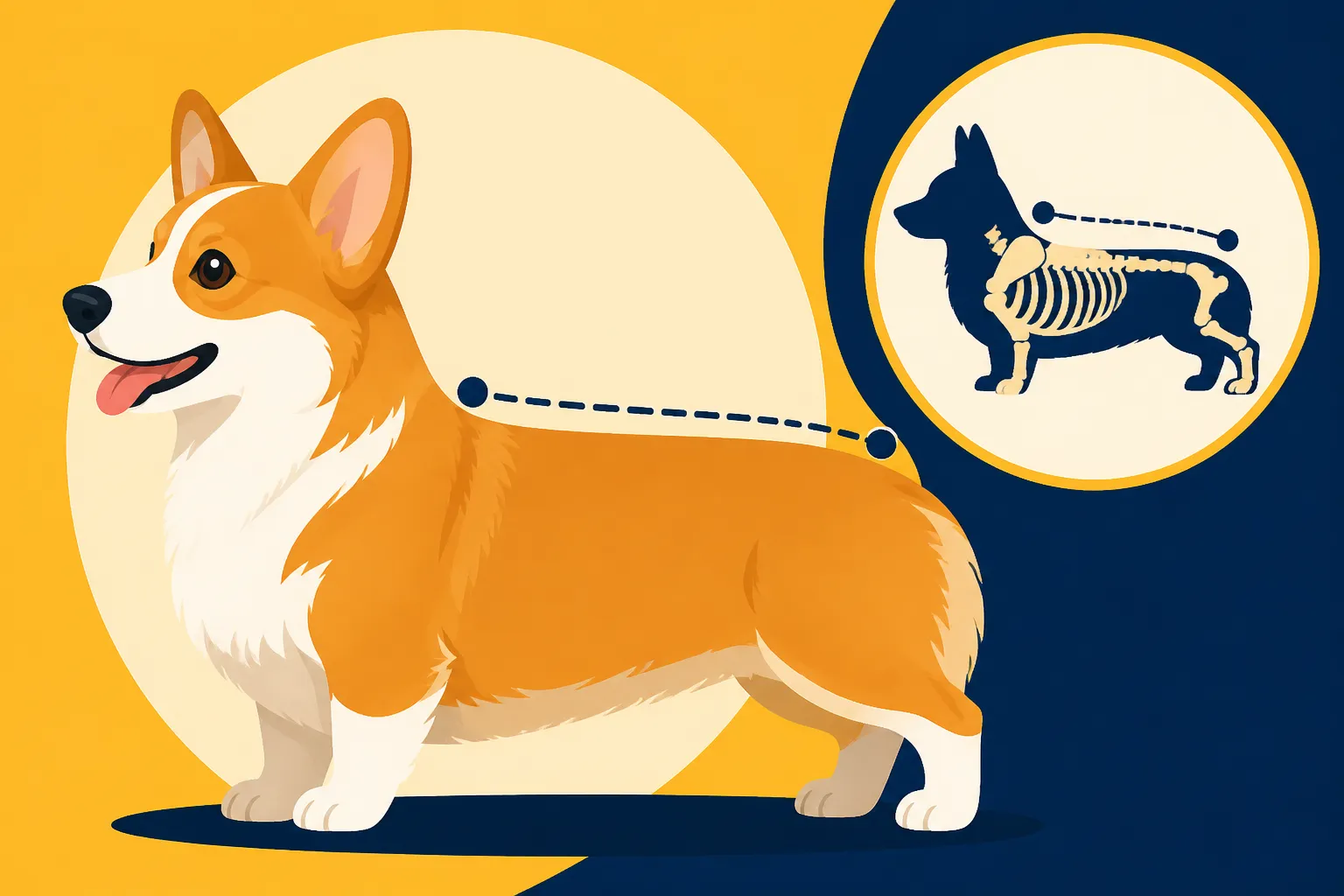
The Corgi Topline and Length of Back
It’s easy to look at a Corgi and immediately think “long dog,” isn’t it? Many of us owners have worried if that adorable, elongated body is inherently fragile, or if every little wobble means trouble. This guide is here to demystify the Corgi’s unique body shape, focusing on their topline and the true nature of their back length, so you can understand what to celebrate, what to support, and what signs might warrant a closer look.
Understanding the Corgi Topline: More Than Just a Straight Line
When we talk about a dog's "topline," we're referring to the outline of their back from just behind the shoulders all the way to the set of their tail. For Corgis, this isn't just a detail for show judges; it's a crucial indicator of their structural integrity and, by extension, their long-term spinal health. A proper topline provides stability and support, helping to distribute forces evenly across their unique, low-slung frame.
What an Ideal Corgi Topline Looks Like
Both the Pembroke Welsh Corgi and the Cardigan Welsh Corgi have very specific breed standards regarding their topline, though there are subtle differences. Generally, an ideal Corgi topline should appear level. It should run smoothly from the highest point of the shoulder blades back to the tail, with no dips, humps, or excessive arching. Imagine a straight, strong shelf that holds their body together. This levelness is what allows them to move efficiently as a low-to-the-ground herding dog, pivoting quickly without unnecessary strain on their spine.
Sometimes, you'll see Corgis with a slight rise over the loins, which is acceptable in some lines, particularly for Cardigans, but a distinct dip behind the shoulders or an exaggerated roach (arch) is generally considered a structural fault. These variations can indicate weaknesses or potential issues in their spinal alignment. It's not about vanity; it's about biomechanics. A strong, level topline is a strong, healthy back.
The Impact of Age, Weight, and Muscle Tone on the Topline
Even with a perfectly structured Corgi, their topline can tell a story about their health over time. As Corgis age, just like us, their muscle tone can diminish, and ligaments might loosen. This can sometimes lead to a slight softening of the topline, making it appear less taut and level than in their younger years. It's a natural process, but it's one we need to be mindful of. An aging Corgi might benefit from specific exercises or physical therapy to maintain core strength.
Weight, of course, plays a massive role. An overweight Corgi will often have fat deposited along their spine, which can make a truly level topline hard to discern by sight and even contribute to a less stable back structure overall. Think of it like trying to balance a stack of plates on a wobbly table – extra weight on a compromised base is just asking for trouble. Conversely, a Corgi that is underweight might have a topline that appears bony or sharp. Ensuring your Corgi maintains The Body Condition Score a Corgi Should Hold is paramount not just for their overall health, but specifically for supporting that crucial topline.
The Truth About Corgi Back Length: It's All About Proportion
When you look at a Corgi, their back often strikes you as long. It's a common observation, and it's not wrong to see them that way! However, it's essential to understand that this perceived "length" is primarily a function of their extremely short legs, rather than an inherently oversized spine. Their bodies are built for a specific purpose, and that purpose dictates their unique proportions.
The Functional "Long Back" of a Herding Dog
Corgis, both Pembrokes and Cardigans, were bred to be cattle-herding dogs. Imagine trying to herd cattle when you're tall and eye-level with their hooves – not a great survival strategy! Corgis needed to be low to the ground to nip at the heels of stubborn livestock without getting kicked. Their short stature and sturdy, elongated body allowed them to do just that, moving quickly and efficiently underneath the cattle.
Their back, while appearing long compared to their legs, is actually quite proportional for their breed. It's not excessively long in the way that some other long-backed breeds might be, where the spine is truly stretched to an unnatural degree. Instead, the Corgi possesses a robust, well-muscled body that is longer than it is tall, providing a low center of gravity and excellent maneuverability. This is why it's so important to understand Why a Corgi's Back Is Built the Way It Is. It's a design for a job, not a design flaw.
Distinguishing Healthy Proportions from Structural Faults
While a Corgi's back is designed to be longer than its height, there's a fine line between breed-typical proportions and an actual structural fault. An excessively long back, one that appears stretched or weak, can put undue stress on the intervertebral discs and surrounding musculature. This isn't just an aesthetic concern; it can significantly increase the risk of spinal problems like Intervertebral Disc Disease (IVDD).
A good way to gauge if your Corgi's length is within healthy parameters is to consider its overall balance. Does the dog look sturdy and powerful, or does it appear somewhat "snaky" or delicate in the body? The Corgi standard emphasizes a "sturdy" and "powerful" dog, despite its length. You want to see strength and substance, not a stretched-out appearance. A balanced Corgi should have enough length to move fluidly, but not so much that it compromises the integrity of its spine.
The Critical Connection: Topline, Back Length, and Spinal Health
It's undeniable: the Corgi's unique physique, with its long back and short legs, makes them more susceptible to certain spinal issues, particularly Intervertebral Disc Disease (IVDD). This isn't meant to scare you, but to empower you with knowledge. Understanding the link between their structure and these potential health challenges is the first step in proactive care. Disc Disease in a Long-Backed Corgi is a very real concern for many owners.
The Mechanics of Spinal Vulnerability
A Corgi's back has all the same components as any other dog's, but the geometry is different. Their intervertebral discs, which act as shock absorbers between the vertebrae, are under greater compressive forces due to the leverage created by their longer body relative to their short legs. Imagine a short bridge supporting a heavy load – the longer the bridge, the more stress on the supports. This is exacerbated by their chondrodystrophic dwarfism, a genetic trait that affects cartilage development, making their discs more prone to degeneration.
When a Corgi has a less-than-ideal topline – perhaps a dip or a slight roach – it means the forces aren't being distributed as evenly as they should be. This uneven distribution can put even more strain on specific discs, increasing the likelihood of them bulging, herniating, or even rupturing. Similarly, if a Corgi's back is truly excessively long, beyond the healthy proportional range, it adds another layer of vulnerability to these already susceptible discs.
Mitigating Risks Through Proactive Care
Knowing these risks doesn't mean you have to live in fear. It means you need to be a vigilant and responsible Corgi owner. Here are some key ways to support your Corgi's spinal health:
- Weight Management: This is probably the single most critical factor. Every extra pound your Corgi carries is an extra pound of stress on their spine. Keeping them lean significantly reduces the load on their discs. Your vet can help you determine the ideal weight for your individual Corgi.
- Preventing Risky Movements: High-impact activities like jumping off furniture, running up and down stairs repeatedly, or performing intense agility jumps can put sudden, twisting stress on the spine. It's a game of probabilities; one bad jump could be all it takes. Consider installing Ramps and Steps That Save a Corgi's Back around your home, especially for sofas and beds your Corgi loves.
- Proper Handling: Always support your Corgi's entire body when lifting them. Scoop them up with one arm under their chest and the other under their hindquarters, keeping their back straight and level. Avoid letting them dangle or carrying them only by their front legs. Picking a Corgi Up Without Hurting It is a skill every Corgi owner should master.
- Appropriate Exercise: While high-impact activities are risky, consistent, moderate exercise is vital for building strong core muscles that support the spine. Think brisk walks, gentle swimming (if they enjoy it), and mentally stimulating games.
- Supplements (with Vet Guidance): Some owners explore joint supplements containing glucosamine, chondroitin, or fish oil. While these generally focus on joint cartilage, a healthy overall musculoskeletal system is beneficial for back health. Always discuss any supplements with your vet, especially if you're looking at specific formulations from places like Chewy.
- Orthopedic Beds: Providing a supportive bed, especially as they age, can make a huge difference in how their spine rests and recovers. Look for beds that offer firm, even support without sagging. Chewy offers a wide range of orthopedic beds that can cater to a Corgi's specific needs.
Supporting Your Corgi's Back Throughout Their Life
Corgis are robust, resilient little dogs, and with the right care, many live long, happy lives free from severe back issues. The key is understanding their unique anatomy and proactively creating an environment that protects their precious spine. It's an ongoing commitment, but one that is well worth it for these amazing companions.
Environmental Adjustments for a Spine-Friendly Home
Your home environment plays a massive role in preventing spinal injuries. Start by observing your Corgi's daily routines. Do they leap off the sofa every time you walk by? Do they charge up and down the stairs like a rocket? These are the habits you need to address.
Ramps are your Corgi's best friend. Whether it's a ramp up to the bed, the sofa, or even a smaller ramp or steps for getting into the car, they eliminate those dangerous jolts and twists that can harm the spine. It might take a little training to get your Corgi to use them consistently, but it's a small investment of time for a huge return in spinal protection. Even if your Corgi seems perfectly agile, remember that a moment of misjudgment can happen.
Consider your flooring too. Hard, slippery surfaces like tile or polished hardwood can make it difficult for Corgis to get proper traction, leading to slips and falls that can jar their spine. Laying down runners or area rugs, particularly in high-traffic areas and where they launch themselves for playtime, can provide much-needed grip.
The Role of Regular Vet Checks and Early Intervention
Routine veterinary check-ups are essential for monitoring your Corgi's overall health, including their spinal condition. Your vet can assess their gait, muscle tone, and flexibility, and discuss any changes you might have noticed. If you ever see signs like reluctance to jump, difficulty with stairs, limping, weakness in the hind legs, or a change in their posture, don't delay. Early intervention is critical for many spinal conditions.
Sometimes, it can be tricky to differentiate between simple muscle soreness and something more serious like disc pain or even Telling Disc Pain From DM in a Corgi. A quick call to your vet can help you decide if an emergency visit is needed. Even if it turns out to be nothing major, peace of mind is invaluable, and catching a minor issue before it becomes a major one is always the best approach.
Long-Term Management and Support
For Corgis that do develop back issues, whether mild or severe, long-term management is often necessary. This can involve a combination of medication, physical therapy (like hydrotherapy or acupuncture), strict rest, and lifestyle adjustments. Mobility aids, such as slings or even custom wheelchairs, can greatly improve the quality of life for Corgis who have lost significant mobility in their hindquarters. Resources for these can often be found through specialized pet supply retailers, including online options like Chewy. The journey can be challenging, but with dedication and veterinary partnership, many Corgis continue to thrive.
| Feature | Ideal Corgi Topline and Back | Potential Issues / Concerns |
|---|---|---|
| Topline | Level, firm, smooth | Dipped behind shoulders, roached/arched excessively |
| Back Length | Proportionate to height, sturdy | Excessively long, appearing weak or stretched |
| Movement | Fluid, powerful, low to ground | Stiff, hesitant, wobbly, uncoordinated |
| Muscle Tone | Well-developed, firm | Sagging, atrophied, or overly fatty |
| Spinal Health | Stable, lower risk of injury | Increased risk of IVDD and other spinal conditions |
Disclaimer
This article is for general informational purposes only and does not constitute professional advice. Laws, prices and regulations vary by location and change over time. Consult a qualified professional for guidance on your specific situation.