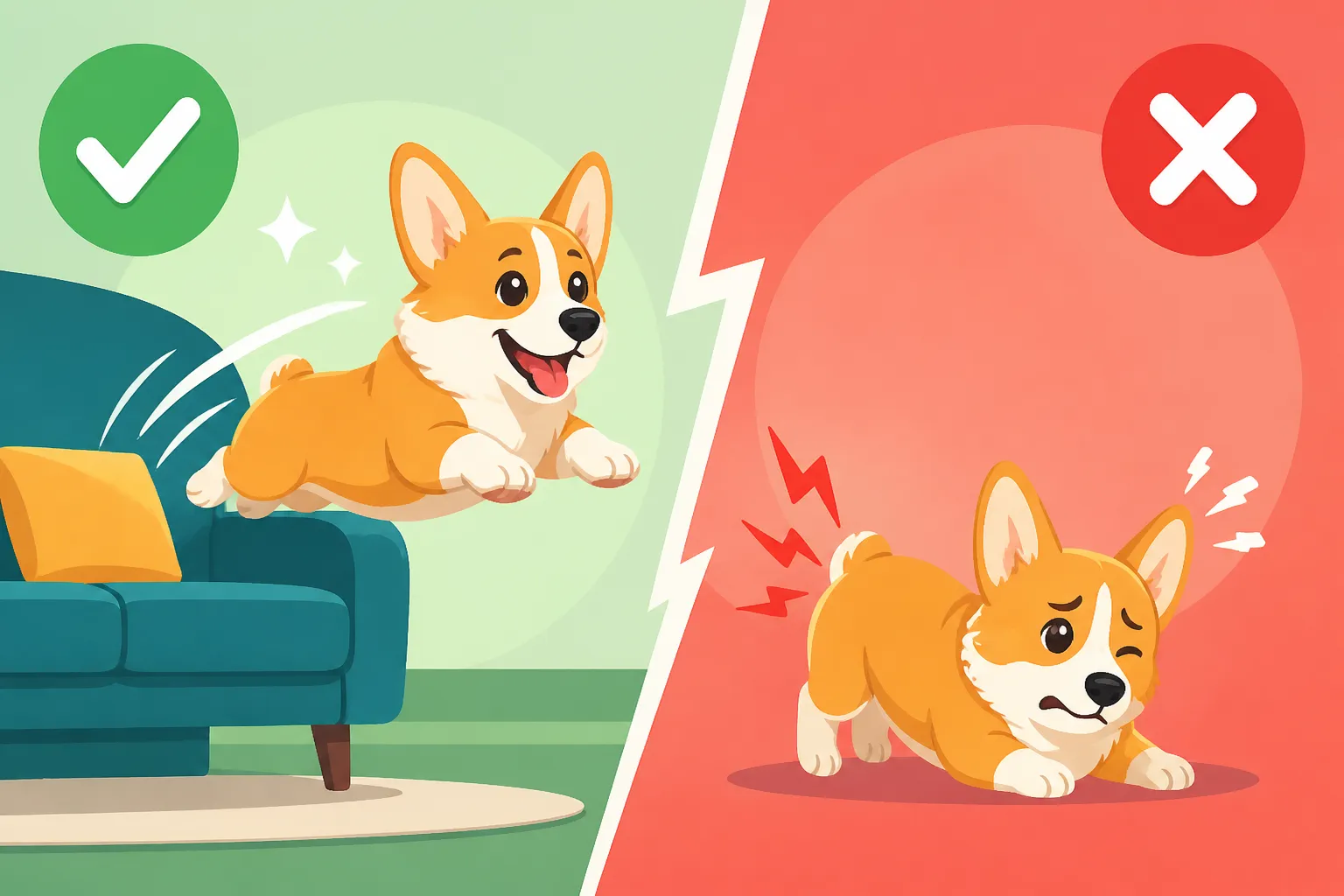
Whether a Corgi Should Ever Jump Off a Sofa
It’s a sight many Corgi owners know all too well: your pint-sized pal, with their deceptively short legs and surprisingly agile body, decides that the easiest way to get off the sofa is a daring leap straight to the floor. While it might look cute or even impressive to see them clear the distance, that seemingly innocuous jump can have devastating consequences for their unique and delicate spines. This guide dives deep into why this common behavior is so risky for Corgis and provides comprehensive strategies to protect your beloved companion from potentially life-altering injuries.
Understanding the Corgi Spine: Why Jumping is a Big No-No
Let's be brutally honest: Corgis are built for herding cattle by ducking under kicks, not for high-flying acrobatics. Their distinctive long bodies and short legs, while undeniably adorable, are also their greatest vulnerability. This unique structure predisposes them to serious spinal issues, especially when they engage in activities like jumping off furniture. It’s not just about a clumsy landing; it’s about the very mechanics of their anatomy.
The Unique Vulnerability to IVDD
The primary concern for Corgis, and many other chondrodystrophic breeds (meaning those with abnormal cartilage or bone development, which leads to their shorter limbs), is Intervertebral Disc Disease, or IVDD. Imagine the discs between your Corgi's vertebrae as tiny, jelly-filled shock absorbers. With IVDD, these discs can degenerate, bulge, or even rupture, pressing on the spinal cord. This pressure causes immense pain, nerve damage, and can lead to weakness, loss of coordination, and even paralysis in their hind legs. When a Corgi jumps, especially from a height, the impact can be precisely what it takes to trigger a disc event. The sudden compression and twist on their spine can force a disc to herniate, much like a jelly donut bursting under pressure. You might not see a full-blown rupture immediately, but each jump contributes to wear and tear, quietly setting the stage for a future crisis. Understanding Disc Disease in a Long-Backed Corgi is critical for every owner.
The Mechanics of Jumping and Landing Impact
Think about the forces involved when your Corgi launches itself off a sofa. First, there's the push-off, which engages their back and leg muscles, but also puts immediate compression on the spine. Then, there’s the brief moment of airborne suspension, followed by the hard landing. Even if they land perfectly on all four paws, the force of impact travels directly up their legs and into their spine. Unlike a dog with longer legs that can absorb more shock through their joints and a more flexible, proportionally shorter back, a Corgi's long, low-slung body acts like a lever. The impact force is amplified, concentrating stress on those delicate intervertebral discs. This kind of repetitive stress, day after day, jump after jump, significantly increases the risk of a severe disc injury. It's not a question of if it will happen for many Corgis, but when, if preventive measures aren't taken. Many owners don't realize that The Jump That Ruptures a Corgi Disc can be something as seemingly benign as hopping off the bed.
The Serious Risks of Sofa Jumps for Your Corgi
When we talk about "risks," we're not just discussing a little ouch or a limp that clears up in a day. For a Corgi, a bad jump can lead to a cascade of painful, expensive, and life-altering health issues. The immediate trauma can be severe, but the long-term consequences are equally daunting, impacting their mobility, comfort, and overall quality of life.
Slipped Discs and Neurological Consequences
The most immediate and terrifying outcome of a Corgi jumping from a height is an acute slipped or herniated disc. This isn't just a painful muscle strain; it's a structural failure in their spine that can compress the spinal cord. Depending on where the disc ruptures and how much pressure it exerts, the symptoms can range from excruciating pain, making them cry out when touched or moved, to complete paralysis of their hind legs. You might notice them dragging their back paws, stumbling, or having difficulty standing. In severe cases, they can lose control of their bladder and bowels, which is incredibly distressing for both dog and owner. The damage to the spinal cord can be permanent, affecting their ability to walk or even move their back legs ever again, even with intensive medical intervention.
Chronic Pain and Early Arthritis
Even if a jump doesn't cause a full-blown disc rupture, the repeated jarring and stress on the spine can lead to chronic inflammation and accelerated degeneration of the spinal discs and surrounding joints. This often manifests as persistent back pain, which might be subtle at first: a reluctance to play, slower movements, or a slight stiffness after resting. Over time, this chronic stress can contribute to the early onset and progression of arthritis in their spine and hips. Imagine living with a dull, constant ache in your back – that's what many Corgis experience. This not only diminishes their enjoyment of life but also requires ongoing pain management, often involving daily medication, joint supplements, and regular veterinary check-ups. It’s a sad reality that this kind of preventable wear and tear can lead to a life of discomfort for our lively little dogs. Sometimes, it can be tricky to distinguish between disc pain and other conditions, so it's good to know about Telling a Corgi's Slipped Disc From Myelopathy.
The Emotional and Financial Toll on Owners
Beyond the physical suffering of your Corgi, dealing with a spinal injury takes a tremendous emotional and financial toll on owners. Witnessing your vibrant, playful Corgi suddenly unable to walk or in severe pain is heartbreaking. The guilt, worry, and stress can be overwhelming. Then there are the practicalities: emergency vet visits, diagnostic imaging like MRIs, potential spinal surgery, and weeks or even months of intensive rehabilitation, including strict Crate Rest for a Corgi With a Bad Back. These treatments can be incredibly expensive, often costing thousands of dollars. For instance, spinal surgery can easily run into the five-figure range. This is where a robust pet insurance plan can be a lifesaver. Companies like Healthy Paws often cover a significant portion of these emergency and specialty care costs, providing immense relief during an incredibly stressful time. Without such coverage, many owners face unimaginable choices. Preparing for these potential emergencies by understanding Insuring a Corgi Before Its First Back Episode is a wise decision.
Preventing Jumps: Making Your Home Corgi-Safe
The good news is that many of these potential spinal nightmares are preventable with proactive measures. Making your home Corgi-safe isn't just about avoiding falls; it's about minimizing spinal stress in their everyday environment. This requires a bit of planning and consistency, but the effort is well worth the long-term health and happiness of your companion.
Ramps and Steps: The Essential Corgi Furniture
This is probably the single most impactful change you can make. Every piece of furniture that your Corgi regularly accesses – the sofa, the bed, your favorite armchair – should be equipped with a ramp or pet steps. Don't assume your Corgi will automatically use them. You'll need to train them patiently, using treats and positive reinforcement. Start by luring them up and down the ramp a few times a day. Make it a fun game, not a chore.
There are many styles available, from carpeted ramps that blend into your decor to sturdy, multi-step units. Consider the height of your furniture and choose a ramp that isn't too steep for their short legs. A good ramp will have a gentle incline, providing a safe, low-impact way for them to get on and off surfaces without any jarring movements. For example, brands like Pet Gear and Zinus offer a range of durable and stable pet ramps and steps that are often recommended by veterinarians. Placing a ramp at each access point, rather than expecting them to wait for you, empowers them to move safely and independently. This also helps with Ramps and Steps That Save a Corgi's Back.
Blocking Access and Safe Lifting Techniques
While ramps are fantastic, sometimes blocking access entirely is the safest bet. If there's a particular high bed or precarious armchair that can't easily accommodate a ramp, consider using baby gates to restrict access when you're not around to supervise. This is especially important when you're out of the house, as many disc injuries occur when dogs are unsupervised and make an impulsive jump.
When you do need to lift your Corgi, it's crucial to do so correctly to support their long back. Never pick them up by their front legs or under their chest alone, as this leaves their spine unsupported and dangling. Instead, use both hands: one hand firmly under their chest, supporting their front end, and the other hand under their hindquarters, supporting their rear. Lift them smoothly and keep their body level, minimizing any twisting or arching of the spine. This two-point support method distributes their weight evenly and protects their vulnerable back. Teaching your Corgi a "wait" cue before you lift them can also make the process smoother and safer for both of you.
Appropriate Exercise and Harness Use
While preventing jumps is key, maintaining a healthy, fit Corgi is also vital for spinal health. Regular, moderate exercise helps strengthen their core muscles, which in turn provides better support for their spine. Think short, controlled walks on a leash, rather than high-impact running or intense fetch games that involve sudden stops and twists. Avoid activities that encourage excessive jumping, twisting, or prolonged standing on hind legs. Instead, focus on low-impact activities like gentle leash walks, sniff-fari adventures in a secure yard, or even canine enrichment puzzles that engage their minds without straining their bodies.
When walking, always use a harness instead of a collar. A collar puts direct pressure on the neck and spine when your dog pulls, which can be detrimental, especially for a Corgi. A well-fitted, Y-shaped front-clip harness, like those from Kurgo or Ruffwear, distributes pressure evenly across their chest and shoulders, away from their delicate neck and back. This is also important to consider Whether a Corgi Should Wear a Harness Not a Collar, which I always recommend.
By implementing these preventative measures, you're not just hoping for the best; you're actively creating an environment that champions your Corgi's spinal health and dramatically reduces the risk of devastating injuries.
When Jumps Go Wrong: Recognizing and Responding to Injury
Despite our best efforts, accidents can happen. If your Corgi has jumped and you suspect an injury, knowing the signs and acting quickly is paramount. Early intervention can significantly impact the outcome, potentially reducing pain and preventing further damage.
Early Signs of Disc Injury
A Corgi in pain might not always cry out. Sometimes, the signs are much more subtle, especially in stoic dogs. It's crucial to observe your Corgi's normal behavior closely so you can spot deviations. Here are some common indicators of a potential disc injury:
- Pain: This is the most obvious sign. Your Corgi might yelp when touched, especially along their back or neck. They might tremble, pant excessively, or refuse to move. Some might even tuck their tail or have a hunched posture.
- Reluctance to Move: They might be hesitant to jump up or down (even from very low heights), climb stairs, or even walk. They might refuse to play or seem unusually quiet and withdrawn.
- Changes in Gait: Observe how they walk. Are they stumbling, dragging their paws, or wobbling in their hindquarters? You might notice a lack of coordination, or one leg seeming weaker than the other. Sometimes, their back legs might cross over when they walk.
- Muscle Spasms: You might see or feel muscle tremors or stiffness along their spine.
- Loss of Bladder/Bowel Control: In severe cases, disc compression can affect nerve function to the point where they lose control over urination or defecation. This is a medical emergency.
Any of these signs, especially if they appear suddenly after a jump or strenuous activity, warrant immediate veterinary attention. Don’t wait to see if it gets better, as delaying treatment can lead to worse outcomes. Recognizing Emergency Signs of a Corgi Disc Injury is vital for every owner.
Immediate Steps and Veterinary Care
If you suspect your Corgi has injured their back, the first and most critical step is to minimize movement. Immediately restrict them to a small, secure area – ideally a crate or a small room – to prevent further damage. Do not let them jump, run, or climb. Carry them carefully (using the proper two-hand support technique) if they need to be moved for potty breaks.
Contact your veterinarian immediately. Explain what happened and the symptoms you're observing. They will likely want to see your Corgi as soon as possible. During the veterinary examination, your vet will perform a thorough neurological assessment to pinpoint the location and severity of the potential injury. This might involve checking reflexes, pain response, and proprioception (their awareness of where their limbs are in space).
To get a definitive diagnosis, your vet may recommend advanced imaging like an MRI or CT scan. These tools allow veterinarians to visualize the spinal cord and identify exactly which disc is affected and how severely. This is a crucial step if Spinal Surgery on a Corgi is being considered. A veterinary neurologist, which your vet might refer you to, is specialized in these types of cases and can often provide the most accurate diagnosis and treatment plan. Knowing What a Neurologist Checks in a Corgi can help you understand the process.
Treatment Options and the Value of Pet Insurance
Treatment for a Corgi disc injury varies depending on the severity.
- Conservative Management: For milder cases, this involves strict crate rest for several weeks (often 4-8 weeks), anti-inflammatory medications, pain relievers, and sometimes muscle relaxers. The goal is to reduce swelling, alleviate pain, and allow the disc to heal. This can be challenging for active Corgis, but it’s absolutely critical for recovery. During this time, gentle physical therapy might be introduced as they improve.
- Spinal Surgery: For severe herniations that cause significant neurological deficits or paralysis, surgery is often the best, and sometimes only, option. The procedure involves carefully removing the damaged disc material that is compressing the spinal cord. While surgery carries risks, it can often provide the best chance for full recovery of mobility. Post-operative care includes intensive nursing, pain management, and a dedicated rehabilitation program.
Regardless of the treatment path, the costs can be substantial. This is precisely why pet insurance, especially from providers like Healthy Paws, is so invaluable for Corgi owners. A good policy can cover a significant portion of emergency visits, diagnostic scans, medications, surgery, and rehabilitation therapies. Having that financial safety net allows you to make treatment decisions based on what’s best for your Corgi, rather than being constrained by cost. It’s an investment in their long-term health and your peace of mind.
It’s clear that preventing your Corgi from jumping off furniture is one of the most important things you can do to protect their health and ensure they live a long, comfortable, and happy life free from preventable spinal issues.
Disclaimer
The information provided in this article is for educational purposes only and is not intended to be a substitute for professional veterinary advice. Always consult with a qualified veterinarian for any health concerns or before making any decisions about your Corgi's health or treatment.