When Pembrokes Arrived in Wales
It’s a funny thing, isn’t it? We bring these adorable, low-riding, big-eared bundles of joy into our homes, and often we’re so swept up in their playful antics that we don’t stop to think about where they truly come from. Specifically, when did those charming Pembroke Welsh Corgis actually arrive in Wales? It’s a question shrouded in a bit of historical mystery, but one that’s fascinating to explore, and this guide will delve into the various theories surrounding their ancient journey.
The Enigma of the Pembroke's Origins in Wales
The Pembroke Welsh Corgi, as we know and love them today, is undeniably a breed deeply tied to the land and farms of Wales. Their short legs and sturdy bodies were perfectly suited for nipping at the heels of cattle, avoiding kicks, and driving livestock across the Welsh countryside. However, pinning down the exact moment these incredible dogs first set paw on Welsh soil is where the historical plot thickens. Unlike some breeds with meticulous records, the Corgi’s origins are largely speculative, built upon linguistic clues, historical migration patterns, and the characteristics of ancient dogs.
For many of us Corgi owners, it feels like they’ve just always been there, a quintessential part of Welsh heritage. But even something as ancient as the Corgi had to arrive somehow, didn't it? Understanding their potential entry points helps us appreciate the long, winding path that led to the happy, vocal companion sitting at your feet right now. It connects your furry friend to a much larger story of human migration and animal companionship that spans centuries.
Tracing the Ancient Roots and Herding Heritage
Before we talk about arrival, let’s acknowledge what these dogs were once they got there. Pembrokes, like their Cardigan cousins, were purpose-bred working dogs. Their low stature wasn't just cute; it was a job requirement. Imagine trying to herd a stubborn steer if you were eye-level with its horns! The Corgi's job was to dart in, nip at the animal's hocks, and duck out of the way before the cattle could react. This critical role on the farm shaped their physical form and tenacious personality. You can learn more about this historical occupation in The Cattle Dog Behind the Corgi.
While their role as herders is crystal clear, the journey that brought their ancestral stock to Wales is less so. There's no grand ship manifest detailing "20 Corgi-like dogs" disembarking in some Welsh port in the year 1000. Instead, historians and canine geneticists piece together clues from folklore, linguistic connections, and the presence of similar dog types in other parts of Europe. This makes the hunt for their arrival date feel a bit like detective work, relying on circumstantial evidence and educated guesses, which is part of its charm!
The Norse or Flemish Connection
When discussing when Pembrokes arrived in Wales, two major theories dominate the conversation, each with its own compelling arguments and implications for the breed's lineage. These aren't just academic debates; they speak to the very essence of what makes a Pembroke a Pembroke.
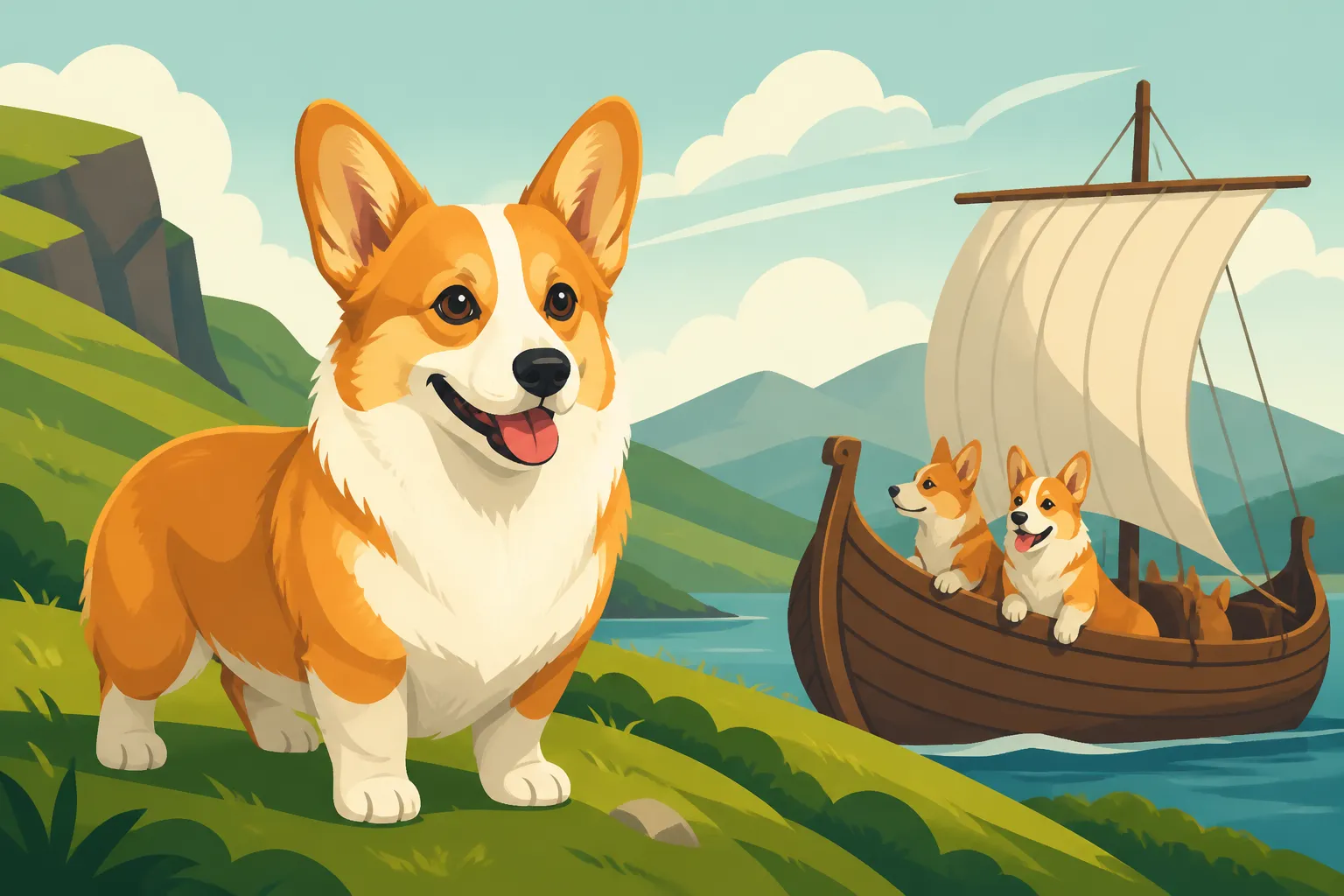
The first theory points to the Norsemen, or Vikings, who famously raided and settled along the coasts of Britain, including parts of Wales, from the 9th to the 11th centuries. It’s theorized that these seafaring warriors brought their own spitz-type herding dogs with them. These dogs, similar to the modern-day Swedish Vallhund, might have been the ancestors of the Pembroke Welsh Corgi. The physical similarities – the foxy head, erect ears, and sturdy, long body – are certainly striking. If this theory holds water, it would place the Pembroke's arrival much earlier than the alternative, embedding them deep within the ancient history of Welsh settlement. Exploring Which Dogs the Vikings Brought to Pembroke can give you a deeper look into this fascinating possibility. This connection paints a picture of resilient, adaptable dogs accompanying their human counterparts on long, arduous journeys across the seas, settling into new lands and new roles.
On the other hand, a second prominent theory ties the Pembroke's arrival to the Flemish weavers. In the 10th to 12th centuries, King Henry I invited skilled Flemish artisans to settle in various parts of Britain, including southwestern Wales, to boost the local economy with their textile expertise. It's believed these weavers brought their own herding dogs, often referred to as "Dutchmen's cattle dogs," which bore a strong resemblance to the ancestors of the modern Pembroke. These dogs would have been small, stout, and adept at controlling cattle, much like early Corgis. This theory is explored further in The Flemish Connection to the Pembroke. The idea here is that these dogs, arriving with their human families, quickly found a new purpose in the verdant, livestock-rich landscapes of Wales, contributing their unique skills to the thriving agricultural communities.
Each theory has its merits, and neither completely excludes the possibility of some blending of dog populations over centuries. What's clear is that the dogs that would become Pembrokes arrived with human migrants, not as an indigenous Welsh animal, and quickly made themselves indispensable.
Distinguishing Pembroke Arrival from Cardigan's Deeper Past
It's easy to lump both Corgi breeds together when talking about Welsh history, but it’s really important to remember that the Pembroke and the Cardigan Welsh Corgi have distinct origins. While both ended up performing similar jobs in Wales, their ancestral lines appear to have taken different paths to get there, with the Cardigan generally considered to have a much older, potentially indigenous, connection to the land.
This distinction is key to understanding the term "arrival" in the context of the Pembroke. For the Cardigan, it’s less about an "arrival" and more about an evolution within Wales, whereas the Pembroke's story involves a more definite external introduction. This fundamental difference in their ancestral journey explains why, despite their shared Corgi name and similar appearance, they are recognized as completely separate breeds.
Cardigan's Independent Ancestry
The Cardigan Welsh Corgi is often considered the older of the two Corgi breeds, with a history that stretches back perhaps 3,000 years or more. While the Pembroke's lineage is often debated between Norse and Flemish influences, the Cardigan's roots are believed to be much more deeply embedded in ancient Wales itself, likely descending from the Teckel family of dogs that also gave rise to the Dachshund. If you're curious about this, Whether the Cardigan Came From the Teckel Family offers a deeper dive into their ancient history.
Their long, brush-like tails and slightly larger, more robust build are just some of the physical cues hinting at their distinct evolutionary path. It's thought that these dogs were present in Wales long before the proposed arrival of the Pembroke's ancestors, working alongside early Celtic settlers. This indigenous heritage gives the Cardigan a slightly different historical narrative, one of ancient continuity rather than distinct immigration. How Old the Cardigan Welsh Corgi Is is a great resource if you want to understand the Cardigan's profound history.
Why the Distinction Matters
Understanding the separate ancestral histories of the Pembroke and Cardigan isn't just a matter of trivia; it’s fundamental to appreciating the distinct qualities of each breed. Even though they both share the moniker "Corgi" – a Welsh word meaning "dwarf dog" or "cur dog" (you can learn more in What Corgi Means in Welsh) – their divergence runs deep. This separate evolution ultimately led to their formal recognition as two distinct breeds.
This historical separation is Why the Two Corgi Breeds Were Kept Apart for so long, and ultimately why The 1934 Split Into Pembroke and Cardigan by the Kennel Club was necessary. It wasn't just about their tails or subtle differences in their heads; it was about acknowledging fundamentally different genetic and historical origins. While a modern Corgi owner might just see a cute, low-rider, a careful look at their history reveals a fascinating tapestry of ancient migrations, human settlement, and selective breeding that has shaped each breed uniquely.
| Theory of Pembroke Arrival | Estimated Timeframe | Proposed Originators | Supporting Evidence |
|---|---|---|---|
| Norse/Viking Influence | 9th – 11th Centuries AD | Vikings | Similarities to Swedish Vallhund, historical Viking settlements in Pembrokeshire, shared spitz-type characteristics. |
| Flemish Weaver Influence | 10th – 12th Centuries AD | Flemish Weavers | Historical invitation of Flemish artisans to Wales, presence of similar 'Dutchmen's cattle dogs' in Flanders. |
The Impact of Their Welsh Settlement and Development
Regardless of whether they came with Vikings or Flemish weavers, what is undeniable is that once their ancestors arrived, they quickly established themselves as invaluable members of Welsh agricultural society. The specific conditions and needs of Welsh farms were the crucible in which the Pembroke Welsh Corgi, as we recognize it, was truly forged. Their characteristics were honed by generations of working stock, cementing their place in the heart of Wales.
This isn’t just a historical footnote; it influences the Corgi we interact with today. Their intelligence, their bossy nature, their vocal tendencies – all can be traced back to their working past. Even if your Corgi's biggest "herd" is your family or the dust bunnies under the sofa, those instincts are still very much alive. Providing them with opportunities to engage those natural drives, perhaps through puzzle toys or engaging training, is a wonderful way to honor their heritage. You can find a fantastic selection of these items on Chewy, making it easy to cater to your Corgi's intelligent mind.
Adapting to the Welsh Landscape and Life
Once these ancestral dogs settled in Wales, they were put to work, and quickly adapted to the unique challenges of the Welsh landscape. The rolling hills, often boggy ground, and the hardy Welsh cattle all played a role in shaping the breed. Their short legs meant they had a low center of gravity, making them agile and stable on uneven terrain. Their thick, weather-resistant double coat, perfect for the often-damp Welsh climate, protected them from the elements and the rough-and-tumble of farm life.
Over time, farmers selectively bred the dogs that were most effective at their job. This meant favoring traits like courage, intelligence, and the distinctive "heel-nipping" technique that kept the cattle moving without putting the dog in too much danger. It was a rigorous selection process based purely on utility, creating a highly functional and resilient dog. They weren't just pets; they were essential co-workers. What a Welsh Corgi Did on a Farm All Day details their demanding daily lives. This adaptation process turned various ancestral dogs into the cohesive, recognizable breed that we now cherish.
From Farm Dog to Family Companion
Fast forward many centuries, and the Pembroke Welsh Corgi transitioned from being primarily a working farm dog to the beloved family companion we know today. While their working past is an integral part of their story, their affable nature, intelligence, and compact size made them adaptable to domestic life. This shift didn't erase their ancient instincts, but it did mean they needed new ways to channel their energy and intelligence within a home environment.
Modern Corgi owners understand that these dogs, even if they aren't herding cattle, still require mental and physical stimulation. They thrive on routine, learning, and having a "job" to do, whether that's fetching the paper or mastering a new trick. Ensuring they have a balanced diet, perhaps from a trusted source like Chewy, and plenty of activity helps keep them healthy and happy. Their lineage, whether Viking or Flemish, speaks to a history of resilience and partnership. It's a testament to their enduring charm and capabilities that they remain one of the most popular breeds globally. When you look at your Corgi, you're not just seeing a cute face; you're seeing centuries of history embodied in a loyal, spirited friend.
Disclaimer
This article is for general informational purposes only and does not constitute professional advice. Laws, prices and regulations vary by location and change over time. Consult a qualified professional for guidance on your specific situation.