The 1934 Split Into Pembroke and Cardigan
It’s a common moment for many Corgi enthusiasts: you see two adorable, low-slung dogs, both undeniably Corgis, but with subtle differences that make you wonder, "Are they even the same breed?" This confusion isn't new, and it stems directly from a significant historical event in 1934 when the Kennel Club officially recognized what had long been informally understood: that the Pembroke Welsh Corgi and the Cardigan Welsh Corgi were, in fact, two distinct breeds, each deserving its own standard and recognition. This guide will walk you through the history, the reasons, and the lasting impact of that pivotal decision.
Before the Divide: A Shared Welsh Heritage
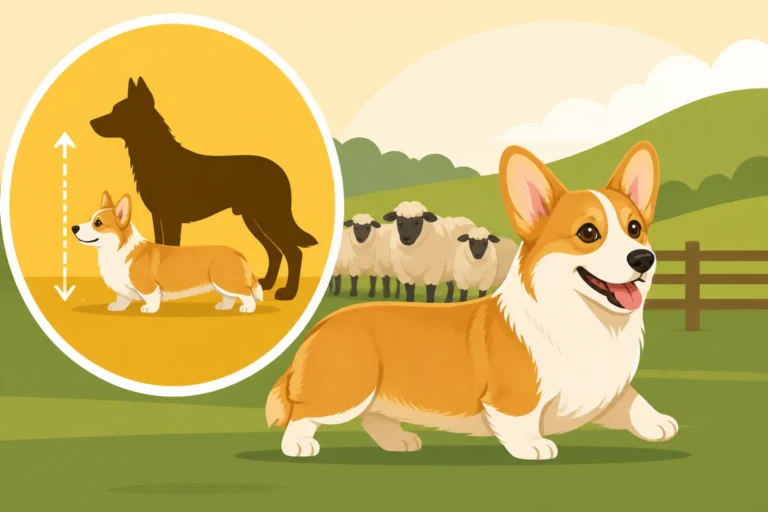
Before the formal split, Corgis were broadly recognized as resilient, intelligent working dogs from Wales. Their short stature and agile bodies made them perfectly suited for herding cattle by nipping at their heels and ducking out of the way of kicks. But even then, subtle differences existed, hinting at their distinct evolutionary paths within the Welsh landscape.
Ancient Roots and Working Lives
For centuries, the Corgi type had been an indispensable part of Welsh farm life. These dogs weren't bred for fancy show rings; they were bred for function. Their primary job was to drive cattle, often larger and more stubborn than themselves, across vast distances to market. This demanding role required dogs that were hardy, intelligent, and fearless. The unique geography of Wales, with its often isolated valleys and distinct agricultural practices, naturally led to slight variations in the dogs developed in different regions. The dogs we now know as Cardigans were typically found in Cardiganshire, while those that would become Pembrokes were from Pembrokeshire, each region fostering traits best suited to its specific needs.
Imagine a busy Welsh drover in the 10th or 11th century. His livelihood depended on his dogs' ability to control a herd of powerful, potentially dangerous cattle. These early Corgis were an integral part of the family and the farm, not just pets but working partners. They faced harsh weather, long days, and demanding tasks, all of which contributed to the robust, no-nonsense temperament that still characterizes both breeds today. Their low-rider build was a strategic advantage, keeping them out of harm's way when working large livestock.
Regional Distinctions in Early Corgis
Even before 1934, keen observers could note differences between the Corgis from Cardiganshire and those from Pembrokeshire. These weren't arbitrary distinctions; they were the natural outcome of localized breeding efforts, often influenced by the types of dogs already present in a given area. The Cardigan, for instance, is thought to have older, possibly "Teckel" (dachshund-like) ancestry, which might explain its slightly larger bone structure and naturally longer tail. In contrast, the Pembroke’s lineage is often linked to Spitz-type dogs brought by Flemish weavers, potentially contributing to its finer bone, more foxy head, and sometimes naturally bobbed tail.
These distinctions weren't always clear-cut, of course. Farmers might trade dogs, and some intermingling surely occurred. However, the general trends were there: a slightly heavier-boned, longer-tailed dog in one region, and a slightly more refined, sometimes naturally bobtailed dog in another. These subtle differences were enough for enthusiasts and early breed fanciers to begin discussing whether they were truly one "Corgi" or two distinct varieties. This kind of discussion is common with many ancient working breeds, where function often dictates form, leading to regional variations that eventually become recognized as separate breeds.
The Path to Official Recognition
The journey from regional farm dogs to officially recognized breeds was a long one, marked by increasing interest in purebred dogs and the establishment of formal breed standards. The Kennel Club, the oldest recognized kennel club in the world, played a crucial role in this process, seeking to define and preserve distinct canine types.
Early Kennel Club Classifications
When Corgis first entered the world of organized dog shows and breed registration, the Kennel Club initially lumped both types together under the single umbrella of "Welsh Corgi." This was a practical approach at the time, as the primary focus was on establishing the general "Corgi" type as a recognized breed, rather than dissecting its finer regional variations. Imagine the early 20th century: dog shows were gaining popularity, and people were fascinated by the diverse array of breeds emerging from working lines. The Welsh Corgi, with its unique appearance and charming personality, quickly captured attention.
However, even with a single classification, the differences between the Cardigan and Pembroke types were evident to those intimately familiar with the dogs. Judges would often see both "varieties" on the same bench, leading to informal discussions about which traits were truly characteristic of the "Welsh Corgi." This initial joint classification, while simplifying things for registration purposes, actually highlighted the need for a more precise definition as the breed gained traction. After all, how could you judge a dog against a standard if the standard itself encompassed two somewhat different types?
The Growing Differences: Appearance and Temperament
As Corgis gained popularity beyond the farm, breeders and enthusiasts began to pay closer attention to specific characteristics. The differences in appearance became more pronounced through selective breeding. The Cardigan's distinctive large, rounded ears and long, brush-like tail stood in contrast to the Pembroke's slightly smaller, more pointed ears and naturally bobbed or docked tail. The Cardigan also tended to be a bit longer in body relative to its height, with a slightly deeper chest and heavier bone. These aren't just cosmetic details; they often reflect subtle variations in how the dogs move and perform their tasks.
Beyond physical traits, temperamental nuances were also observed. While both are intelligent, loyal, and somewhat stubborn herders, many noted the Cardigan as having a slightly more mellow and watchful disposition, perhaps reflecting its older, more ancient lineage. The Pembroke, on the other hand, was often described as a bit more outgoing, vivacious, and perhaps a touch more vocal—a trait many Corgi owners can attest to! These accumulating distinctions, both physical and behavioral, made it increasingly difficult for judges to apply a single breed standard fairly, pushing the breed community towards a formal separation. This growing awareness set the stage for the historic decision that would forever change the Corgi landscape.
The Pivotal Year: 1934 and the Formal Split
The year 1934 stands as a landmark in Corgi history, the moment when years of observation, debate, and growing distinction culminated in an official decision by the Kennel Club. This was not a sudden impulse, but the resolution of a long-standing discussion about the true identity of these beloved Welsh dogs.
The Rationale Behind the Separation
The primary reason for the formal separation was simply the recognition that the two types of Corgis had, over centuries of regional development, diverged into distinct breeds. They had different origins, different physical characteristics, and even subtle differences in their working styles and temperaments. Trying to maintain a single breed standard became increasingly impractical and unfair to both types. How could a judge accurately assess a Cardigan's conformation, with its long, sweeping tail and rounded ears, against a Pembroke's foxy head and often natural bobtail, if they were both considered the same "Welsh Corgi"? It was like trying to judge apples and oranges by the same rulebook.
The formal split allowed each breed to have its own specific standard, ensuring that breeders could focus on preserving and enhancing the unique traits of either the Pembroke or the Cardigan. This meant clearer guidelines for breeding, judging, and maintaining breed integrity. It wasn't about diminishing one or elevating the other; it was about acknowledging their individual identities. This move ensured that future generations of Corgis, both Pembroke and Cardigan, would develop according to clear, distinct breed ideals, safeguarding their unique heritage.
Immediate Impact on Breeders and Owners
The official recognition of two distinct breeds had an immediate and significant impact on the Corgi community. For breeders who had been specializing in one type or the other, it brought clarity. They no longer had to navigate a single, often ambiguous, standard but could now commit fully to breeding either Pembrokes or Cardigans according to their own specific guidelines. This reduced confusion in the show ring and allowed for more focused breeding programs. Suddenly, showing a long-tailed Cardigan against a bobtailed Pembroke made logical sense because they were no longer direct competitors within the same class; they were champions of their respective, now-separate, breeds.
For owners, the split helped clarify which type of Corgi they owned, or wanted to own. It fostered a deeper appreciation for the subtle yet important differences that had evolved. While some might have initially found the separation a bit perplexing, it ultimately served to strengthen both breeds by allowing them to flourish independently. This also meant that if you were looking for specific traits, like a particular ear set or tail carriage, you could now seek out the breed that consistently exhibited those characteristics, whether it was a Cardigan for its stately tail or a Pembroke for its lively, tail-free waddle. Reputable breeders, like those often found listing on platforms such as Chewy, would soon begin to clearly distinguish between the two.
Key Differences That Solidified the Split
The 1934 decision wasn't arbitrary; it was based on tangible, consistent differences that had developed over centuries. Understanding these key distinctions is vital for appreciating why the separation was not just logical, but necessary.
Physical Traits: Tails, Ears, and Build
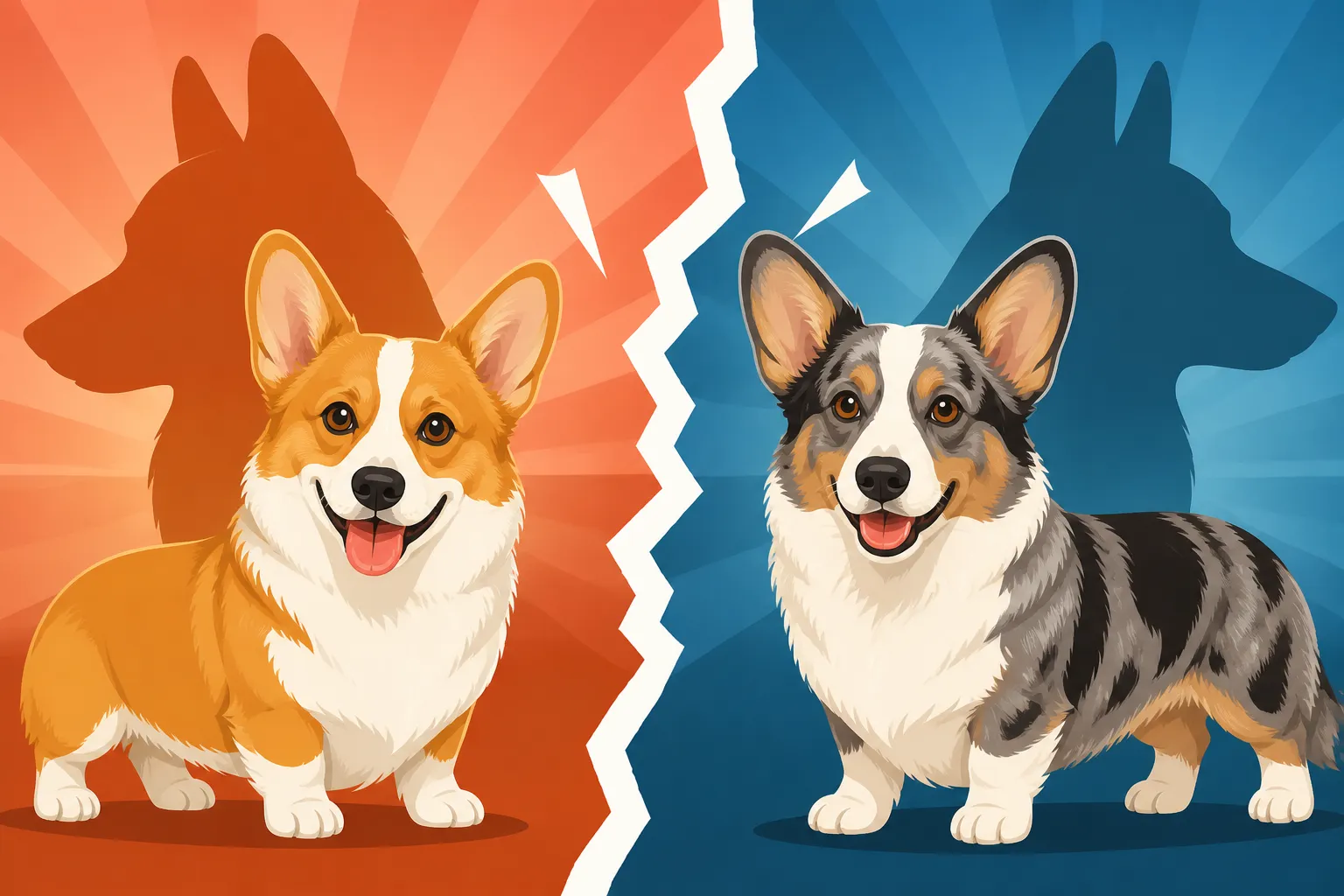
The most visually striking differences between the Pembroke and Cardigan Welsh Corgis lie in their tails, ears, and overall build. The Cardigan is characterized by its long, fox-like tail that is carried low, resembling that of a brush. Its ears are notably larger and more rounded at the tips, often described as "bat ears," set wide apart. In terms of build, Cardigans tend to be slightly larger and heavier-boned than Pembrokes, giving them a more robust, substantial appearance. They also typically have a longer body relative to their height. You can dive deeper into Cardigan Tails Against Pembroke Tails for more specific details.
In contrast, the Pembroke is famous for its natural bobtail or a tail that was traditionally docked, resulting in a very short, almost absent tail that gives it its characteristic "wiggle butt." Its ears are smaller and more pointed, giving it a foxy expression. Pembrokes generally have a slightly lighter bone structure and are typically a bit shorter in body, with an overall more compact and agile look. The Corgi Ear Shape the Standard Calls For is another fascinating point of distinction between the two. These differences in physical standards are not merely aesthetic; they reflect distinct genetic lineages and historical preferences.
| Feature | Pembroke Welsh Corgi | Cardigan Welsh Corgi |
|---|---|---|
| Tail | Naturally bobbed or traditionally docked; very short. | Long, brush-like, carried low (fox-like). |
| Ears | Smaller, more pointed, foxy expression. | Larger, rounded at tips (bat ears), wider set. |
| Build | Slightly lighter bone, more compact body. | Slightly heavier bone, longer body. |
| Head | More foxy, wedges to a point. | Broader, flatter skull, powerful jaw. |
| Size | Slightly smaller, generally less weight. | Slightly larger, generally more weight. |
Temperamental Nuances and Working Styles
While both breeds share the quintessential Corgi intelligence and independent spirit, there are subtle temperamental differences that became more apparent over time. The Cardigan is often described as a bit more reserved, thoughtful, and perhaps a touch calmer. They can be intensely loyal to their families and watchful, sometimes taking a moment to assess new situations or strangers before engaging. Their working style was historically more about driving cattle with a steady, persistent presence.
The Pembroke, on the other hand, is generally perceived as more outgoing, effervescent, and boisterous. They often have a reputation for being more vocal—sometimes described as having a lot to say! They tend to be very enthusiastic and playful, always ready for an adventure. Their herding style, while similar, might lean more towards quick, agile nips and rapid movements. Both breeds are highly intelligent and require mental stimulation, but the Pembroke’s zest for life often manifests in a more outwardly expressive personality. Understanding these nuances helps explain why someone might gravitate to one over the other, even though both are fantastic companions. You might also find it interesting to learn Whether Cardigans Are Calmer Than Pembrokes.
Post-Split Development and Modern Identity
After the 1934 split, both Pembroke and Cardigan Corgis continued to develop their distinct identities, each gaining its own set of admirers and champions. Their paths diverged not only in their official standards but also in their public perception and popularity.
The Pembroke's Rise to Popularity
The Pembroke Welsh Corgi experienced a surge in popularity that few breeds ever achieve, largely due to its association with the British Royal Family. Queen Elizabeth II famously adored the breed, owning more than 30 Pembrokes throughout her reign. This royal endorsement catapulted the Pembroke into the global spotlight, making it one of the most recognizable and beloved dog breeds in the world. Suddenly, everyone wanted a Corgi, and the Pembroke, with its charming face and iconic "stump" tail, became the face of the breed.
This rise to prominence meant that more people sought out Pembrokes, leading to increased breeding and a wider distribution of the breed. While this brought greater awareness, it also brought challenges, such as the potential for irresponsible breeding due to high demand. However, dedicated breeders worked hard to maintain the breed standard and promote responsible ownership. The Pembroke became, and remains, a darling of social media and pop culture, embodying a blend of regal dignity and playful charm. Its compact size and cheerful disposition make it a popular choice for families and individuals alike, often leading owners to seek out quality products from trusted retailers like Chewy for their specific needs.
The Cardigan's Steadfast Niche
While the Pembroke enjoyed widespread celebrity, the Cardigan Welsh Corgi carved out a more steadfast, if less flashy, niche. It has always had a devoted following among those who appreciate its slightly larger size, robust build, and distinct tail. The Cardigan's supporters often value its slightly more reserved nature and ancient lineage, recognizing it as perhaps the older of the two Corgi types. Though not having the same royal connection, the Cardigan's loyal fan base ensured its continued presence and development.
Breeders of Cardigans continued to focus on preserving its unique characteristics, ensuring that its longer tail, rounded ears, and slightly more substantial build remained true to its standard. The Cardigan is often seen as a bit more "old-fashioned" or traditional, holding onto a quieter dignity. It often appeals to owners who prefer a dog with a slightly more watchful demeanor but still possess all the intelligence and loyalty of the Corgi family. While perhaps not as ubiquitous as the Pembroke, the Cardigan has a strong, enduring appeal that speaks to its ancient heritage and distinctive charm, making it a cherished companion for those who seek it out.
Understanding the Legacy of the Split Today
The 1934 split isn't just a historical footnote; it's a foundational event that continues to shape how we understand, breed, and care for both Corgi varieties today. For anyone considering bringing one of these wonderful dogs into their lives, knowing this history provides invaluable context.
Why the Distinction Still Matters for Owners
For current and prospective Corgi owners, understanding the distinction between Pembrokes and Cardigans is incredibly important. It's not just about aesthetics; it's about temperament, potential health considerations, and breed-specific needs. While both are Corgis, they are not interchangeable. For instance, if you're drawn to the classic "wiggle butt" and a particularly outgoing personality, a Pembroke might be your ideal match. If you prefer a longer tail, slightly more reserved demeanor, and a dog with a generally heavier build, a Cardigan could be better suited. Learning about The Twelve to Fifteen Year Corgi Lifespan will also reveal that while generally similar, breed-specific predispositions mean subtle differences in health profiles may exist.
This knowledge empowers you to make an informed decision when choosing a puppy or adopting an adult Corgi. It also helps you understand the breed standard your dog was bred to, which can inform everything from grooming practices—especially when considering a The Fluffy Corgi and the Standard—to training approaches. Knowing your Corgi's specific breed allows you to better appreciate its unique characteristics and cater to its particular needs, ensuring a happier and healthier life together. Responsible ownership starts with knowing exactly which wonderful Corgi you've welcomed into your home.
Supporting Both Breeds Responsibly
The legacy of the 1934 split also highlights the importance of supporting both breeds responsibly. This means seeking out ethical breeders who prioritize health testing and adhere to breed standards, whether for a Pembroke or a Cardigan. It means understanding the unique genetic predispositions of each breed and being prepared for the specific care they might require. For example, while both breeds are prone to back issues due to their long spines, the nuances of their builds might influence the exact type of preventative care you focus on. Why Corgi Weight Is a Spinal Problem is a critical read for owners of either Corgi breed.
Whether you choose a Pembroke or a Cardigan, responsible ownership involves providing proper nutrition (many owners rely on quality dog food available from retailers like Chewy), appropriate exercise that protects their unique physique, and consistent training that respects their herding instincts. It also means educating others about the differences, helping to dispel common misconceptions that both Corgi types are exactly the same. By doing so, we honor the historical journey of both breeds and ensure their continued well-being for generations to come, celebrating the unique heritage of each "Welsh Corgi."
Disclaimer
This article is for general informational purposes only and does not constitute professional advice. Laws, prices and regulations vary by location and change over time. Consult a qualified professional for guidance on your specific situation.