Why the Corgi Was Bred So Low
It's a common sight to see a Corgi waddling by, those adorably short legs carrying a surprisingly long, sturdy body. Many of us look at them and wonder, with a chuckle, why they're built quite so low to the ground. This guide is here to unravel the historical, genetic, and practical reasons behind the Corgi's distinctive low-slung physique, helping you understand this beloved breed's unique design and the implications for their care today.
The Corgi's Original Job: A Cattle-Driving Dynamo
To truly understand why Corgis are built the way they are, we have to travel back in time to the farms and pastures of Wales. These aren't just cute lapdogs; Corgis were, and in some rare cases still are, serious working dogs. Their entire physical structure is a testament to the demanding job they performed, a job that required both cunning and a very specific build.
Driving Cattle, Not Just Herding Them
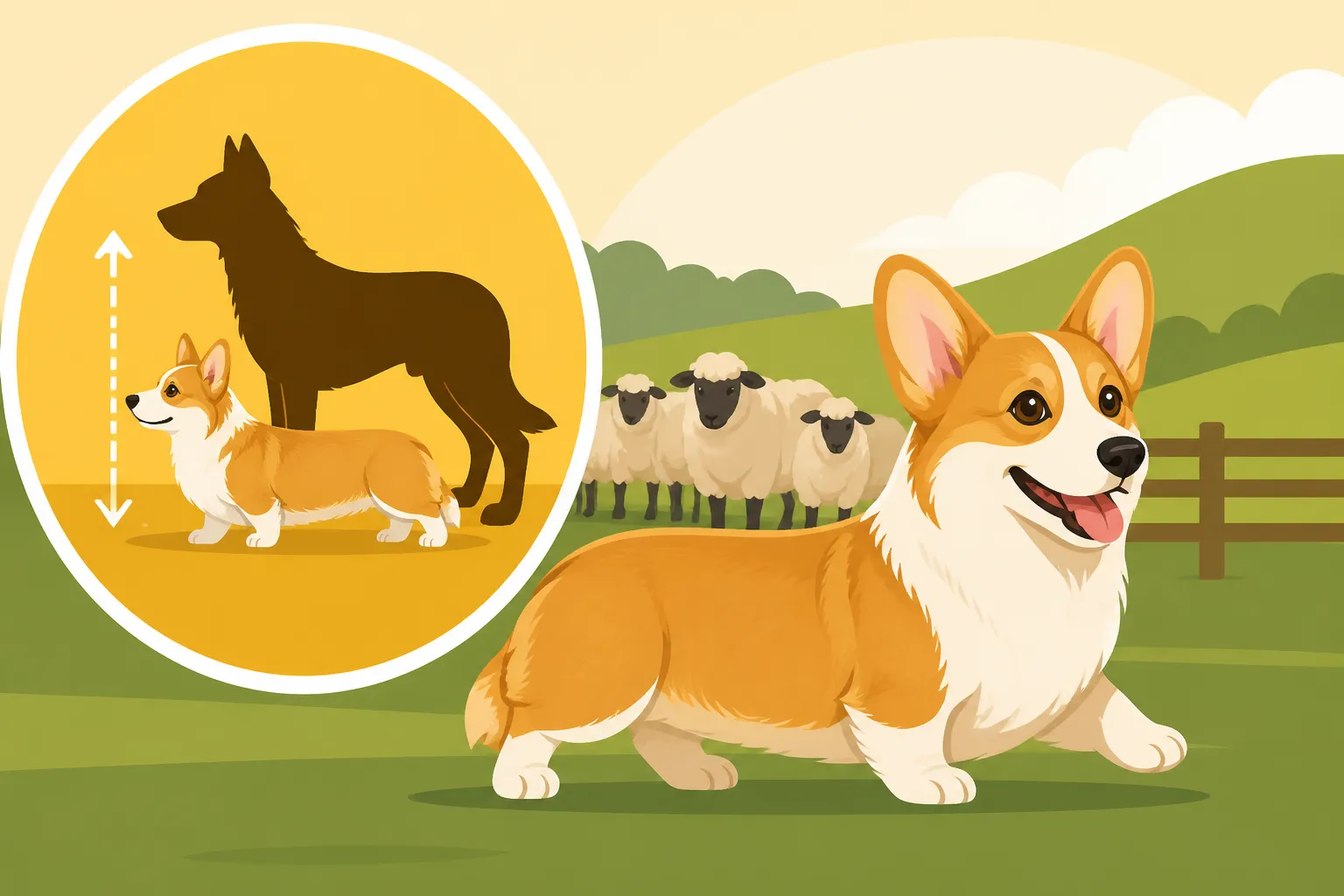
You see, there's a difference between merely herding animals and actively driving them. Many herding breeds, like Border Collies, work by circling wide, using their "eye" and presence to gather and move flocks. Corgis, however, employed a much more direct, and frankly, gutsy approach. They were "heelers," meaning their primary method of moving cattle was to nip at the heels of stubborn cows or bulls. Once they got the cattle moving, they'd duck back out of the way, only to nip again if the animal slowed or veered off course. This wasn't a job for the faint of heart, or for a dog that stood too tall. Their low stature was absolutely crucial for this style of work, allowing them to zip in, deliver a quick correction, and then swiftly retreat beneath the cattle's line of vision and kicking range. It's a marvel of evolution and selective breeding!
A Low Profile for Safety and Efficiency
Imagine trying to nip at the heels of a several-hundred-pound animal when you're eye-level with its knees. That's a recipe for disaster. The Corgi's short legs and long body allowed them to stay well below the most dangerous parts of a cow: its powerful legs and potentially lethal hooves. By remaining close to the ground, they could dart in and out with remarkable agility, appearing almost invisible to the larger animals until it was too late. This wasn't just about safety, though it certainly helped avoid a fatal kick; it was also about efficiency. Their low center of gravity made them incredibly stable, even when making sharp turns or stopping abruptly in muddy fields. They could hug the ground, almost slithering through the chaos of a moving herd, which gave them an edge in controlling the livestock. Their unique build meant they could do a job few other dogs could, especially when dealing with the robust, often feisty Welsh Black cattle of their homeland. How a Corgi Moved Cattle Without Being Kicked delves deeper into these working methods.
Understanding Chondrodystrophy: The Science Behind Short Legs
While their working role clearly necessitated their unique build, it wasn't just a matter of circumstance. There's a fascinating genetic reason why Corgis have those characteristically short limbs. It's a condition known as chondrodystrophy, and it's intentionally bred into the Corgi line.
The Genetics of Dwarfism in Corgis
Chondrodystrophy is a genetic trait that results in disproportionate dwarfism. Essentially, it's a condition where the long bones of the legs stop growing prematurely, while the body continues to develop to a relatively normal length for a dog of its type. This isn't a disease in Corgis; it's a fundamental part of their breed standard, a trait that was actively selected for because of its utility on the farm. The specific genetic mutation that causes this in Corgis and similar breeds affects cartilage development. Because of this, their bones develop differently than those of a dog with standard leg length. This genetic predisposition means that Corgi puppies are born with the blueprint for their short legs already set, a hallmark of their lineage and purpose. It's a classic example of how selective breeding can hone a physical trait to perfection for a specific job. If you're looking into breeding, knowing The DNA Tests a Corgi Breeder Should Run is crucial for understanding these genetic traits.
Comparing Corgis to Other Short-Legged Breeds
The Corgi isn't alone in sporting a low-rider chassis. Many other breeds share the chondrodystrophy gene, each bred for their own unique purposes. Think of the Dachshund, bred to go to ground and flush out badgers from their burrows, or the Basset Hound, whose short legs keep its nose close to the scent trail. Even some terriers, like the Scottish Terrier, were bred with a low profile to navigate rocky terrain and get into tight spaces. While they all share the genetic trait for short legs, the specific shape and proportions of their bodies vary, reflecting the subtle differences in their historical jobs. For instance, the Corgi's stout, muscular frame is designed for power and agility against large livestock, whereas a Dachshund's extremely elongated body is optimized for tunneling. It's truly incredible how humans have sculpted canine form through breeding to meet such diverse needs, making breeds like the Corgi perfectly adapted to their niche. We often wonder What Chondrodystrophy Means for a Corgi in terms of their daily lives.
The Advantage of Being Low to the Ground
Beyond the scientific explanation, the practical advantages of a Corgi's low stature in their working environment were undeniable. It was a physical adaptation that made them supremely effective and incredibly resilient.
Evading Hooves and Horns
Let's not mince words: working with cattle is dangerous. A swift kick from a cow's powerful hind leg can be lethal for a dog. A Corgi's low profile was their primary defense mechanism. By being so close to the ground, they could stay beneath the arc of a cow's kick. When they nipped at the heels, they immediately ducked, becoming almost invisible to the enraged animal. This wasn't just about being lucky; it was a deliberate strategy. They would weave and dart, using their compact size to their advantage, slipping between legs and under bellies, making themselves incredibly difficult targets. Their ability to quickly get out of the way after delivering a "correction" was paramount to their survival and success as working dogs. It's a testament to their bravery and intelligence that they mastered such a perilous task, all thanks to that fundamental advantage of being built so low.
Maneuverability and Leverage
It might seem counterintuitive that a short-legged dog could be agile and powerful, but the Corgi's design is a masterclass in functional biomechanics. Their long, strong back and deep chest, combined with their short, sturdy legs, give them a low center of gravity. This translates to exceptional stability and maneuverability. They could pivot on a dime, change direction rapidly, and maintain their balance on uneven terrain. When driving cattle, this agility was crucial for staying ahead of the herd or quickly repositioning themselves. Moreover, their low stance gave them incredible leverage. When they put their weight into a quick nip, they weren't just running; they were using their entire body as a compact, powerful unit. This meant they could deliver a surprisingly effective correction to a much larger animal, getting its attention and prompting it to move. It's why they were so highly valued by farmers; they were little powerhouses, perfectly engineered for their demanding job. This unique structure is why issues like Disc Disease in a Long-Backed Corgi are so important for owners to understand.
How Their Build Shaped Their Temperament and Instincts
A dog's physical traits often go hand-in-hand with its personality and innate behaviors. The Corgi's low stature and its demanding historical role undoubtedly played a significant part in forging the distinctive temperament we see today.
Boldness and Independence from Necessity
Imagine being a dog, barely a foot tall, whose job it is to convince a several-hundred-pound animal to move in a specific direction. This isn't a job for a shrinking violet. Corgis needed immense courage, confidence, and a healthy dose of independence. They couldn't wait for human commands for every single nip and duck; they had to make quick decisions on their own, often amidst the chaos of a moving herd. This necessity bred a dog with a formidable spirit, a "big dog in a small body" mentality. They learned to think for themselves, to be assertive, and to stand their ground (literally) when faced with a challenge. This historical need for self-reliance is precisely why many Corgis today are known for their strong opinions and often stubborn streaks. They are thinkers, strategists, and natural leaders in their own minds, a trait forged by generations of independent, low-to-the-ground cattle drivers. Why an Independent Corgi Ignores You explores this further.
The Persistent Herding Drive
Even without cattle to herd, that ingrained instinct remains powerful in modern Corgis. Their low build, originally designed for nipping at heels, translates into common behaviors we see in pet Corgis. They might "herd" children, other pets, or even their owners by nudging, circling, or yes, giving a gentle (or not-so-gentle) nip at ankles. This isn't aggression; it's their ancient programming kicking in, adapted for the domestic environment. They still feel the urge to control movement, to gather their "flock." This can manifest as barking at passing cars, trying to direct people around the house, or becoming overly excited during active play. Understanding that this behavior stems from their very design and history, rather than simple naughtiness, is key to managing it effectively. Providing appropriate outlets for this herding drive, such as herding games or specific training, can help keep a Corgi happy and prevent frustration. Chew toys from Chewy can also provide a great outlet for their energy and mental stimulation. The Cattle-Driving Nip a Corgi Still Has explains this common behavior in detail.
Living with a Low-Slung Corgi Today: Modern Considerations
While their unique build was perfect for the pastures of Wales, it presents specific considerations for Corgi owners in modern homes. Understanding these factors is crucial for their long-term health and happiness.
Protecting Their Signature Back
The very feature that made Corgis so effective as cattle drivers – their long back relative to their short legs – also makes them prone to certain health issues. Intervertebral Disc Disease (IVDD) is a significant concern for Corgis. Their discs, which cushion the vertebrae in their spine, can degenerate and rupture, causing pain, paralysis, and other neurological problems. Activities like jumping on and off furniture, repetitive stair climbing, or even rough play can put undue stress on their delicate spines. As a Corgi owner, understanding The Age Corgi Disc Problems Usually Appear and taking preventative measures is paramount. This means minimizing high-impact activities, using ramps and stairs, and maintaining a healthy weight to reduce spinal strain. Every Corgi owner learns quickly that their dog's back is a precious commodity, requiring careful management throughout its life.
Adapting the Home Environment for a Corgi
Because of their low stature and the need to protect their backs, Corgi owners often find themselves making specific adaptations around the house. Ramps are a Corgi's best friend, whether for getting onto the sofa, into the car, or even up a short set of steps to the yard. These ramps reduce the impact of jumping and help preserve spinal health. Non-slip rugs on hard floors can also prevent slips and falls, which can be particularly jarring for a Corgi's back. Elevated food and water bowls might seem like a good idea, but for Corgis, a bowl that lets them keep their feet on the ground in a natural stance is often better. Ultimately, creating a Corgi-friendly home means thinking from their perspective, low to the ground, and anticipating where their unique build might encounter challenges or risks. Many excellent products for Corgi-specific needs, from orthopedic beds to specialized ramps, are readily available on sites like Chewy. Having Ramps and Steps That Save a Corgi's Back is a key part of Corgi ownership.
Here's a quick look at how the Corgi's low stature impacts various aspects of their lives:
| Aspect | Original Purpose (Low Stature) | Modern-Day Implications (Low Stature) |
|---|---|---|
| Working Role | Enabled nipping at heels without being kicked by cattle. | Retains strong herding instincts; may nip at ankles, herd children. |
| Safety | Allowed evasion of hooves and horns, high survival rate. | Vulnerable to impacts if jumping, requires careful handling. |
| Mobility | High agility, low center of gravity for quick pivots on uneven ground. | Can navigate tight spaces, but requires ramps for heights to protect back. |
| Health Risks | No specific working risk from short legs; trait was advantageous. | Predisposition to Intervertebral Disc Disease (IVDD) due to long back. |
| Temperament | Fostered independence, boldness, and quick decision-making. | Often results in a confident, sometimes stubborn personality. |
| Grooming | Close to ground meant picking up mud/debris; dense coat protected. | Belly and leg feathering easily gets dirty; requires regular cleaning. |
| Home Environment | No specific adaptation needed on open farmland. | Requires ramps, non-slip surfaces, and management of stairs/furniture. |
As you can see, the Corgi's short legs are far from a random quirk; they are the very essence of what made this breed a success, both historically and in the hearts of families worldwide today. Their unique build is a continuous reminder of their brave and industrious past.
Disclaimer
This article is for general informational purposes only and does not constitute professional advice. Laws, prices and regulations vary by location and change over time. Consult a qualified professional for guidance on your specific situation.