The Vikings and the Pembroke’s Arrival in Wales
The history of our beloved Pembroke Welsh Corgi is a fascinating tapestry woven with threads of ancient Welsh farm life and, surprisingly, the maritime journeys of the Vikings. It's easy to look at these stout, low-slung dogs and imagine them always being a part of the Welsh landscape, but the truth is, their lineage likely carries echoes from much further afield. This guide will delve into the historical whispers and genetic clues that connect the modern Pembroke Welsh Corgi to the intrepid Norse explorers, tracing how these sturdy little herders might have sailed across the seas to become the iconic companions we cherish today.
The Ancient Roots of the Pembroke Welsh Corgi
Before we even begin to ponder the Viking connection, it's essential to understand the dogs that were already roaming the Welsh countryside. Wales, with its rugged terrain, independent farmers, and a long tradition of livestock rearing, was fertile ground for the development of hardy, intelligent working dogs. These weren't just pets; they were integral members of the farm household, essential for survival.
Early Welsh Farm Dogs and Their Role
Imagine the early Welsh farmer, trying to manage unruly cattle or a flock of sheep across vast, unfenced landscapes. They needed a dog that was fearless, agile, and smart enough to outwit livestock, yet small enough to avoid being kicked by a cow's hooves. This isn't a job for a dainty lapdog! The working dogs of ancient Wales were developed out of necessity. They were often "heeldrivers," nipping at the heels of stubborn animals to encourage movement, a trait still seen in many Corgis today, occasionally to the chagrin of their human family members. The short stature of the Corgi wasn't an accident; it was a deliberate evolutionary advantage, allowing them to duck under swinging hooves while still effectively moving stock. This specialization allowed them to excel in the unique demands of Welsh farming, performing a task that larger dogs simply couldn't manage as efficiently or safely. Driving Cattle With a Corgi Six Inches Tall perfectly illustrates this historical purpose.
These dogs were often rough-and-ready, bred for utility rather than looks. They lived hard lives, working alongside their human companions from dawn until dusk. Their intelligence and eagerness to please, coupled with their inherent tenacity, made them indispensable. While records from such early times are sparse, the consistent need for a specific type of herding dog in Wales suggests a long lineage of these low-set, powerful canines adapted to the local environment and agricultural practices. They were the original all-terrain vehicles of the Welsh farm.
Indigenous Breeds of Wales Before External Influences
Before any potential Viking influence, Wales undoubtedly had its own native dog populations. These would have been a mix of general-purpose farm dogs, hunters, and guardians, evolving over centuries with the people who lived there. It's crucial to remember that dog breeds, as we define them today with strict standards and pedigrees, are a relatively modern invention. In ancient times, dogs were bred for function, and local populations would have developed distinct types based on geographical isolation and specific working needs. The ancestral dogs of Wales would have been resilient, capable of surviving the often harsh weather and terrain.
One of the most famous indigenous types, though larger, might be considered the ancestors of today's Welsh Sheepdogs or even some of the earlier collies. However, the unique niche of the low-slung, "heeler" type was likely already emerging. These could have been distinct local variants, or perhaps even an early, less refined form of the Cardigan Welsh Corgi, which is believed by many to be the older of the two Corgi breeds. The Cardigan's long history in specific Welsh counties suggests a deep root within the native dog population. Regardless, the foundation was set: Wales was a place where compact, intelligent herding dogs were highly valued and likely had a genetic pool evolving to meet those demands.
Unraveling the Viking Connection
Now, let's talk Vikings. When we think of Vikings, we often picture longboats and fierce warriors, not dog breeders. But their influence on the British Isles, including parts of Wales, was profound and multifaceted, extending to culture, language, and yes, even genetics – potentially canine genetics too!
Historical Viking Presence in Wales
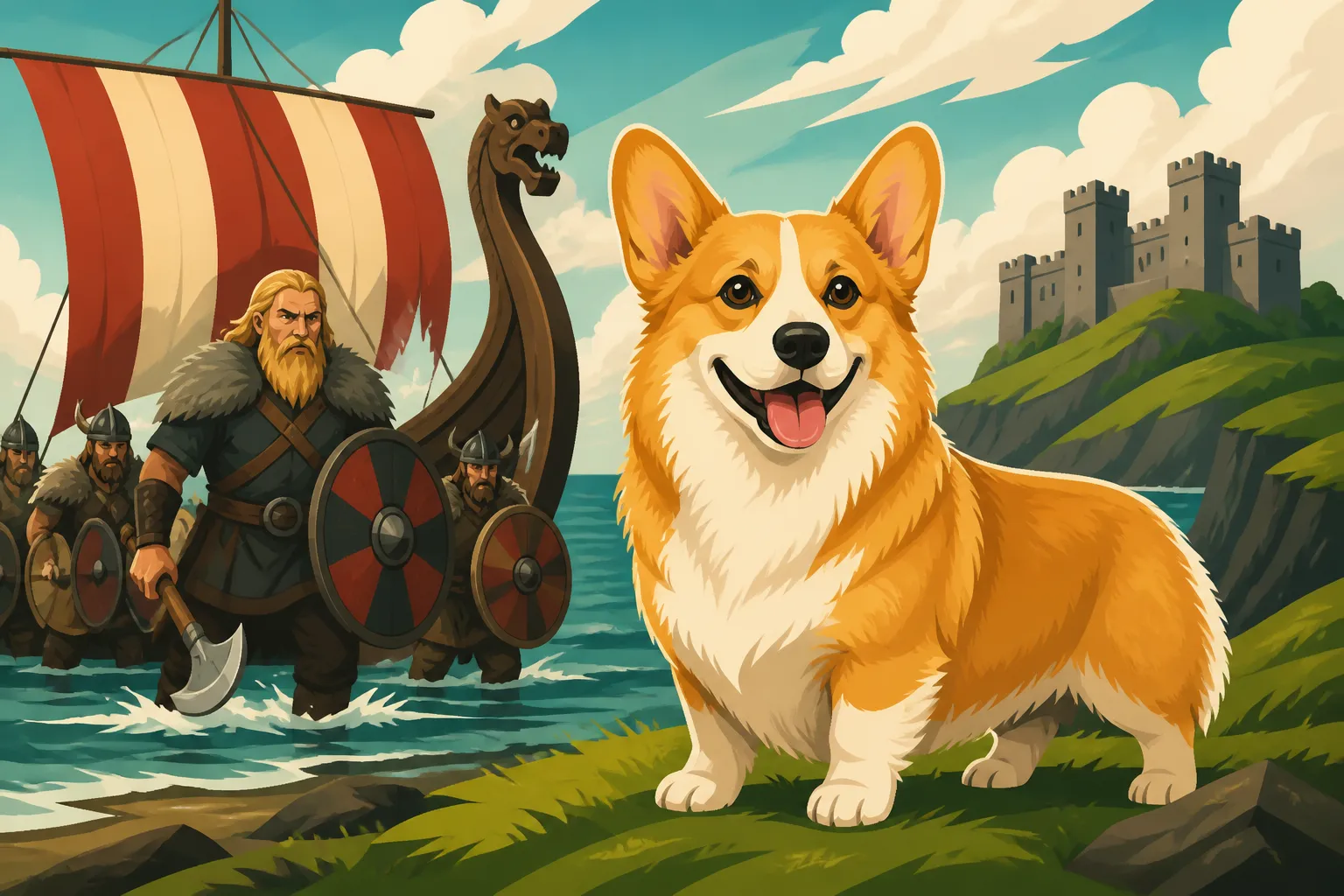
The Vikings certainly made their mark on Wales, though perhaps not as extensively as in parts of Ireland or England. Their presence was primarily focused on coastal raiding and establishing trading posts, particularly along the southern coasts and in strategic locations. Places like Milford Haven and the Gower Peninsula show evidence of Norse activity, including settlements and place names with Viking roots. These weren't just hit-and-run raids; many Vikings established communities, trading goods, and interacting with the local Welsh populations over generations. It's during these periods of interaction, whether through trade, settlement, or even the aftermath of raids, that the exchange of goods – and animals – could have occurred.
Imagine a Viking trading vessel docking near a Welsh settlement. They would bring their own provisions, tools, and undoubtedly, their dogs. These dogs would have been companions, guardians, and perhaps even working animals, accustomed to the harsh conditions of seafaring and Nordic life. Their presence in Welsh communities, even if initially small, provided opportunities for mingling with the local canine gene pool. This isn't to say a Viking literally handed over a purebred Corgi ancestor, but rather that their dogs introduced new genetic material into the existing Welsh stock.
Spitz-Type Dogs from the North
The dogs associated with the Vikings were typically robust, hardy breeds known as Spitz types. These dogs are characterized by their thick double coats, erect ears, wedge-shaped heads, and often curled tails. Think of breeds like the Norwegian Buhund, Icelandic Sheepdog, or even the much larger Norwegian Elkhound. These dogs were adapted to colder climates and often served multiple roles: herding, guarding, and hunting. They were intelligent, vocal, and independent – traits that sound remarkably familiar to anyone who has lived with a Corgi. The idea is that these Nordic Spitz dogs, brought over by the Vikings, encountered the low-slung, indigenous Welsh herding dogs.
What if the resulting offspring, a blend of the indigenous Welsh heeling dog and the sturdy, intelligent Viking Spitz, proved to be an exceptionally effective working animal? The upright ears, expressive faces, and often keen intelligence of the Pembroke Corgi certainly bear a resemblance to many Nordic breeds. It's a compelling hypothesis that suggests the Pembroke's unique combination of traits might be a testament to this historical encounter, where the best characteristics of two distinct canine lineages merged to create something even more remarkable.
Evidence of Crossbreeding: A Gentle Blend
The idea isn't that Vikings arrived with fully formed Corgis in tow, but rather that their dogs contributed to the genetic makeup of the local Welsh herding dogs. Think of it as a slow, natural blending over generations. A sturdy, intelligent Spitz-type dog might have bred with a local Welsh heeler, and if the offspring proved adept at herding, those genes would be carried forward. Over time, as farmers continuously selected for the most effective working dogs, traits from the Nordic influence would have become more ingrained. This process, driven by natural selection and human preference for utility, would have gradually shaped the appearance and temperament of the emerging Pembroke type.
It's a subtle form of evidence, relying more on historical plausibility and shared physical characteristics than written records. We don't have ancient pedigrees documenting "Viking dog meets Welsh heeler." Instead, we observe the traits common to both categories of dogs – the double coat, the expressive foxy face, the alert ears – and consider the known historical movements of people. The "Spitz blood" in the Pembroke, as some researchers suggest, refers to this theoretical genetic contribution from Nordic dogs. Whether Spitz Blood Is in the Pembroke dives deeper into this specific genetic debate.
The Arrival and Integration of Nordic Dogs
The integration of these new canine genes wouldn't have been a dramatic event, but a gradual process influenced by various forms of human interaction.
Trade, Raids, and Settlement: Pathways for Canine Migration
Dogs, like all domesticated animals, travel with people. The Vikings, whether as traders or settlers, would have brought their dogs along for companionship, protection, and perhaps even to assist with tasks in their new environments. Imagine a Viking family settling in a coastal Welsh village; their dogs would naturally interact with the local canine population. Trading relationships also meant movement of goods and people, and it’s not a stretch to imagine dogs being traded or simply coming along with their human companions. After raids, dogs might have been left behind or acquired by local Welsh people. This constant, albeit often sporadic, movement of people and their animals provides ample opportunity for the intermingling of genetic lines.
Consider the practicality: a dog could offer protection on a long voyage or while guarding a newly established homestead. They were not mere accessories but functional members of the community. A farmer might observe a visiting Norse dog’s temperament or working style and actively seek to breed with a local dog if they saw potential improvements to their own stock. This selective breeding, even informal, could have accelerated the integration of desirable traits from the Nordic dogs into the Welsh herding lines.
Impact on Local Dog Populations
The introduction of new genetic material from the Nordic Spitz dogs would have had a significant impact on the existing Welsh dog populations. Imagine a gene pool that has been relatively isolated, then suddenly new traits are introduced. Some of these traits might have been highly advantageous for the demanding life of a herding dog. For instance, the robust build and weather-resistant double coat of a Spitz dog could offer improved resilience against the Welsh climate. The intelligence and problem-solving skills, common in many Nordic breeds, would also be highly desirable for herding livestock.
Over generations, this new genetic influx, combined with the continuous selective pressure for herding ability, would have led to a diversification of the local dog population. It wasn't about replacing the native dogs, but enriching their genetic diversity. This process of admixture is common in the history of many dog breeds, reflecting human migration and settlement patterns. The resulting dogs would have been a unique blend, optimized for the specific environmental and working demands of Wales, carrying the legacy of both indigenous Welsh stock and their Nordic visitors.
A Gradual Genetic Blending, Not an Overnight Change
It's crucial to emphasize that this wasn't a sudden transformation. The development of the Pembroke Corgi, much like any ancient breed, was a slow, organic process taking place over many centuries. The initial introductions of Viking dogs would have led to small pockets of crossbred animals. As these dogs proved their worth, their offspring would have been favored, and the traits they carried would slowly spread throughout the region. This "genetic blending" would have occurred through natural breeding within communities, influenced by practical selection by farmers.
The Pembroke Welsh Corgi, as we know it today, is the culmination of this long evolutionary journey. It represents a successful adaptation, a dog perfectly suited to its environment and its work. The historical connection to the Vikings adds a fascinating layer to this story, suggesting that the very essence of the Pembroke – its intelligence, hardiness, and distinctive appearance – might be a living testament to the multicultural interactions that shaped early Wales. Understanding When Pembrokes Arrived in Wales helps us contextualize this long, slow process of breed formation.
The Pembroke's Distinctive Traits and Potential Nordic Influence
When you look at a Pembroke Welsh Corgi, certain features just scream "Spitz-type dog," don't they? It's not just a feeling; there are tangible physical and even temperamental characteristics that hint at this intriguing Nordic ancestry.
Physical Similarities to Nordic Breeds: Ears, Coat, Build
Let's start with the most obvious traits. The Pembroke's erect, rather large ears, often referred to as "bat ears" or "foxy ears," are a hallmark of Spitz breeds. Compare them to the ears of an Icelandic Sheepdog or a Norwegian Buhund – the resemblance is striking. These ears aren't just for show; they're highly functional for an alert herding dog, capable of picking up subtle sounds from the livestock or the surrounding environment.
Then there's that glorious double coat. Corgis are notorious for their shedding, but that thick undercoat and protective outer coat are perfect for braving the cold, damp Welsh weather, much like the original Spitz dogs were equipped for the Nordic climate. This coat provides excellent insulation, keeping them warm in winter and surprisingly cool in summer by trapping air. You can find quality brushes and grooming supplies from retailers like Chewy to help manage that abundant fur, especially during shedding season. The overall sturdy, compact build, with powerful legs, also mirrors the robust nature of many northern breeds designed for endurance and resilience. The Corgi Head and Ear Set goes into more detail about these defining features.
Temperamental Echoes of Spitz Dogs: Intelligence, Independence, Vocal Nature
Beyond the physical, there are behavioral traits that link the Pembroke Corgi to its potential Nordic ancestors. Spitz breeds are renowned for their intelligence, often accompanied by a streak of independence. They are thinkers, sometimes bordering on stubborn, and Corgi owners will heartily agree with that assessment! This isn't a dog that blindly obeys; it’s a dog that processes information and makes its own decisions, a trait invaluable when herding unpredictable livestock.
Their vocal nature is another strong indicator. Many Spitz breeds are known for being quite talkative, using barks, yips, and even "woo-woos" to communicate. Corgis, with their expressive barks and conversational tendencies, certainly fit this bill. This vocalization would have been useful for herding, alerting the farmer, or communicating with the flock. The tenacity and courageous spirit, necessary for standing up to much larger animals, are also deeply embedded in both Corgis and their supposed Nordic relatives. These aren't fragile dogs; they have big personalities packed into their small frames. What a Welsh Corgi Did on a Farm All Day shows how these traits translated into their working life.
The Evolution of the Herding Niche: Adaptation and Specialization
The blending of these traits – the low-set body of the indigenous Welsh dog with the physical and temperamental attributes of the Nordic Spitz – created a highly specialized herding machine. The low center of gravity and short legs meant the Corgi could weave through the legs of cattle without being kicked. The intelligence and independent nature, perhaps enhanced by the Spitz influence, allowed them to think on their feet and make quick decisions in the field. The thick coat provided protection against the elements, and the alert ears and vocalizations were perfect for maintaining control over the flock.
This wasn't just random breeding; it was a natural process of adaptation and selection. Farmers would have favored the dogs that performed best, passing on the most effective traits. Thus, the Corgi evolved into the perfect "cattle dog," capable of performing a unique and invaluable role on the Welsh farm. It’s a testament to how different dog lineages can merge and adapt to create a highly specialized and successful working breed.
Separating Myth from Historical Likelihood
While the Viking connection is a compelling theory, it's important to approach ancient breed histories with a critical eye. Distinguishing between genuine historical likelihood and romanticized myth is key to understanding the true origins of our Corgis.
The Challenge of Genetic Tracing Without Modern Records
One of the biggest hurdles in definitively proving the Viking origin theory is the lack of comprehensive historical records. Modern genetic testing can trace ancestral lines back thousands of years for humans, but for dog breeds, especially those developed before formal pedigrees and breed clubs, it's a much more complex puzzle. Ancient dog populations were fluid; there was no concept of a "purebred" in the way we understand it today. Dogs bred freely within communities, and without written records or preserved genetic samples, scientists must rely on archaeological finds, historical accounts (which are often vague about specific dog types), and comparative morphology (looking at physical similarities between breeds).
Genetic studies, when they can be done, often show complex mixtures rather than single, clear lines. The DNA of modern Corgis carries a multitude of markers, reflecting centuries of breeding, migration, and adaptation. Pinpointing a specific "Viking dog" gene within that tapestry is incredibly difficult. However, the absence of definitive proof doesn't necessarily disprove the theory; it simply highlights the limitations of historical research into ancient dog lineages.
Oral Traditions and Local Legends
In the absence of written history, oral traditions and local legends often provide valuable, albeit embellished, insights into a culture's past. Wales, rich in folklore, has its own delightful legends about the Corgi, often linking them to fairies and magic. The most famous legend speaks of Corgis being the steeds of fairies, with the "fairy saddle" markings on their backs. While charming, these stories rarely offer concrete historical facts about breed origins. The Fairy Saddle and Other Corgi Legends is a fun dive into this aspect.
However, these legends do tell us something important: Corgis have been deeply ingrained in Welsh culture for a very long time. The fact that they are woven into the very fabric of local storytelling suggests a long and cherished history, reinforcing the idea of their deep roots in the Welsh landscape. While they don't mention Vikings directly, they speak to the Corgi's enduring presence and the affection with which they were viewed by the Welsh people.
Modern Interpretations of Ancient Lineages
Today, scientists and breed historians combine all available data – archaeological evidence, historical migration patterns, comparative breed analysis, and even modern genetic studies – to piece together the likely origins of dog breeds. While no single piece of evidence offers a definitive "smoking gun" for the Viking-Pembroke connection, the cumulative weight of the circumstantial evidence makes a strong case for Nordic influence. The presence of Viking settlements in Wales, the consistent appearance of Spitz-type traits in the Pembroke (and even the older Cardigan), and the practical advantages of blending these characteristics for herding all point towards a compelling historical narrative.
It's a story of resilience, adaptation, and the enduring bond between humans and dogs. The Pembroke Welsh Corgi, with its spirited personality and distinctive looks, carries within its genes the echoes of ancient Welsh farmers and, quite possibly, the adventurous spirit of the Vikings who once sailed to its shores. It's a breed that reminds us that history is often far more intertwined and fascinating than we first imagine. For those looking to dive deeper into the early history of the Corgi, Chewy offers a wide range of books and resources on breed history and characteristics.
Here's a quick look at some key points:
| Trait / Feature | Indigenous Welsh Dogs (Pre-Viking) | Viking Spitz-Type Dogs | Modern Pembroke Welsh Corgi | Potential Connection |
|---|---|---|---|---|
| Stature | Low-set, close to the ground | Variable, often medium-sized | Low-set, long body, short legs | Indigenous trait preserved |
| Ear Type | Likely variable, semi-erect/drop | Erect, alert, triangular | Erect, prominent, foxy-like | Strong Spitz influence |
| Coat Type | Hardy, working coat | Thick, double coat, weather-resistant | Thick, dense double coat, sheds profusely | Strong Spitz influence |
| Temperament | Tenacious, herding instinct, loyal | Intelligent, independent, vocal | Intelligent, independent, vocal, bold | Blend, Spitz influence prominent |
| Working Role | Heel-driving herders (cattle/sheep) | Herding, guarding, hunting | Heel-driving herder | Adaptation of combined traits |
| Geographic Origin | Wales | Scandinavia/Northern Europe | Wales | Result of historical interaction |
This article is for general informational purposes only and does not constitute professional advice. Laws, prices and regulations vary by location and change over time. Consult a qualified professional for guidance on your specific situation.