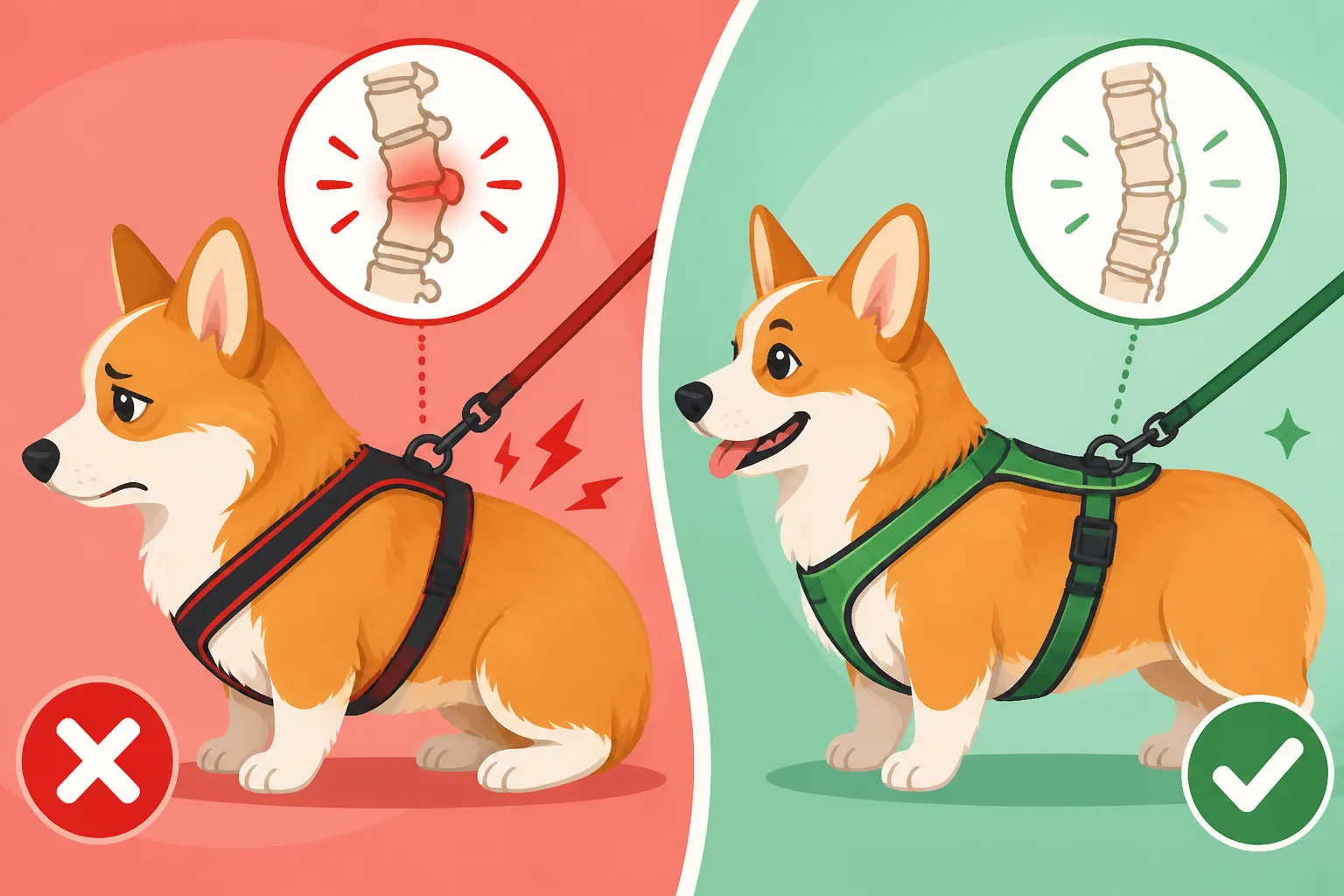
Why a Corgi’s Harness Should Not Press the Spine
One of the trickiest parts of being a Corgi parent is finding the right gear that supports their unique, long-backed bodies without causing more harm than good. Many of us worry about everything from how they jump off the sofa to what they eat, but often overlook the everyday item they wear: their harness. Choosing a harness that presses on your Corgi's spine can lead to significant discomfort, strain, and even exacerbate underlying health issues, making their daily walks a potential risk rather than a joy. This guide will dive deep into why spine-friendly harnesses are non-negotiable for Corgis and what you should look for to keep your furry friend safe and sound.
The Unique Anatomy of a Corgi's Spine
Let's face it, Corgis are adorable with their long bodies and short legs, but this distinctive build comes with a set of anatomical quirks that require special consideration. Their unique structure makes them particularly susceptible to spinal issues, far more so than many other breeds. Understanding this is the first step in ensuring their long-term health and comfort.
Understanding Their Long Back and Short Legs
Corgis, both Pembrokes and Cardigans, are what we call a chondrodystrophic breed. This fancy term simply means they have a genetic trait that results in disproportionately short limbs and a longer-than-average body relative to their height. Think of it like a human with dwarfism; their bones develop differently. This isn't just a cosmetic trait; it profoundly impacts their skeletal system. Their spine, while structurally similar to other dogs, is stretched across a longer span with less support from equally short legs. This means the intervertebral discs, which act as cushions between the vertebrae, are under more constant stress from everyday movements. Picking a Corgi up incorrectly or letting them jump frequently can put immense pressure on these discs, as can an ill-fitting harness. What Chondrodystrophy Means for a Corgi helps explain this in more detail.
The Risks of Intervertebral Disc Disease IVDD
Because of their chondrodystrophic nature, Corgis are genetically predisposed to Intervertebral Disc Disease, or IVDD. This is a condition where the cushioning discs between the vertebrae either bulge or rupture into the spinal cord space. When this happens, it can cause excruciating pain, nerve damage, and even paralysis. Imagine a jelly doughnut with the jelly squeezing out – that's essentially what happens with a ruptured disc. The pressure on the spinal cord is immense. A harness that puts direct pressure on the top of the spine, especially in the neck or mid-back region, can add to this ongoing stress. Over time, or with a sudden jolt, this added pressure from a poorly designed harness could potentially contribute to disc degeneration or even trigger a rupture in an already vulnerable Corgi. Disc Disease in a Long-Backed Corgi is a critical read for any Corgi owner.
Degenerative Myelopathy and Spinal Health
While IVDD is a structural issue, it's also important to touch on Degenerative Myelopathy (DM), another severe spinal condition seen in Corgis. DM is a progressive neurological disease that affects the spinal cord, leading to weakness and paralysis in the hind limbs. It's not caused by physical trauma or pressure in the same way IVDD can be, but rather by a genetic mutation. However, regardless of the cause, maintaining overall spinal health and minimizing any undue stress or discomfort to the back is paramount for a Corgi. A dog already dealing with the early signs of DM, such as scuffing their back nails or A Corgi Whose Back Legs Cross Over, would certainly be made more uncomfortable and potentially experience worsened mobility issues with a harness that presses on their spine, even if it doesn't cause DM. While the connection is indirect, the principle remains: protect that spine.
How a Poorly Designed Harness Can Cause Harm
It’s easy to think a harness is just a harness, a simple tool to walk your dog. But for a Corgi, the design and fit of this seemingly innocuous piece of equipment can have profound implications for their health. A harness that doesn't account for their specific body shape can create significant problems, turning a simple walk into a painful experience.
Direct Pressure on the Vertebrae
Many standard harnesses are designed with a strap that runs horizontally across the dog's back, often sitting directly over the thoracic or lumbar spine. For a Corgi, whose spine is already under inherent stress due to its length and the nature of its breed, this direct pressure can be incredibly detrimental. Imagine wearing a backpack with a strap that constantly digs into your spine – it’s uncomfortable, to say the least. For a Corgi, this pressure isn't just uncomfortable; it can compress the spinal discs, irritate the surrounding nerves, and contribute to inflammation. Over time, or with a sudden pull on the leash, this concentrated pressure can aggravate existing disc issues or even accelerate the degeneration of healthy discs. It's particularly concerning during training sessions where leash corrections might be applied, as the force directly impacts the most vulnerable part of their anatomy. We need to be vigilant about avoiding anything that adds even a whisper of extra stress to their delicate backs.
Restricting Natural Movement and Gait
Beyond direct pressure, a poorly designed harness can also restrict a Corgi's natural range of motion, particularly around the shoulders and chest. Many harnesses have straps that cross the front of the chest, sometimes too high or too tight, impeding the shoulder blades' movement. Corgis, despite their short legs, are incredibly agile and powerful dogs; their movement is central to their health. When their gait is restricted, they might compensate by altering their stride, hunching their back, or shifting their weight unnaturally. This compensation can lead to muscle strain, joint pain, and even further stress on the spine as other parts of their body try to pick up the slack. Think of it like wearing ill-fitting shoes that make you walk awkwardly – eventually, your knees or hips might start to ache. For a Corgi, this can mean chronic discomfort and contribute to orthopedic problems beyond just their spine, potentially affecting their hips and front-end structure. Whether a Corgi's Short Legs Change Its Hips is a related read that underscores the importance of unimpeded movement.
Rubbing, Chafing, and Skin Issues
While not directly spinal, constant rubbing and chafing from an ill-fitting harness can also be a significant issue. Corgis have a dense double coat, which can be both a blessing and a curse. If a harness rubs in key areas like the armpits, chest, or flanks, it can create hot spots, skin irritation, and even infections, especially if moisture gets trapped underneath. This discomfort alone can cause a Corgi to alter its gait or posture to avoid the irritation, inadvertently putting stress on its back. Moreover, the constant friction can damage their protective undercoat and guard hairs, leading to patchy fur or thinning. While a harness from a reputable brand like Chewy offers many options, it's vital to ensure the materials are breathable and soft, and the fit is perfect to prevent these secondary, yet still painful, issues from arising. Nobody wants their dog to dread walks because their harness is causing them physical pain or skin problems.
What to Look for in a Spine-Friendly Corgi Harness
Now that we understand the potential pitfalls, let's talk about solutions. Choosing the right harness for your Corgi is one of the most important preventive measures you can take for their spinal health. It's not about finding the most expensive or trendiest harness, but the one designed with their unique body in mind.
Design Features That Distribute Pressure
The absolute key to a spine-friendly Corgi harness is how it distributes pressure. You want a harness that avoids placing any direct force on the top of their spine. This typically means looking for a "Y-front" or "H-style" harness. These designs feature a strap that runs down the center of the chest, splitting into a "Y" shape that goes around each front leg, with the main attachment point for the leash on the back, situated behind the shoulder blades and off the spine.
Here's what makes these designs superior:
- Chest Plate/Strap: A wider, padded strap or plate across the chest helps to disperse pressure broadly across the sternum, which is much more robust and less vulnerable than the spine. When your Corgi pulls, the force is absorbed by their chest, not their neck or back.
- Off-Spine Placement: The straps that go over the back should sit well behind the shoulder blades and ideally be wider or padded to avoid digging in. The leash attachment ring should also be positioned in this area, away from the immediate spinal column.
- Adjustability: Multiple adjustment points (around the neck, chest, and girth) are crucial to achieving a snug, yet comfortable, fit that doesn't shift or rub. A harness that allows for fine-tuning will ensure that the pressure distribution is maintained even as your Corgi moves.
Material and Construction Considerations
Beyond the design, the materials and overall construction play a huge role in comfort and safety.
- Padding: Look for harnesses with ample, soft padding, especially around the chest, armpits, and any areas where straps might make contact with the body. Neoprene, fleece, or breathable mesh padding can prevent chafing and add a layer of cushioning.
- Breathability: Corgis have thick double coats, and overheating can be a concern. Opt for harnesses made from breathable materials like mesh or certain nylons, especially if you live in a warmer climate or your Corgi is active. Heat Sensitivity Under a Corgi's Double Coat is a good article to review regarding this.
- Durability: A harness should be well-constructed with strong stitching, robust buckles, and durable D-rings for leash attachment. You want it to withstand daily wear and tear without failing, ensuring your Corgi's safety.
- Lightweight: While durable, the harness shouldn't be overly bulky or heavy. A lightweight design will add less strain and allow for more natural movement.
Measuring and Fitting for Optimal Safety
Even the best-designed harness won't be spine-friendly if it doesn't fit properly. This is where many owners go wrong.
-
Measure Accurately: You'll need two main measurements:
- Neck Girth: Measure around the base of your Corgi's neck, where their collar would naturally sit.
- Chest Girth: Measure around the widest part of their rib cage, typically just behind the front legs.
- Back Length: Some harnesses also require a back length measurement to ensure the top strap doesn't sit on the spine. Measure from the base of the neck to the base of the tail.
-
Refer to Sizing Charts: Every brand's sizing can be a little different. Always consult the specific sizing chart for the harness you're considering. If your Corgi is between sizes, it's often better to go with the larger size, as long as it's still adjustable enough for a snug fit.
-
The "Two-Finger Rule": Once the harness is on, you should be able to comfortably slip two fingers under every strap. If it's too tight, it will restrict movement and create pressure points. If it's too loose, your Corgi might slip out, or the harness could shift and rub.
-
Check Range of Motion: Observe your Corgi walking, trotting, and even sitting while wearing the harness. Ensure their shoulder blades have a full range of motion and that no straps are digging into their armpits or restricting their leg movement. The harness should not ride up into their throat, especially with a front-clip option, as this can still create pressure on the neck.
Maintaining Spinal Health Beyond the Harness
While a spine-friendly harness is a crucial piece of the puzzle, it's just one component of a holistic approach to maintaining your Corgi's spinal health. Their long backs require ongoing vigilance and proactive care throughout their lives.
Weight Management and Nutrition
Perhaps the single most critical factor in a Corgi's spinal health, outside of genetics, is their weight. Every extra pound your Corgi carries puts additional strain on their already vulnerable spine and joints. It's like asking a small bridge to hold a much heavier load than it was designed for – eventually, something's going to give. Why Corgi Weight Is a Spinal Problem cannot be overstated. Maintaining a lean, healthy weight is preventative medicine for IVDD and other orthopedic issues.
- Portion Control: Corgis are notoriously food-motivated and can be prone to obesity. Their food should be weighed, not scooped, to ensure precise portions. How Little an Adult Corgi Actually Eats might surprise you.
- Balanced Diet: Feed a high-quality, balanced diet appropriate for their age, activity level, and any specific health needs. Brands like Ollie offer fresh, customized meal plans that can help manage weight by providing precise calorie counts and nutrient-dense ingredients. These tailored meals can make a huge difference in keeping your Corgi at their ideal The Body Condition Score a Corgi Should Hold.
- Healthy Treats: If using treats for training, factor them into their daily calorie allowance. Opt for low-calorie, healthy options like carrot sticks or small pieces of their regular kibble.
- Regular Monitoring: Regularly assess your Corgi's body condition. You should be able to easily feel their ribs without pressing hard, and they should have a visible waist. Don't let their fluffy coat hide extra pounds! Spotting Weight Gain Hidden Under a Corgi Coat is a real struggle for Corgi owners.
Safe Exercise and Activity
Corgis are energetic dogs, but their exercise needs to be managed carefully to protect their backs. High-impact activities or movements that twist and jolt the spine should be avoided.
- Avoid Jumping: Discourage jumping on and off furniture, in and out of cars, or up and down stairs. Even seemingly small jumps can put tremendous shearing force on their delicate spinal discs. Invest in ramps or pet stairs for beds, sofas, and vehicles. Ramps and Steps That Save a Corgi's Back are invaluable tools.
- Controlled Walks: Regular, moderate walks on a leash are excellent. Avoid excessive running, especially on uneven terrain or with sudden stops and starts, which can stress the spine.
- Supervised Play: Playtime should be kept on level ground and avoid roughhousing that involves twisting or sudden impacts.
- Hydrotherapy: For Corgis recovering from injury or managing chronic conditions, hydrotherapy (swimming in a controlled environment) can be fantastic for building muscle tone without impact on the joints or spine.
Regular Vet Check-ups and Early Detection
Proactive veterinary care is essential for monitoring your Corgi's spinal health. Your vet can catch subtle signs of trouble before they become severe emergencies.
- Annual Exams: Regular veterinary check-ups are crucial. Your vet can assess your Corgi's gait, palpate their spine, and discuss any changes in their mobility or behavior. The Annual Exam Where a Corgi's Back Gets Checked is not just about vaccines.
- Be Aware of Symptoms: Familiarize yourself with the early signs of spinal issues, such as reluctance to jump, difficulty with stairs, changes in gait (like A Corgi That Scuffs Its Back Nails), pain when handled, or any weakness in the hind legs.
- Early Intervention: If you notice any concerning symptoms, contact your vet immediately. Early diagnosis and treatment of conditions like IVDD can significantly improve the outcome. Pet insurance, such as plans offered by Healthy Paws, can be an absolute lifesaver when unexpected spinal emergencies arise, helping cover the costs of diagnostics, specialist consultations, and treatments like surgery or physical therapy. Insuring a Corgi Before Its First Back Episode is a wise decision.
- Genetic Testing: If you are considering a Corgi puppy, ensure the breeder screens for genetic conditions like DM. While a harness won't prevent DM, knowing your Corgi's genetic status allows for informed care. The DNA Tests a Corgi Breeder Should Run are important considerations.
Harness Type Comparison for Corgis
Choosing the right harness can feel overwhelming with so many options available. Here's a quick comparison of common harness types and their suitability for Corgis:
| Harness Type | Description | Corgi Suitability | Pros | Cons |
|---|---|---|---|---|
| Y-Front / H-Style | Features a strap that goes down the chest, splitting into a Y, with the back strap behind the shoulders. | Excellent. Distributes pressure across the sternum and chest, keeping it off the spine. Allows for full shoulder movement. Ideal for Corgis to protect their delicate backs. | Spine-friendly, comfortable, good control, allows natural movement. | May require careful fitting to avoid armpit chafing if straps are too wide or not adjusted properly. |
| Front-Clip (No-Pull) | Leash clips at the chest, often part of a Y-front design. Redirects dog's forward motion when they pull. | Excellent if Y-front. Combines spinal protection with anti-pull benefits. Forces the dog to turn sideways rather than pulling forward. | Helps reduce pulling, good spinal protection, maintains natural gait. | Can tangle legs if not fitted well; some dogs dislike the feeling of being turned. |
| Back-Clip (Standard) | Leash clips on the back, often a simple loop over the spine. | Acceptable if it's a Y-front or H-style. If it's a strap directly over the spine, poor choice. Can encourage pulling, which puts pressure on the back and neck. | Simple to put on. | Risk of spinal pressure if design is poor; less control over pulling; can encourage leaning into the leash. |
| Step-In | Dog steps into two leg holes, then the harness clips over the back. | Good, often Y-front. Many step-in harnesses are naturally designed with straps away from the spine and across the chest. Good if the dog dislikes overhead harnesses. | Easy to put on, often comfortable, good for spinal health if well-designed. | Can sometimes be less secure if the dog is an escape artist. |
| Vest Harness | A wider piece of fabric covering a larger area of the chest and back. | Good. Often distributes pressure well over a broader area. Ensure the fabric on the back doesn't bunch or create a rigid pressure point directly on the spine. | Comfortable, good for small/delicate dogs, spreads pressure. | Can be bulky, may cause overheating in thick-coated Corgis if not breathable; less precise fit. |
| Head Halter / Front-Leader | Straps over the nose and behind the ears, giving control by turning the dog's head. | Generally Not Recommended. While it removes pressure from the spine, it puts significant pressure on the delicate neck and face, which can be uncomfortable and potentially injurious for Corgis. Use only under professional guidance. | Excellent for strong pullers, good control. | Risk of neck injury if not used properly; can be distressing for the dog. |
In summary, for Corgis, a Y-front or H-style harness with a back clip (situated behind the shoulder blades) or a front clip (on the chest) is generally the safest and most recommended option. Always prioritize fit and comfort above all else.
Disclaimer
This article is for general informational purposes only and does not constitute professional advice. Laws, prices and regulations vary by location and change over time. Consult a qualified professional for guidance on your specific situation.