Whether a Corgi Puppy Is on Track for Thirty Pounds
One of the biggest worries for new Corgi puppy parents is whether their little floof is growing just right. It’s so easy to look at those adorable, roly-poly puppies and wonder if they’re on track to become healthy adults, or if that roundness is actually a red flag. Many of us hear numbers thrown around, like "a Corgi should be around 30 pounds," and then panic if our tiny pup seems to be gaining weight quickly. This guide is here to soothe those worries and give you realistic expectations about your Corgi puppy's growth, helping you understand if they’re truly on a healthy path or if that 30-pound mark is something to approach with caution.
Understanding Healthy Corgi Growth Patterns
When you bring home a Corgi puppy, whether a Pembroke or a Cardigan, they are undeniably charming bundles of fur and energy. It's natural to track their growth, but it's vital to understand what "healthy growth" actually looks like for these unique, long-backed dogs. They aren't built like other breeds, and their growth trajectory needs careful consideration to prevent future health issues.
The Typical Growth Arc for a Pembroke or Cardigan Puppy
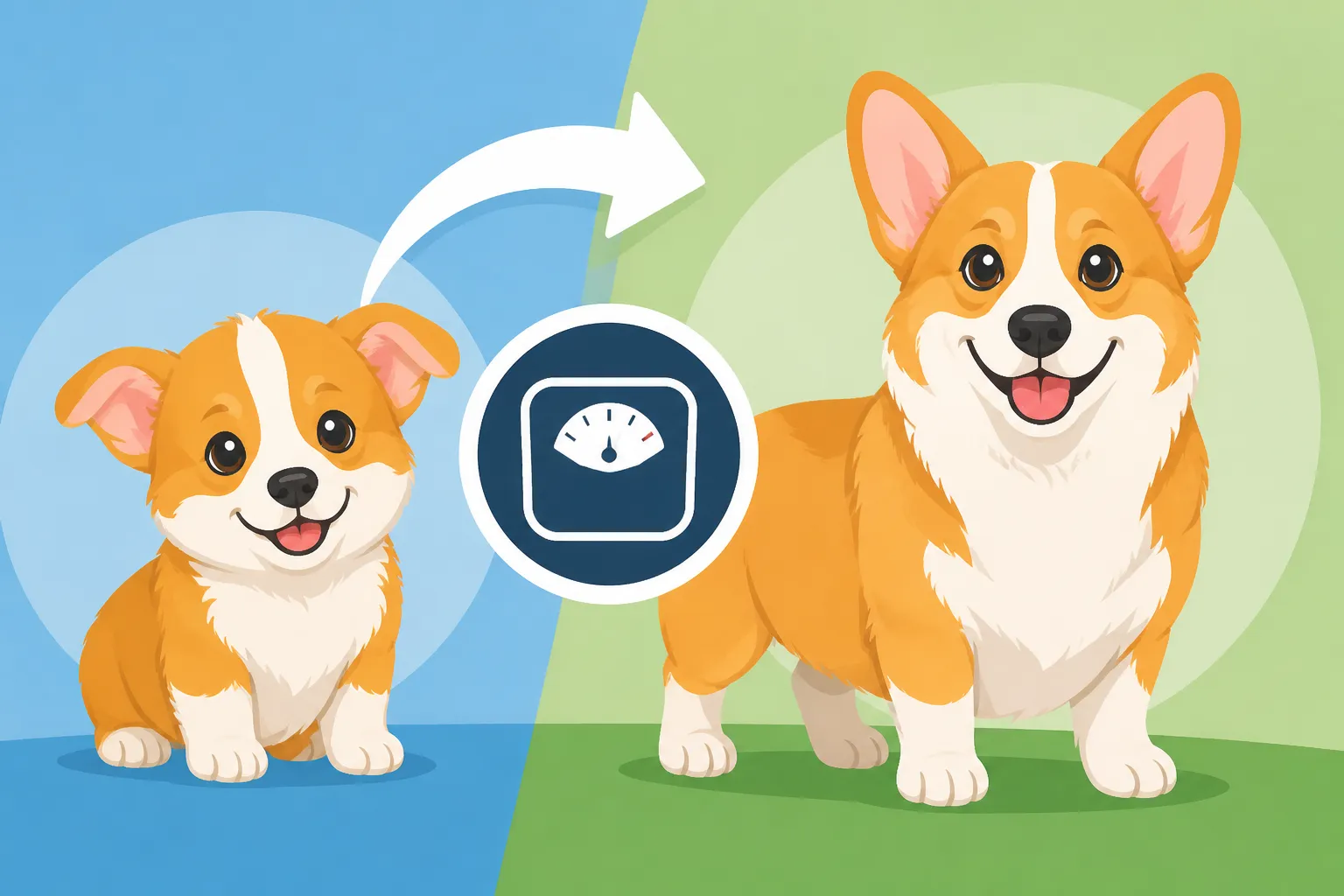
Corgi puppies experience a pretty rapid growth spurt in their first few months, much like many other breeds. They'll go from a tiny fluffball to a more substantial little dog surprisingly quickly. However, this initial burst of growth typically starts to slow down significantly after about six to eight months of age. While they might still fill out a bit, adding muscle and solidifying their frame, the intense vertical and horizontal growth phase usually tapers off. They generally reach their adult height and much of their adult weight around one year old, though some may continue to mature until 18 months. You can learn more about this in When a Corgi Reaches Its Adult Height.
It's crucial to remember that Corgis, both Pembrokes and Cardigans, are meant to be sturdy but not obese at any age. Even as puppies, they shouldn't be overly "chunky." While puppy fat is normal to some extent, an excessively round or barrel-shaped puppy might already be on a path toward adult obesity, which is particularly dangerous for their long backs. Pembrokes typically mature to a slightly lighter weight than Cardigans, so comparing a Pembroke puppy's growth to a Cardigan's can lead to unnecessary anxiety. A healthy adult Pembroke male generally weighs in the range of 27-30 pounds, while a female might be 25-28 pounds. Cardigan males can be heavier, often reaching 30-38 pounds, with females typically 25-34 pounds. This difference is important when setting expectations for your individual puppy's adult size. Knowing What a Pembroke Should Weigh versus Why a Cardigan Carries More Weight Than a Pembroke is key.
Why the 30-Pound Mark Can Be Misleading for Puppies
The common perception that "a Corgi should be 30 pounds" is often misunderstood, especially when applied to puppies. This figure refers to the adult weight range for many Corgis, particularly males, and it absolutely does not mean your 4 or 6-month-old puppy should be anywhere near that. Expecting a puppy to rapidly approach 30 pounds can lead owners to inadvertently overfeed, believing they are helping their dog grow big and strong.
The reality is, a Corgi puppy growing too quickly or carrying too much weight early on can put undue stress on their developing joints and crucial spine. These dogs are genetically predisposed to intervertebral disc disease (IVDD) due to their chondrodystrophic build—those adorable short legs and long backs. Extra weight, especially during formative months, exacerbates this risk significantly. It’s far better for a Corgi puppy to be on the lean side as they mature, allowing their bones and joints to develop without added strain. When you hear well-meaning friends or family comment, "Oh, he's so big for his age!" about your rapidly growing Corgi puppy, it might sound like a compliment, but for a Corgi, it's often a cause for concern. We're aiming for healthy, proportionate growth, not just size.
Factors Influencing a Corgi Puppy's Adult Weight
Understanding the general growth pattern is just one piece of the puzzle. Several specific factors play a huge role in determining your Corgi puppy's eventual adult weight and whether they hit that 30-pound mark in a healthy way. It's a combination of nature and nurture, with both genetics and daily care having a profound impact.
Genetics and Parental Size: The Blueprint for Your Corgi
When you bring home a Corgi puppy, their genetic blueprint is already set. The most reliable indicator of your puppy's potential adult size and weight comes directly from their parents. A reputable breeder will be transparent about the adult weights of the sire and dam, and often grandparents, which gives you a realistic expectation for your puppy. If both parents are on the smaller end of the breed standard, it’s highly unlikely your puppy will grow to be a 35-pound adult. Conversely, if the parents are larger, then your puppy might naturally be a bigger Corgi, fitting within the higher end of the healthy weight range for their sex and breed.
Good breeders prioritize breeding healthy, well-structured Corgis that adhere to the breed standard, which includes appropriate size. They are not striving for oversized Corgis, as this can often lead to health complications down the line, particularly concerning their backs. Don't be afraid to ask a breeder about the typical adult weights of their dogs, and look at pictures of the parents to get a visual sense. This information, combined with knowing what The AKC Pembroke Welsh Corgi Standard outlines, should give you a clearer picture than just a generic weight expectation. Genetic testing for other health conditions is also a sign of a responsible breeder, which often correlates with attention to healthy growth. Find out What a Corgi Breeder Should Be Testing For to further understand a breeder's diligence.
The Role of Diet and Exercise in Puppy Development
While genetics provide the framework, diet and exercise are the architects of your Corgi puppy's actual development. It is absolutely crucial to manage both meticulously. Overfeeding a Corgi puppy is incredibly easy to do, especially since they often act like they are perpetually starving. Their love of food is legendary! However, free-feeding a Corgi puppy – simply leaving a bowl of kibble out all day – is a recipe for disaster. It can lead to rapid, unhealthy growth and an early onset of excessive weight, straining their delicate developing spine and joints.
Instead, feed your Corgi puppy measured portions of high-quality puppy food, split into two or three meals a day. Always follow the feeding guidelines on the food bag, but remember these are just starting points. Your individual puppy's metabolism and activity level will dictate how much they truly need. It’s always safer to err on the side of slightly less food and allow them to be lean rather than chunky. Companies like Chewy offer a wide variety of quality puppy foods, and some services like Ollie provide fresh, pre-portioned meals that can help ensure you’re not overfeeding. Regular, age-appropriate exercise is also vital. This means short, controlled walks and playtime, not long hikes or excessive jumping activities that could stress their young bodies. Build muscle gradually without putting strain on developing bones and joints. This careful balance ensures they develop a strong, healthy frame rather than just growing quickly due to excess calories. For detailed guidance, check out Feeding a Corgi Puppy at Each Stage and Keeping a Growing Corgi Puppy on the Thin Side.
Monitoring Your Corgi Puppy's Weight and Body Condition
Okay, so we know that simply aiming for a specific number like "30 pounds" for a puppy isn't the whole story. What is the best way to track your Corgi puppy's development and ensure they're growing healthily? It comes down to more than just what the scale says. You need to become an expert in feeling and seeing your Corgi's body condition.
Beyond the Scale: The Importance of Body Condition Scoring
While regular weight checks are important – especially if you have a reliable small scale, perhaps from Amazon, for home use – the most critical tool for assessing your Corgi’s health is Body Condition Scoring (BCS). This involves using your hands and eyes to evaluate the fat covering over their ribs, spine, and waist. For a Corgi, this is particularly important because their dense double coat can easily hide excess weight, making them appear perfectly fine when they're actually carrying too many pounds. You can read more about Feeling for Ribs Through a Corgi's Undercoat.
Here’s how to do it:
- Ribs: Gently run your hands along your Corgi's sides. You should be able to easily feel their ribs without pressing hard, like feeling the knuckles on the back of your hand. If you can see their ribs, they might be too thin. If you have to press firmly to feel them, or if you can't feel them at all, they're likely overweight.
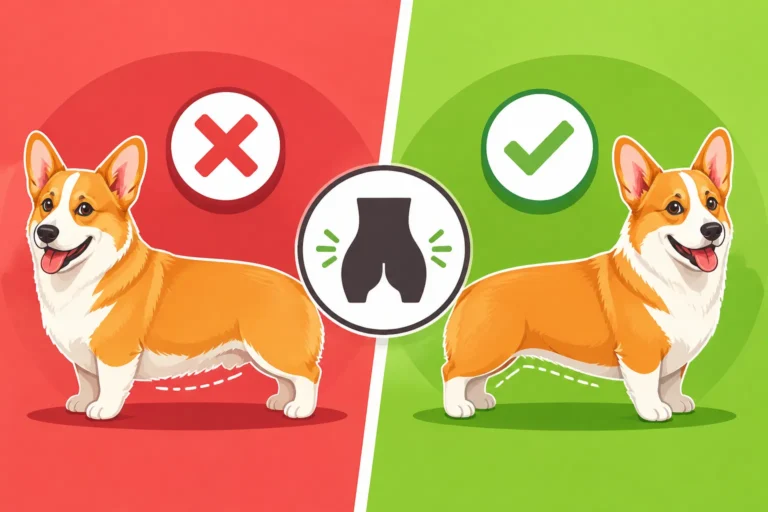
- Waist: From above, your Corgi should have a noticeable tuck or hourglass shape behind their ribs, before their hips. This might be subtle due to their long body, but it should be there. From the side, their belly should tuck up slightly, not hang low or be straight from chest to tail. A visible tuck is crucial, and it’s something to look for carefully under all that fur. Learn more about Whether a Corgi Should Have a Visible Tuck.
- Spine: You should be able to feel the bumps of their vertebrae along their back with light pressure. If they feel like a flat surface, there's too much fat.
A Corgi puppy should always feel lean, even if they look fluffy. Their body condition should ideally be on the lower end of the healthy range (a BCS of 4 or 5 out of 9), especially while they are still growing. This table offers a quick guide:
| Body Condition Score (BCS) | Description for Corgi | What to Feel/See |
|---|---|---|
| 1-3 (Underweight) | Too Thin | Ribs, spine, hip bones easily visible/prominent. No fat. Muscle loss. |
| 4-5 (Ideal) | Healthy | Ribs easily felt with minimal fat covering. Waist visible behind ribs. Abdominal tuck present. |
| 6-7 (Overweight) | A Bit Chunky | Ribs felt with difficulty, moderate fat covering. Waist barely discernible. Abdominal tuck minimal or absent. |
| 8-9 (Obese) | Too Heavy | Ribs not felt or require significant pressure. No waist. Abdomen distended. Heavy fat deposits over spine and tail base. |
When to Consult Your Vet About Your Corgi's Weight
Regular veterinary check-ups are non-negotiable for a Corgi puppy. Your vet is your best partner in monitoring your puppy's growth and overall health. During these visits, especially the initial puppy series and annual exams, your vet will weigh your puppy, assess their body condition score, and discuss their diet and exercise routine with you. They can help you determine if your Corgi puppy’s growth rate is appropriate for their breed and individual genetics. You can prepare for these visits by learning about The Vet Visits a Corgi Puppy Needs First.
Don't hesitate to consult your vet if you have any concerns about your Corgi puppy's weight or growth. Perhaps your puppy seems to be gaining weight unusually fast despite careful feeding, or maybe they're not gaining enough. These could be indicators of underlying health issues or simply mean their diet needs adjustment. The vet can help you set realistic weight goals for your puppy's anticipated adult size and fine-tune their feeding plan. They can also differentiate between a healthy, sturdy Corgi and one that is carrying too much body fat, which, as we've discussed, is a particular concern for their long, delicate spines. Catching weight issues early can literally add years of healthy life to your Corgi and reduce the risk of debilitating conditions later on. Every The Annual Exam Where a Corgi's Back Gets Checked is an opportunity to discuss these crucial details. Don't underestimate How Much Weight an Overweight Corgi Carries and its impact.
Disclaimer
This article is for general informational purposes only and does not constitute professional advice. Laws, prices and regulations vary by location and change over time. Consult a qualified professional for guidance on your specific situation.