Why a Clipped Corgi Loses Its Weather Protection
Clipping a Corgi coat removes the outer guard hairs and the dense undercoat that protect their skin from UV rays, heat, and cold.
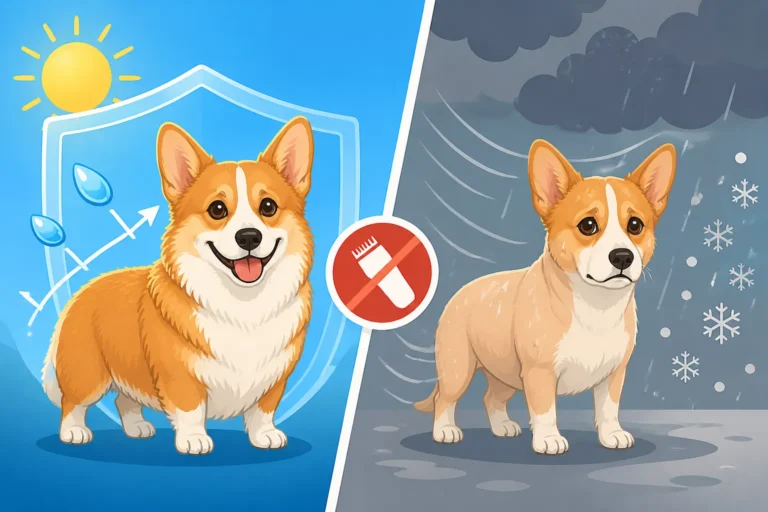
Clipping a Corgi coat removes the outer guard hairs and the dense undercoat that protect their skin from UV rays, heat, and cold.

Corgi pet allergies involve dander flakes, dried saliva, and heavy double coat shedding that trigger severe reactions in sensitive people.
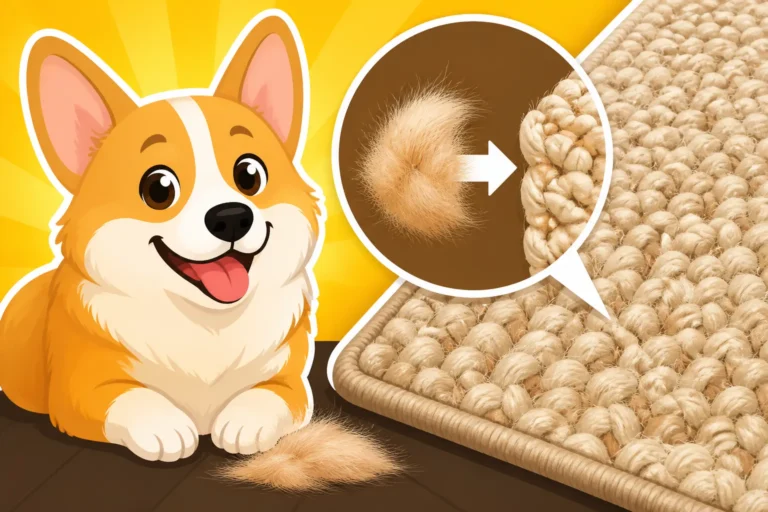
Corgi double coat hair and static electricity weave twenty eight pounds of shed fluff deep into carpet fibers, defeating standard vacuums.
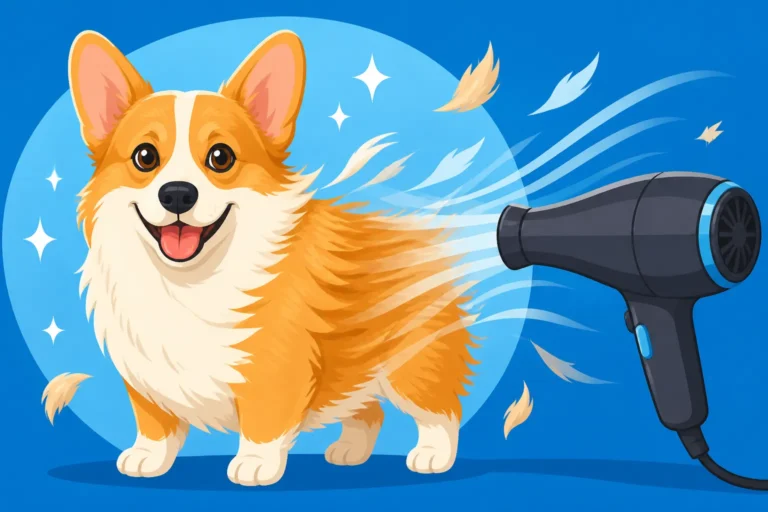
Using a high-velocity pet force dryer on a Corgi double coat prevents trapped moisture, bacteria, and painful hot spots.
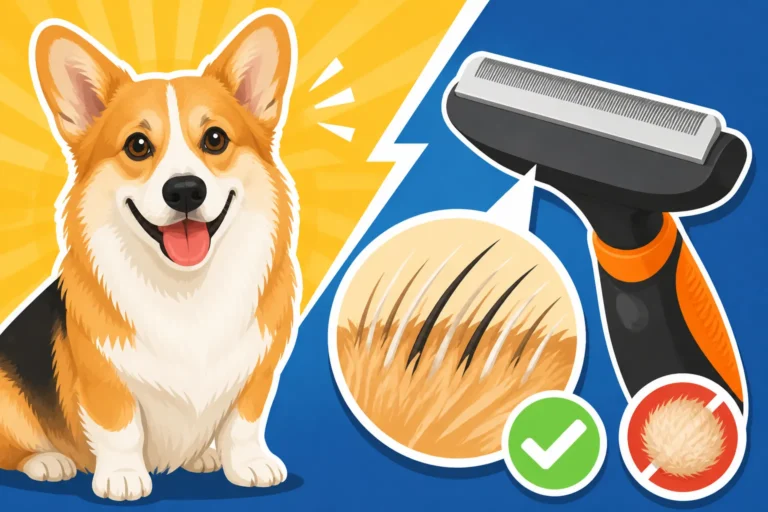
Deshedding blade mechanics and Corgi double coats explain whether these grooming tools cut protective guard hairs during seasonal sheds.

Working an undercoat rake through a Corgi double coat removes trapped dead hair, prevents painful mats, and protects skin health.
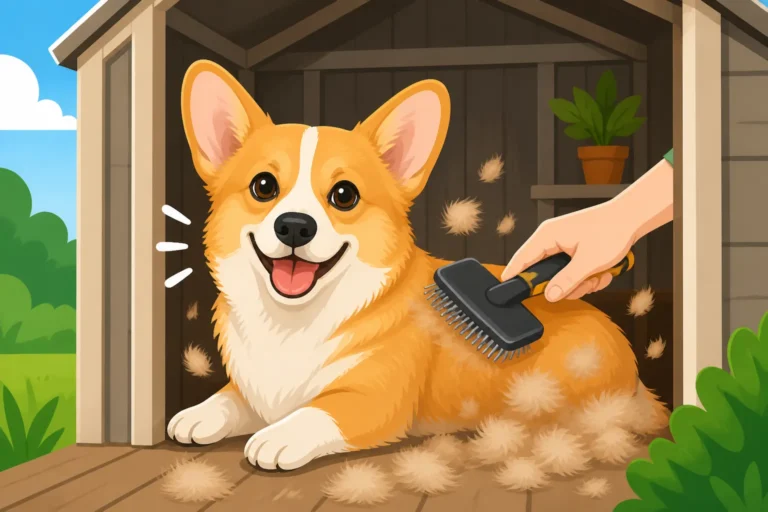
Daily Corgi brushing manages twenty-eight pound shedding seasons, explaining the double coat and year-round hair turnover.

Spring Corgi shedding and the biology of their double coat explain the massive volume of loose fur during seasonal coat blowing.

Corgi daily shedding and twice yearly seasonal coat blow-outs happen because their double coat constantly regenerates new hair.

Corgi shedding seasons occur during spring and autumn, explaining when double coat blowouts happen and why loose hair falls all year.