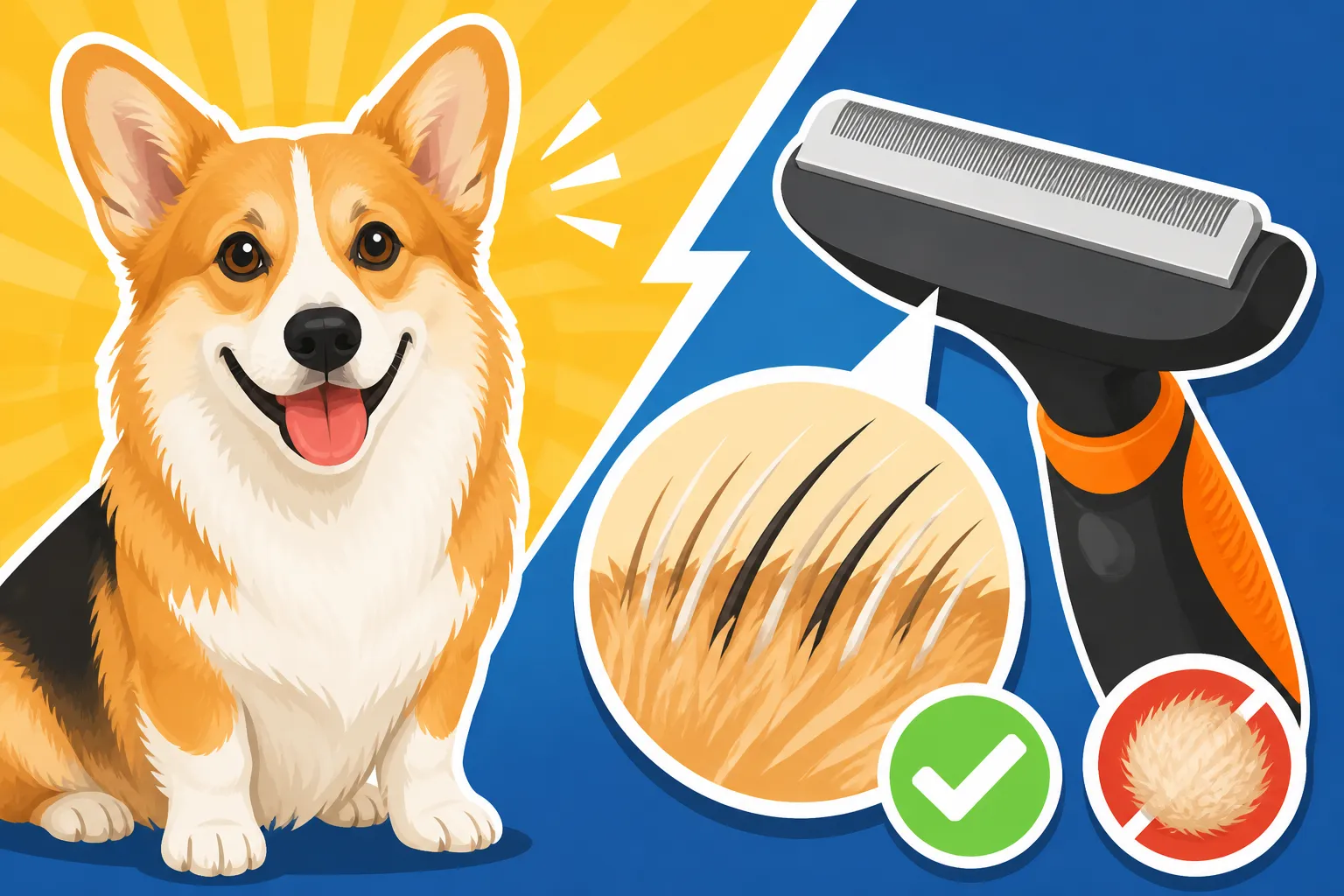
Whether a Deshedding Blade Cuts Corgi Guard Hair
If you're a Corgi parent, you know the struggle is real when it comes to shedding. Those adorable little fluff-bombs seem to leave a miniature version of themselves everywhere they go, and it's totally understandable to reach for any tool that promises relief. Deshedding blades are often touted as the magic solution, but a common worry I hear from fellow Corgi enthusiasts is whether these tools might actually be doing more harm than good, specifically by cutting through that vital top layer of guard hairs. This guide will dive deep into how these tools interact with your Corgi's unique coat and how to use them safely.
Understanding the Corgi Double Coat
Before we even touch a deshedding tool, it's crucial to understand the masterpiece that is your Corgi's double coat. It's not just there for looks; it's a highly functional, carefully designed system that has kept their ancestors comfortable in all sorts of weather while herding cattle. Knowing how it works helps us protect it, ensuring our Corgis stay healthy and happy.
The Role of Guard Hairs
Imagine your Corgi's outer coat as their personal, all-weather protective suit. These are the guard hairs—the longer, coarser, and often slightly stiffer hairs that you see on the surface. They’re like tiny, individual raincoats, forming a protective barrier against moisture, dirt, and harmful UV rays. When water hits a healthy Corgi's coat, it should bead up and roll off, largely thanks to these guard hairs.
Beyond external protection, guard hairs also play a critical role in temperature regulation. They create a natural airflow channel, allowing air to circulate close to the skin. In colder weather, this helps trap warm air, insulating your Corgi. In warmer weather, this same airflow helps dissipate heat. Damage to these hairs compromises this natural defense system, leaving your Corgi more vulnerable to the elements.
The Undercoat's Job
Beneath that protective layer of guard hairs lies the true insulator: the undercoat. This layer consists of incredibly soft, dense, and much finer hairs. It's this fluffy, downy layer that provides the bulk of your Corgi's warmth in winter and helps regulate body temperature by trapping air. When your Corgi sheds, it's primarily this undercoat that's being released in vast quantities, especially during seasonal "blows."
The undercoat isn't meant to be seen or felt directly; its job is to be close to the skin, providing that thermal barrier. A healthy undercoat is thick and even, but it's also constantly renewing itself. The shedding process removes old, dead undercoat, making way for new growth. This natural cycle is why Corgis are such prolific shedders.
Why Corgis Shed So Much
Let's face it, Corgis shed like it's their full-time job. It’s not just a little bit of hair here and there; it's often an astonishing amount that can leave you wondering if you accidentally acquired a second, invisible Corgi made entirely of fluff. This heavy shedding is a direct result of their dense double coat and their history as working dogs. Their ancestors spent their days outdoors, enduring various weather conditions, and their coat adapted to handle it all.
They typically have two major "coat blows" each year—one in spring to shed the thick winter undercoat and prepare for warmer weather, and another in fall to grow in a denser coat for winter. However, many Corgi owners will tell you that shedding is pretty much a year-round affair, with peaks during these seasonal changes. Factors like indoor living (which can confuse natural light cycles), diet, and individual genetics can influence the amount and frequency of shedding. It's a natural process, albeit a messy one for us humans! It’s estimated that a healthy How Much Hair a Twenty-Eight Pound Corgi Drops is shed annually, which really puts it into perspective.
Deshedding Blades: How They Work (and Where They Can Go Wrong)
Deshedding tools, often generically referred to as "deshedding blades," have become incredibly popular, promising to reduce shedding by removing loose undercoat more effectively than traditional brushes. But like any powerful tool, they need to be used with understanding and care to avoid unintended consequences.
The Intended Mechanism
Tools like the FURminator, a well-known example of a deshedding blade, are designed with a finely toothed edge that reaches down through the top layer of guard hairs to grab and pull out the loose, dead undercoat. The idea is that these teeth are too blunt or too far apart to cut the healthy guard hairs, but sharp enough to comb out the fluffy undercoat that's ready to come out. When used correctly, with light strokes, parallel to the skin, these tools can indeed remove a significant amount of undercoat, helping to reduce the amount of hair floating around your house.
The effectiveness lies in their ability to penetrate the dense outer coat and address the root cause of much of the shedding—the constantly renewing undercoat. They're meant to make the "coat blow" periods more manageable by accelerating the removal of dead hair that would otherwise be shed all over your furniture and floors. However, their design, while ingenious, is also where the potential for misuse and damage arises.
The Risk of Guard Hair Damage
Here's the rub: while these tools are designed not to cut guard hairs, they absolutely can if not used correctly. Think of it this way: a sharp knife is designed for cutting food, but you can certainly cut your finger if you're not careful. The same principle applies here. Applying too much pressure, using a scrubbing motion instead of long, gentle strokes, or going over the same spot repeatedly can cause the fine teeth of the deshedding blade to snag, bend, or even slice through the guard hairs. A dull blade can be even worse, as it pulls and breaks hairs rather than smoothly releasing the undercoat.
Hypothetically, imagine you're brushing your Corgi, Bartholomew, after a long day of zoomies. You're trying to get all that loose undercoat out, so you press down a little harder, thinking it will be more effective. Instead of just pulling out the dead fluff, the blade might catch the guard hairs, snapping them in the middle or pulling them out prematurely. This isn't a clean cut like with scissors; it's more of a blunt force trauma to the hair shaft, leaving jagged edges or weakening the hair structure. It's a common mistake that, unfortunately, many well-meaning owners make in their quest for a less hairy home.
Recognising Damaged Guard Hairs
So, how can you tell if you've accidentally damaged your Corgi's guard hairs with a deshedding blade? It's often not immediately obvious, as the damage accumulates over time or with particularly rough sessions. One of the first signs is a change in the coat's texture. Healthy guard hairs should feel somewhat coarse and smooth, especially when stroked from front to back. Damaged guard hairs, however, might feel brittle, frizzy, or even have a 'spiky' appearance where they've been broken.
Visually, you might notice the coat looking duller, losing some of its natural sheen. Instead of lying flat and sleek, sections might stand up or appear uneven. If you look closely, you might even see individual hairs that are visibly shorter than their neighbors, or have a frayed look at the ends. Over-brushing or aggressive use can also lead to thinning patches in the coat, where both undercoat and guard hairs have been removed indiscriminately. This is distinct from the natural shedding pattern and should be a red flag. If your Corgi's coat suddenly looks less vibrant or feels rougher than usual, it’s worth examining your grooming routine and tools.
The Consequences of Guard Hair Damage
Damaging your Corgi's guard hairs isn't just an aesthetic problem; it can have real, tangible impacts on their health and comfort. The Corgi coat is a marvel of natural engineering, and when that engineering is compromised, its protective functions diminish.
Impaired Coat Function
When the guard hairs are cut, broken, or pulled out, the entire integrity of the double coat is compromised. Remember those tiny, individual raincoats? If they're torn or missing, they can no longer effectively repel water. This means your Corgi could get soaked to the skin more easily during rain or even just a heavy dew, leading to prolonged dampness that can chill them in cool weather or irritate their skin. It also affects their natural insulation. The guard hairs are supposed to stand slightly away from the undercoat, creating an air pocket. If they're damaged, this airflow is disrupted, making it harder for your Corgi to regulate their body temperature, both in heat and cold.
Furthermore, these hairs offer a natural shield against the sun's harsh UV rays. Just like we need sunscreen, your Corgi's coat provides natural sun protection. A damaged coat can lead to sunburn, especially on lighter-colored Corgis or areas with thinner fur. This is a crucial point, as often owners think shaving or severely trimming a Corgi will cool them down in summer, but it actually has the opposite effect, exposing their delicate skin. This ties directly into understanding Why a Clipped Corgi Loses Its Weather Protection and why it's so important to preserve the natural coat structure.
Skin Irritation and Hot Spots
A compromised coat doesn't just look bad; it can open the door to a host of skin problems. When guard hairs are damaged, the skin underneath becomes more exposed and vulnerable. This can lead to environmental irritants, allergens, and moisture getting trapped closer to the skin, which in turn can cause itching and inflammation. Corgis are already prone to certain skin sensitivities, and disrupting their natural coat defense only exacerbates this.
Constant itching can lead to excessive licking, chewing, or scratching, which creates tiny abrasions on the skin. These small wounds, especially in a damp or warm environment (which a poorly managed undercoat can create), are prime breeding grounds for bacteria and yeast, leading to infections known as "hot spots." Hot spots are intensely itchy, red, inflamed lesions that can grow rapidly and be incredibly painful for your Corgi. Preventing them is far easier than treating them, and part of prevention is maintaining a healthy, intact coat. Understanding issues like Wet Patches That Turn Into Corgi Hot Spots highlights the importance of maintaining a healthy coat barrier.
Aesthetic Changes and Regrowth
From a purely aesthetic standpoint, damaged guard hairs can make your Corgi's coat look dull, uneven, and even scraggly. The smooth, lustrous appearance that is so characteristic of a healthy Corgi coat can be replaced by a frizzy, dull mess. The regrowth process for guard hairs is also incredibly slow. Unlike undercoat, which grows and sheds relatively quickly, guard hairs have a much longer growth cycle. If a significant number are damaged or pulled out, it can take months, sometimes even over a year, for them to fully regrow to their original length and texture.
During this regrowth period, the coat often looks patchy and uneven. The new guard hairs might come in with a different texture or even a slightly altered color, and the overall "feel" of the coat will be off. It can be a frustrating experience for owners who pride themselves on their Corgi's appearance. It's a vivid example of how damaging the coat, even unintentionally, can have long-lasting consequences. The issue of The Patchy Regrowth on a Clipped Corgi perfectly illustrates this challenge, underscoring the need for careful grooming.
Safe & Effective Corgi Deshedding Practices
So, if deshedding blades can be risky, what's a Corgi owner to do about all that shedding? The good news is there are plenty of safe and highly effective ways to manage your Corgi's coat without risking damage to their precious guard hairs. It's all about using the right tools, the right technique, and understanding their natural shedding cycle.
Gentle Brushing Techniques
The cornerstone of Corgi coat care is regular, gentle brushing. Forget aggressive scrubbing or pressing down hard. The goal is to remove loose hair, not yank it out or break it. For a Corgi's double coat, you'll want a combination of tools. An undercoat rake is excellent for getting down into the dense undercoat and gently pulling out dead fluff without disturbing the guard hairs. Use long, smooth strokes, always going in the direction of hair growth. Start at the neck and work your way back, paying close attention to the thicker areas around the hindquarters and shoulders.
Following up with a good slicker brush can help remove any remaining loose hairs and smooth out the topcoat, while a pin brush is great for general conditioning and stimulating the skin. Always be mindful of your Corgi's comfort; if they flinch or show discomfort, you might be pulling too hard or hitting a tangle. Patience and consistency are your best friends here. You can find a great selection of these tools on platforms like Chewy or Amazon, ensuring you have the right arsenal. Having The Rake and Comb a Corgi Coat Actually Needs is key to successful at-home grooming.
Timing and Frequency
When it comes to deshedding, timing is everything. Corgis, as we know, have seasonal coat blows, typically in spring and fall. These are the times when you'll want to ramp up your deshedding efforts significantly. During these periods, daily brushing with an undercoat rake can be incredibly beneficial. You'll be amazed at the mountains of fur that come off. However, outside of these intense shedding cycles, daily brushing might not be necessary or even advisable, as you risk over-brushing and irritating the skin or damaging healthy hair.
During the "off-peak" shedding times, two to three times a week might be sufficient for general maintenance and keeping tangles at bay. The key is to pay attention to your individual Corgi's coat. Some shed more consistently, others have more distinct seasonal fluctuations. Adjust your routine accordingly, but always prioritize gentle, consistent effort. Observing The Two Weeks a Corgi Coat Comes Out in Handfuls helps you anticipate peak shedding periods and adjust your grooming efforts.
The Role of Professional Groomers
Sometimes, the sheer volume of Corgi fluff can feel overwhelming, and that's perfectly okay! Professional groomers are wizards when it comes to double coats. A good groomer understands the intricacies of a Corgi's coat and will use techniques and tools designed to preserve its integrity while effectively removing loose undercoat. They often have high-velocity dryers, which are incredibly effective at "blowing out" vast amounts of dead undercoat without touching the guard hairs.
If you're unsure about using a deshedding blade or simply can't keep up with the shedding yourself, a professional grooming appointment every 6-8 weeks, or more frequently during heavy shedding seasons, can be a game-changer. They can also offer advice on at-home care and suggest the best tools for your Corgi's specific coat type. Don't be shy about asking your groomer for their approach to a Corgi's double coat, especially if you're concerned about tools that might damage the guard hairs. For many, delegating this task to a professional is well worth What a Groomer Charges to Blow Out a Corgi.
Alternative Deshedding Aids
Beyond brushes and professional help, there are other aids that can contribute to effective deshedding and coat health. A warm bath followed by a thorough blow-dry with a high-velocity dryer is an incredibly effective way to loosen and remove dead undercoat. The water helps separate the hairs, and the powerful air stream literally blasts the loose fur out. Just be sure your Corgi is completely dry, right down to the skin, to prevent skin issues. Blowing a Corgi Coat Out With a Dryer is a technique commonly used by professionals and can be replicated at home with the right equipment.
Furthermore, a healthy diet plays a crucial role in coat quality. Feeding your Corgi a high-quality, balanced diet, perhaps even something like the fresh meals offered by Ollie, can contribute significantly to overall coat health, leading to stronger hairs and potentially less excessive shedding. Supplements like fish oil, rich in Omega-3 fatty acids, can also promote a healthy, shiny coat and reduce dryness and breakage. These methods support the coat from the inside out, making grooming efforts more successful.
Comparison of Deshedding Tools vs. Guard Hair Safety
To help you decide which tools are best for your Corgi, here's a quick comparison of popular deshedding tools and their impact on guard hair integrity:
| Tool Type | Primary Function | Risk to Guard Hairs (when used correctly) | Risk to Guard Hairs (when used incorrectly/excessively) | Recommended Use |
|---|---|---|---|---|
| Undercoat Rake | Removes loose undercoat | Very low | Low (if pulling tangles aggressively) | Regular removal of dead undercoat, especially during sheds |
| Slicker Brush | Detangles, smooths, removes light shed | Very low | Low (if bristles are too harsh or pressing hard) | Daily or every-other-day brushing for overall coat health |
| Deshedding Blade | Reaches deep to remove undercoat | Low | High (can cut/break hairs, thin topcoat) | Infrequent use during heavy sheds, with light pressure |
| Pin Brush | General grooming, detangling | Very low | Very low | Daily brushing to prevent mats and distribute oils |
| High-Velocity Dryer | Blasts out loose undercoat, dries coat | None | None | Post-bath deshedding, drying |
Final Thoughts on Protecting Your Corgi's Coat
Navigating the world of Corgi grooming, especially with that magnificent double coat, can feel like a never-ending battle against the fluff. It's truly a testament to your dedication that you're even asking questions about whether certain tools might be harming your dog! The truth is, deshedding blades can cut a Corgi's guard hairs if they're not used with the utmost care, proper technique, and a good understanding of your dog's unique coat.
Remember, your Corgi's coat is their natural armor, protecting them from the elements and regulating their body temperature. Damaging those guard hairs, whether by improper brushing or even by shaving, can have real consequences for their comfort and health. My best advice? Prioritize gentle, consistent grooming with the right tools like undercoat rakes and slicker brushes. When in doubt, consult a professional groomer who specializes in double-coated breeds. Their expertise can save you a lot of worry and ensure your Corgi's coat stays as healthy, functional, and beautiful as it's meant to be.
Disclaimer
This article is for general informational purposes only and does not constitute professional advice. Laws, prices and regulations vary by location and change over time. Consult a qualified professional for guidance on your specific situation.