Teaching Children Not to Run From a Corgi
It’s a scene many Corgi owners know all too well: a child bursts into a run, laughter echoing, and suddenly, your adorable, low-riding herding dog springs into action, nipping at heels or bumping legs. This isn't aggressive behavior in the malicious sense, but it can be startling, painful, and even dangerous, leaving both children and parents frustrated. This guide will walk you through understanding why your Corgi acts this way and, more importantly, how to teach both your dog and your children to interact safely and happily.
Understanding the Corgi's Deep-Seated Herding Instinct
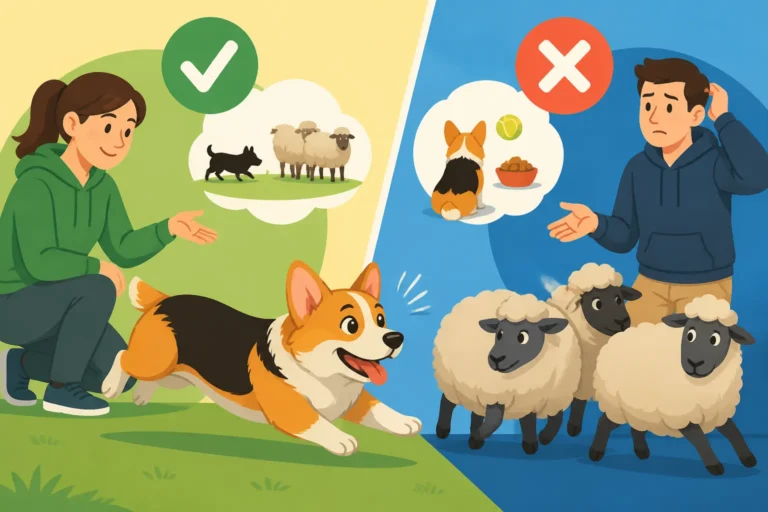
Let's be real, Corgis were bred for a job, and that job was moving cattle. They weren't just cute companions; they were serious working dogs. Their entire physical structure and innate drive are designed for this purpose. When a child runs, to a Corgi, it's not a playful dash across the lawn; it's a herd animal scattering, and their instinct tells them to gather it up. This isn't a flaw in their personality; it's their heritage.
Why Running Triggers the Chase and Nip
Imagine being a Corgi, low to the ground, surrounded by towering, unpredictable cattle. Your ancestors learned to dart in, nip at the heels, and then flatten themselves to avoid being kicked. That quick movement of a running child perfectly mimics the movement of livestock that needs to be "directed." The chase, the nip—it’s all part of a deeply ingrained herding sequence. They aren't trying to hurt the child; they're trying to control the "herd." It's incredibly difficult for a dog to ignore thousands of years of selective breeding telling them to do precisely this. You might even notice that the faster or more erratically the child moves, the stronger the Corgi's urge to herd becomes. It’s a primal response, hardwired into their very being.
This isn't aggression, but rather a Corgi doing what comes naturally. It’s the same impulse that might make them try to "herd" other pets, or even you, if you move too quickly. Understanding that this is an instinct, not malice, is the first step in addressing the behavior. The Corgi isn't being "bad"; it's just being a Corgi. For a deeper dive into this specific behavior, take a look at The Cattle-Driving Nip a Corgi Still Has.
Distinguishing a Herding Nip from an Aggressive Bite
It’s crucial to understand the difference here, for both your peace of mind and the safety of your children. A herding nip, while it can definitely smart and sometimes leave a red mark, is typically a quick grab and release. It's meant to get attention and redirect movement, not to inflict serious injury. The Corgi isn't usually growling, showing teeth in a truly aggressive way, or trying to hold on. Their body language is often excited, focused, and intent on the "herding" task. It’s a communication, albeit a painful one.
An aggressive bite, on the other hand, is born of fear, pain, or territoriality. It might be preceded by growling, snarling, stiff body language, or a showing of teeth. The bite itself is often harder, with the intent to injure, and the dog might hold on or shake. If you are ever unsure, or if your Corgi's nips seem to be escalating in intensity or are accompanied by other worrying behaviors, always consult with a professional dog behaviorist. For more specific details on what constitutes a Corgi nip, check out Why a Corgi Nips Rather Than Bites.
Corgis and the Energy of Children
Children, especially young ones, are often a whirlwind of unpredictable energy. They run, they squeal, they wave their arms, they drop things and pick them up quickly. All of these movements can be irresistible triggers for a Corgi whose entire genetic makeup screams "herd!" A child’s quick, jerky movements are exactly what a Corgi would interpret as a sheep or calf bolting from the flock.
This isn’t just about running; it's about all forms of sudden, uncoordinated motion. A child bouncing a ball, riding a scooter, or even just tumbling playfully on the carpet can trigger that same instinct. It's a challenging dynamic because children, by their very nature, aren't designed to move slowly and predictably. This is why managing both the Corgi's behavior and the child's understanding is so important for a harmonious home.
Training Your Corgi to Manage Its Herding Impulse
Since you can't erase thousands of years of breeding, the goal isn't to stop your Corgi from having the instinct, but to teach them acceptable ways to express it, or more often, to suppress it in the presence of running children. This requires consistency, patience, and positive reinforcement.
Redirection and Positive Reinforcement Techniques
When you see your Corgi begin to focus on a running child, the key is to intervene before the nip happens. This means being vigilant and proactive. Immediately call your Corgi to you using a happy tone, or offer a high-value treat or a favorite toy to divert their attention. Reward them enthusiastically for disengaging from the child and focusing on you instead. This teaches them that ignoring the "herd" and coming to you is far more rewarding.
Another excellent technique is to teach a strong "leave it" or "come" command. Practice this in various environments, gradually increasing distractions. When your Corgi successfully leaves a tempting item or comes when called, reward them handsomely. You can use exciting toys or delicious treats readily available from places like Amazon to make these redirections super appealing. The goal is to build a default behavior of coming to you rather than engaging with the running child. For practical tips, look into Redirecting a Corgi Off Ankles.
Impulse Control Exercises
Building impulse control is vital for a Corgi, especially one with strong herding instincts. Exercises like "stay," "wait," and tethering teach your Corgi to manage their urges and defer to your command. Start these in a quiet, distraction-free environment and gradually introduce more challenging scenarios. For example, have your Corgi "stay" while you walk a few steps away, then release them and reward. Increase the distance and duration over time.
Tethering your Corgi to a piece of furniture or to yourself (supervised, of course) when children are playing can also be helpful. This prevents them from practicing the unwanted herding behavior while still allowing them to observe the activity from a safe distance. Over time, they learn that the children's running isn't an invitation to herd. Comprehensive online training programs, such as those offered by BAXTER & Bella, can provide structured lessons and support for teaching these critical impulse control behaviors. Consistency is absolutely key here; a few minutes of practice every day will yield far better results than sporadic, hour-long sessions.
Providing Alternative Outlets for Herding Energy
Your Corgi has a deep-seated need to work and to use their herding brain. If they don't have appropriate outlets, they will find their own, and often that means herding children. Providing structured, safe alternatives is essential. Consider activities like:
- Herding Balls: Large, durable balls that your Corgi can push and "herd" around a yard are fantastic. They satisfy the instinct without involving people.
- Flirt Poles: These are like giant cat toys for dogs, allowing your Corgi to chase and "capture" a lure, mimicking the chase and pounce of a herding dog.
- Scent Work/Nose Work: This is a mentally stimulating activity that uses your Corgi's keen sense of smell. It tires them out mentally without putting stress on their long back, and it doesn't involve any running.
- Structured Play: Engage in games of fetch where you control the pace and direction, or teach them fun tricks that require mental focus.
These activities help to burn off that intense herding energy and give your Corgi a "job" that is acceptable and safe. Remember, a tired Corgi is often a well-behaved Corgi. Giving your Corgi an appropriate task or game helps channel their natural drive. If you're wondering about other enriching activities, The Job a Corgi Needs Instead of Herding You offers more great ideas.
Teaching Children Safe Interactions with Your Corgi
Training your Corgi is only half the battle; children also need to learn how to behave around dogs, especially one with such strong instincts. This is an ongoing process that requires patience and supervision.
The "Statue Game" and Other Calm Body Language
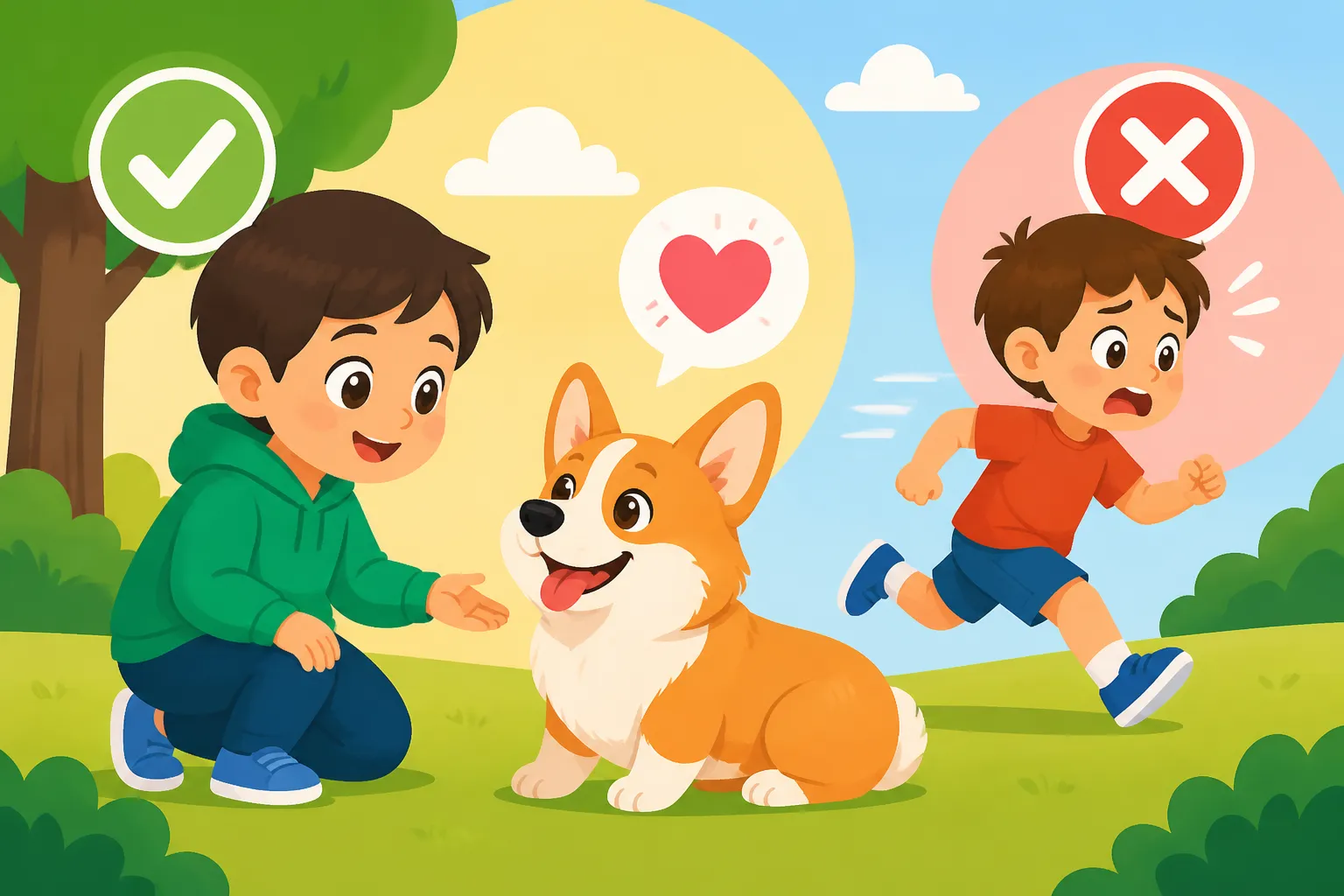
Teach your children the "Statue Game." If the Corgi starts to get too focused or nippy, they should immediately freeze like a statue – no running, no squealing, no waving arms. This removes the "moving herd" trigger and helps the Corgi calm down. Once the Corgi disengages, they can slowly resume play, or even better, call you over for help.
Emphasize "gentle hands, gentle feet." Children should learn to approach the Corgi calmly, offer a hand for sniffing, and avoid quick, sudden movements. Teach them to use a quiet, calm voice. Show them how to pet the Corgi appropriately (no pulling ears or tails) and explain that a dog needs space sometimes. This respectful interaction helps the Corgi see children as calm companions, not as targets for herding.
The Importance of Supervised Interactions
This cannot be stressed enough: never leave young children unsupervised with a Corgi, especially one with a strong herding drive. Accidents happen in a split second, and even the most well-meaning nip can cause fear or injury. An adult should always be actively engaged and ready to intervene. This means being present in the room, not just in the vicinity.
Think of it as setting up both your Corgi and your child for success. Supervision allows you to step in and redirect the Corgi if you see that herding instinct start to flare. It also allows you to guide your child's behavior, reinforcing the calm interactions you want to see. This vigilance is crucial, particularly when children are very young and less capable of understanding complex rules or dog behavior. For guidance on interactions, consider A Corgi in a House Full of Children and Animals.
Recognizing Your Corgi's Body Language
Teach your children to understand basic Corgi body language. This helps them know when to give the dog space. Explain signs like:
- Lip licking or yawning: Often a sign of stress or discomfort.
- Turning head away or avoiding eye contact: The Corgi is trying to disengage.
- Stiff body, low tail: The Corgi might be feeling anxious or unsure.
- Whites of eyes showing (whale eye): A clear sign of stress.
- Panting when not hot: Can indicate stress or anxiety.
If a Corgi displays these signs, it's telling you and the children that it needs a break. Teaching children to respect these signals is vital for preventing escalating situations and fostering a relationship based on mutual respect. You can make it a game: "Can you see if Fido is happy or needs quiet time?"
Setting Up the Environment for Success
Beyond training and teaching, modifying your home environment can significantly reduce opportunities for unwanted herding behaviors and create a safer space for everyone.
Creating Safe Zones and Avoiding Triggers
Think about your home layout. Can you use baby gates or dog pens to create separate "safe zones" for your Corgi and your children? This allows children to play freely without triggering the Corgi's herding instinct, and it gives your Corgi a quiet retreat where they can relax away from the commotion. This is especially useful during times of high activity, like a child's birthday party or playdate. Ramps and Gates to Fit Before a Corgi Arrives has some useful tips for setting up your home.
Actively avoid games that encourage running and chasing when your Corgi is present. If children want to play tag, do it in a separate room or outdoors where the Corgi cannot participate. You can even teach the Corgi that children running means a special chew toy comes out, associating the activity with a positive, quiet experience for them.
Utilizing Management Tools Effectively
Sometimes, management tools are your best friend. A leash, even indoors, can be a great way to prevent your Corgi from practicing unwanted behaviors. If you anticipate a situation where children might be running, put your Corgi on a leash and keep them close to you. This gives you immediate control and allows you to intervene swiftly if needed.
Consider a well-fitting harness, particularly a front-clip harness, for walks and supervised indoor time. These harnesses offer better control than a collar alone and can help you gently guide your Corgi away from tempting running targets. You can find a variety of comfortable and effective harnesses on Amazon. Whether a Corgi Pulls on the Leash offers more details on harness choices.
Remember, management isn't a substitute for training, but it's a critical tool in preventing the rehearsal of undesirable behaviors while you work on teaching new ones. It buys you time and prevents frustrating incidents, keeping everyone safer and happier.
| Interaction Type | Good for Corgis & Kids | Avoid with Corgis & Kids |
|---|---|---|
| Movement | Calm walking, gentle sitting | Running, jumping, fast spinning |
| Sound | Quiet talking, gentle laughter | Loud squealing, screaming, high-pitched noises |
| Touch | Gentle petting (shoulders, chest) | Grabbing, pulling tails/ears, hugging tightly, poking |
| Play | Fetch with adult supervision, puzzle toys | Tug-of-war with children, wrestling, chase games with kids |
| Environment | Separate safe zones, supervised play | Unsupervised access, open doors to running spaces |
Consulting a Professional
While this guide offers a lot of practical advice, some Corgis have a particularly strong herding drive, or their behavior might be more intense than a typical nip. If you're struggling to make progress, or if you ever feel that the nips are becoming more frequent, harder, or accompanied by other concerning behaviors, please don't hesitate to reach out to a certified professional dog trainer or a veterinary behaviorist.
These experts can assess your specific situation, observe your Corgi's behavior in context, and develop a customized training plan that addresses your dog's individual needs and your family's dynamics. Sometimes, an outside, experienced perspective is exactly what's needed to unlock success and ensure everyone in your home, two-legged and four-legged, can live together peacefully and safely. They can help you implement strategies for A Corgi That Nips Running Children and other challenges.
Training takes time and commitment, but with consistency, patience, and the right approach, you can teach your Corgi to coexist happily and safely with the energetic children in their life. You might also find that reinforcing good behavior, especially during puppyhood, makes a huge difference. Consider resources like The Corgi Puppy Mouth and Where It Lands for early intervention.
Disclaimer
This article is for general informational purposes only and does not constitute professional advice. Laws, prices and regulations vary by location and change over time. Consult a qualified professional for guidance on your specific situation.