Teaching a Corgi Not to Jump Off Furniture
It’s a sight many Corgi owners know all too well: that sudden leap off the sofa, a blur of fur launching itself from a bed, or even a daring jump down from a car seat. While it might look cute and agile, these everyday jumps pose a significant, often painful, risk to your beloved Corgi's long back. This guide will walk you through understanding why jumping is so dangerous, what motivates your Corgi to do it, and how you can proactively train them and modify your home to keep them safe and sound.
The Hidden Dangers of Jumping for Corgis
As Corgi lovers, we adore their low-rider stature and their energetic, bouncy personalities. But that unique build, so perfect for herding cattle by nipping at their heels, is also their Achilles' heel when it comes to impact. Each jump, especially repeated ones, puts immense stress on their delicate spine.
Why a Corgi's Build Makes Jumping Risky
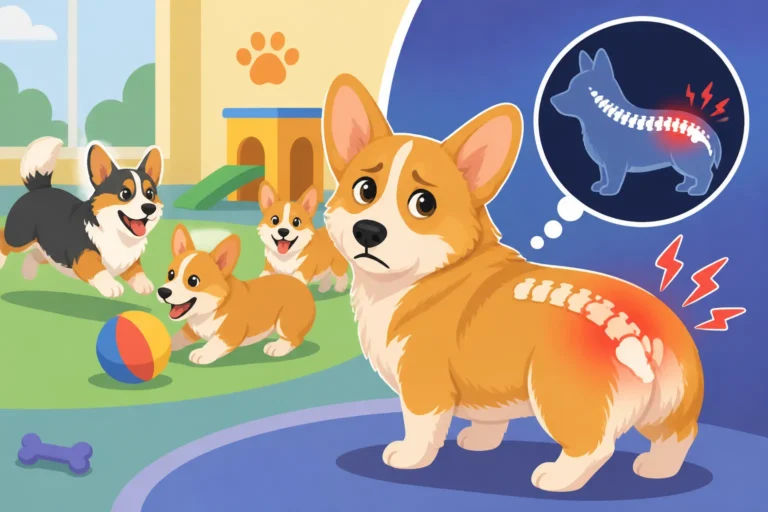
Corgis, both Pembrokes and Cardigans, are what we call chondrodystrophic breeds. This fancy word essentially means they have disproportionately short legs and a long body. Think of it like a bridge: a short bridge with solid, thick supports is stable, but a very long bridge with those same short, thick supports is under far more strain. Their spinal discs, which act as shock absorbers between the vertebrae, are prone to degeneration much earlier than in many other breeds. This condition, known as Intervertebral Disc Disease (IVDD), means those discs can harden, bulge, or even rupture, leading to agonizing pain, nerve damage, and potentially paralysis.
When a Corgi jumps, particularly down from a height, the force of their landing is transmitted directly through their spine. Imagine that long, relatively unsupported segment of their back taking the brunt of their body weight, compounded by gravity. It's not a matter of if, but often when, an issue will arise if they continue to engage in high-impact activities like jumping. Owners often don't realize the quiet damage being done until a sudden movement triggers a severe episode. It’s a silent threat that lurks beneath that fluffy exterior.
The Types of Injuries That Can Happen
The most common and devastating injury associated with jumping in Corgis is a ruptured or herniated disc. This happens when one of those vulnerable spinal discs either slips out of place or bursts, spilling its jelly-like contents into the spinal canal. This puts pressure on the spinal cord, leading to a range of symptoms from mild pain and weakness to complete paralysis. You might see your Corgi suddenly cry out, refuse to move, drag their back legs, or experience incontinence. These are emergency signs that require immediate veterinary attention. Emergency Signs of a Corgi Disc Injury details what to look for.
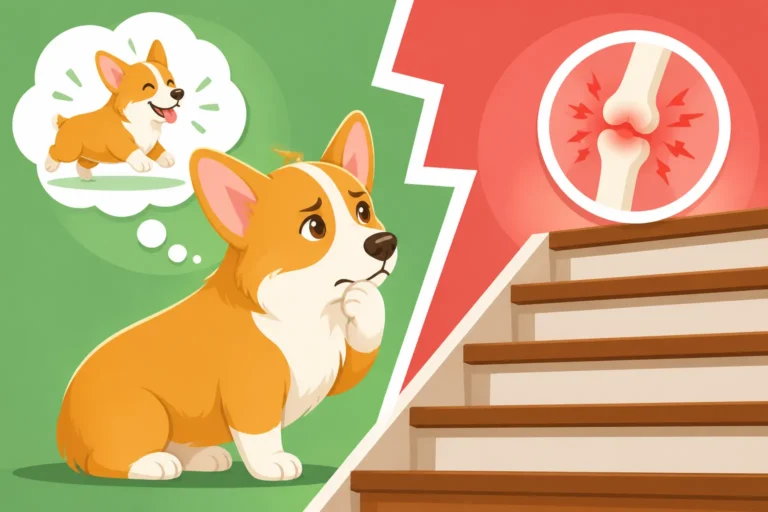
Beyond disc issues, repeated jumping can also contribute to other musculoskeletal problems. Over time, the constant stress can lead to early onset arthritis in their joints, especially in their hips, knees, and even their shoulders, which take a significant impact upon landing. They might develop muscle strains or sprains from awkward landings, which, while less severe than a disc rupture, can still cause considerable discomfort and require rest. A sudden, uncontrolled jump can also lead to fractures or more subtle, chronic pain that affects their quality of life long-term.
Long-Term Consequences of Repeated Impact
Allowing your Corgi to repeatedly jump off furniture doesn't just put them at risk for an acute injury; it lays the groundwork for chronic issues down the line. Each jarring landing contributes to the wear and tear on their already predisposed spine and joints. It's like constantly hitting a weak spot on a car's chassis – eventually, something is going to give way. The repeated microtraumas can accelerate degenerative changes in the discs, making them more brittle and prone to failure even with a seemingly minor movement later in life.
This chronic stress can lead to persistent pain, even if a full rupture doesn't occur. Your Corgi might become less active, reluctant to play, or exhibit subtle signs of discomfort that are easy to miss. They might struggle to get comfortable, experience stiffness, or simply seem "old before their time." Managing chronic pain often involves ongoing veterinary care, medication, and lifestyle adjustments that could have been mitigated by preventing high-impact activities from the start. Ultimately, protecting their back early on is an investment in their comfort and mobility for their entire lifespan. You can learn more about managing these risks by reading Disc Disease in a Long-Backed Corgi.
Understanding Your Corgi's Motivation to Jump
It's easy to get frustrated when your Corgi continues to launch themselves from the sofa, especially when you've invested in ramps or tried to block access. But understanding why they do it can help you approach the problem with more empathy and tailor your training solutions. It's rarely out of defiance, and almost always rooted in instinct, comfort, or learned behavior.
The Instinct to Be Close to Their People
Corgis are incredibly social creatures. They thrive on companionship and want nothing more than to be a part of their human family. If the "action" is happening on the sofa or bed, they instinctively want to be there too. They see you relaxing, watching TV, or chatting, and they don't want to be left out on the cold floor. This desire to be near you, to cuddle up and feel secure, is a powerful motivator. For many Corgis, being physically close to their people is a fundamental need that overrides any perceived danger or discomfort they might experience from jumping.
This instinct is often reinforced by our own behavior, even inadvertently. We might allow them on the furniture for cuddles, which is lovely, but then when they want to get down, they jump. They associate the furniture with positive interactions and affection. It’s hard to say no to those big Corgi eyes, and it feels mean to deny them comfort. However, we need to find ways to provide that closeness and comfort without compromising their long-term health. Consider creating a special dog bed right next to the sofa or bed so they are still part of the action, just safely on the floor.
Lack of Awareness of Their Own Physical Limits
Here's the thing about Corgis: they often think they're much bigger and more invincible than they actually are. They have the heart of a large herding dog packed into a small, low-slung body. They don't have the same self-preservation instinct when it comes to their spine that a human might have. They see a height, they see a path, and they just go for it, not realizing the biomechanical stress it places on their body. They don't connect a particular jump today with potential pain or paralysis tomorrow.
Their enthusiasm often outweighs their judgment. A Corgi might be so excited to greet you at the door, or to chase a tossed toy, that they simply don't pause to consider the safest way down from the couch. Their minds are focused on the immediate reward or interaction, not on the physics of their landing. This is why it's so crucial for us as their guardians to be their safety officers, understanding their physical limitations and teaching them safer habits, because they simply don't have that foresight themselves.
Attention-Seeking Behavior and Learned Habits
Let's be honest, Corgis are smart and they learn quickly what gets them attention. If jumping off the furniture, even if it results in a little scolding, still gets a reaction from you, it can become a learned behavior. Perhaps they get a reaction because you worry about them, or maybe they get a pat once they’re on the floor. Even negative attention can be perceived as a reward by some dogs. They might have learned that when they jump down, you rush over, or engage with them, reinforcing the idea that jumping gets your focus.
Moreover, if they've been allowed to jump off furniture for a long time without incident, it becomes a deeply ingrained habit. They've done it hundreds of times, and nothing bad has happened, so why stop now? Breaking these established patterns requires patience, consistency, and offering a clear, rewarding alternative. It's about retraining their brains to associate getting down safely (using a ramp, or waiting for a lift) with even greater rewards than the quick thrill of a jump. This is where dedicated training, like that offered by BAXTER & Bella, can be incredibly helpful in developing new, positive routines.
Setting Up Your Home for Corgi Safety
Once you understand why your Corgi jumps, the next step is to create an environment that encourages safe habits and physically prevents dangerous ones. This means making your home Corgi-proof, focusing on accessibility and designating safe spaces.
Introducing Ramps and Steps as Safe Alternatives
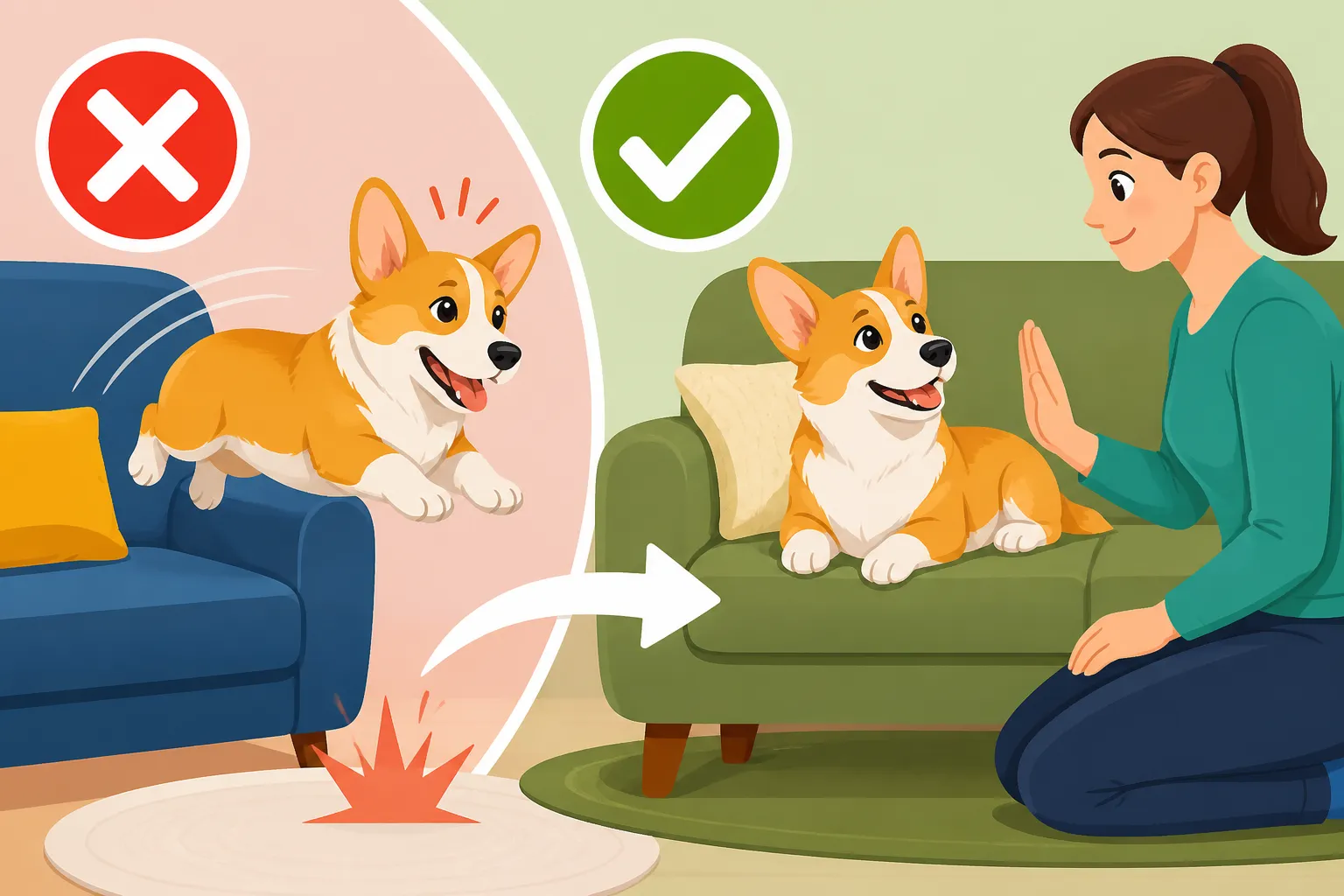
This is, hands down, one of the most effective strategies for protecting your Corgi's back. Ramps or sturdy steps allow your Corgi to ascend and descend from furniture without any jumping impact. The key is finding ones that are stable, have good traction, and are long enough that the incline isn't too steep. A short, steep step set can still put a lot of strain on their knees and back. Look for options on Amazon or at your local pet supply store that are specifically designed for small breeds with longer bodies. Ramps and Steps That Save a Corgi's Back offers more detailed advice.
Introducing these new tools requires patience. Don't expect your Corgi to instantly understand or embrace them. Start by placing the ramp next to their favorite spot on the sofa or bed. Use high-value treats to lure them up and down the ramp repeatedly. Make it a game, a positive experience. Praise them enthusiastically every single time they use it correctly. You might even want to temporarily block their direct access to the furniture, gently guiding them to the ramp instead. Consistency here is crucial; every family member needs to reinforce the use of the ramp.
Creating Designated "Corgi Zones"
Sometimes, you can't have ramps everywhere, or you might prefer that your Corgi doesn't have free rein on certain pieces of furniture. This is where creating designated "Corgi zones" can be incredibly helpful. These are comfortable, inviting spaces on the floor that your Corgi can call their own, equipped with their favorite orthopedic bed, blankets, and toys. The goal is to make these zones more appealing than jumping onto the furniture.
For example, if your Corgi loves to be near you while you're working at your desk, place a comfy dog bed right beside your chair. If they love watching TV with you, set up a plush bed at the foot of the sofa. Reward them heavily for settling in these areas. You can use baby gates or pet pens to block off access to certain rooms or furniture when you can't actively supervise. This isn't about punishment; it's about setting them up for success by removing the opportunity for unsafe behavior and providing appealing, safe alternatives.
Securing Furniture to Prevent Unintended Jumps
While ramps are ideal for planned access, sometimes a curious Corgi might try to jump from an unexpected spot, or accidentally fall. This is less common than deliberate jumping, but it's worth considering, especially for very active or senior Corgis whose balance might be declining. Think about any unstable pieces of furniture or areas that might pose a hidden risk.
For instance, if you have low shelving units or coffee tables that your Corgi can easily get onto, but then struggles to get off safely, consider rearranging your furniture or blocking access. Ensure rugs and runners are non-slip, especially in areas where your Corgi might jump off a surface, to prevent slips that can lead to injury. If your Corgi is particularly prone to jumping off the bed in the middle of the night, you might consider placing an extra-large, plush dog bed right next to the bed as a "soft landing" area, or even investing in a low-profile bed frame for yourself. It’s about anticipating potential hazards and minimizing them where possible.
Positive Reinforcement Training for Safe Furniture Habits
Training is a cornerstone of protecting your Corgi's back. It’s not just about preventing unwanted behavior, but actively teaching and rewarding the desired, safe alternatives. Positive reinforcement is key here – we want them to associate good choices with good things!
Teaching "Off" and "Wait" Cues
These two cues are invaluable for managing furniture access. The "Off" cue teaches your Corgi to get off a piece of furniture when asked, and the "Wait" cue teaches them to pause before jumping or getting on/off. Start with "Off." Lure your Corgi off the furniture with a treat, saying "Off!" as their paws hit the floor. As soon as all four paws are on the ground, praise enthusiastically and give the treat. Repeat this many, many times in short, fun sessions. The goal is for them to happily jump off for the reward, not to be pushed or pulled.
Once "Off" is solid, you can work on "Wait." This is particularly useful for encouraging ramp use. With your Corgi on the furniture, hold a treat near their nose and say "Wait!" as you move the treat towards the ramp opening. If they pause, even for a second, then immediately use the ramp, praise and reward. You can also use "Wait" when they are about to jump onto furniture without permission. Ask them to "Wait," then guide them to their designated Corgi zone on the floor, rewarding them for choosing the safe spot. Patience and consistency are your best friends here.
Rewarding Four Paws on the Floor
This simple principle is incredibly powerful. Any time your Corgi chooses to keep all four paws on the floor instead of jumping, or uses a ramp/steps correctly, make it a big deal. High-value treats, enthusiastic praise, and perhaps a quick game of tug or a favorite chew toy. We're essentially teaching them that staying on the ground or using the ramp leads to wonderful things, while jumping leads to nothing (or gentle redirection).
For example, if your Corgi approaches the sofa and looks like they might jump, but then opts to lie down in their dog bed nearby, immediately reward them. If they hesitate before jumping down and look at you, that’s your cue to praise and offer a treat for them using the ramp. You can even proactively reward them for simply hanging out in their "Corgi zone" while you're on the sofa. The more they associate the floor with positive reinforcement, the less appealing unauthorized furniture access becomes. This method is far more effective and less stressful than constantly scolding or physically preventing jumps.
Using Lures and Gentle Guidance
Luring is a fantastic, non-aversive way to teach new behaviors. For ramp training, hold a high-value treat right at your Corgi's nose, and slowly move it up the ramp, encouraging them to follow. As soon as they take a step or two, mark the behavior with a verbal "Yes!" or a clicker, and give them a small piece of the treat. Continue this until they are comfortable going all the way up and down. Make sure the ramp is stable and doesn't wobble, as this can make them hesitant.
Gentle physical guidance can also be used, especially in the initial stages. If your Corgi is hesitant, you can gently place your hands under their chest and hindquarters and physically guide them up or down the ramp, praising them throughout. The goal is to make it a positive, calm experience, not a scary or forced one. Never push or pull them roughly, as this can create a negative association with the ramp. Remember, slow and steady wins the race when it comes to changing long-ingrained habits. An online training program like BAXTER & Bella offers structured lessons and support that can guide you through these techniques step-by-step.
Managing and Preventing Jumping Behavior
Training is one piece of the puzzle, but managing your home environment and your Corgi's daily routine is equally important. Prevention is always better than cure, especially when it comes to spinal health.
Consistency is Key: Everyone on Board
This cannot be stressed enough: everyone in the household needs to be on the same page. If one person allows jumping, even occasionally, and another strictly enforces ramp use, your Corgi will get mixed signals. They'll quickly learn who the "soft touch" is and will try their luck with that person, undermining all your hard work. This includes children, housemates, and any regular visitors. A quick family meeting to establish the rules and discuss how to implement them consistently will go a long way.
Explain why these rules are in place – that it's for the Corgi's health and safety, not just arbitrary commands. Ensure everyone knows the "Off" and "Wait" cues, and understands how to properly use lures and provide rewards for safe behavior. It's much easier for your Corgi to learn if the message is clear and unwavering from every angle. This uniform approach not only protects their back but also strengthens their understanding of boundaries and makes them feel more secure.
Managing Excitement and Play Around Furniture
Corgis are bundles of energy, and excitement can often lead to impulsive behavior, like jumping. Think about situations where your Corgi is most likely to jump: when you first come home, during an enthusiastic play session, or when someone is about to give them a treat. These are moments where their adrenaline is high, and their self-control might be lower. During these times, it's particularly important to be proactive.
Before a high-energy interaction, like arriving home, ask your Corgi to settle in their designated safe spot on the floor. Only then, once they are calm, should you engage with them. Redirect play away from furniture: if they're racing around the living room, encourage them to play with toys on the floor, or take them outside for a romp. Avoid tossing toys onto the sofa or bed, as this invites them to jump up and down. Instead, throw toys along the floor to encourage safe, horizontal movement. By managing their excitement levels around furniture, you reduce the temptation and opportunity for unsafe jumps. Whether a Corgi Should Ever Jump Off a Sofa goes deeper into this specific risk.
Crating and Confinement for Injury Prevention
While crating might sound restrictive, a properly introduced crate or pen can be a Corgi's safe haven and an invaluable tool for injury prevention. If your Corgi is particularly prone to jumping, or if you're going to be out of the house and can't supervise, a crate or pen prevents them from getting onto furniture unsupervised. This is especially critical if your Corgi is prone to "zoomies" or sudden bursts of energy that might lead to impulsive jumps.
Introduce the crate positively with treats and toys, making it a comfortable, inviting den. Never use it for punishment. When you need to leave, or if you simply need a break from active supervision, knowing your Corgi is safely confined and unable to put their spine at risk can provide immense peace of mind. For Corgis on crate rest for an injury, this is obviously non-negotiable, but it's also a powerful preventative measure for healthy dogs. Remember that a Corgi will cope much better if the crate is introduced as a safe, quiet space rather than a punishment.
Addressing Common Challenges and Setbacks
Even with the best intentions and consistent training, you might encounter challenges. It's important not to get discouraged but to troubleshoot and adapt your approach.
When Your Corgi Ignores Ramps
This is a common frustration! Your Corgi might view the ramp as a strange obstacle rather than a helpful tool. First, check the ramp itself. Is it stable? Does it wobble? Does it have good traction? A slippery or wobbly ramp can be scary for a dog. Consider adding carpet strips or non-slip adhesive pads if it seems slick. Next, re-evaluate your lure and reward strategy. Are your treats high-value enough? A plain kibble won't cut it for some Corgis when they're learning something new. Try boiled chicken, cheese, or small pieces of hot dog.
Go back to basics: place the ramp flat on the floor initially and lure them over it horizontally. Then, raise it just a tiny bit, rewarding them lavishly for each step. Make it a positive game every time. You can also try placing their favorite toy or even a meal at the top of the ramp to entice them. If they still refuse, you might need to temporarily block their direct access to the furniture entirely, making the ramp the only option. Patience is key; some Corgis just need more time and positive reinforcement to build confidence.
Dealing with Guests and Unsupervised Jumping
Guests can throw a wrench into even the most well-established routines. Your Corgi might get overly excited, seeking attention from new people, or guests might inadvertently encourage jumping by inviting them onto furniture or not understanding your rules. Before guests arrive, have a plan. You might consider crating your Corgi for the initial excitement of arrivals, or keeping them on a leash so you can easily manage their movements.
Brief your guests about your Corgi's "no jumping" rules and explain the importance for their spinal health. Politely ask them not to invite your Corgi onto furniture or engage in play that encourages jumping. Have a bowl of small, approved treats ready for guests to offer when your Corgi is settled on the floor or using their ramp correctly. By managing the environment and communicating clearly, you can ensure that your Corgi's safe habits aren't undermined by well-meaning but uninformed visitors.
What to Do If an Injury Occurs
Despite all your best efforts, accidents can happen. If you suspect your Corgi has injured their back from a jump, or if you notice any sudden changes in their gait, pain, weakness, or inability to use their hind legs, act immediately. This is a medical emergency. Gently move your Corgi onto a flat, supportive surface like a board or blanket, trying to keep their spine as straight as possible. Avoid bending or twisting them.
Contact your veterinarian or an emergency veterinary clinic right away. Describe the symptoms and the suspected incident. They will likely advise you to bring your Corgi in for an examination, which might include X-rays or even an MRI to diagnose the extent of the injury. Early intervention is crucial for a better prognosis in spinal injuries. A Corgi That Cries When Lifted Under the Chest and Telling a Corgi's Slipped Disc From Myelopathy provide more insights into recognizing these critical situations. Do not delay seeking professional help.
Long-Term Strategies for a Healthy Corgi Back
Protecting your Corgi's back is an ongoing commitment, not a one-time fix. Beyond preventing jumping, there are several long-term strategies you can employ to promote overall spinal health and reduce the risk of future injuries.
Maintaining Ideal Weight for Spinal Health
This is arguably one of the most critical factors for Corgi spinal health. Excess weight puts enormous additional strain on their long back and vulnerable discs, much like carrying a heavy backpack all day, every day. Every extra pound your Corgi carries significantly increases their risk of IVDD and exacerbates any existing spinal issues. Even a few pounds can make a huge difference to a small dog like a Corgi.
Work with your vet to determine your Corgi's ideal body condition score and target weight. Feed a high-quality, measured diet, and be mindful of treats, ensuring they fit within their daily caloric intake. Regular, moderate exercise that focuses on strengthening core muscles without high impact (like walking, short bursts of fetch on a flat surface, or swimming) is also beneficial. You can refer to The Body Condition Score a Corgi Should Hold for guidance on assessing your Corgi's weight. Making weight management a priority is a profound act of love for your Corgi's longevity and comfort.
Regular Vet Check-ups and Early Detection
Routine veterinary check-ups are essential for monitoring your Corgi's overall health, but they are especially important for their spinal well-being. During these visits, your vet can assess their gait, spine, and joint mobility, and discuss any subtle changes you might have noticed. Early detection of any spinal stiffness, pain, or neurological deficits can allow for proactive management strategies before a crisis occurs.
Don't hesitate to bring up any concerns you have, even if they seem minor. "He sometimes scuffs his back nails," or "She seems a bit stiff after sleeping" could be early indicators of an underlying issue. Your vet can advise on appropriate exercises, nutritional supplements, or lifestyle adjustments that can support spinal health. As Corgis age, these check-ups become even more critical, allowing you to address conditions like Early Arthritis in a Corgi before they severely impact quality of life. Think of your vet as your partner in keeping your Corgi comfortable and mobile for as long as possible.
Enriching Activities That Are Spine-Safe
While preventing jumping is crucial, it doesn't mean your Corgi has to live a boring life. There are plenty of enriching, stimulating activities that are perfectly safe for their backs and will keep them happy and mentally engaged. Focus on activities that keep all four paws on the ground or involve minimal impact. Nose work and scent games are fantastic for Corgis – they use their keen sense of smell, are mentally tiring, and require no jumping. Hide treats around the house or in puzzle toys.
Trick training, teaching them to "spin," "bow," or "weave" through your legs, can be fun and builds a strong bond without stressing their spine. Supervised walks on varied, non-slippery terrain (avoiding steep hills or stairs) are great for muscle tone. Some Corgis even enjoy calm walks in a dog stroller or wagon, allowing them to still be out and about when their bodies might be less capable. Explore options like hydrotherapy, which is excellent for building muscle and improving mobility with zero impact. The goal is to provide a rich, fulfilling life that respects their physical limitations.
Comparative Table of Jumping Risks vs. Safe Alternatives
To help visualize the difference and reinforce the benefits of safe alternatives, here's a quick comparison:
| Activity / Risk Factor | Potential Impact on Corgi's Spine | Safer Alternative | Benefits of Alternative |
|---|---|---|---|
| Jumping off furniture | High impact, disc compression, increased risk of IVDD, joint trauma | Using a ramp or steps | Eliminates impact, protects discs and joints, builds confidence |
| Landing hard after a jump | Sudden force on vertebrae, possible disc rupture, nerve damage | Waiting to be lifted (or using ramp) | Gentle transition, prevents acute injury, maintains spinal alignment |
| Repeated jumping daily | Chronic wear and tear, accelerated disc degeneration, early arthritis | Consistent ramp/step use, designated floor zones | Long-term spinal health, reduces chronic pain risk, extends mobility |
| Excitement-induced leaps | Impulsive, uncontrolled movements, higher risk of awkward landings | Calm greeting routines, redirecting play to floor | Prevents accidental injury, promotes calmer behavior, reinforces training |
| Running/playing on slippery surfaces | Falls, slips, sudden twisting motions, disc strain | Non-slip rugs, secured runners, outdoor play on grass | Prevents slips, maintains traction, reduces torque on spine |
Disclaimer
This article is for general informational purposes only and does not constitute professional advice. Laws, prices and regulations vary by location and change over time. Consult a qualified professional for guidance on your specific situation.